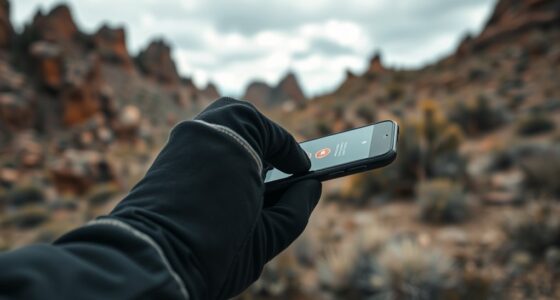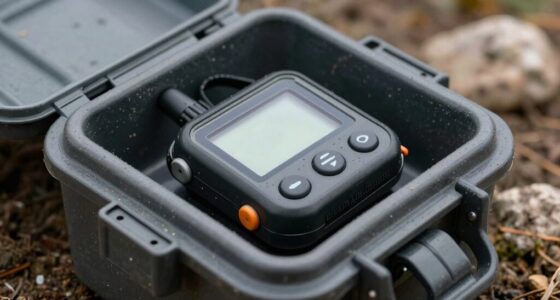
For trail comms, choose UHF if you’re orienting yourself through rugged terrains or forests with obstacles, as it penetrates dense foliage better. VHF is ideal for open landscapes, offering longer distances across flat terrain. To evaluate satellite systems if you’re in remote areas without terrestrial coverage. Your choice depends on terrain, distance, and environment, but there’s more to consider to find the best setup for your adventure. Continue exploring to discover the details that will make your comms most effective.
Key Takeaways
- Use UHF radios in rugged terrains and obstacles for reliable local communication.
- Choose VHF radios for open landscapes requiring longer-distance communication.
- Opt for satellite systems in remote areas lacking terrestrial signal coverage.
- Consider terrain features to select the most effective system for your environment.
- Balance range, terrain, and power needs to determine the best communication method.
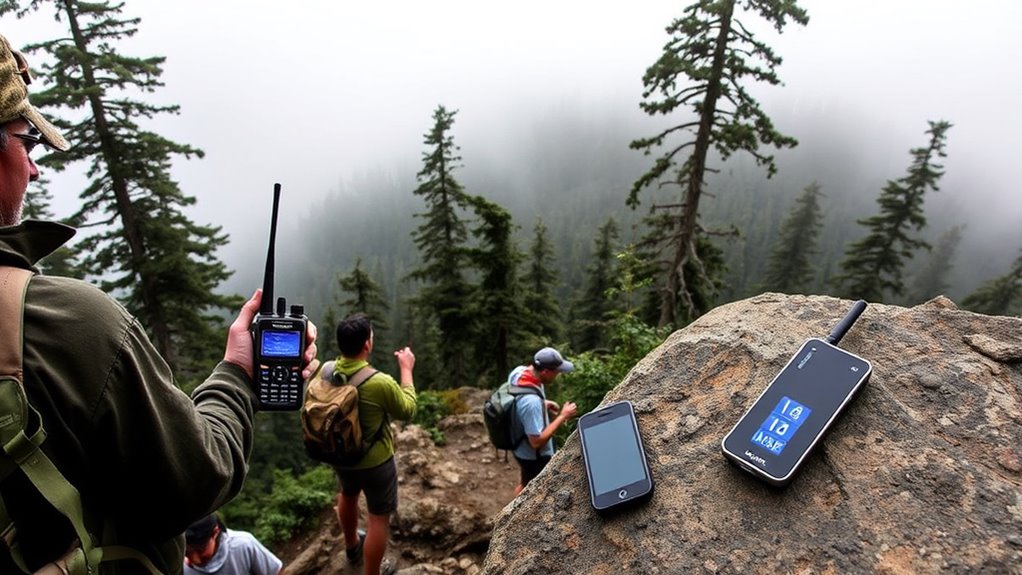
When choosing the best communication method for trail adventures, understanding the differences between UHF, VHF, and satellite systems is essential. Your choice impacts how effectively you can stay in touch, especially during emergencies. Each system has unique strengths and limitations, and knowing how they align with your adventure’s needs will help you make smarter decisions.
UHF radios are popular among trail enthusiasts because they typically offer better performance in built-up areas or rugged terrains where obstacles can block signals. They operate at higher frequencies, which means they can penetrate dense foliage and rough terrain more effectively. However, UHF radios generally have a shorter range compared to VHF and are more sensitive to interference from man-made structures. When planning for emergency protocols, UHF radios allow quick communication with nearby team members or support stations, which is critical if something goes wrong during your hike. But, you need to consider battery life considerations, as UHF radios tend to consume more power, especially with continuous use. Bringing spare batteries or a portable charger becomes essential to guarantee you’re never left without communication during critical moments.
VHF radios, on the other hand, are better suited for open landscapes and longer-distance communication. They operate at lower frequencies, which can travel further over flat or open terrain, making them ideal for expansive wilderness areas. When it comes to emergency protocols, VHF radios provide reliable contact with rescue services or other groups over greater distances. Still, their effectiveness diminishes when dense trees or terrain features block the signal. Battery life considerations are similar to UHF radios, but some VHF units are designed to be more energy-efficient. For extended trips, you’ll want to pay attention to power management, ensuring you carry enough batteries or charging options to maintain constant communication. Additionally, understanding the contrast ratio of your radio’s display can help conserve battery life by adjusting screen brightness appropriately during prolonged use.

SAMCOM FPCN30A Two Way Radios Long Range 5 Watts Walkie Talkies for Adults Rechargeable 2 Way Radios UHF Handheld Business Group Call Radio 1500mAh Battery with Earpieces for Construction,6 Packs
- UHF Channels for Team Separation: 20 channels for organized communication
- One-Key Group Broadcast: Instantly connect multiple teams
- Long-Range Power: Up to 5 miles in open areas
As an affiliate, we earn on qualifying purchases.
As an affiliate, we earn on qualifying purchases.
Frequently Asked Questions
How Do Weather Conditions Affect Each Communication Method?
Weather conditions can considerably impact each communication method. UHF signals are more prone to weather interference like rain and snow, causing signal degradation. VHF signals generally perform better in adverse weather but still experience some interference. Satellite communications are less affected by weather, but heavy storms can disrupt signals temporarily. You should consider these factors when choosing your method, especially in challenging weather, to maintain reliable communication on the trail.
What Is the Expected Battery Life for Each System?
Did you know a typical VHF radio’s battery lasts around 8-10 hours with moderate use? For UHF, expect similar battery longevity, but satellite phones often offer shorter durations, usually 4-6 hours, due to higher power needs. To maximize your device’s lifespan, effective power management is key—turn off when not in use, reduce transmission power, and carry spare batteries. This way, you stay connected longer on your adventures.
Are There Legal Restrictions on Using Satellite Phones?
Yes, there are legal restrictions on using satellite phones. You must adhere to regulatory requirements, which vary by country, and often involve licensing to operate satellite communication devices legally. Before using a satellite phone, check local laws and obtain any necessary permits to ensure you’re in compliance. Failure to do so can result in fines or service disruptions, so always verify regulatory compliance beforehand.
Can These Communication Systems Be Used Internationally?
The saying “What’s right for one may not be right for all” rings true here. You can generally use satellite phones internationally without much trouble, as they’re designed for global coverage. However, UHF and VHF systems often face regional regulations and limited international compatibility, making them less reliable across borders. Always verify regional regulations before relying on any system abroad to ensure seamless communication.
How Secure Are UHF and VHF Communications?
UHF and VHF communications are generally not highly secure because they often lack advanced encryption standards. Your signals can be intercepted easily if you’re not using encryption, risking sensitive information. To improve security, consider implementing encryption standards like AES, and be aware of potential signal interception risks. Using secure channels and keeping firmware updated can also help protect your communications from unauthorized access and interception.

Retevis RB48 FRS Walkie Talkies Long Range,Mil-Standards 810H Two Way Radio
- Military-Grade Durability: Built to survive harsh conditions
- Triple Proof Protection: IP67 waterproof, dustproof, drop-proof
- Long Range Communication: Up to 300,000 sq.ft. and 25 floors
As an affiliate, we earn on qualifying purchases.
As an affiliate, we earn on qualifying purchases.
Conclusion
No matter which communication method you choose—UHF, VHF, or satellite—your safety depends on it. Think of it like wielding a superpower on the trail; the wrong choice could leave you stranded in the middle of nowhere or cut off from help when you need it most. So pick wisely, equip yourself with the right gear, and remember: your voice might just be the lifeline that saves your adventure—and your life. Stay connected, stay safe!
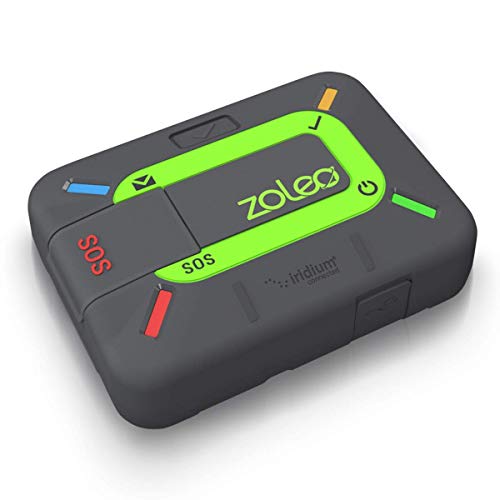
ZOLEO Satellite Communicator – Two-Way Global SMS Text Messenger & Email, Emergency SOS Alerting, Check-in & GPS Location – Android iOS Smartphone Accessory
- Global Satellite Messaging: Text and email via satellite, cellular, Wi-Fi
- Emergency SOS Alert: Send GPS location SOS to emergency center
- Medical Assistance Access: Get non-emergency medical help
As an affiliate, we earn on qualifying purchases.
As an affiliate, we earn on qualifying purchases.