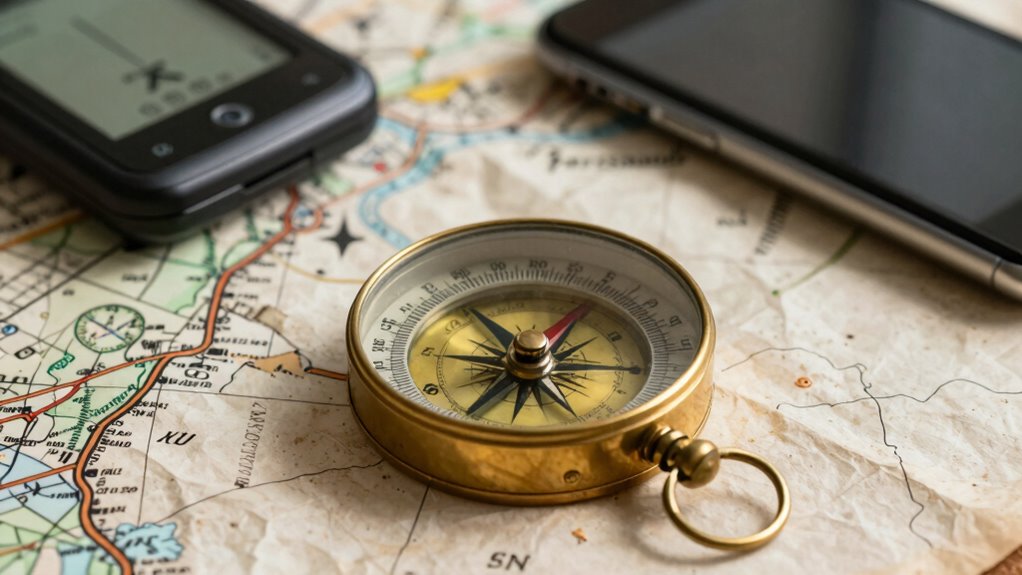
Having a compass and paper map with your high-tech tools guarantee you stay prepared if technology fails or you’re in a remote area without signals. They provide reliable, independent navigation that doesn’t rely on batteries or internet. These traditional tools also deepen your connection to the environment and enhance your skills. Plus, they’re eco-friendly and protect your privacy. Keep exploring, and you’ll discover even more reasons why these classic tools remain essential for outdoor adventures.
Key Takeaways
- They provide reliable navigation without dependence on batteries or signals, essential during technology failures.
- Paper maps and compasses foster a deeper connection to the environment and enhance traditional navigation skills.
- Using physical tools reduces environmental impact and aligns with eco-friendly outdoor practices.
- They ensure privacy, as they do not track location or require internet connectivity.
- Serving as backup tools, they increase safety and confidence in remote or challenging terrains.
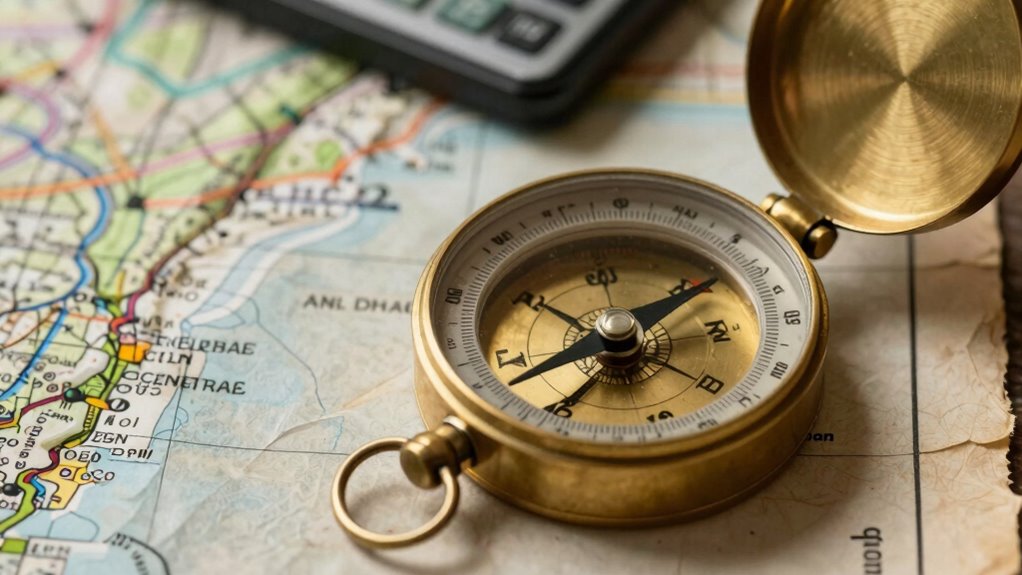
Have you ever wondered why, despite the prevalence of GPS and digital maps, a compass and paper map still deserve a place in your navigation toolkit? These traditional tools offer a level of reliability that technology sometimes can’t match. Unlike electronic devices, a compass and paper map aren’t dependent on batteries or signals, making them invaluable when technology fails or becomes compromised. They provide a sense of control, allowing you to understand your environment better, which is critical in wilderness settings or remote areas. This hands-on approach fosters a deeper connection to your surroundings, helping you develop a more intuitive sense of direction.
Traditional navigation tools like a compass and paper map offer unmatched reliability and a hands-on connection to your environment.
From a historical perspective, a compass and paper map hold significant importance. They have guided explorers, adventurers, and travelers for centuries, shaping our understanding of geography and navigation. This historical accuracy is embedded in their design—maps based on centuries of cartographic knowledge and compass technology refined over generations. Using them connects you to this rich legacy, reminding you of the pioneering spirit of early explorers. This sense of continuity can boost your confidence and situational awareness, especially when high-tech options are unavailable or unreliable. Additionally, navigation skills gained through practice with traditional tools can enhance your overall ability to orient yourself in unfamiliar environments.
Another compelling reason to carry a compass and paper map is their reduced environmental impact. Electronic devices require batteries, which involve resource extraction, manufacturing, and disposal, all contributing to environmental degradation. In contrast, paper maps are biodegradable, especially when made from sustainable sources, and a compass is a simple, durable tool with minimal environmental footprint. Using these traditional tools reduces electronic waste and energy consumption, aligning your navigation practices with eco-friendly principles. It’s a small but meaningful way to lessen your environmental impact, especially if you’re frequently outdoors or on extended trips.
Furthermore, a paper map and compass offer a level of privacy that digital tools can’t provide. They don’t track your location or collect data about your movements, ensuring your privacy remains intact. This aspect is increasingly important in a world where digital privacy concerns are growing. Plus, they don’t require an internet connection, so you can depend on them anywhere, anytime, without worrying about connectivity issues or hacking risks.
In addition, modern maps and compasses are often recommended in outdoor safety guidelines, emphasizing their importance as backup tools in case of technological failure. In essence, a compass and paper map are timeless navigation tools that complement modern technology. They provide reliability, a connection to history, and eco-friendly benefits, making them essential parts of any comprehensive navigation strategy. While GPS and digital maps are convenient and efficient, traditional tools keep you grounded—literally and figuratively—and prepared for whatever challenges your journey may present.

BOSOIRSOU 12pcs Orienteering Compass Set – Waterproof, Map Compass for Hiking, Backpacking, Camping, Kids, Travelling
- Package Includes: 12 compasses for outdoor activities
- Durable Material: High-quality waterproof acrylic construction
- Portable Design: Includes neck strap for easy carrying
As an affiliate, we earn on qualifying purchases.
As an affiliate, we earn on qualifying purchases.
Frequently Asked Questions
How Do I Calibrate a Traditional Compass for Accuracy?
To calibrate your traditional compass for accuracy, first find the magnetic declination for your location and adjust your compass accordingly. Hold the compass flat, rotate it until the needle aligns with the north mark, accounting for declination. Check for compass deviation by comparing readings with a known landmark. Regularly recalibrate, especially after impacts or using it in different environments, to guarantee your compass remains precise and reliable.
Can Paper Maps Be Used Effectively in Digital-Only Environments?
Imagine a world where digital reliance is absolute, but paper maps remain your silent heroes. Yes, you can use paper maps effectively in digital-only environments, especially when your devices fail or lose signal. They also reduce environmental impact by minimizing energy use. Relying on paper maps keeps you prepared, grounded, and less vulnerable to digital disruptions, making them a timeless backup that guarantees your navigation stays reliable, no matter what.
What Are the Best Practices for Folding and Storing Paper Maps?
You should fold your paper map using proper folding techniques, like the “accordion” method, to keep it organized and prevent tears. Always maintain correct map orientation, aligning it with your surroundings for easy navigation. Store your map flat in a protective case or envelope, avoiding creases and moisture. Regularly refold it along the same lines to preserve its integrity and guarantee quick access when needed, especially in outdoor or unfamiliar environments.
How Do I Read Topographical Features on a Paper Map?
Think of the map as a treasure map, revealing hidden terrain through its symbols and contour lines. To read topographical features, identify the contour lines—closely spaced lines show steep slopes, while wider gaps indicate gentle terrain. Use map symbols to recognize mountains, valleys, and water features. By understanding these clues, you can visualize the landscape’s shape and elevation, turning a flat sheet into a three-dimensional adventure.
What Are the Legal Considerations for Using Navigational Tools Outdoors?
When using navigational tools outdoors, you should be aware of legal liability and permission requirements. You’re responsible for ensuring your safety and the safety of others, so always respect property rights and obtain necessary permissions if accessing private land. Check local regulations, especially if you’re using drones or conducting searches, to avoid legal issues. Staying informed helps you navigate responsibly and minimizes potential legal complications during outdoor adventures.
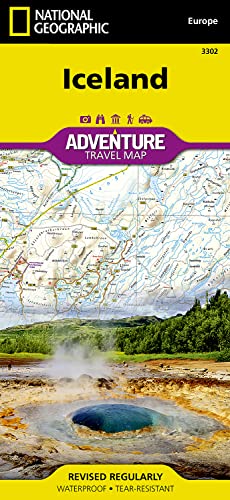
Iceland Map (National Geographic Adventure Map, 3302)
- Location: Iceland
- Publisher: National Geographic Maps
As an affiliate, we earn on qualifying purchases.
As an affiliate, we earn on qualifying purchases.
Conclusion
Even with over 3.5 billion smartphone users worldwide, relying solely on high-tech navigation can leave you vulnerable if signals drop or devices fail. A recent survey shows 60% of hikers prefer carrying a compass and paper map as a backup. These traditional tools aren’t just nostalgic; they’re essential for safety and confidence in the wild. Keep them handy—you never know when technology might let you down, but your skills won’t.

Orienteering Compass Advanced Scout for Hiking Camping Navigation Blue
- Acrylic Baseplate with Azimuth Bearing: Includes 360-degree rotating bezel for navigation
- Liquid-Filled Magnetic Needle: Ensures fast, accurate north pointing
- Magnifying Glass for Map Reading: Facilitates detailed geological map navigation
As an affiliate, we earn on qualifying purchases.
As an affiliate, we earn on qualifying purchases.

Yeaqee 8 Pcs Land Navigation Kit Includes 5 Military Map Markers Lensatic Military Compass Coordinate Scale and Protractor Pace Beads Counter for Camping, Mountaineering, Climbing, Adventure
- Durable, Waterproof Compass: Metal construction with luminescent arrow
- Multi-Color Map Markers: Four markers with dual tips for notes
- Beads Distance Counter: 16-inch black beads for tracking
As an affiliate, we earn on qualifying purchases.
As an affiliate, we earn on qualifying purchases.