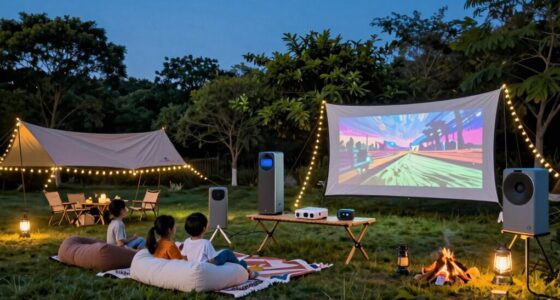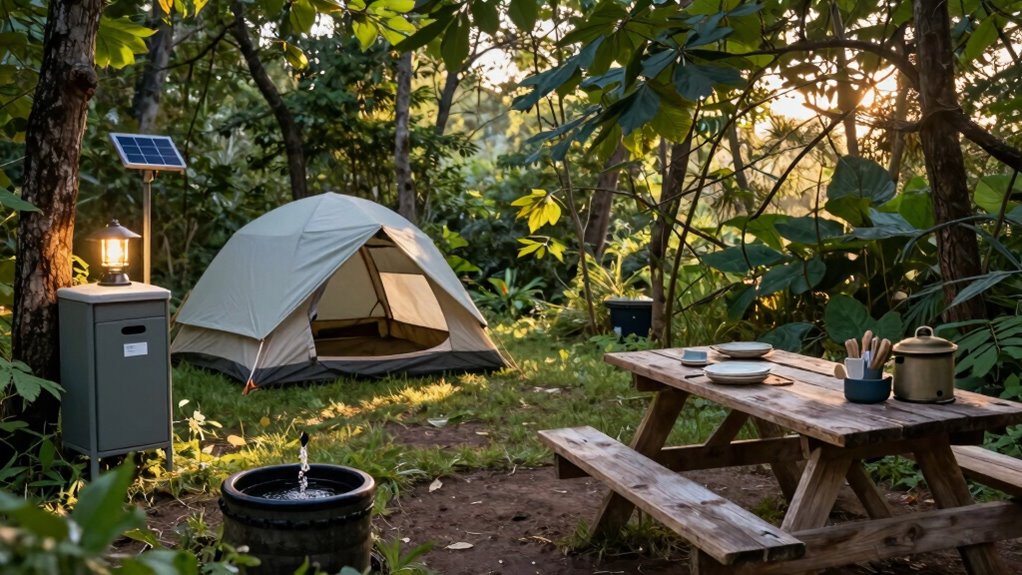

To make your campsite comfort more sustainable over time, focus on eco-friendly gear made from recycled or biodegradable materials. Use renewable energy sources like portable solar panels and energy-efficient gear to reduce reliance on fossil fuels. Practice waste management by packing out trash, avoiding single-use plastics, and composting organic waste. Conserve water with efficient equipment and proper wash stations. If you keep exploring, you’ll discover even more ways to enjoy comfort while protecting the environment.

Get emergency and outdoor gear delivered free — and shop member deals
- Fast, free delivery on millions of items
- Access to Prime Big Deal Days deals on October 6–7
- Prime Video, Amazon Music and more included
Key Takeaways
- Invest in durable, eco-friendly gear made from recycled or biodegradable materials to extend lifespan and reduce waste.
- Use renewable energy sources like portable solar panels to power devices sustainably during camping.
- Practice waste reduction with reusable containers, composting, and proper disposal to minimize environmental impact.
- Implement water conservation methods such as collecting rainwater and using water-efficient gear to preserve resources.
- Prioritize overall sustainability by maintaining cleanliness, reducing resource use, and supporting ecosystem health.

Camping offers a chance to reconnect with nature, but guaranteeing comfort without harming the environment is essential. To make your campsite experience more sustainable over time, start by investing in eco-friendly gear. Look for tents, sleeping bags, and cookware made from recycled or biodegradable materials. These options reduce waste and lessen your environmental impact, helping preserve the natural beauty around you. Lightweight, durable gear also lasts longer, meaning you won’t need to replace it as often, which further supports sustainability.
Invest in eco-friendly, durable gear to reduce waste and protect nature during your camping adventures.
Harnessing renewable energy is another key step. Portable solar panels can power your campsite, charging devices or running small appliances without relying on fossil fuels. Solar-powered lanterns and chargers are easy to carry and set up, providing reliable light and power while avoiding pollution. If you’re staying for multiple days, consider a larger solar setup or a wind turbine if conditions permit. This not only minimizes your carbon footprint but also guarantees a consistent energy supply, making your campsite more self-sufficient and environmentally friendly.
Managing waste responsibly is vital. Bring reusable containers, utensils, and water bottles to cut down on single-use plastics. When possible, compost organic waste and pack out all trash, including biodegradable items, to prevent littering. This simple practice helps protect local wildlife and keeps the environment pristine for future campers. Additionally, avoid using harsh chemicals for cleaning or personal care. Opt for biodegradable soaps and detergents that break down naturally, reducing pollution of nearby water sources. Adopting waste reduction practices can significantly lessen your environmental impact. Incorporating proper waste disposal methods ensures that waste is managed responsibly and minimizes contamination.
Water conservation is equally important. Use water-saving techniques, such as collecting rainwater or using water-efficient gear, to minimize usage. Set up designated wash stations away from water bodies to prevent contamination. Using eco-friendly gear designed for water efficiency ensures you don’t waste this precious resource while maintaining comfort. Incorporating biodiversity-conscious practices into your camping routine can also help protect the local flora and fauna.
As an affiliate, we earn on qualifying purchases.
Frequently Asked Questions
How Can I Reduce Water Usage at My Campsite?
To reduce water usage at your campsite, focus on water conservation practices and eco-friendly showers. Use a low-flow showerhead to minimize water waste and take shorter showers. Collect rainwater or use biodegradable soap to avoid excess water consumption. Turn off taps when not in use, and reuse greywater for cleaning or plants. These simple steps help conserve water, protect the environment, and make your campsite more sustainable over time.
What Eco-Friendly Materials Are Best for Camping Gear?
You should look for camping gear made from eco-friendly fabrics like recycled polyester, organic cotton, or hemp, which reduce environmental impact. For insulation, choose sustainable options such as recycled synthetic fibers or sheep wool, which are durable and eco-conscious. These materials help you stay comfortable while minimizing your footprint. Always check product labels for certifications like GOTS or OEKO-TEX to guarantee you’re selecting truly sustainable gear for your adventures.
How Do I Minimize Waste During Camping Trips?
Imagine your campsite glowing softly at sunset, with waste minimized like a well-tended garden. You can do this by embracing recycling initiatives, sorting your waste into designated bins, and practicing composting methods for organic leftovers. These simple actions turn trash into treasure, reducing landfill waste and nourishing the earth. By consciously managing waste this way, you keep your campsite pristine and eco-friendly, creating a more sustainable experience for future adventures.
Are Solar-Powered Gadgets Effective for Camping?
Yes, solar-powered gadgets are effective for camping because they harness solar energy, providing a clean and reliable power source. They’re especially useful for charging phones, GPS devices, and lanterns, reducing reliance on batteries or generators. While gadget efficiency varies, investing in high-quality solar chargers guarantees you get maximum energy conversion. Over time, solar gadgets help you maintain campsite comfort sustainably, lowering your environmental impact and keeping your devices powered in remote locations.
How Can I Educate Campers About Sustainability?
You can educate campers about sustainability by using eco-conscious signage that highlights eco-friendly practices and the benefits of sustainable camping. Additionally, organize sustainable camping workshops to teach skills like Leave No Trace, proper waste disposal, and conservation techniques. Engage campers actively, share practical tips, and encourage questions. This approach helps foster awareness and responsibility, making sustainability an integral part of their camping experience.
As an affiliate, we earn on qualifying purchases.
Conclusion
By making small, mindful changes, you’re planting seeds for a sustainable campsite that thrives for generations. Think of your efforts as tending a garden—you nurture it with care, and it blossoms into a beautiful, enduring retreat. Every step you take toward eco-friendly practices helps preserve the natural beauty around you. So, keep cultivating these habits; your campsite will flourish like a well-tended orchard, offering comfort and serenity long after your visit ends.
As an affiliate, we earn on qualifying purchases.
As an affiliate, we earn on qualifying purchases.
Evergreen bestsellers Picks
bestsellers
As an affiliate, we earn on qualifying purchases.