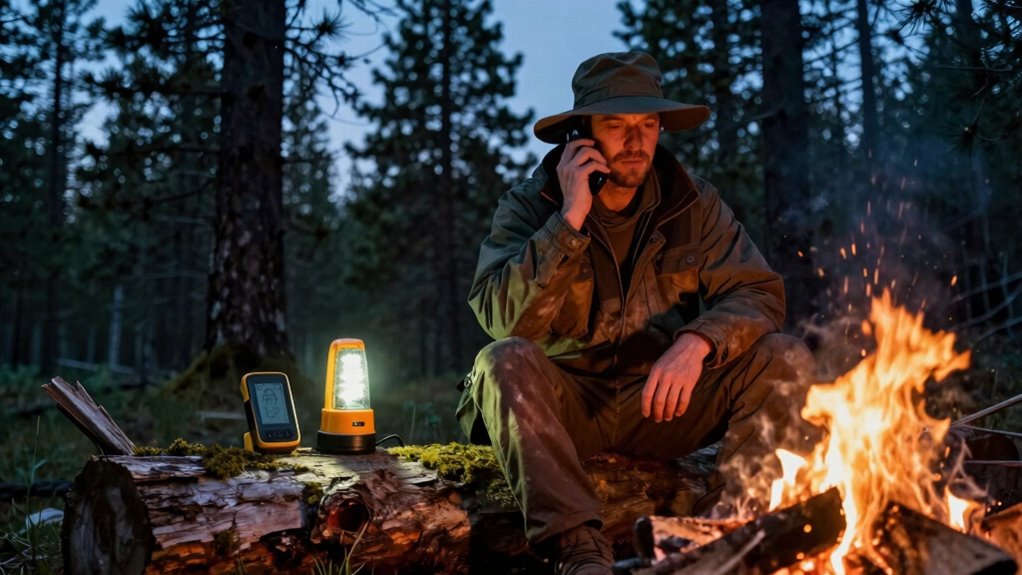
To stay safer on solo camps, always carry reliable communication devices like satellite messengers or emergency beacons, and make sure you understand local regulations. Set a schedule for regular check-ins with a trusted contact, and share your plans and expected return time. Keep devices charged and test them beforehand. Familiarize yourself with emergency protocols to avoid misunderstandings. If you follow these steps, you’ll be better prepared—discover more ways to enhance your safety on solo trips below.
Listen free for 30 days with Audible
Thousands of audiobooks and originals — cancel anytime.
As an affiliate, we earn on qualifying purchases.
Key Takeaways
- Share detailed itinerary and expected return time with a trusted contact before starting your trip.
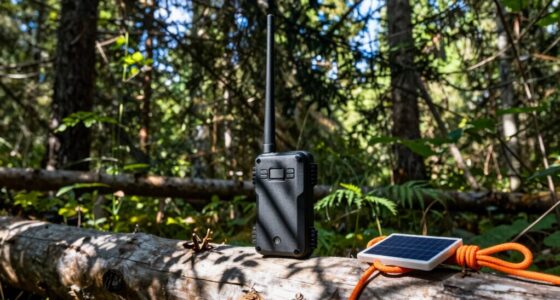
- Use satellite messengers or emergency beacons to maintain communication in areas with no cell service.
- Schedule regular check-ins with someone outside the trip to confirm safety and location.
- Familiarize yourself with local emergency protocols and device operation rules to ensure proper communication.
- Carry essential safety gear, including a first aid kit, whistle, and weather-appropriate clothing, to handle emergencies effectively.

Camping alone can be a rewarding experience, but it also requires extra caution to guarantee your safety. One of the most important steps you can take is to focus on emergency preparedness. Before you hit the trail, make sure you have a clear plan in case things go wrong. This includes knowing the location of the nearest help point or ranger station, carrying a fully charged cell phone with extra power sources, and having a reliable GPS device or map. Share your itinerary with a trusted friend or family member, including your expected return time, so someone knows where you are and can alert authorities if needed. Staying connected is essential, especially if you encounter an emergency, so set up a communication schedule with someone outside your trip. Regular check-ins, even just a quick message, can provide peace of mind and a safety net.
Another key element is gear selection, which directly impacts your safety and ability to communicate in emergencies. When choosing your gear, prioritize items that enhance your safety and facilitate communication. A well-stocked first aid kit, a whistle, and a flashlight are essentials, but consider adding a personal emergency beacon or satellite messenger, especially if you’re venturing into remote areas. These devices can transmit your location to rescue services without relying on cell service. Your gear should also include weather-appropriate clothing, a sturdy shelter, and a multi-tool or knife. Proper gear selection ensures you’re prepared for unexpected weather changes or injuries, reducing the risk of needing rescue. Additionally, understanding the capabilities of your projector technology can help you plan for entertainment or navigation in remote areas. It is also wise to familiarize yourself with emergency communication rules to ensure you can effectively use your devices during a crisis. Being aware of emergency communication regulations in your area can help prevent misunderstandings and ensure your signals are received by rescue teams. Knowing the local emergency protocols can further improve your response in critical situations, especially when combined with knowledge of communication devices and their proper use.
As an affiliate, we earn on qualifying purchases.
Frequently Asked Questions
What Are the Best Emergency Communication Devices for Solo Campers?
The best emergency communication devices for solo campers are satellite phones and personal locators. Satellite phones let you make calls from remote areas, ensuring you can reach help anytime. Personal locators, like GPS devices with emergency alert features, quickly send your location to rescue services. Together, these tools provide reliable communication, peace of mind, and faster rescue responses if an emergency arises, keeping you safer during solo camping adventures.
How Often Should I Check in With Someone During My Trip?
You should check in with someone at least once a day during your trip, respecting camping etiquette and maintaining environmental awareness. Regular check-ins guarantee someone can assist if needed and help you stay connected without disturbing the natural surroundings. Keep communication brief and considerate, and choose times that don’t disrupt wildlife or other campers. This balance keeps you safe while respecting the environment and fellow outdoor enthusiasts.
What Are Signs of Potential Danger to Watch For?
Watch for signs of potential danger like unusual animal behavior or sudden, unpredictable weather patterns—these are nature’s warning signs. If wild animals become restless or aggressive, or if the weather shifts suddenly, it’s time to reassess your safety. Keep an eye on your surroundings, stay alert, and trust your instincts. Recognizing these signals early helps you avoid trouble, turning the wilderness from a threat into an adventure you control.
How Do I Handle Communication Failures in Remote Areas?
When communication fails in remote areas, act quickly by using emergency signaling methods like whistles, mirrors, or flashlights to attract attention. Always have a contingency plan, such as a satellite phone or a pre-arranged check-in schedule, to guarantee help is reachable. Stay calm, conserve your resources, and follow your plan. Keeping these strategies in mind can greatly improve your safety and response time during communication breakdowns.
What Should I Include in a Safety Communication Plan?
You should include clear emergency contact protocols, ensuring someone knows your itinerary and check-in schedule. Detail how you’ll use reliable communication equipment, and regularly maintain it to prevent failures. Specify backup options like satellite phones or emergency beacons. Make sure your contacts understand your plan and how to reach you. Regularly test your devices and keep spare batteries or chargers handy, so you’re always prepared for unexpected situations.
emergency beacon for outdoor safety
As an affiliate, we earn on qualifying purchases.
As an affiliate, we earn on qualifying purchases.
Conclusion
Think of your solo camp as a ship sailing through calm waters. Good communication rules are your lighthouse, guiding you safely through potential storms. By staying connected and sharing your plans, you keep danger at bay and your adventure enjoyable. Remember, even the bravest sailors need a beacon to navigate safely. So, keep your communication strong, and your solo journey will be as smooth as a calm sea—exciting, peaceful, and well-protected.
As an affiliate, we earn on qualifying purchases.
As an affiliate, we earn on qualifying purchases.
NFL season / tailgating Picks
team gear
As an affiliate, we earn on qualifying purchases.