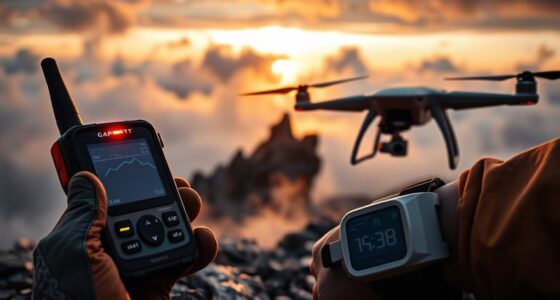
If your phone dies and you’re off-grid, rely on high-tech tools like GPS devices designed for outdoor navigation to guide your way. Use satellite messengers or personal locator beacons to send emergency signals if needed. Combine these with traditional skills, such as compass use, topographic maps, and natural landmarks, like mountains or distinctive rocks. Supplement your kit with solar or hand-crank chargers to keep devices powered. Keep exploring for more tips to stay safe in remote areas.
Key Takeaways
- Use GPS devices with topographic maps and waypoint marking for reliable navigation in remote areas.
- Rely on satellite messengers and Personal Locator Beacons (PLBs) for emergency communication and rescue signals.
- Apply traditional skills like compass reading and celestial navigation as backups when high-tech tools fail.
- Keep devices durable, fully charged, and consider alternative power sources like solar panels or hand-crank chargers.
- Recognize natural landmarks and environmental cues, such as terrain features and wildlife, to aid orientation without electronics.
Using GPS Devices Designed for Outdoor Navigation
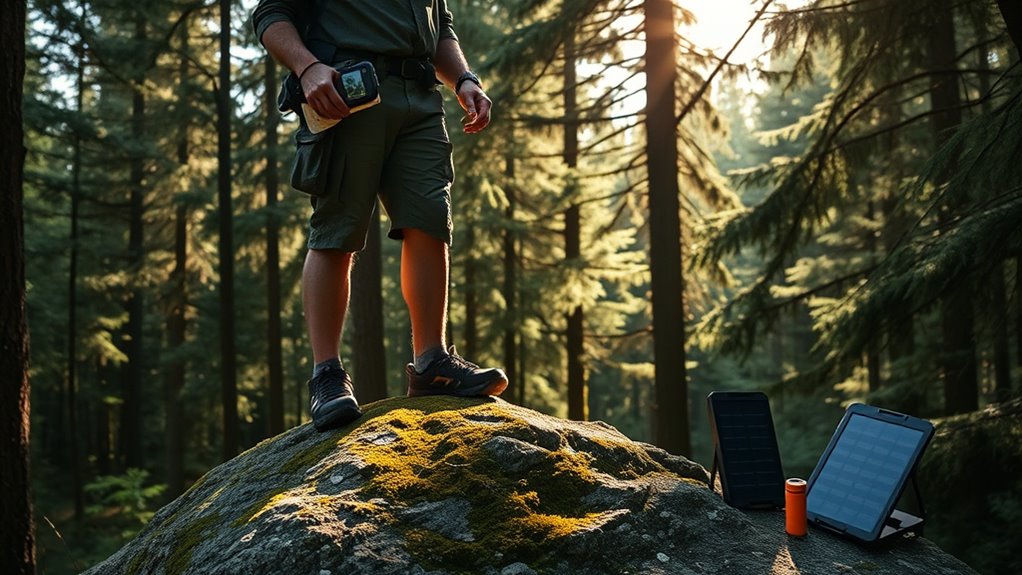
When venturing off-grid, using a dedicated GPS device designed for outdoor navigation can substantially boost your confidence and safety. These devices excel in GPS accuracy, providing precise location data even in remote areas. Unlike smartphones, they are built to withstand harsh conditions and often include features like topographic maps and waypoint marking. Many models also support satellite communication, ensuring you can access your location or send updates without relying on cellular networks. This makes them reliable tools for navigation where signals are weak or unavailable. With a high-quality GPS device, you gain the confidence to explore unfamiliar terrain safely, knowing your position is accurate and your routes are well-marked. Additionally, high-precision navigation technology ensures your routes are optimized and reliable, which is essential for confident, off-grid adventures.
Employing Satellite Messengers for Emergency Communication
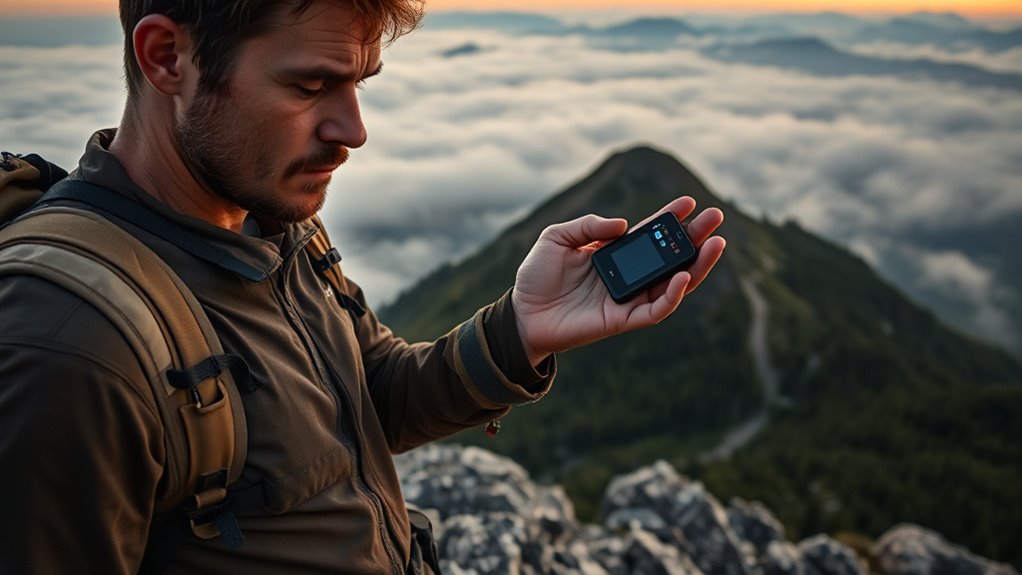
Choosing the right satellite messenger guarantees you can reach help when cellular networks are down. Learning how to send clear emergency messages maximizes your safety, but be aware of the device’s limitations in coverage and power. Understanding these factors helps you stay prepared and confident during off-grid adventures. Additionally, selecting devices built with energy-efficient technology ensures longer battery life and reliable performance in remote areas. Incorporating total‑cost clarity into your decision-making process can also help you select a device that offers the best value over its lifespan. Knowing how to implement encryption solutions to secure your communications further enhances your safety by protecting sensitive information from potential threats. Being familiar with simple, effective maintenance routines can also extend your device’s lifespan and ensure consistent performance when you need it most. Moreover, understanding off-grid power sources can help you maintain device functionality during extended excursions.
Satellite Device Selection
Selecting the right satellite messenger is essential for guaranteeing reliable emergency communication when you’re off-grid. You want a device that offers solid satellite coverage, easy operation, and excellent device durability to withstand tough conditions. When choosing, consider factors like battery life, ruggedness, and signal strength. A durable device can handle drops, moisture, and dust, ensuring it functions when needed most. Proper exfoliation can also help maintain the device’s performance over time by preventing dirt and debris buildup. Here’s a quick comparison:
| Feature | Importance |
|---|---|
| Device Durability | Ensures reliable performance in harsh environments |
| Battery Life | Keeps you connected longer during extended trips |
| Signal Strength | Guarantees communication even in remote areas |
| Ease of Use | Allows quick emergency activation when needed |
Prioritize these aspects to select a satellite device that keeps you safe off-grid.
Effective Emergency Messaging
Effective emergency messaging is essential when you’re off-grid, and satellite messengers make it possible to stay connected in remote areas. They utilize a satellite network to transmit your messages, ensuring you can reach emergency contacts even without cell service. With these devices, you can send predefined alerts, check in with loved ones, or request help instantly. To maximize safety, set up your emergency contacts beforehand and test your device regularly. Regular device testing is crucial to ensure your satellite messenger functions reliably when needed. Additionally, understanding the satellite network coverage can help you choose the right device for your needs. Being aware of the coverage area can help you plan your trips more effectively and avoid surprises. Remember, clear communication can be lifesaving in critical moments.
Usage and Limitations
While satellite messengers are powerful tools for emergency communication off-grid, understanding their usage and limitations helps guarantee you’re prepared when it matters most. To maximize battery life, practice battery conservation by turning off the device when not in use and lowering screen brightness. Keep your device charged with portable solar panels or extra batteries, especially during extended trips. Signal boosting can help improve connectivity in remote areas—position yourself in open spaces or near high ground to enhance signal strength. However, remember that satellite signals can be affected by weather, terrain, and obstructions, limiting effectiveness. Don’t rely solely on these devices; always have backup plans like traditional maps or survival skills. Knowing their capabilities and restrictions ensures you’re better equipped to handle emergencies confidently. Understanding satellite technology can further help you make informed decisions about their proper use and limitations.
Navigating With Traditional Compass and Topographic Maps
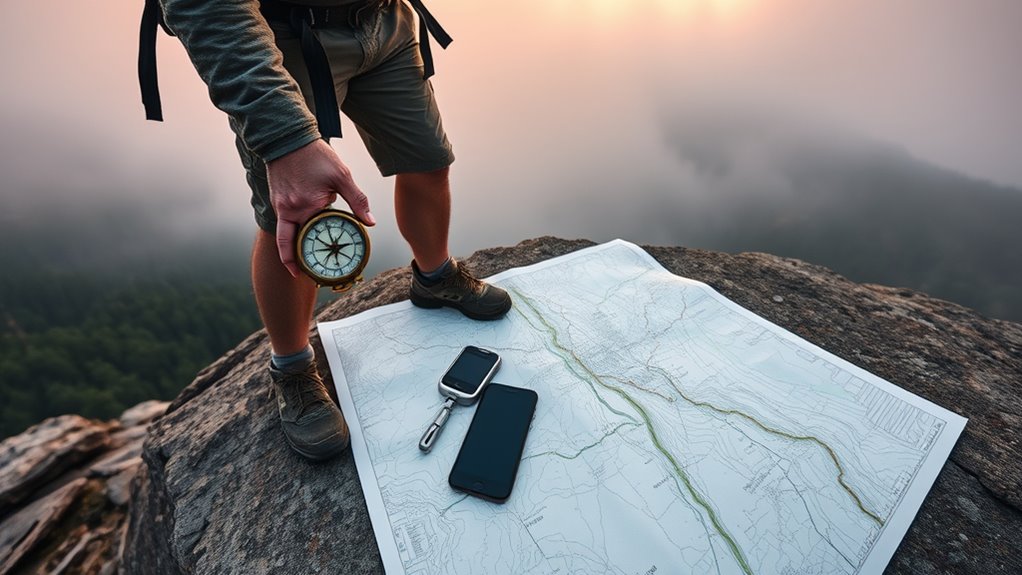
Using a traditional compass and topographic maps remains a fundamental skill for navigation, especially when high-tech tools fail or are unavailable. To navigate accurately, you need to understand magnetic declination— the difference between magnetic north and true north— and adjust your compass accordingly. Familiarity with celestial navigation can also help if the sun and stars are visible, allowing you to determine direction without a compass. When reading maps, identify landmarks and contour lines to assess your position and plan your route. Remember to keep your map oriented correctly and account for declination. Practice these skills beforehand to build confidence.
- Learn to read topographic maps and contour lines
- Adjust for magnetic declination in your compass
- Use celestial navigation when needed
Leveraging Solar-Powered and Hand-Crank Chargers
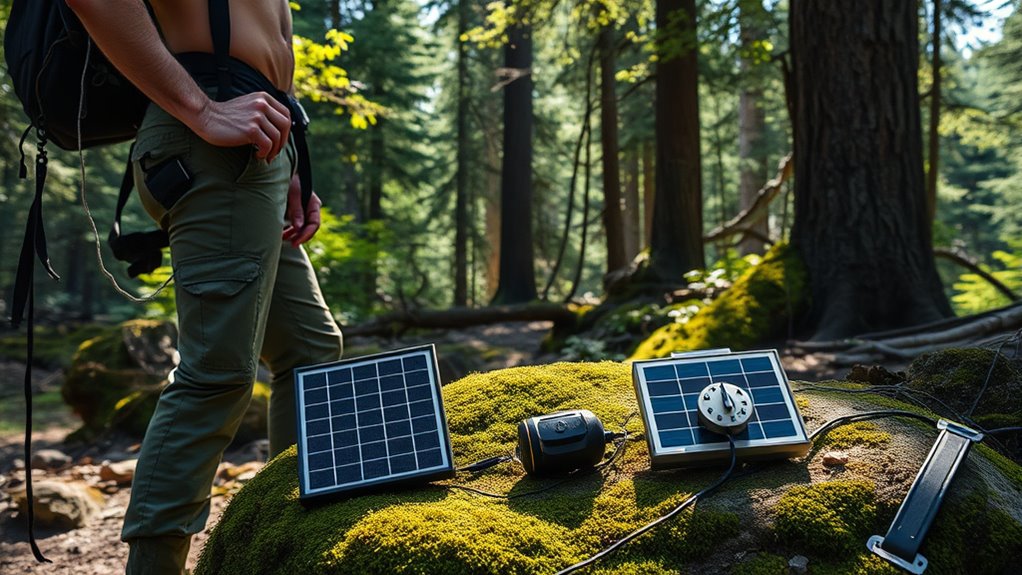
Solar panels vary in efficiency, affecting how quickly they charge your devices in different conditions. Hand-crank chargers provide a reliable backup, but their power output depends on how long you crank them. Understanding these factors helps you choose the best power source for your off-grid adventures. Being aware of battery technologies can help optimize your energy storage options for extended trips. Additionally, knowing how to maximize solar charging can improve your device’s power intake during limited sunlight. Proper charge management can also prolong your device’s battery life and ensure reliable power when you need it most. Incorporating energy conservation techniques into your routine can further extend your device’s usability in off-grid settings.
Solar Panel Efficiency
Have you ever wondered how to keep your devices charged when you’re off the grid? Solar panel efficiency plays a key role in maximizing energy from sunlight. To guarantee your solar-powered chargers perform well, focus on proper solar panel maintenance—keeping surfaces clean and free of debris boosts photovoltaic energy conversion. The angle and positioning of your panels also matter; aim for direct sunlight during peak hours. High-quality panels with good conversion rates help you get the most energy, even on cloudy days. Regularly check connections and avoid shading from trees or structures. Additionally, understanding tax implications of off-grid living can help you plan your energy setup more effectively. Ensuring your solar panel setup is optimized can significantly increase energy output, making off-grid adventures more manageable. Proper solar panel maintenance not only enhances efficiency but also extends the lifespan of your equipment. Incorporating solar panel monitoring systems can help you track performance and identify issues early, ensuring consistent power supply. Staying aware of battery storage options can further improve your off-grid energy resilience. By maintaining your solar panels properly, you’ll guarantee consistent power, making off-grid adventures more manageable.
Hand-Crank Power Output
When your solar-powered devices run out of juice, a hand-crank charger can be a reliable backup. These chargers convert manual effort into electrical power, making them essential off-grid tools. A solar charger is great during the day, but when sunlight’s scarce, a hand-crank option guarantees you stay connected. Some models combine a hand-crank with a wind generator, harnessing both human and natural energy sources for maximum output. To use, simply turn the crank steadily—each rotation generates enough power to charge your phone or small devices. While less efficient than solar, hand-crank chargers are durable and portable, perfect for emergencies. Incorporating off-grid power solutions such as hand-crank chargers and wind generators can provide a versatile, reliable energy source that keeps your devices alive when other options fail. Proper maintenance of energy-generating devices ensures they remain functional and ready when needed. Additionally, understanding the importance of proper aero guardians maintenance can help ensure your emergency equipment remains functional and ready when needed. Regularly checking and cleaning these power management systems can significantly enhance their longevity and efficiency. Combining these tools with wind generators offers a versatile, off-grid power solution that keeps your devices alive when other options fail. Incorporating essential oils into your routine can help maintain mental clarity and reduce stress during challenging times.
Utilizing Personal Locator Beacons (PLBs) for Rescue Signals

Personal Locator Beacons (PLBs) are essential tools for ensuring rescue teams can locate you quickly if you get lost or injured in remote areas. When activated, your personal beacon sends a distress signal via satellite, alerting rescue services to your exact location. This rapid communication can be life-saving, especially when cell service isn’t available. To maximize effectiveness, keep your PLB accessible and pre-programmed with your details. Remember, a clear rescue signal can markedly reduce rescue time. You should also register your beacon with authorities to guarantee it functions properly during emergencies. Using a personal beacon is a proactive step that boosts your safety. It’s a reliable backup when your phone fails or runs out of power, giving you peace of mind in the wild. Additionally, understanding satellite communication and how it works can help you better utilize your PLB in critical moments.
Relying on Altimeters and Barometers for Terrain Awareness

Altimeters and barometers are invaluable tools for terrain awareness, providing real-time data on elevation changes and atmospheric pressure. By monitoring altimeter calibration, you can detect subtle elevation shifts, helping you stay oriented. Barometers track barometric pressure trends, indicating upcoming weather changes or terrain features. Understanding these trends allows you to predict if you’re ascending or descending, even without visual cues. Keep your altimeter calibrated regularly to prevent errors. Use barometric pressure readings to confirm your location or identify landmarks. Here’s a quick reference:
| Altimeter Calibration | Barometric Pressure Trends | Terrain Indicator |
|---|---|---|
| Regular adjustments | Rising suggests ascent | Mountain peaks |
| Device drift | Falling suggests descent | Valleys |
| Calibration checks | Stable indicates level | Plateaus |
These tools can considerably improve your off-grid navigation accuracy.
Harnessing Wildlife and Natural Landmarks for Orientation
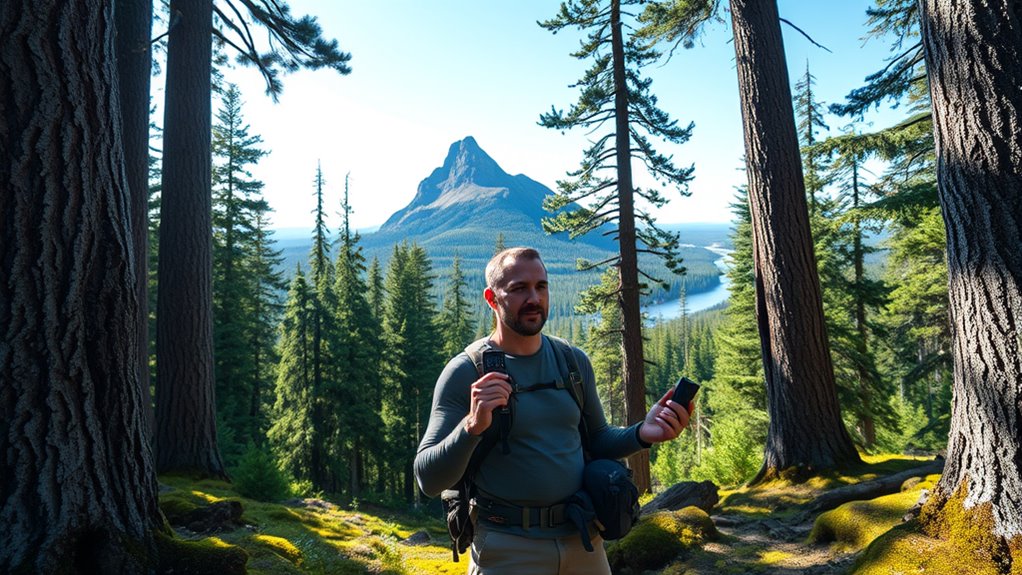
Wildlife and natural landmarks can serve as reliable guides when orienting off-grid. By observing animal tracks, you can determine recent activity and direction—follows trails left by deer or foxes to water sources or paths. Recognizing natural landmarks like distinctive rock formations, unique tree clusters, or mountain peaks helps you maintain your bearings. These features are often visible from afar and remain relatively constant, making them useful reference points.
Wildlife tracks and natural landmarks help you navigate when signals fail.
- Spot animal tracks to follow animal movement and find water or shelter
- Use prominent natural landmarks to maintain your route
- Recognize terrain features that repeat or stand out in the landscape
These cues can help you navigate confidently, even when your phone is dead or signals are unavailable.
Implementing Offline Maps and Navigation Apps
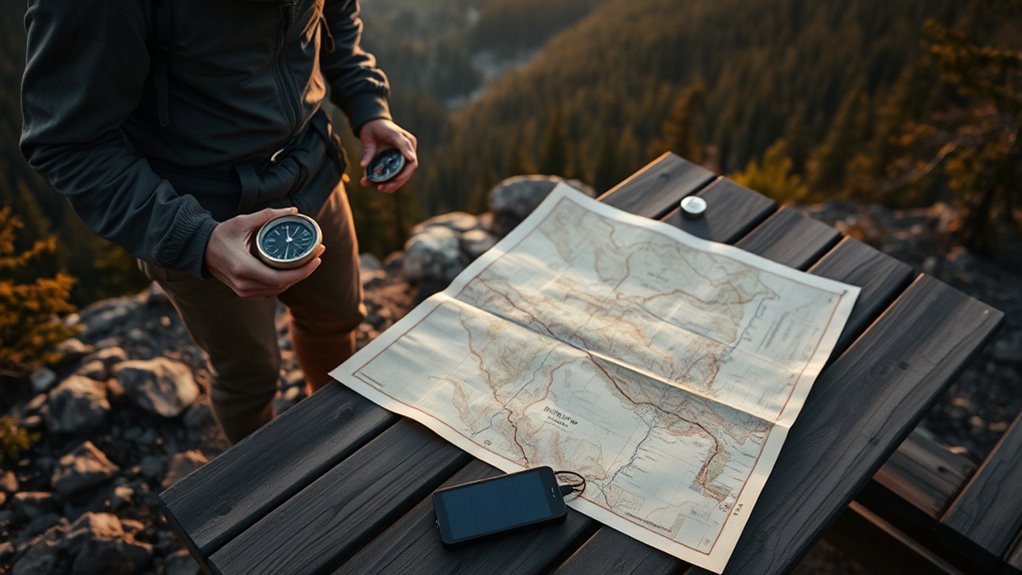
When venturing off-grid, having reliable navigation tools is essential, especially since signals can be unpredictable. An offline map saves your day by providing detailed terrain and trail information without needing an internet connection. Before heading out, download a navigation app that supports offline maps, ensuring you have access to your planned route at all times. These apps often allow you to mark waypoints, track your progress, and navigate turn-by-turn directions even without service. Keep your device fully charged, and consider carrying a portable power bank. Familiarize yourself with the app’s features beforehand so you can quickly reference maps and your location when signals drop. Offline maps and navigation apps are your best backup, helping you stay on course and reach your destination safely.
Preparing a Survival Kit With Essential High-Tech Tools
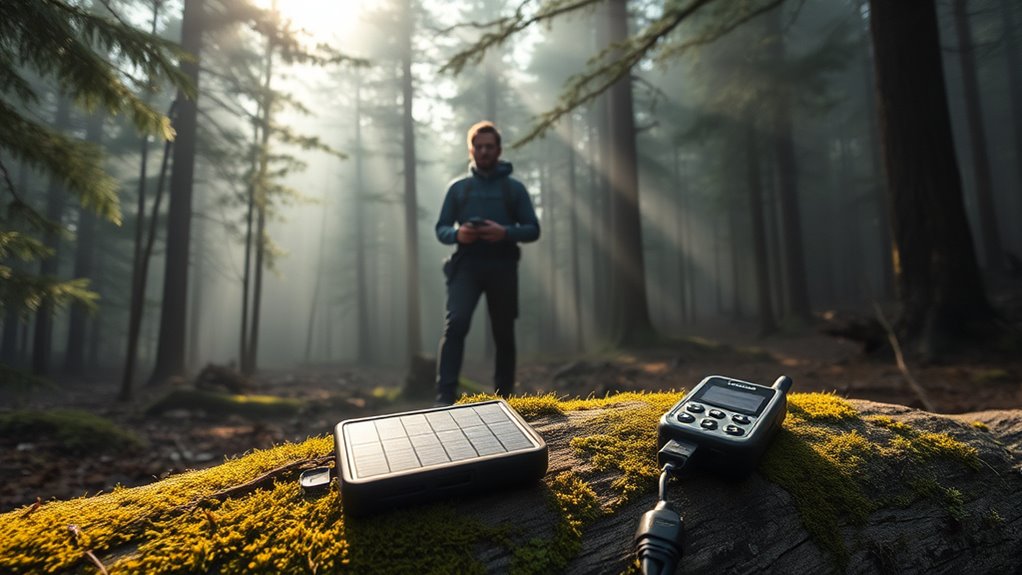
To guarantee your safety off-grid, assembling a survival kit with essential high-tech tools is crucial. Focus on compact, reliable gear that keeps you connected and safe. Use waterproof backpacks to protect your equipment from moisture and rough conditions. Include solar lanterns to ensure illumination without relying on batteries, especially during extended stays. Pack multi-functional tools like portable chargers and emergency radios for communication and navigation. Consider a GPS device with offline maps to prevent getting lost and a power bank to keep your devices charged. These high-tech essentials enhance your independence and safety, helping you navigate even the toughest environments confidently. Prioritize durability and versatility to make your survival kit effective and manageable.
Frequently Asked Questions
How Accurate Are Satellite Messengers in Remote Areas?
Satellite messengers are quite accurate in remote areas, typically providing location data within 10 meters. Their satellite accuracy depends on the device’s quality and network coverage, but generally, they maintain a reliable remote signal. You can trust them for precise tracking and emergency communication, even far from cell towers. However, always remember that weather conditions or obstructions might slightly affect the remote signal’s strength and accuracy.
Can Solar Chargers Work Efficiently During Cloudy or Rainy Days?
Solar chargers can still work during cloudy or rainy days, but their solar efficiency drops because weather impact diminishes the amount of sunlight reaching the panels. You might find that charging takes longer or is less reliable, so it’s wise to carry extra power sources or a high-capacity power bank. Staying prepared ensures your devices stay powered, even when weather conditions aren’t ideal.
What Is the Battery Life of Personal Locator Beacons?
A personal locator beacon typically has a battery lifespan of about 12 to 24 hours of continuous use. You should know that these devices can handle approximately 300 to 500 charging cycles before needing a battery replacement. When you’re off-grid, it’s essential to conserve power and activate the beacon only in emergencies, ensuring it remains functional when you need it most. Proper maintenance extends its reliability in vital moments.
Are Offline Maps Reliable Without Internet Connectivity?
Offline maps are generally reliable when there’s no internet, but be aware of offline map limitations like outdated information. They don’t update automatically, so if your maps aren’t current, you might get inaccurate directions. Before heading off-grid, download the latest offline map updates. Always carry a physical map as a backup, since digital tools can sometimes mislead, especially in unfamiliar terrain or when data is outdated.
How Do I Troubleshoot High-Tech Navigation Tools in Emergencies?
Imagine your navigation tool flickering, uncertain. First, manual calibrate it to guarantee accuracy, adjusting for compass drift or sensor errors. Check for signal interference from nearby metals or electronics that could disrupt reception. If issues persist, switch to backup methods like a compass or paper map. Keep your device’s firmware updated beforehand, and always carry a physical map as a fail-safe in emergencies.
Conclusion
When you’re off-grid, stay prepared with reliable tools, stay aware of your surroundings, and stay calm under pressure. Use GPS devices to pinpoint your location, employ satellite messengers to call for help, and rely on traditional compasses and maps to stay oriented. Harness solar chargers to keep your gear powered, and always have a survival kit ready. By combining high-tech tools with natural cues, you increase your chances of safety, survival, and successful navigation.