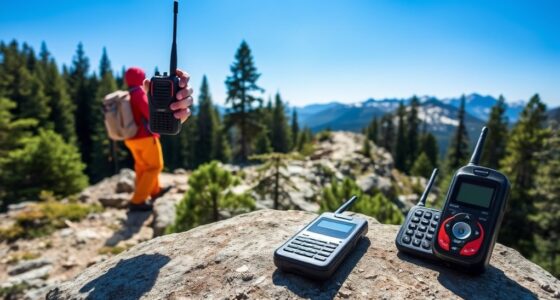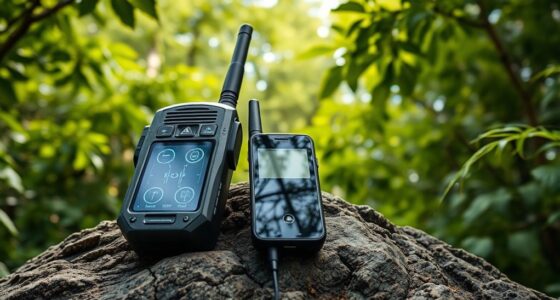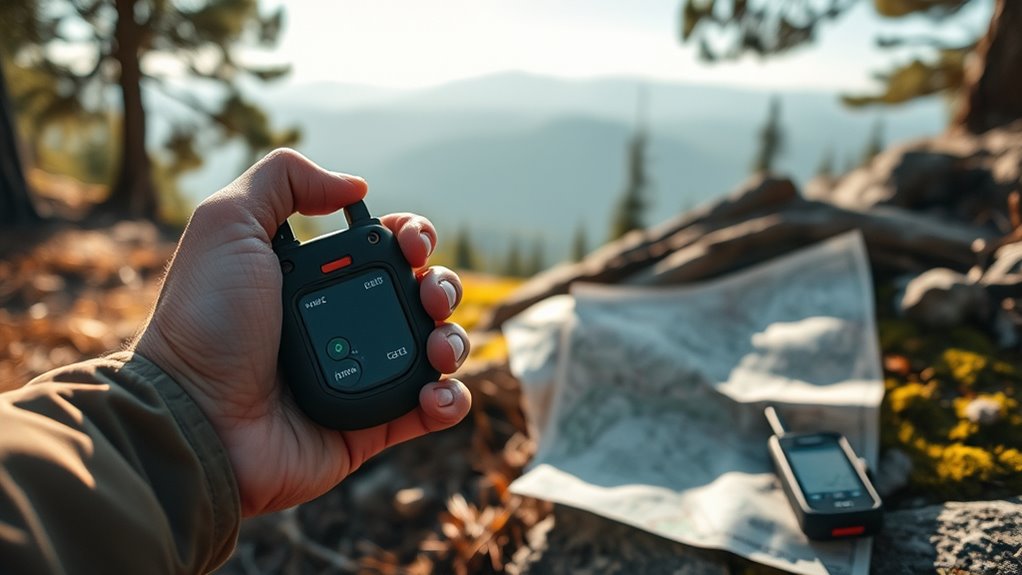

To use your PLB, guarantee it’s fully functional by checking the battery, antennas, and registration details before heading out. When needed, open the protective cover, hold it skyward, and press and hold the activation button until the device transmits your distress signal. Keep it steady and away from obstructions. Proper setup and understanding are vital, and if you follow the tips ahead, you’ll be prepared to operate it confidently in an emergency.
Key Takeaways
- Ensure your PLB is fully charged, registered, and in working condition before heading into the wilderness.
- Activate the device only in genuine emergencies by opening the cover, checking status, and holding the activation button skyward.
- Hold the PLB upright and aim the antenna skyward, keeping it uncovered and free from obstructions during activation.
- Confirm the device’s status indicators show proper functioning and that registration details are current for effective rescue.
- After activation, monitor signals and avoid unnecessary movement to maintain clear transmission until rescue is confirmed.
Understanding Your PLB’s Features and Components
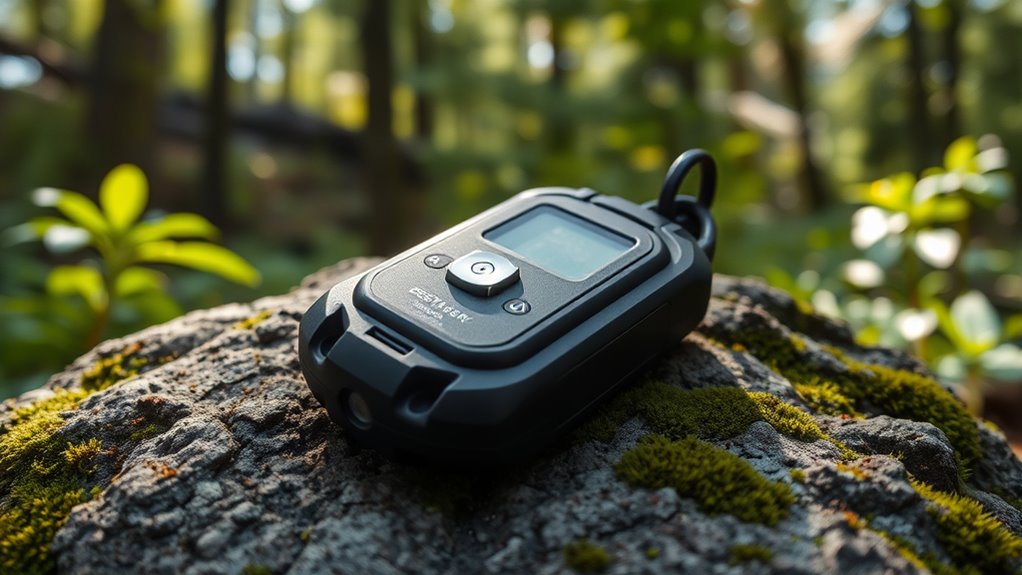
To effectively use your Personal Locator Beacon (PLB), it’s essential to understand its main features and components. The device battery powers the entire unit, so knowing its status and replacement procedures guarantees your PLB stays operational when needed. The antenna is another critical component; proper antenna orientation maximizes signal strength and ensures reliable transmission during emergencies. Keep the antenna pointed upward and unobstructed for optimal performance. Familiarize yourself with the device’s controls, such as the activation button and status indicators, so you’re ready in a crisis. Understanding these features helps you operate the PLB confidently, guaranteeing it functions correctly when you need it most. Regular checks of the battery and antenna setup are vital for peace of mind during your outdoor adventures. Additionally, knowing how to maintain and test your PLB ensures it remains reliable when every second counts. Properly calibrating your device and understanding signal transmission principles further enhances its effectiveness in critical moments. Being aware of battery health monitoring allows you to address potential issues proactively before an emergency arises. Moreover, understanding the different operating modes of your PLB can optimize its performance in various scenarios.
Preparing Your PLB Before Heading Out
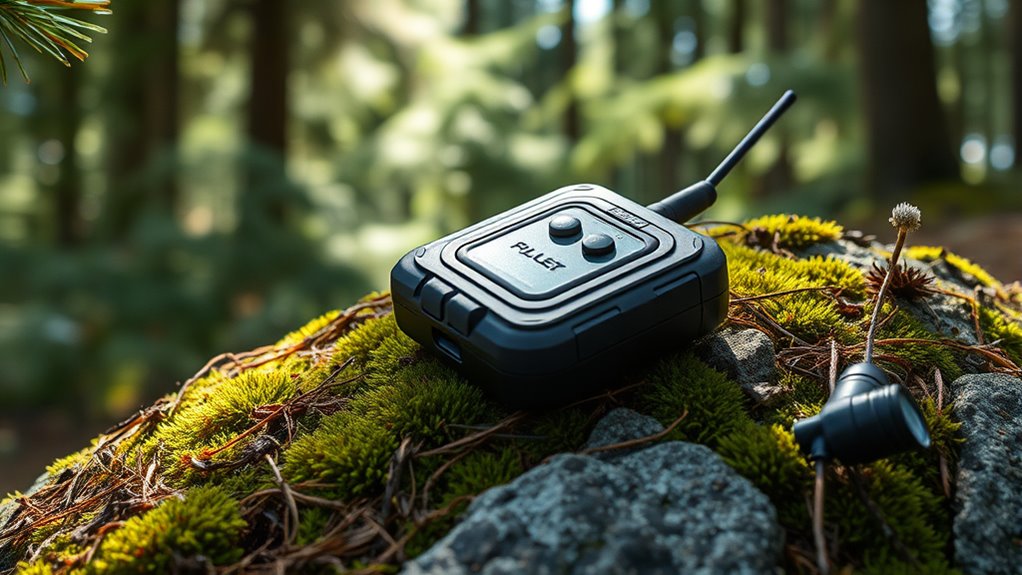
Before heading out, make sure your PLB is fully prepared for use. Start with device maintenance by inspecting it for any damage or debris that could interfere with its operation. Check all buttons and antennas to ensure they’re functioning properly. Pay close attention to battery management; ensure the battery is fully charged or has fresh batteries if replaceable. Some PLBs have built-in rechargeable batteries—charge them according to the manufacturer’s instructions before your trip. Confirm that the device’s registration details are up to date and stored correctly. Performing these simple checks helps guarantee your PLB will work reliably in an emergency. Device reliability is crucial for peace of mind in outdoor settings. Proper preparation reduces the risk of device failure when you need it most, giving you peace of mind during your outdoor adventure. Additionally, understanding PLB operation can help you troubleshoot common issues and ensure optimal performance when it matters most. Regularly testing your device according to manufacturer guidelines can further enhance device performance and ensure readiness. To maximize the effectiveness of your PLB, familiarize yourself with the local emergency services and ensure your device’s registration details are up to date in case of an emergency.
Recognizing When to Activate Your Device
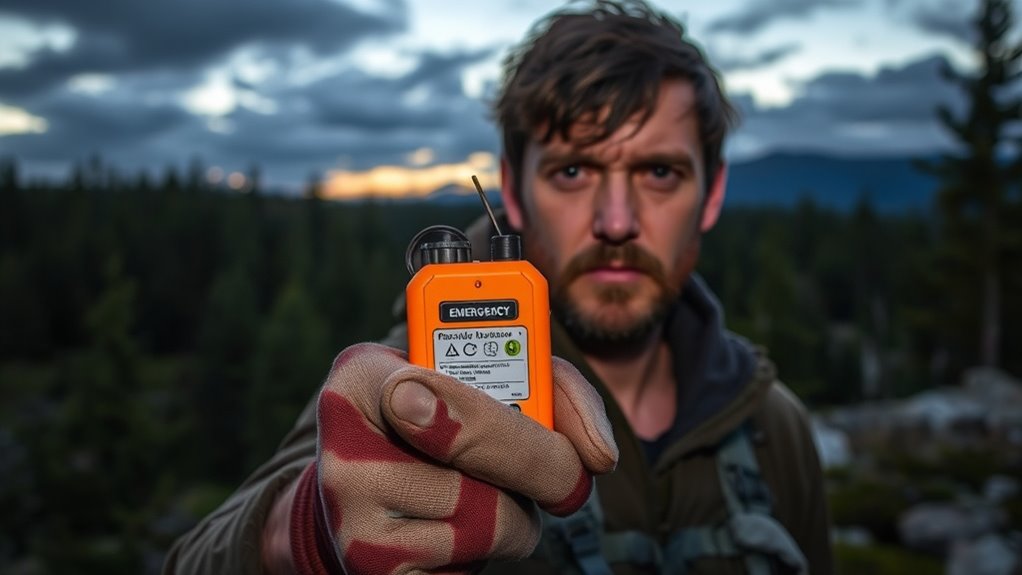
You should activate your PLB when you notice signs of an emergency, like injury, disorientation, or severe weather. If you’re lost or injured and can’t get help, it’s time to press the button. Even if there’s no signal or assistance seems unreachable, activating your device can still be vital.
Signs of Emergency
Recognizing the signs of an emergency is essential for knowing when to activate your Personal Locator Beacon (PLB). If you encounter navigation challenges, such as losing your bearings or cannot find your way back, it’s time to consider help. Sudden weather changes, like storms or high winds, can also signal danger. Additionally, if you’re feeling physically unwell, injured, or exhausted beyond recovery efforts, activating your PLB is critical. Being aware of manipulation tactics that might cloud your judgment can also be vital in high-stress situations, ensuring you respond appropriately. Here are key signs to watch for: 1. Navigation challenges that leave you unsure of your location 2. Severe weather considerations threatening safety 3. Signs of injury or deteriorating health that can’t be managed alone Trust your instincts—if these signs occur, it’s time to activate your PLB.
Lost or Injured
When traversing in remote areas, being aware of your condition and surroundings can help you decide when it’s time to activate your PLB. If you’re lost or injured, assess your situation carefully. Use navigation techniques like landmarks, compass, or GPS to confirm your location, and consider weather conditions that might worsen your situation. If you’re unable to move safely, or if injuries prevent you from continuing, it’s essential to activate your PLB immediately. Don’t wait until the situation becomes desperate; recognizing early signs of distress allows prompt rescue. Keep in mind that worsening weather, such as a storm or sudden drop in temperature, can escalate your emergency, making activation urgent. Staying alert and making quick decisions can be lifesaving.
No Signal or Help
Even if your PLB is activated, there may be situations where signals don’t reach rescue services immediately. Signal failure can occur due to dense terrain, weather, or technical glitches, delaying rescue coordination. Recognizing when to activate your device is vital. Consider these signs:
- No response after a few minutes of attempting to call for help manually.
- Persistent silence despite proper device activation and correct placement.
- Remaining in an unsafe situation where waiting for rescue is too risky.
In these cases, you should activate your PLB immediately. Trust your judgment—if staying put or seeking help seems futile, activating your PLB helps guarantee rescue teams are alerted, even when signals seem blocked or delayed.
How to Properly Turn On Your PLB

To properly turn on your PLB, start by opening the device’s protective cover to access the power button. Before powering it up, make certain your battery maintenance is up to date; check the battery status indicator if available. Proper battery care guarantees the device will function when needed. Once the cover is open, press and hold the power button until the device powers on. If it doesn’t turn on, verify that the battery is charged or replace it if necessary. Remember, device registration is essential before use, so confirm your registration details are current with the issuing authority. Turning on your PLB correctly ensures it’s ready to transmit an emergency signal when needed, and maintaining it properly prolongs its lifespan and reliability. Additionally, familiarizing yourself with the device’s safety features can help prevent accidental activation or damage. Incorporating smart safety protocols can further enhance your preparedness during outdoor adventures.
Correctly Activating the Emergency Signal
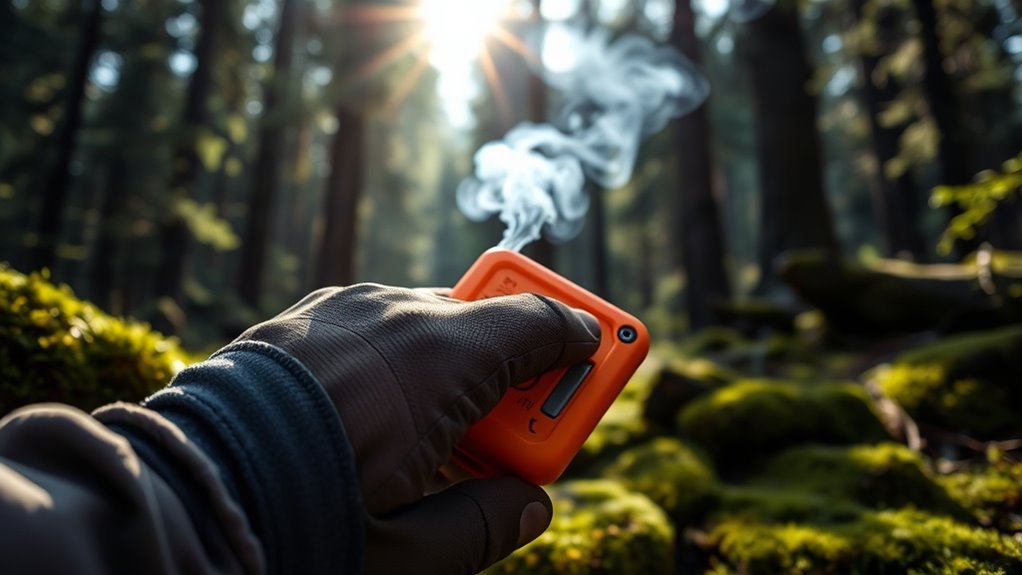
Before activating your PLB, make sure it’s an actual emergency. Follow the proper activation steps carefully to guarantee your signal is sent correctly. Confirm the situation and proceed promptly to get the help you need. Proper device setup ensures reliable transmission, so familiarize yourself with your PLB’s features beforehand. Additionally, understanding emergency procedures can make a crucial difference during urgent moments. Knowing how to interpret signals can also help you respond appropriately once assistance is on the way. Developing strong problem-solving skills can assist in troubleshooting device issues in critical situations. Being aware of ventilation considerations can help prevent device overheating during extended use.
Confirm Emergency Situation
Confirming an emergency situation is a crucial step before activating your Personal Locator Beacon (PLB). You need to confirm the situation truly warrants distress signaling to avoid false alarms. First, perform a signal confirmation by checking for signs of danger, like injuries, severe weather, or lost conditions. Next, verify your status by evaluating your location and resources. Finally, conduct a quick status verification with your team or companions to confirm everyone’s safety. Only after these steps, if the threat remains, proceed with activating the PLB. This process minimizes false alarms and ensures your distress signal is clear and justified. Remember, a well-verified emergency not only saves time but also increases the chances of swift rescue. Incorporating advanced rescue technologies can further improve the accuracy of your situation assessment.
Follow Activation Procedures
Activating your Personal Locator Beacon correctly is crucial to guarantee your distress signal is received promptly and accurately. Before activation, ensure your device maintenance is up to date, and perform a quick signal testing to confirm the beacon functions properly. When you’re ready, follow the manufacturer’s activation steps carefully—usually, this involves flipping a switch or pressing a button until the indicator light confirms activation. Keep the beacon steady and hold it still to maximize signal strength. Avoid unnecessary movement, which can disrupt transmission. Remember, a properly activated PLB transmits a clear emergency signal to rescue authorities. Regular device maintenance and signal testing before your trip help guarantee the beacon works flawlessly in a real emergency. Proper activation can make all the difference in saving your life.
Ensuring Your Location Is Accurately Transmitted

To guarantee your location is accurately transmitted, it’s vital to position your PLB properly and follow the manufacturer’s instructions carefully. Proper placement ensures optimal satellite communication and improves signal accuracy. Keep the device in an open area, away from dense trees or metal objects that could block signals. Here are key tips:
- Hold the PLB upright, aiming it skyward for clear satellite contact.
- Avoid covering the antenna or shielding it with clothing or gear.
- Activate the device only when necessary to conserve battery life and ensure a strong signal.
Monitoring Your PLB After Activation
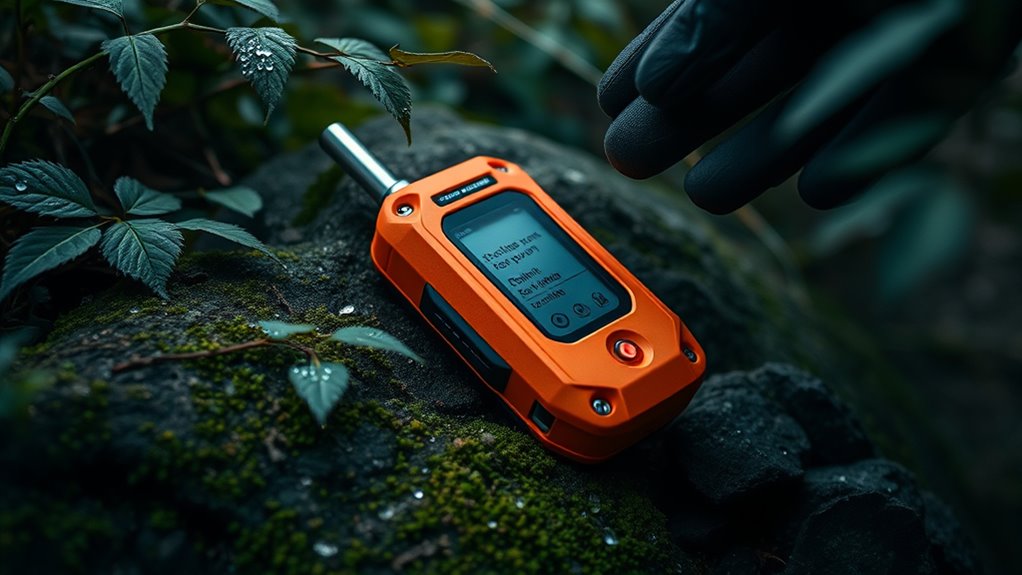
Once your PLB is activated, keeping a close eye on its status is vital to guarantee help is on the way. Regularly check the device’s battery maintenance to verify it has enough power to transmit your signal effectively. A weak or depleted battery can delay rescue efforts or cause the PLB to fail altogether. Additionally, perform signal testing if possible, to confirm your beacon is transmitting correctly. Many PLBs have diagnostic features or indicators that show if the device is functioning properly. Avoid touching or adjusting the device unnecessarily once activated, but stay attentive to any signals or status lights that confirm ongoing transmission. Monitoring these aspects helps ensure your PLB remains operational until professional rescue teams arrive. Incorporating battery preservation techniques and other connected safety devices with your emergency gear can further enhance your preparedness. Awareness of emergency communication systems can also improve your response in critical situations. Regular device maintenance ensures long-term reliability and readiness in emergency scenarios. Additionally, understanding rescue procedures can help you stay calm and effective while awaiting assistance.
Troubleshooting Common Issues During Activation

Troubleshooting common issues during activation can prevent delays in rescue efforts and guarantee your device functions correctly when it matters most. If your PLB isn’t activating properly, start by checking for battery issues—ensure the battery is fully charged and correctly installed. Next, consider signal interference; metal objects, dense foliage, or electronic devices nearby can block signals, so move to an open area if possible. Additionally, verify that you’re following the proper activation procedure, pressing and holding the button correctly. Properly understanding signal transmission principles can help you identify and overcome obstacles that hinder communication with rescue satellites. Also, ensuring your device is within the operating temperature range is crucial, as extreme temperatures can affect performance. Being aware of water resistance features can prevent damage during outdoor use. Recognizing device compatibility with other gear can also improve your chances of successful activation and transmission. Remember, understanding these factors can significantly improve rescue communication during emergencies. In summary: 1. Confirm the battery is charged and properly installed. 2. Move to an open space to reduce signal interference. 3. Follow the correct activation steps as per your device’s manual.
Tips for Safe and Effective Use in Emergency Situations
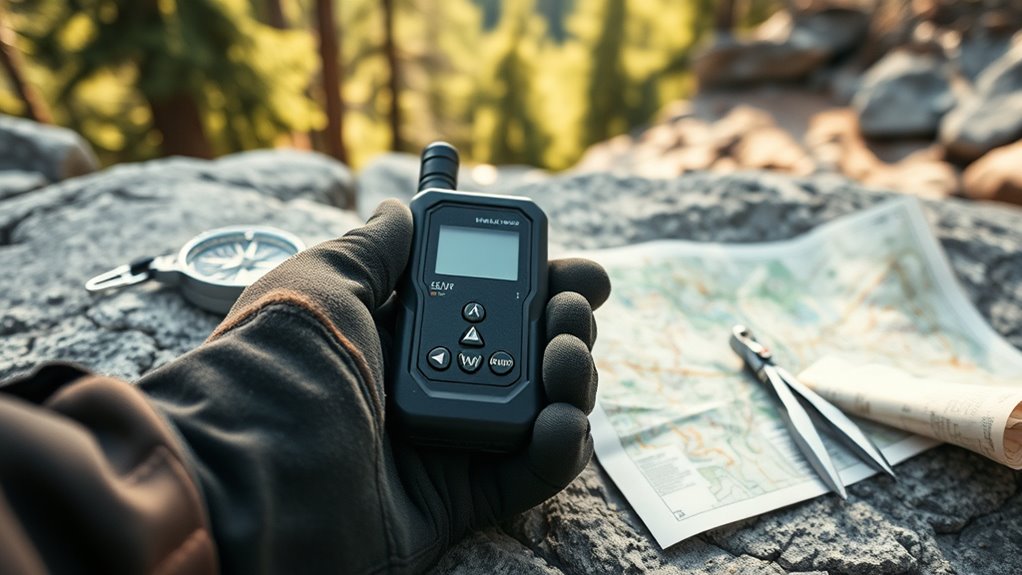
Using your PLB effectively in emergencies requires quick, confident action. Before heading out, verify your device is properly maintained—check batteries, antenna connections, and overall gear readiness. Regular gear maintenance guarantees your PLB functions when needed most. When activating, follow established communication protocols: clearly identify your location, provide concise details, and stay on the line with rescue services if possible. Keep your device accessible and protected from damage, so it’s ready to use at a moment’s notice. Avoid unnecessary delays or mishandling during activation; swift, deliberate actions save lives. Practice your emergency procedures periodically, so you’re familiar with the process. Proper gear maintenance combined with clear communication protocols maximizes your chances of a successful rescue and keeps you safe in critical moments.
Frequently Asked Questions
Can I Test My PLB Without Triggering a Real Distress Signal?
Yes, you can do PLB testing without triggering a real distress signal. Most PLBs have a dedicated test mode allowing you to perform a safe PLB testing. During this process, you’ll activate the test, which sends a signal cancellation after confirming the device’s functionality. Always follow your manufacturer’s instructions for testing, and remember to cancel the test signal properly to avoid any false alerts or unnecessary rescue operations.
How Long Does a Typical PLB Battery Last During Continuous Use?
A typical PLB battery lasts about 24 hours of continuous use, but it’s essential to check its battery lifespan regularly. Unlike smartphones, PLB batteries usually don’t drain quickly with normal use, so follow the replacement schedule provided by the manufacturer—often every 5 years. If you keep it active or test it frequently, expect to replace the battery sooner, ensuring your device’s reliability when you need it most.
Is There a Way to Cancel an Accidental Activation?
Yes, you can cancel false alarms on your PLB by following the device’s emergency procedures, which typically involve turning it off or disabling the alert system. If you accidentally activate it, immediately notify the appropriate authorities or rescue services to prevent false alarms and guarantee quick response. Familiarize yourself with your PLB’s specific instructions to efficiently cancel false alarms and avoid unnecessary rescue operations.
Will Weather Conditions Affect the Plb’s Signal Transmission?
Did you know that 70% of signal failures are due to weather impact? Weather conditions can considerably affect your PLB’s signal transmission. Heavy rain, snow, or dense clouds may cause signal interference, making it harder for rescue teams to locate you. While PLBs are designed to work in extreme conditions, it’s wise to be aware that severe weather can diminish their effectiveness. Always check forecasts before heading out into challenging weather.
How Often Should I Register My PLB With Authorities?
You should register your PLB with authorities immediately after purchase and update the registration annually or whenever your contact or location details modify. This registration frequency ensures authorities notification is current, which speeds up your rescue response in emergencies. Keep a record of your registration details and renew them on time so that rescue teams can quickly locate you when needed, maximizing your safety during outdoor adventures.
Conclusion
Remember, your PLB is your ultimate lifeline in emergencies—like having a superhero on speed dial. By understanding its features, preparing it properly, and knowing exactly when and how to activate, you boost your safety exponentially. Stay calm, follow the steps, and trust your device to broadcast your distress signals when every second counts. With your PLB ready, you turn potential disaster into a manageable challenge—because in the wild, it’s your most crucial tool for survival.