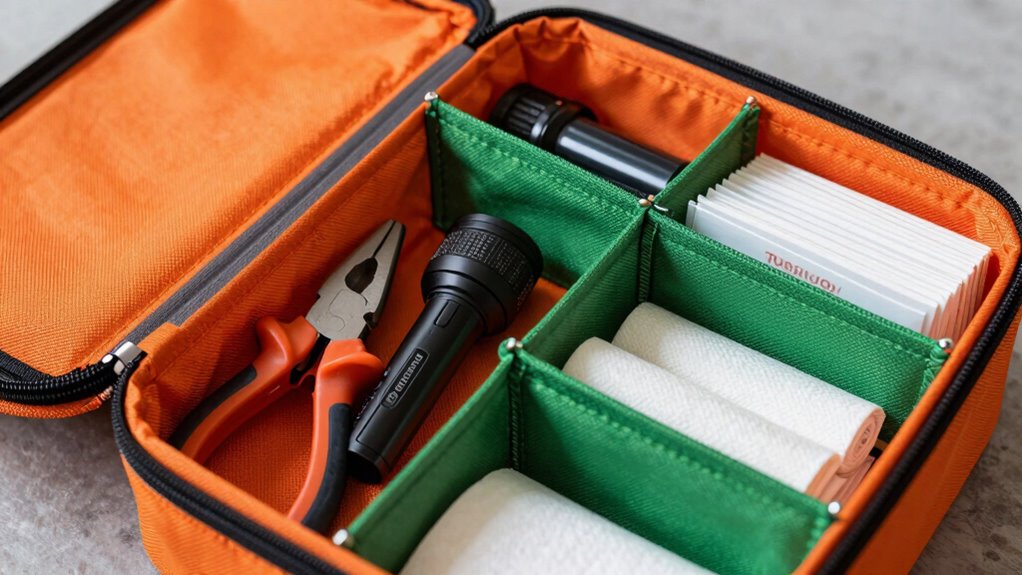

To build faster access into your emergency kit, choose durable, portable containers with clear labels and multiple compartments for organization. Assign specific spots for critical items like first aid supplies and communication devices, placing them at the top or in easy-to-reach pockets. Regularly check, practice, and adjust your setup to eliminate delays. Incorporating eco-friendly products and understanding your needs will make your kit more efficient—keep going to discover how to optimize your emergency preparedness further.
Key Takeaways
- Use labeled, compartmentalized containers for quick identification and access to essentials.
- Prioritize critical items like first aid and communication tools in easily reachable locations.
- Regularly practice emergency scenarios to identify and eliminate access delays.
- Keep frequently used supplies near the top or in dedicated, visible pockets.
- Ensure the kit is durable and portable for rapid deployment in various environments.
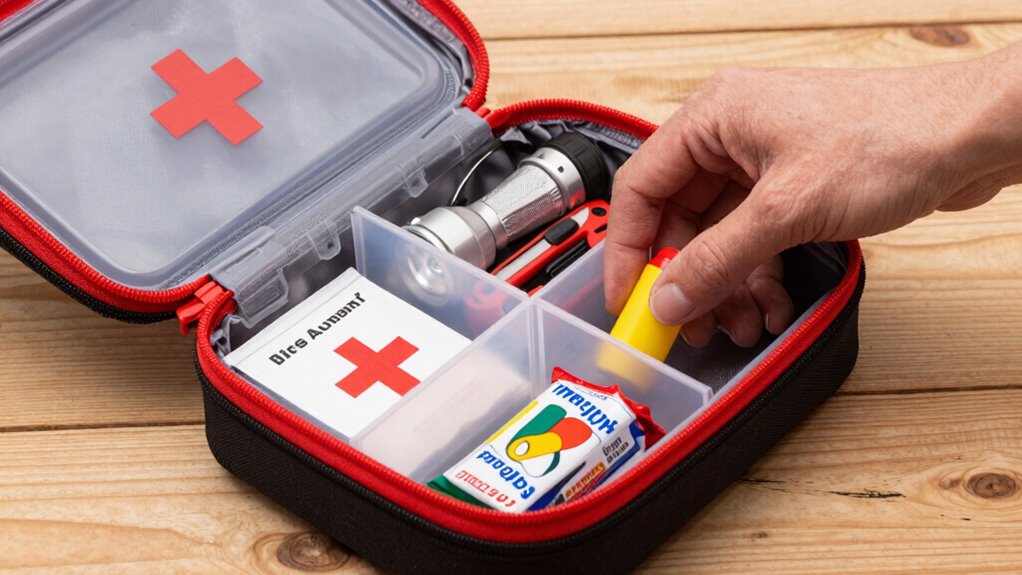
When emergencies strike, quick access to your kit can make all the difference. Whether it’s a minor injury or a more serious situation, being able to reach your supplies promptly can save time, reduce stress, and even save lives. To ensure you can grab what you need without delays, focus on organizing your emergency kit for maximum speed and efficiency. Start by selecting a container that’s easy to open and portable, like a rugged plastic box or a backpack with multiple compartments. Clear labeling on the outside helps you identify the kit instantly, especially in chaotic moments. Inside, compartmentalize your supplies so everything has a designated spot—the last thing you want is rummaging through a jumble of items when seconds count.
You should also prioritize accessibility for critical items like first aid supplies, emergency communication devices, and tools needed to signal for help. Keep essential first aid items—bandages, antiseptic wipes, pain relievers, and scissors—near the top or in a dedicated, visible pocket. This way, if someone is injured, you can quickly access what’s needed to provide immediate care. For example, organized storage can significantly reduce the time it takes to locate and retrieve vital supplies. Including proper labeling on your supplies can further streamline access and prevent confusion during stressful moments. For emergency communication, include a charged cell phone, portable charger, and a whistle or signal mirror. Store these in a separate, waterproof section to prevent damage, and make sure they’re within easy reach. Consider adding a printed list of emergency contacts and instructions, laminated to withstand moisture. Regularly checking your kit and biodiversity awareness can also inspire you to include environmentally friendly supplies and practices. Incorporating environmentally conscious products can help reduce your ecological footprint during emergencies. Additionally, understanding emergency preparedness principles can help you better tailor your kit to your specific needs and potential scenarios. Practice accessing your kit swiftly—simulate scenarios where you need to grab and use items under stress. This will help you identify any obstacles or delays and adjust your organization accordingly. Remember, the goal is to minimize the time it takes to find critical items, especially those related to first aid and emergency communication, which are often the most vital during crises.
As an affiliate, we earn on qualifying purchases.
Frequently Asked Questions
What Materials Are Best for Quick-Release Fasteners?
For quick-release fasteners, choose materials like stainless steel or high-strength plastic, as they provide durability and reliable quick release mechanisms. Stainless steel is sturdy and corrosion-resistant, making it ideal for demanding environments. High-strength plastics, like nylon or polypropylene, are lightweight and still offer durability. Using these materials guarantees your fasteners are both durable and easy to operate, providing faster access during emergencies.
How Often Should Emergency Kits Be Restocked?
You should restock your emergency kits at least once a year—preferably before your forgetful neighbor’s birthday. Use sturdy storage containers to keep everything organized, and a clear labeling system so you don’t mistake your bandages for snacks. Regular checks guarantee your supplies are fresh and functional, ready when disaster strikes. Don’t wait until it’s too late—schedule a yearly refresh and keep your kit truly emergency-ready.
Can Digital Solutions Improve Emergency Kit Access?
Digital solutions can definitely improve emergency kit access. With digital integration, you can organize and track your kit’s contents easily, ensuring everything’s up-to-date. Mobile alerts notify you when supplies run low or need replacing, saving time during emergencies. These tools streamline access, reduce search time, and enhance preparedness, making it quicker and more efficient for you to find what you need when every second counts.
What Are Common Mistakes in Emergency Kit Organization?
You often make mistakes like poor organization or ignoring kit placement, which slows access. Forgetting to use clear storage labels can cause confusion during emergencies, while improper kit placement—such as high shelves or tucked-away corners—hinders quick retrieval. To improve, make certain your emergency kit is stored in a visible, easily accessible location, and label compartments clearly. Regularly review and update your labels and placement to maintain fast access when it matters most.
How to Ensure Kits Are Accessible for People With Disabilities?
To guarantee your emergency kits are accessible for people with disabilities, you should include clear, visible accessible signage and ensure it’s easily readable. Install auditory alerts nearby to guide those with visual impairments. Keep kits at reachable heights, use large, high-contrast labels, and avoid obstructions. Regularly test these features, and involve people with disabilities in planning to address specific needs, making sure everyone can access emergency supplies quickly.
first aid kit organizer with compartments
As an affiliate, we earn on qualifying purchases.
As an affiliate, we earn on qualifying purchases.
Conclusion
Now, imagine your emergency kit as a treasure chest—hidden away and hard to reach. Instead, make it your quick-access vault, where essentials are just a grab away. When seconds matter, ease of access can mean the difference between chaos and calm. Don’t let complexity slow you down; streamline your kit so it’s both secure and instantly reachable. Because in emergencies, speed isn’t just a convenience—it’s your lifeline.
waterproof emergency communication device
As an affiliate, we earn on qualifying purchases.
As an affiliate, we earn on qualifying purchases.
portable emergency supplies backpack
As an affiliate, we earn on qualifying purchases.
As an affiliate, we earn on qualifying purchases.