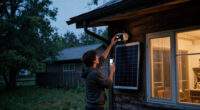
In open terrain, weather stations and lightning detectors are vital for your safety. They constantly monitor atmospheric conditions and detect lightning activity, providing real-time alerts before storms fully develop. This early warning helps you act quickly—seeking shelter, postponing outdoor activities, or securing equipment. Without natural cover, you’re more vulnerable to severe weather, making these tools indispensable for effective storm management. Keep exploring to discover how these devices help you stay prepared and protected.

Get emergency and outdoor gear delivered free with Prime
- Fast, free delivery on millions of items
- Prime Video, Amazon Music and more included
- Member-only deals all year
Key Takeaways
- They provide real-time storm data, enabling early warnings in areas with minimal natural shelter.
- Lightning detectors alert to strikes miles away, enhancing safety before storms fully develop.
- Weather stations monitor atmospheric conditions to predict storm development and track movement.
- Continuous data collection helps plan outdoor activities and improve emergency preparedness.
- They support rapid response and safety measures, reducing injury and property damage in open terrain.
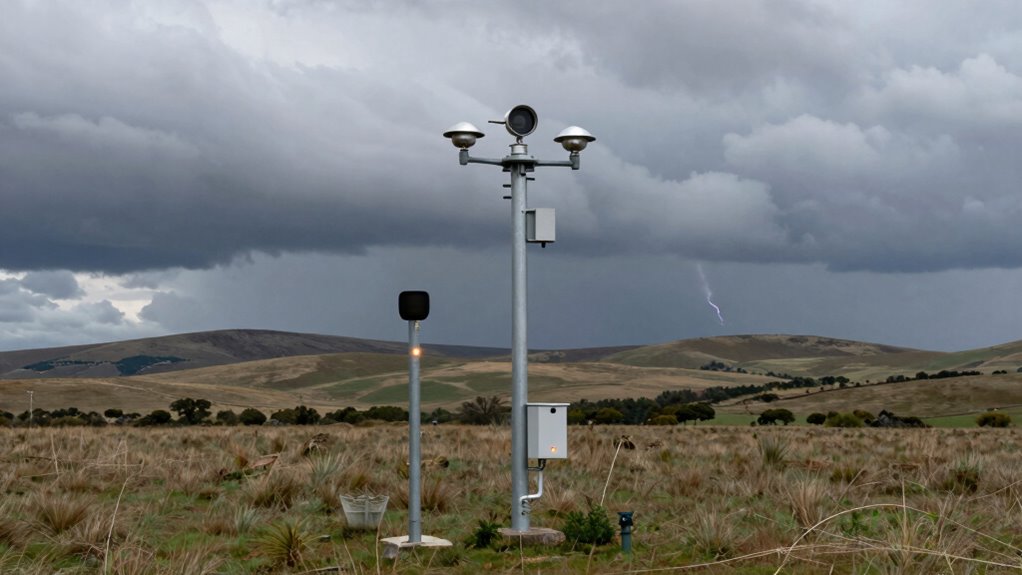
Have you ever wondered how weather stations and lightning detectors work together to keep you safe? In open terrain, where the landscape offers little natural shelter, these tools become essential for effective storm tracking and guaranteeing safety protocols are in place. Weather stations constantly monitor atmospheric conditions, measuring temperature, humidity, wind speed, and barometric pressure. This data helps you understand when a storm is brewing or intensifying. Lightning detectors, on the other hand, are specialized devices that sense electromagnetic pulses produced by lightning strikes. When these two systems work in tandem, they provide an extensive picture of approaching storms, allowing you to prepare and respond accordingly.
In open areas, storms can develop rapidly, and the lack of natural obstructions means lightning and strong winds can pose significant threats. Storm tracking is critical here, and weather stations play a pivotal role by analyzing data trends to predict storm movement. When combined with lightning detectors, which identify nearby lightning activity, you gain real-time insights into the immediate danger. This integrated approach helps you implement safety protocols more effectively, such as seeking shelter or evacuating vulnerable locations before the storm reaches its peak. It’s not just about predicting the weather; it’s about actively managing risk.
Lightning detectors enhance your ability to respond quickly. They alert you the moment lightning activity increases, even if the storm is still several miles away. This early warning allows you to activate safety protocols—like moving to a secure shelter, postponing outdoor activities, or securing equipment—before the storm becomes more dangerous. In open terrain, where visibility might be limited and natural cover sparse, these alerts are crucial for avoiding injuries or damage. The immediacy of lightning detection complements the broader storm tracking provided by weather stations, giving you a layered defense against severe weather. Additionally, understanding real-time data is vital for making timely safety decisions during rapidly evolving weather situations.
Moreover, these tools help you understand storm patterns, so you can anticipate future weather events. This foresight is invaluable for planning outdoor activities, conducting safety drills, or managing emergency responses. Additionally, understanding weather monitoring allows you to interpret data trends more effectively and make better-informed decisions. By continuously monitoring atmospheric conditions and lightning activity, you’re better equipped to make informed decisions that prioritize safety. Furthermore, integrating storm prediction techniques with these tools can enhance preparedness for upcoming weather events, reducing potential hazards. The collaboration between weather stations and lightning detectors creates a proactive safety environment, especially in open terrain, where the risks are higher and quick action is often necessary. This combination also emphasizes the importance of rapid response in emergency preparedness, ensuring timely actions are taken to minimize hazards. Ultimately, their combined use ensures you’re not just reacting to storms but actively managing your safety with confidence and precision.
weather station with lightning detection
As an affiliate, we earn on qualifying purchases.
As an affiliate, we earn on qualifying purchases.
Frequently Asked Questions
How Accurate Are Weather Stations in Remote Open Terrains?
Weather stations in remote open terrains can be quite accurate, but their precision depends on proper sensor calibration and reliable data transmission. You need to regularly calibrate sensors to guarantee they respond correctly to environmental changes. Additionally, maintaining robust data transmission methods prevents data loss or delays. When these elements are well-managed, your weather station provides trustworthy readings, helping you make informed decisions about weather conditions in open terrains.
Can Lightning Detectors Predict the Exact Location of a Strike?
Lightning detectors can’t predict the exact location of a strike, but they excel in strike localization, helping you pinpoint where lightning occurs. Imagine a wildfire safety team using strike localization data to identify lightning hotspots in real-time, enabling swift response. Lightning prediction remains challenging, but detectors provide vital information to enhance safety and preparedness, especially in open terrains where lightning strikes can have serious consequences.
What Is the Typical Lifespan of Weather Station Equipment Outdoors?
You can expect outdoor weather station equipment to last around 5 to 10 years, but this depends on factors like sensor calibration and exposure to elements. Regular maintenance guarantees sensors stay accurate, and checking data transmission helps catch issues early. Extreme weather can shorten equipment lifespan, so investing in durable, weather-resistant models and performing routine upkeep keeps your station functioning effectively longer.
How Do Weather Stations Differentiate Between Various Weather Phenomena?
Imagine your weather station detects a sudden drop in temperature and increased humidity. It differentiates these phenomena through specialized sensors, which are calibrated regularly for accuracy. Data transmission from these sensors to your system helps analyze patterns, confirming if it’s a cold front or a storm. By accurately identifying weather phenomena, you can respond promptly, ensuring safety and proper planning in open terrain.
Are There Portable Weather Stations Suitable for Temporary Setups?
Yes, there are portable weather stations perfect for temporary weather monitoring in open terrain. These compact setups are easy to carry and quick to deploy, making them ideal for short-term use during outdoor events, field research, or emergency response. They typically include essential sensors for temperature, humidity, wind speed, and lightning detection, providing real-time data to help you stay informed and make safe decisions in dynamic weather conditions.
outdoor lightning detector device
As an affiliate, we earn on qualifying purchases.
As an affiliate, we earn on qualifying purchases.
Conclusion
By embracing weather stations and lightning detectors, you enhance safety, stay savvy, and seize the serenity of open terrain. These tools transform uncertainty into understanding, giving you the power to prevent peril and promote peace. Remember, preparedness prompts protection—so stay vigilant, vigilant, and vigilant. When weather warnings work wisely, worry wanes, and your outdoor adventures remain safe, sound, and sensational. Stay smart, stay safe, and let technology take the trouble out of tough terrain.
weather station for storm monitoring
As an affiliate, we earn on qualifying purchases.
As an affiliate, we earn on qualifying purchases.
lightning alert system for open terrain
As an affiliate, we earn on qualifying purchases.
As an affiliate, we earn on qualifying purchases.
Fall Picks
fall essentials
As an affiliate, we earn on qualifying purchases.