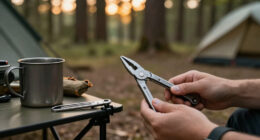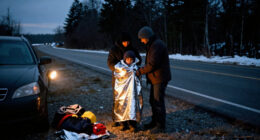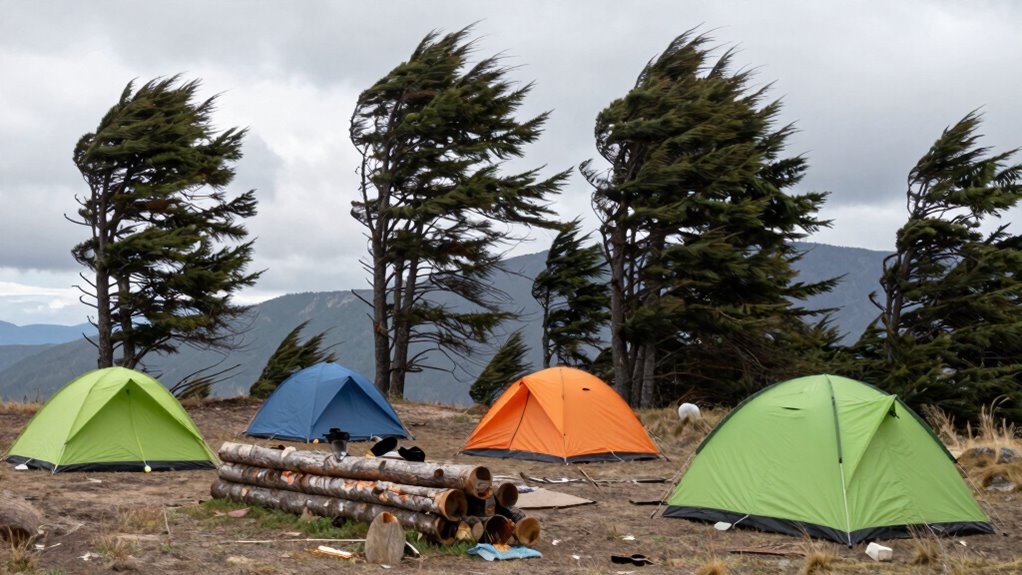

When camping in wind-prone areas, you should always pick a site with natural windbreaks and avoid setting up under large branches. Secure your gear with sturdy stakes driven at 45 degrees and tighten all lines to prevent acting like sails. Keep an eye on weather updates and be ready to move if conditions change. Regularly check and reinforce your setup to stay safe and comfortable. Keep going, and you’ll discover even more ways to stay safe in windy conditions.

Get emergency and outdoor gear delivered free with Prime
- Fast, free delivery on millions of items
- Prime Video, Amazon Music and more included
- Member-only deals all year
Key Takeaways
- Always select sheltered camping sites with natural windbreaks to reduce exposure to strong winds.
- Regularly inspect and reinforce stakes, poles, and guylines to prevent failure during gusts.
- Secure all loose gear and campsite items to prevent them from becoming projectiles or hazards.
- Monitor weather conditions actively and be prepared to adjust or seek shelter quickly.
- Recognize signs of changing wind patterns and respond promptly to minimize safety risks.
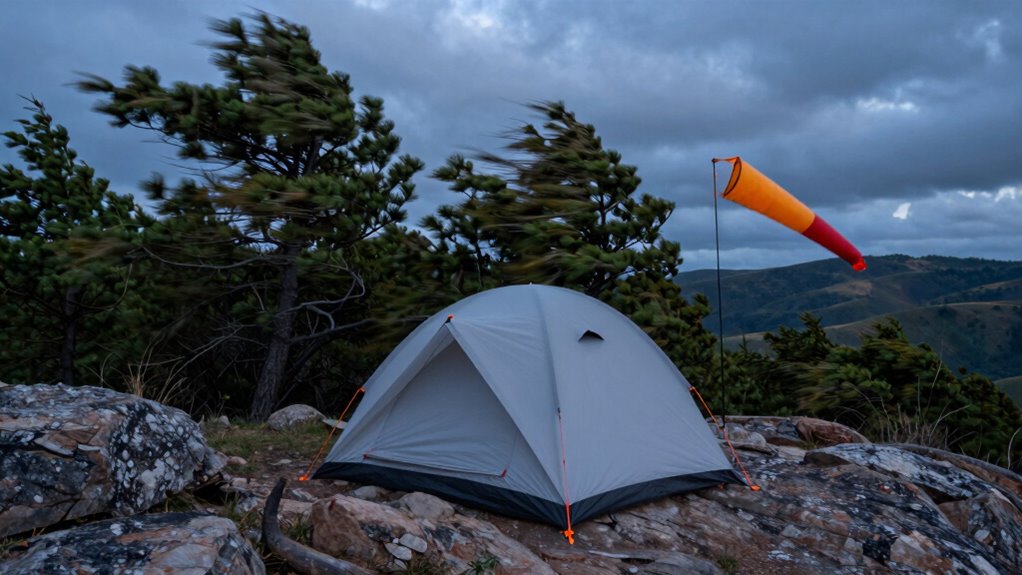
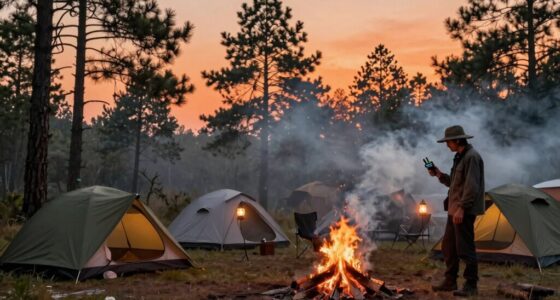
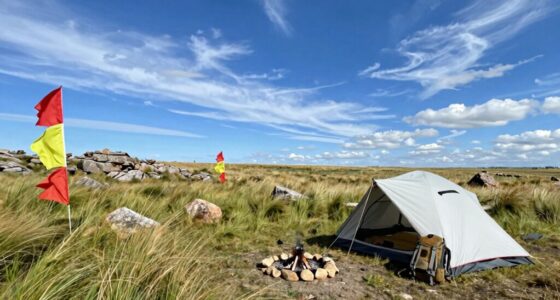
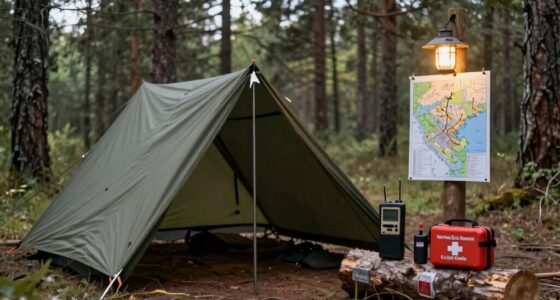
When camping in windy conditions, taking proactive steps to protect yourself and your gear is crucial. Wind safety becomes a top priority because gusts can easily turn a relaxing trip into a dangerous situation if you’re unprepared. One of the most important aspects to consider is tent stability. A well-secured tent isn’t just about comfort; it’s about safety. If your tent isn’t stable, it can collapse or blow away, exposing you to the elements and increasing the risk of injury or discomfort. To enhance tent stability, always choose a site that offers natural windbreaks like trees or hills, but avoid setting up directly under large branches that could fall. Use sturdy stakes and guy lines, and ensure they are driven deep into the ground. Tighten all lines properly; loose lines can turn into sails, catching the wind and destabilizing your shelter. Additionally, checking your gear before setting up is essential, as wind can cause minor issues to become major problems if your equipment isn’t in good shape. Wind can cause loose or worn stake loops to slip, and damaged poles may bend or break under pressure. Pack extra stakes and guylines so you can reinforce your tent or other structures if needed. When anchoring your tent, try to angle stakes at 45 degrees for better hold. If the terrain is soft or sandy, consider using deadman anchors or burying stakes in heavy objects like rocks or logs to improve stability. Ensuring your gear is properly maintained can also reduce the risk of sudden failures during high winds, preventing accidents, and protecting your overall safety. Furthermore, it’s wise to secure loose items around your campsite as wind can easily turn them into hazards or projectiles. Staying informed about weather conditions is also vital; wind can change suddenly, and knowing when a storm or high wind warning is issued allows you to make quick adjustments or seek safer shelter. Keep your phone or a weather radio handy, and listen for updates. Proper preparation and awareness can greatly reduce wind-related risks and ensure a safer, more enjoyable outdoor experience despite the gusty conditions. By prioritizing wind safety and ensuring tent stability, you protect yourself, your gear, and your overall camping experience, making your outdoor adventure safer and more enjoyable despite the gusty conditions.
As an affiliate, we earn on qualifying purchases.
Frequently Asked Questions
How Can I Tell if My Campsite Is Prone to High Winds?
You can tell if your campsite is prone to high winds by checking the wind speed forecast before you arrive. Look at weather forecasts for the area, paying attention to wind advisories or warnings. Also, observe the terrain—exposed ridges or open fields tend to experience stronger winds. When you arrive, notice how the trees and surrounding landscape respond to the breeze, giving you a real-time sense of potential wind exposure.
Are There Specific Materials Better for Wind-Resistant Tents?
They say “a good defense is the best offense,” and that’s true for tents too. Opt for tents made with durable tent fabrics that incorporate windproof technology, like ripstop nylon or polyester with reinforced seams. These materials are more resistant to tearing and can withstand high winds better. Investing in a tent with wind-resistant features guarantees you stay safe and comfortable, even when the wind picks up unexpectedly.
What Are the Signs of Wind Damage to Camping Gear?
You’ll notice signs of wind damage on your camping gear, like torn tent fabric or bent tent poles, indicating a need for tent reinforcement. Keep an eye out for compromised seams or leaks, which suggest gear waterproofing has failed. If your tent or gear shows these signs, address them promptly to prevent further damage, ensuring your equipment stays durable and reliable in windy conditions.
How Do Wind Conditions Affect Fire Safety at Camp?
A stitch in time saves nine, so stay vigilant. Wind conditions, especially gust patterns, can quickly spread sparks and embers, increasing fire risk. Wind chill lowers temperatures, making fires harder to control, while gusts can blow flames toward dry brush or tents. Always clear around your fire, keep a water source nearby, and monitor wind changes. By doing so, you considerably reduce the chance of wildfires and ensure everyone’s safety.
Can Wind Exposure Impact Wildlife Behavior Near Campsites?
Wind exposure can considerably impact wildlife behavior near campsites by causing wildlife disturbance and shelter disruption. As wind gets stronger, animals may become more stressed, alter their usual routines, or seek shelter elsewhere. You might notice increased movement or noise from wildlife trying to escape the wind. To minimize these effects, set up your campsite away from dense vegetation or open areas, and respect wildlife habitats to avoid unnecessary disturbance.
As an affiliate, we earn on qualifying purchases.
Conclusion
By understanding wind exposure, you’re like a sailor steering through open waters—more aware of the gusts and breezes that can sway your camping experience. Keep your tent anchored, select sheltered spots, and stay vigilant to wind shifts. With these tips, you’ll navigate the gusty days confidently, turning unpredictable weather into just another part of your adventure. Remember, the wind may be a mighty force, but with preparation, you hold the map to a safe, enjoyable trip.
As an affiliate, we earn on qualifying purchases.
portable weather radio for camping
As an affiliate, we earn on qualifying purchases.
As an affiliate, we earn on qualifying purchases.
Halloween Picks
halloween
As an affiliate, we earn on qualifying purchases.