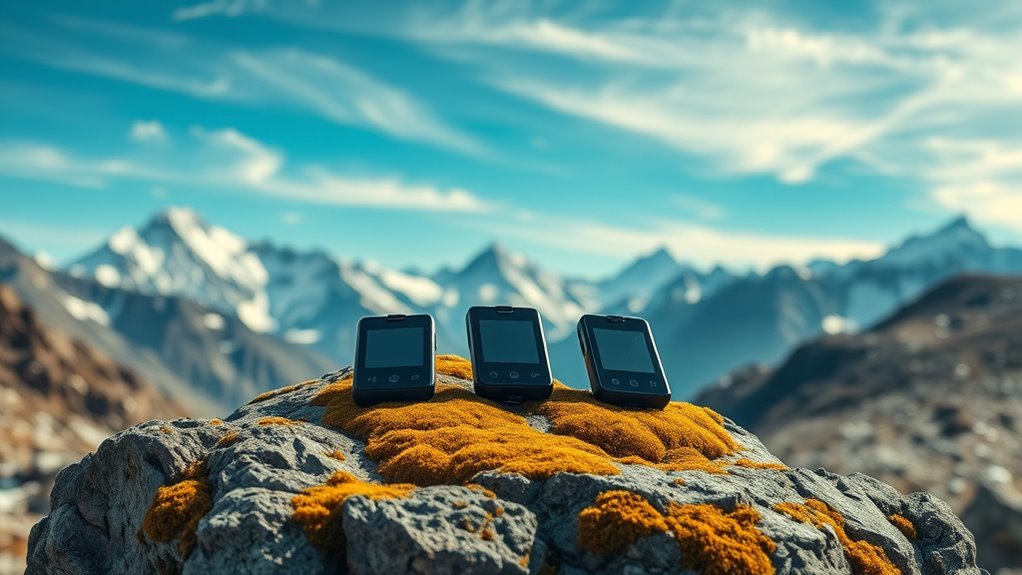

If you’re seeking reliable satellite messengers for off-grid living, I recommend the Garmin inReach Mini 2 for its compact size, two-way messaging, and emergency SOS features. For internet access in remote spots, the Starlink Mini offers high-speed, global coverage with easy setup. The Tri Cascade VOS 5G modem provides blazing-fast connectivity for those with cellular networks. Keep exploring to discover how to choose the best device based on your needs and environment.
Key Takeaways
- Choose devices supporting global satellite networks like Iridium or Starlink for reliable worldwide coverage.
- Prioritize models with long battery life and power options, such as solar compatibility, for extended off-grid use.
- Ensure two-way messaging and SOS features are included for emergency communication and safety.
- Opt for compact, lightweight, and rugged designs to enhance portability and durability in harsh outdoor environments.
- Consider subscription costs, device features, and ease of use to maintain consistent connectivity in remote locations.

Garmin inReach Mini 2, Lightweight and Compact Satellite Communicator, Hiking Handheld, Black
Compact, lightweight satellite communicator enables two-way messaging and interactive SOS globally (Active satellite subscription required. Some jurisdictions regulate...
As an affiliate, we earn on qualifying purchases.
Garmin inReach Mini 2 Satellite Communicator

If you’re serious about off-grid living or outdoor adventures, the Garmin inReach Mini 2 is a must-have device because it offers reliable two-way satellite messaging and emergency SOS capabilities. It’s compact, lightweight, and easy to carry, measuring just 2.04 x 3.9 x 1.03 inches and weighing only 3.49 ounces. You can share your location via MapShare, navigate with TracBack, and use the digital compass even when stationary. The device pairs seamlessly with Garmin wearables and smartphones through Bluetooth or USB, and its battery lasts up to 14 days in tracking mode, making it perfect for extended trips.
Best For: outdoor enthusiasts and adventurers who need reliable satellite communication and emergency SOS capabilities in remote locations.
Pros:
- Compact and lightweight design for easy portability
- Up to 14 days of battery life in tracking mode for extended use
- Seamless pairing with Garmin devices and smartphones for easy messaging and navigation
Cons:
- Requires an active satellite subscription for full functionality
- Limited display size may challenge detailed map viewing
- Satellite communication use may be regulated or restricted in some jurisdictions

Starlink Mini – Portable Satellite Internet for Boats, RVs, Camping, Off-Grid Adventures - Marine & Land Mobility - Region Free
Ultra-Compact Design: Lightweight and portable for easy transport and quick setup—ideal for boats, RVs, campers, and off-grid cabins.
As an affiliate, we earn on qualifying purchases.
Starlink Mini Portable Satellite Internet for Boats and RVs

The Starlink Mini Portable Satellite Internet stands out as the top choice for boats and RVs needing reliable, high-speed connectivity off the grid. Its global coverage through SpaceX’s extensive satellite network means I can stay connected anywhere, whether on land or at sea. The device is ultra-compact, lightweight, and easy to set up with a simple plug-and-play system—ready in minutes. Built for durability, it withstands harsh weather conditions, ensuring reliable performance in diverse environments. With speeds comparable to home broadband, it supports streaming, gaming, and remote work, all while consuming minimal power, making it perfect for mobile lifestyles.
Best For: outdoor enthusiasts, boaters, and RV travelers seeking reliable, high-speed satellite internet in remote and off-grid locations.
Pros:
- Global coverage with SpaceX’s extensive satellite constellation
- Ultra-compact, lightweight, and easy to set up with plug-and-play hardware
- Durable weather-resistant design suitable for extreme environments
Cons:
- Weighs 41 pounds, which may be heavy for some portable users
- Limited detailed information on price and availability in certain regions
- Requires a power source, such as battery or solar, for mobile operation
Amazon Product B0C66KHZLP
As an affiliate, we earn on qualifying purchases.
Tri Cascade VOS 5G Cellular Travel Internet Modem-Dongle

For travelers who need reliable, high-speed internet wherever they go, the Tri Cascade VOS 5G Cellular Travel Internet Modem-Dongle stands out as an ideal choice. It features a Qualcomm Snapdragon X55 5G modem supporting full spectrum worldwide, offering download speeds up to 2.5Gbps. Compatible with macOS, Windows, Linux, and iPadOS, it works as a USB-C dongle and Wi-Fi hotspot, with no drivers needed. The device includes a T-Mobile SIM card with flexible global plans starting at $20/month, supporting unlimited roaming. Compact and plug-and-play, it guarantees secure, fast internet on the go, perfect for remote work or staying connected off-grid.
Best For: remote workers, travelers, and digital nomads seeking reliable, high-speed internet access on the go without the hassle of drivers or complicated setup.
Pros:
- Supports full 5G spectrum worldwide with download speeds up to 2.5Gbps
- Plug-and-play design with no driver downloads required, compatible with macOS, iPadOS, Windows, and Linux
- Includes a T-Mobile SIM card with flexible global plans starting at $20/month and unlimited roaming
Cons:
- Not compatible with Android tablets or iPad Air 3rd generation and below
- Requires an active T-Mobile SIM and data plan, which may incur additional costs
- Limited to devices supporting USB-C connectivity, not compatible with older USB-A ports
Factors to Consider When Choosing a Satellite Messenger for Off-Grid Living

When choosing a satellite messenger for off-grid living, I focus on factors like coverage area, battery life, and messaging features to guarantee reliable communication. Size and portability are also vital since I need a device that’s easy to carry on adventures. Additionally, I consider network reliability and SOS capabilities to keep me safe in remote locations.
Coverage Area Compatibility
Choosing a satellite messenger requires careful attention to its coverage area, especially since not all devices work seamlessly everywhere. I always check if the device supports the regions I plan to visit or live in, since coverage varies by satellite network like Iridium, Globalstar, or GPS satellites. It’s essential to verify the coverage maps provided by manufacturers to guarantee reliable communication in remote or off-grid locations. I also consider whether the network offers global or regional coverage, depending on my travel plans. Additionally, I assess if the device’s antenna and signal strength are suitable for the terrain and environmental conditions of my area. Ensuring compatibility with the satellite constellation used in your intended region is key for staying connected no matter where you are.
Device Battery Life
A satellite messenger’s battery life is essential for off-grid living because it determines how long the device can keep you connected without access to charging sources. In remote areas, extended battery life means you can rely on your device during multi-day adventures without worrying about losing power. Devices with power-saving features, like 10-minute tracking modes, can stretch battery life to two weeks or more. The capacity of the built-in battery and how efficiently the device uses power also play a big role. External options, such as portable solar panels, can help keep your device charged in the field. Rapid charging capabilities are a bonus, minimizing downtime and ensuring you stay connected during longer trips. Battery life truly influences your safety and peace of mind off-grid.
Messaging and SOS Features
Reliable messaging and SOS features are essential for off-grid living because they guarantee I can communicate with others and summon help in emergencies, no matter how remote I am. Satellite messengers allow two-way communication, so I can send and receive messages even where cellular coverage doesn’t reach. Many devices include interactive SOS functions, letting me send distress signals and receive emergency alerts quickly. Embedding GPS coordinates in messages helps responders locate me fast during crises. Compatibility with messaging apps and map sharing enhances navigation and coordination, making remote areas safer. However, these features depend on a strong satellite subscription plan and the device’s ability to connect with available satellites. Choosing a device with dependable messaging and SOS capabilities ensures I stay connected and protected off the grid.
Size and Portability
Since I often venture into remote areas, size and portability become crucial factors when selecting a satellite messenger. A smaller, lightweight device is much easier to carry and store during extended adventures, minimizing physical strain. Devices weighing less than 5 ounces are especially convenient, fitting comfortably into gear bags or even pockets for quick access in emergencies. Compact designs with integrated mounting options or protective cases boost convenience, allowing me to secure the device easily in rugged environments. Additionally, streamlined interfaces on smaller units make them simple to operate without extensive training, saving time and hassle when I need to send a message or activate an SOS. Overall, a portable satellite messenger enhances mobility and ensures I stay connected without adding unnecessary bulk.
Network Reliability
When choosing a satellite messenger for off-grid living, network reliability plays a vital role in ensuring I stay connected when it matters most. I consider satellite constellation coverage and the number of active satellites in the area, as these directly impact signal strength and consistency. Weather conditions like heavy rain or snow can temporarily disrupt signals, so I look for devices that perform well in adverse weather. The frequency bands used, such as L-band or Ku-band, also matter—they influence signal penetration and stability in remote environments. I value devices that can switch between multiple satellite networks, providing redundancy if one network falters. Additionally, regular updates to satellite infrastructure and software help maintain peak performance and reduce the risk of outages, ensuring reliable communication whenever I need it.
Ease of Use
Choosing a satellite messenger that’s easy to operate can make all the difference in off-grid situations. A simple, intuitive interface with clear buttons and menus guarantees I can send and receive messages quickly, even in stressful moments. Devices with pre-programmed features and minimal setup steps help me get started fast, reducing the learning curve. Visual indicators like icons or LED lights provide instant feedback on signal strength and device status, so I know when I’m connected. An intuitive pairing process with smartphones or other devices streamlines setup and ongoing communication. Clear instructions and straightforward navigation menus are essential, especially during emergencies, where quick, reliable use can be life-saving. Overall, ease of use boosts confidence and ensures I stay connected when it matters most.
Cost and Subscription
One key factor to contemplate when selecting a satellite messenger is the total cost, which includes both the device’s purchase price and ongoing subscription fees. Subscription costs vary widely, from just a few dollars to over fifty dollars per month, depending on the plan and provider. Some devices offer different options like basic, unlimited, or pay-as-you-go plans, helping you tailor the service to your usage. Remember, the initial purchase price is separate from recurring fees, so it’s important to consider both upfront and ongoing expenses. Certain providers bundle extra features like weather updates or mapping into their plans, which can impact the overall cost. Be sure to review contract terms and renewal policies carefully to avoid surprises or hidden charges.
Frequently Asked Questions
Can Satellite Messengers Work Without a Clear View of the Sky?
Satellite messengers typically need a clear view of the sky to work effectively, as they rely on satellites overhead to transmit signals. When you’re in dense forests, valleys, or urban areas with tall buildings, signal reception can be limited or lost entirely. I’ve experienced this firsthand; open skies guarantee the best connection. If you’re off-grid often, consider models with stronger antennas or additional features to improve reliability in tricky spots.
How Long Do Battery Charges Last on These Devices?
Battery life on satellite messengers varies, but I find most last between 12 to 30 days on a full charge, depending on usage. Think of it as a marathon, not a sprint—if you send frequent messages or use GPS often, you’ll need to recharge more frequently. I recommend turning off non-essential features when not in use to extend battery life, ensuring you stay connected when it matters most.
Are Satellite Services Available in Remote Wilderness Areas?
Yes, satellite services are available in remote wilderness areas. I’ve used these devices in the backcountry and found that most provide reliable coverage, even far from cell towers. However, signal strength can vary depending on terrain and weather. I always make sure to carry a satellite messenger with me when exploring off-grid, so I can stay connected and get help if needed.
Do These Devices Support International Emergency Services?
Sure, these devices do support international emergency services, but don’t assume they’re foolproof. I’ve found that even the best satellite messengers can have blind spots or connectivity hiccups in the most remote corners. They’re invaluable for peace of mind, yet I always keep a backup plan. After all, relying solely on tech in the wilderness is like trusting a compass that occasionally spins—best to be prepared for surprises.
What Is the Cost Difference Between Handheld and Portable Satellite Internet?
Handheld satellite devices typically cost between $300 and $600, while portable satellite internet units range from $500 to over $1,500. I find that handheld options are more affordable and easier to carry, perfect for quick emergencies or short trips. Portable internet devices tend to be pricier but offer higher data speeds and better connectivity for extended off-grid living. Your choice depends on your budget and connectivity needs.
Conclusion
Living off-grid doesn’t mean losing connection. With advancements like the Garmin inReach Mini 2, Starlink Mini, and Tri Cascade VOS 5G, staying connected is more accessible than ever. Did you know that over 80% of outdoor enthusiasts prioritize reliable communication tools? No matter your adventure, choosing the right satellite messenger guarantees safety and peace of mind. So, weigh your needs carefully and stay connected wherever your journey takes you.