Technology can substantially help you prevent altitude sickness by providing real-time monitoring of your blood oxygen levels, heart rate, and breathing. Devices like pulse oximeters and wearable sensors alert you early to hypoxia symptoms, so you can take prompt action. Oxygen supplementation devices make ascent safer by maintaining oxygen levels. Advanced tools analyze your physiological data, offering personalized advice and supporting safer acclimatization. Keep exploring to discover more ways technology can safeguard your high-altitude adventures.
Key Takeaways
- Real-time monitoring devices like pulse oximeters detect early signs of hypoxia, enabling timely intervention.
- Portable oxygen systems help maintain blood oxygen levels, alleviating symptoms during high-altitude ascent.
- Technological advances analyze physiological data to predict altitude adaptation and guide safe acclimatization.
- Wearable sensors track heart rate and breathing, providing personalized feedback for altitude sickness prevention.
- Combining technology with proper acclimatization practices enhances safety and reduces the risk of altitude sickness.
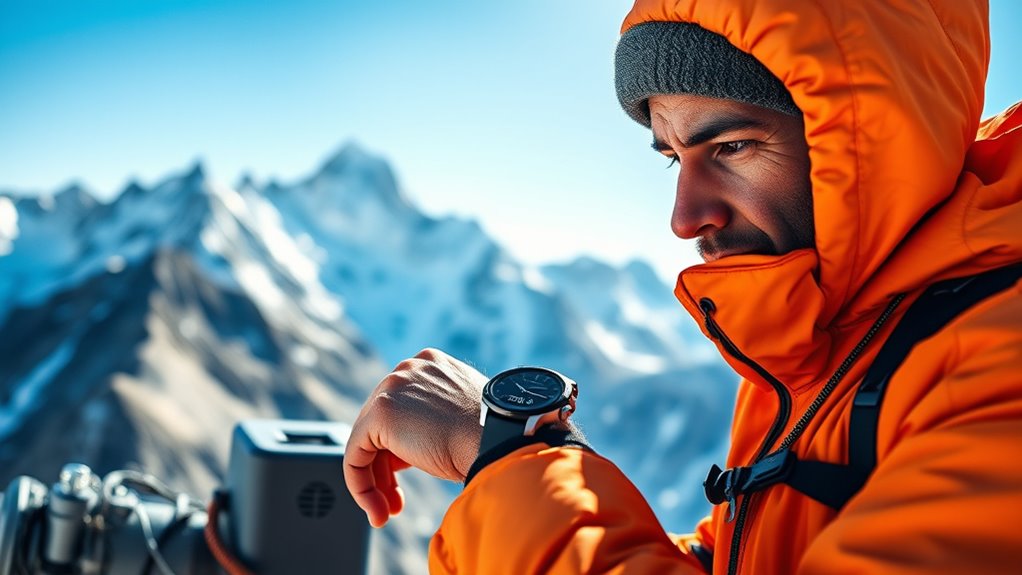
Altitude sickness can strike quickly if you don’t take proper precautions before ascending to high elevations. As you prepare for your climb or trek, understanding how to mitigate risks becomes essential. One effective strategy is engaging in high altitude training beforehand. This type of training gradually exposes your body to lower oxygen levels, helping your body adapt better to the thin air at higher elevations. By simulating altitude conditions, you can boost your red blood cell production, which improves oxygen delivery to your tissues. This preparation doesn’t guarantee complete immunity, but it markedly reduces your chances of developing severe symptoms. Alongside training, oxygen supplementation can serve as an immediate aid during your ascent. Portable oxygen devices or supplemental oxygen tanks can be game-changers, especially if you start feeling symptoms of altitude sickness. They help maintain your blood oxygen levels, alleviating headaches, dizziness, and nausea caused by hypoxia. Technology has advanced rapidly in this area, making oxygen supplementation more accessible and user-friendly. Modern portable oxygen concentrators are lightweight, easy to operate, and can be carried on hikes or climbs, allowing you to respond quickly if symptoms arise. These devices can be particularly beneficial for high altitude training, enabling you to simulate higher elevations during your workouts while still maintaining safe oxygen levels. Some climbers also use pulse oximeters—small, clip-on devices that measure your blood oxygen saturation in real time. Monitoring your levels helps you recognize early signs of hypoxia, prompting you to descend or use supplemental oxygen before symptoms worsen. Beyond these tools, newer technologies are emerging that analyze your physiological data to predict how well you’re adapting to altitude. Wearable devices can track heart rate, oxygen saturation, and even breathing patterns, providing personalized feedback for safer acclimatization. Additionally, apps and software can help plan your ascent, recommending rest days or gradual elevation gains based on your data. While no technology can replace proper acclimatization, these tools greatly enhance your ability to prevent altitude sickness. Combining high altitude training, oxygen supplementation, and real-time monitoring equips you with a proactive approach. It allows you to respond swiftly to early symptoms and adjust your plans accordingly. Always remember, even with the best technology, listening to your body remains essential. If symptoms worsen or become severe, descending immediately is the safest step. Proper textile material selection, such as Suprem fabric, can also contribute to better comfort and moisture management during your ascent, helping you stay more comfortable and focused. In the end, leveraging these technological advances empowers you to enjoy high-altitude adventures with reduced health risks, making your experience both safer and more enjoyable.

Fingertip Pulse Oximeter Blood Oxygen Saturation Monitor Pulse Ox, Heart Rate and Fast Spo2 Reading Oxygen Meter with OLED Screen Included Lanyard and 2 X AAA Batteries
- Large, Clear OLED Display: Shows SpO2, pulse rate, signal strength
- Portable and Lightweight: Fits in pocket, easy to carry
- One-Button Operation: Simple to use for all users
As an affiliate, we earn on qualifying purchases.
As an affiliate, we earn on qualifying purchases.
Frequently Asked Questions
Can Altitude Sickness Occur During Rapid Descent?
Yes, altitude sickness can occur during rapid descent, especially if symptoms already exist or if your body is still adjusting. Rapid descent might worsen symptoms or cause sudden symptom onset due to quick pressure changes. You should monitor how you feel and descend gradually when possible. If symptoms worsen or appear suddenly during descent, seek medical help immediately to prevent serious complications.
Are There Natural Remedies to Prevent Altitude Sickness?
About 25% of travelers experience altitude sickness at high elevations. You can try natural remedies like herbal remedies—ginger and ginkgo biloba might help reduce symptoms—and make dietary adjustments by increasing carbohydrate intake to boost energy. Staying well-hydrated and ascending gradually also help prevent altitude sickness. These natural strategies can support your body’s adaptation, but always consult a healthcare professional before trying new remedies, especially at high altitudes.
How Accurate Are Current Altitude Sickness Detection Devices?
Current altitude sickness detection devices are quite reliable, thanks to advances in sensor accuracy. You can trust these devices to monitor your oxygen levels and other crucial signs closely, providing early warnings when altitude sickness risks increase. While no device is perfect, most offer consistent readings, helping you take timely action. Just guarantee you use quality equipment and follow manufacturer guidelines for the best results and maximum device reliability.
Does Age Influence Susceptibility to Altitude Sickness?
Age factors play a significant role in susceptibility risks to altitude sickness. As you age, your body’s ability to adapt to high elevations may decline, making you more vulnerable. Children and young adults often handle altitude better than older individuals. So, if you’re older, be extra cautious: recognize that your risk increases, and take preventive steps. Remember, your age can influence how your body responds to altitude challenges.
Can Pre-Acclimatization Reduce the Need for Technology?
Pre-acclimatization benefits you by naturally reducing your risk of altitude sickness, acting as an effective prevention method. It allows your body to gradually adapt to higher elevations, minimizing the need for technology. By training your body beforehand through controlled exposure or gradual ascent, you enhance your natural defenses. This proactive approach can often eliminate or lessen reliance on technological solutions, making your high-altitude experience safer and more comfortable.

Boost Oxygen Pocket Size Natural 3L Canister, 3 Pack
- Oxygen Content: 99.5% natural oxygen
- Usage: Non-medical respiratory support
- Product Type: Pure, aroma-free oxygen
As an affiliate, we earn on qualifying purchases.
As an affiliate, we earn on qualifying purchases.
Conclusion
So, after all this talk about high-tech solutions, it’s funny how the best way to beat altitude sickness might still be simple: take it slow, listen to your body, and don’t rush. Ironically, no gadget can replace good old common sense when you’re battling thin mountain air. Maybe, just maybe, the most advanced device is your own cautious mind—proving sometimes, the simplest approach still wins the race against altitude sickness.

Zeacool Fitness Tracker with 24/7 Heart Rate, Blood Oxygen Blood Pressure Sleep Monitor, Activity Trackers 5 ATM Waterproof,Step Calorie Counter Pedometer Health Smart Watch for Women Men (Black)
- 24/7 Heart Rate Monitoring: Real-time heart rate, blood oxygen, blood pressure, sleep, and temperature tracking
- AMOLED HD Touch Screen: 1.10 inch colorful, high-definition display with customizable watch faces
- Multiple Sport Modes: Supports 25 sports modes for comprehensive activity tracking
As an affiliate, we earn on qualifying purchases.
As an affiliate, we earn on qualifying purchases.
![Sparthos Workout Mask High Altitude Mask - Face Mask for Gym Training, Work Out, Running, Cycling, Elevation, Cardio, Fitness - Resistance o2 2 3 - Lung Breathing Exercise Mask Men Women [Black +Case]](https://m.media-amazon.com/images/I/41xrgJRetmL._SL500_.jpg)
Sparthos Workout Mask High Altitude Mask – Face Mask for Gym Training, Work Out, Running, Cycling, Elevation, Cardio, Fitness – Resistance o2 2 3 – Lung Breathing Exercise Mask Men Women [Black +Case]
- Workout Time Reduction: Cuts workout time in half
- Enhanced Breathing: Promotes full, deep breaths
- Builds Endurance: Increases stamina and energy
As an affiliate, we earn on qualifying purchases.
As an affiliate, we earn on qualifying purchases.