To survive winter camping, you need the right gear and tech. Layer moisture-wicking clothes with insulating layers like down or synthetic fills to trap heat. Use heated blankets, portable heaters, and smart shelter designs like igloos or insulated tents to stay warm. Protect your batteries, and use solar panels or backup power to keep devices running. Safety tools like satellite messengers and personal beacons are essential. Keep exploring for detailed tips to help you stay safe and comfortable in the cold.
Key Takeaways
- Use thermal layered clothing, moisture-wicking fabrics, and insulated gear to maintain body heat and prevent hypothermia.
- Incorporate advanced heating devices like portable heaters and heated blankets for enhanced warmth and comfort.
- Build snow shelters such as igloos or quinzees with proper insulation to trap heat efficiently.
- Insulate batteries and use portable solar panels or backup power sources to ensure reliable device operation.
- Carry safety tools like locator beacons, satellite messengers, and emergency kits to stay protected and communicate in emergencies.

Gifts for Men Fathers Day, Survival Kit, 150 PCS Survival Gear and Supplies Equipment with Trauma Bag, Molle Pouch Emergency Kit for Outdoor Camping, Hunting, Car, Home, Earthquake, Adventures
- Complete First Aid & Survival Supplies: Designed by emergency responders and survival experts
- Compact and Portable Design: Ideal for bug-out bags, cars, and home use
- Versatile Emergency Kit: Suitable for camping, hunting, earthquakes, and adventures
As an affiliate, we earn on qualifying purchases.
Essential Insulation and Clothing Technologies

When it comes to winter camping, having the right insulation and clothing technologies can make all the difference between an enjoyable trip and a miserable one. Thermal layering is essential; it traps heat and keeps you warm in freezing conditions. Start with moisture wicking fabrics next to your skin to draw sweat away and prevent chills. These fabrics dry quickly and reduce moisture buildup, which is fundamental in cold weather. Over that, add insulating layers like down or synthetic fill to retain body heat. Avoid cotton, as it traps moisture and cools you down. Proper layering allows you to adjust clothing based on activity level and weather changes, ensuring you stay warm, dry, and comfortable throughout your winter adventure. Incorporating natural insulation options can further enhance warmth while reducing reliance on synthetic materials. Additionally, choosing appropriate body jewelry materials, such as titanium or Bioflex, can prevent irritation if the jewelry comes into contact with moisture or cold environments. For optimal comfort, consider clothing with moisture-wicking properties that actively manage sweat and moisture.

Survival Kit, 250Pcs Survival Gear First Aid Kit with Molle System Compatible Bag and Emergency Tent, Emergency Kit for Earthquake, Outdoor Adventure, Hiking, Hunting, Gifts for Men Women
- Comprehensive 250-Piece Survival Kit: Includes essential tools and first aid supplies
- Bright Red First Aid Bag: Conspicuous storage for emergency medical items
- First Aid Supplies Included: Tweezers, scissors, bandages, and more
As an affiliate, we earn on qualifying purchases.
Advanced Heating Devices for Cold Nights
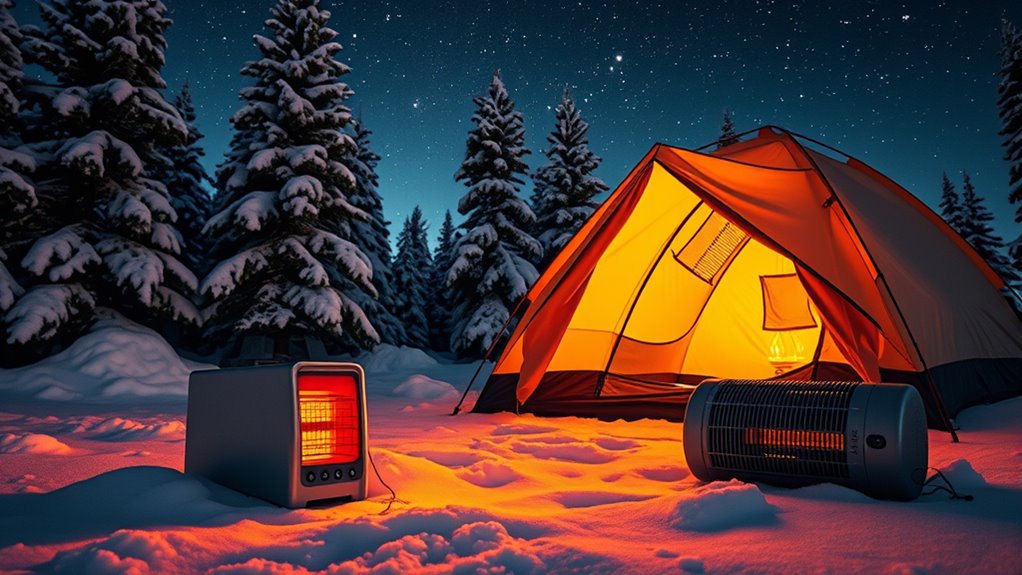
To stay warm during cold nights, advanced heating devices provide reliable, portable solutions that complement traditional insulation. Heated blankets are a great option; they wrap you in warmth without adding bulk, making them perfect for sleeping or resting. Portable heaters, such as compact propane or electric models, can quickly raise the ambient temperature inside your tent or shelter. These devices are designed to be safe and efficient, ensuring you stay comfortable without draining your power supply. When used correctly, heated blankets and portable heaters can extend your camping season and improve sleep quality in freezing conditions. Additionally, choosing the right heating device can optimize heat distribution and energy efficiency. For optimal safety, selecting a certified heater with safety features is highly recommended. Always follow safety guidelines to prevent risks like carbon monoxide buildup or electrical hazards. Proper ventilation systems are also crucial when using certain heaters to ensure safe operation. Incorporating advanced heating technology can further enhance your warmth and safety during winter camping. These advanced heating devices are essential tools for winter campers seeking reliable warmth in harsh cold.

276PCS First Aid Kit Home Car Camping Hiking Emergency Supplies Small Compact Lovely Bag for School Outdoor, Basic Outdoor Essentials Survival Kit for Travel AMORNING
- Compact and Lightweight: 7.8" x 5.55" x 2.9", 1 lb
- Water-Resistant EVA Material: Durable and portable design
- Versatile Emergency Storage: Fits car, home, travel, outdoor
As an affiliate, we earn on qualifying purchases.
Innovative Shelter Solutions for Winter Campsites
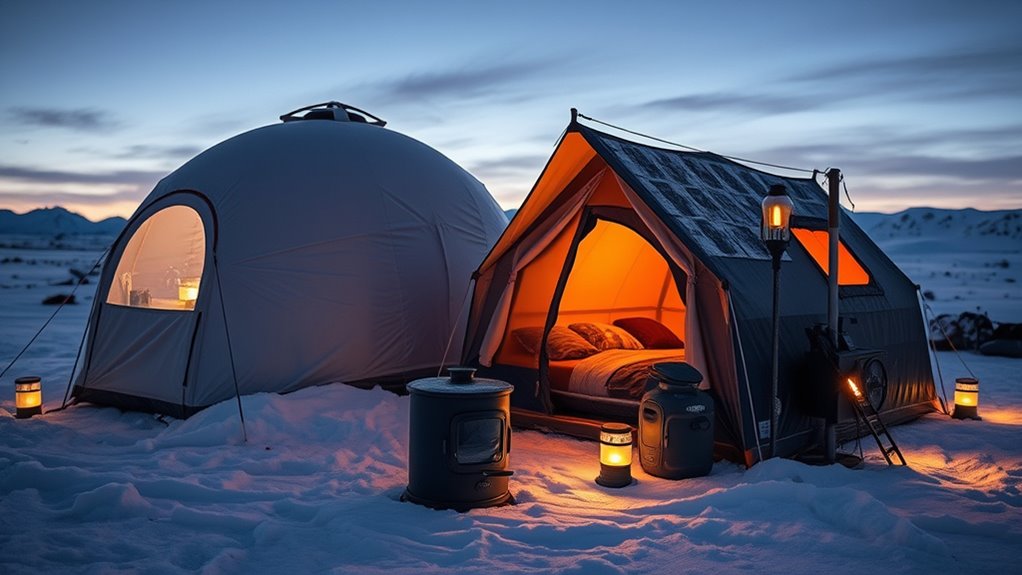
Innovative shelter solutions are transforming winter camping by offering greater protection against the elements and enhancing warmth retention. Snow shelter design has advanced, enabling you to craft structures like igloos or quinzees that trap heat efficiently. Using thermal insulation materials, such as foam boards or reflective blankets, boosts warmth inside your shelter. These innovations help you stay dry and cozy amid extreme cold. Incorporating advanced construction techniques can further enhance the stability and heat retention of your shelter. Additionally, utilizing innovative insulation methods can significantly improve your shelter’s ability to conserve heat. Modern navigation and mapping technologies also assist in planning your shelter placement for optimal protection from wind and snow accumulation. Understanding ownership essentials and proper maintenance can ensure your shelter remains reliable over multiple seasons. Here’s a quick comparison:
| Shelter Type | Key Features |
|---|---|
| Igloo | Compact, excellent insulation, snow blocks |
| Quinzee | Piled snow walls, customizable interior |
| Snow Cave | Natural insulation, requires proper ventilation |
| Insulated Tent | Modern thermal fabrics, lightweight for portability |

Survival Kit, 262Pcs Survival Gear and Supplies with First Aid Kit Pouch and Crossbody Bag, Emergency Kit with Tent, Camping Axe Hammer, Survival Shovel w/Pick, Bug Out Bag Gifts for Men Women
- Emergency Preparedness for 72 Hours: Designed for family safety during disasters
- Comprehensive First Aid Supplies: Includes tweezers, scissors, bandages, and emergency card
- Survival Gear for Crisis Situations: Features food, water, warmth, and lighting tools
As an affiliate, we earn on qualifying purchases.
Power Sources and Battery Management in Freezing Conditions
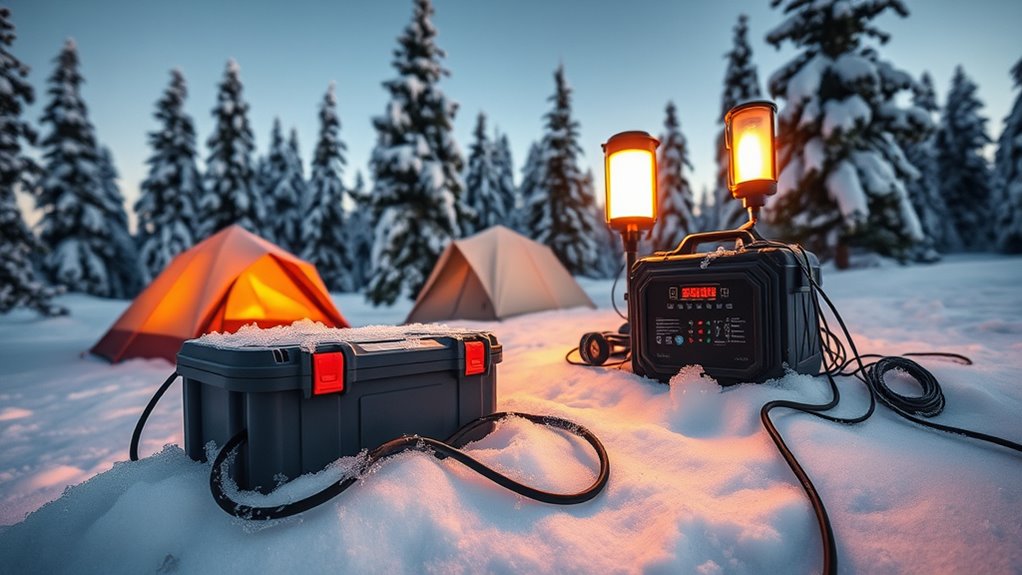
Maintaining reliable power sources in freezing conditions requires careful planning, as cold temperatures can markedly reduce battery performance. To keep your gear running, consider insulating your batteries with thermal wraps or foam to prevent heat loss. Using portable solar panels can supplement power during daylight, but guarantee they’re positioned in direct sunlight and kept clean for maximum efficiency. Battery insulation is essential—wrap batteries in insulating materials or keep them inside insulated containers to maintain ideal temperature. Regularly check and charge your batteries to avoid deep discharge, which can damage them in cold weather. Additionally, carry backup power sources, like portable power banks or spare batteries, to ensure continuous power supply. Proper management, including monitoring battery capacity, keeps your devices functional, even in the harshest winter conditions. To further enhance reliability, consider cold-weather battery models and select models designed for cold climates to prevent unexpected failures. Be aware that battery chemistry also influences performance in low temperatures, so choose batteries suited for winter use. Employing temperature-resistant batteries can significantly improve your setup’s resilience during extended cold exposure.
Safety Gadgets and Emergency Communication Tools

In winter camping, having reliable safety gadgets and emergency communication tools can be the difference between a safe trip and a dangerous situation. Personal locator beacons and satellite messengers are essential for staying connected in remote areas. Personal locator beacons transmit distress signals to rescue services instantly, while satellite messengers allow you to send texts and share your location with loved ones, even without cell service. Consider the following options:
| Device Type | Key Feature |
|---|---|
| Personal Locator Beacon | Emergency distress signal |
| Satellite Messenger | Two-way messaging and location sharing |
| Emergency Whistle | Audible alert in rescue scenarios |
| Compact First Aid Kit | Treat injuries promptly |
| Multi-tool | Versatile tool for emergencies |
These gadgets ensure you can summon help quickly and stay safe in winter wilderness. Understanding industry trends and proper gear maintenance can improve your safety strategies significantly. Additionally, exploring sauna and cold-plunge systems can aid in recovery and thermal regulation during extended trips. Incorporating emergency preparedness training can further enhance your safety in unpredictable winter conditions. Staying informed about emergency planning can help you respond more effectively to unforeseen challenges in the cold.
Frequently Asked Questions
How Do I Prevent Frostbite During Extended Winter Camping Trips?
To prevent frostbite during extended winter camping, stay vigilant with frostbite prevention techniques and maintain cold injury awareness. Keep your extremities warm by wearing layered, insulated gloves, socks, and proper footwear. Regularly move to promote blood flow, and avoid prolonged exposure to cold surfaces. Cover your face and ears, and monitor your skin for early signs of frostbite. Staying proactive helps you stay safe and enjoy your trip longer.
What Are the Best Practices for Conserving Battery Life in Freezing Temperatures?
To conserve battery life in freezing temperatures, you should focus on battery preservation and portable power strategies. Keep your devices warm by storing them in insulated pockets or inside your sleeping bag when not in use. Limit screen time and turn off unnecessary features like Bluetooth and Wi-Fi. Carry a portable power bank, ideally insulated, to recharge devices as needed. These steps help extend your device’s usability and guarantee you stay connected.
How Can I Stay Warm Without Relying Solely on Electronic Heating Devices?
Ever wonder if you can stay warm without relying solely on electronic devices? You can by mastering layering techniques and choosing the right insulation materials. Start with a moisture-wicking base layer, add an insulating mid-layer like fleece or wool, and top with a waterproof outer shell. Good insulation traps your body heat and keeps cold air out, giving you reliable warmth even when your batteries run low.
Are There Eco-Friendly, Sustainable Insulation Options Suitable for Winter Camping?
Yes, you can choose eco-friendly, sustainable insulation options for winter camping. Look for gear with recycled insulation or made from sustainable materials like hemp, wool, or cork. These options provide excellent warmth while reducing environmental impact. By selecting gear with these features, you help protect the planet without sacrificing insulation quality, ensuring your winter camping experience remains cozy and environmentally conscious.
What Are the Signs of Hypothermia, and How Can I Treat It in the Field?
Like a flickering candle, hypothermia signs can be subtle. You might notice shivering, confusion, slurred speech, or clumsiness. In the field, treat it promptly by removing wet clothing, insulating the person with blankets, and providing warm, non-alcoholic drinks if they’re conscious. Keep them dry, sheltered, and monitor their breathing. Immediate action prevents the condition from worsening, ensuring they stay warm and safe until help arrives.
Conclusion
So, armed with all this cutting-edge gear, you’ll probably survive winter camping—probably. Just remember, no gadget can substitute common sense, and your frozen toes might still argue otherwise. Embrace the cold, trust your tech, and maybe, just maybe, you’ll leave the snow with all your appendages intact. Or at least have a good story about how your high-tech gear nearly outsmarted winter’s icy grip. Happy camping, brave explorer!