To keep cooking, water, and shelter systems from conflicting, establish clear zones for each activity, such as positioning cooking areas away from sleeping spaces, and near water sources. Organize supplies to prevent clutter and spills, and implement water-saving methods to reduce strain on resources. Stay flexible by regularly updating plans based on current conditions and resource availability. Want to learn more about integrating these systems smoothly? Keep exploring strategies to create a balanced, safe environment.
Key Takeaways
- Design shelter layouts to separate cooking areas from sleeping zones to prevent smoke and odor conflicts.
- Coordinate resource management to ensure water use for cooking does not deplete supplies needed for shelter hygiene.
- Establish clear communication protocols for sharing space and resources, avoiding overlapping or conflicting activities.
- Implement flexible systems that can adapt to changing needs, reducing strain on one area that may cause conflicts.
- Regularly monitor and adjust plans to balance safety, comfort, and resource use across cooking, water, and shelter domains.

Balancing cooking, water, and shelter systems can be challenging, especially in confined or resource-limited settings. When you’re managing these critical needs, it’s essential to prioritize efficient communication and planning. Emergency communication plays a crucial role in this process. Establishing reliable channels ensures you stay informed about changing conditions, resource availability, and safety alerts. Clear communication helps coordinate efforts, prevent overlaps, and address urgent needs promptly. Without it, conflicts can arise, making it harder to allocate resources effectively and maintain safety standards.
Effective communication is key to coordinating resources and ensuring safety in resource-limited, confined emergency settings.
Nutritional planning is equally important. When resources are scarce, you need to optimize food and water supplies to meet everyone’s needs without waste. Focus on nutrient-dense foods that provide maximum energy and vitamins with minimal water and cooking time. Planning meals in advance allows you to ration supplies carefully, preventing shortages and ensuring that everyone receives adequate nourishment. This foresight minimizes stress on shelter systems by reducing the frequency of cooking and water usage, which can strain limited resources. Incorporating resource management strategies can further enhance sustainability and efficiency.
You also want to design your shelter setup to support your cooking and water systems efficiently. Position your cooking area away from sleeping zones to avoid smoke and odors, but ensure it’s close enough to water sources for easy access. Incorporate storage solutions that keep water and food supplies organized and protected from contamination. If space is limited, consider compact, multi-purpose furniture that can serve as storage or work surfaces. This approach helps conserve space and reduces clutter, making it easier to maintain hygiene and safety.
In resource-limited settings, you must be strategic about water use. Implement water-saving techniques like using minimal amounts for cooking and cleaning, and reuse greywater where appropriate. For cooking, opt for methods that conserve water, such as steaming or using less water in boiling. These practices extend your water supplies and reduce the burden on your shelter’s plumbing or water collection systems. Additionally, understanding emerging trends in resource management can help you adopt innovative solutions for more sustainable living.
Lastly, remain adaptable. Emergency situations often evolve rapidly, and your plans should be flexible enough to accommodate new challenges. Regularly update your emergency communication protocols and nutritional plans based on available resources and changing conditions. By doing so, you’ll create a more harmonious environment where cooking, water, and shelter systems support each other rather than conflict. This integrated approach ensures safety, health, and comfort for everyone involved, even under tough circumstances.
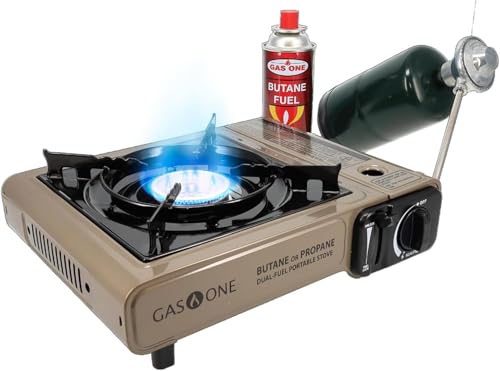
Gas One GS-3400P Propane or Butane Stove Dual Fuel Stove Portable Camping Stove – Patented – with Carrying Case Great for Emergency Preparedness Kit
- Dual Fuel Compatibility: Works with butane or propane fuels
- Automatic Ignition: Piezo-electric ignition eliminates lighters
- User-Friendly Design: Adjustable heat dial for easy control
As an affiliate, we earn on qualifying purchases.
As an affiliate, we earn on qualifying purchases.
Frequently Asked Questions
How Do I Prioritize Resources Among Cooking, Water, and Shelter?
You should start by evaluating your immediate needs and available resources, then apply resource allocation to address the most critical needs first. Prioritize safety and essentials like water and shelter, then balance these with cooking needs. Continuously reassess, adjusting your priority balancing as situations change. This approach ensures you efficiently use your resources, maintaining stability without neglecting any essential system.
What Are Common Conflicts Between These Essential Systems?
Imagine a delicate dance where each step must harmonize with the next. Common conflicts between cooking, water, and shelter systems often stem from resource allocation struggles and system integration issues. For example, overusing water for cooking can compromise shelter hygiene, while prioritizing shelter might limit water access. Balancing these needs requires careful planning, ensuring each system supports the others without competing, creating a seamless flow of essential resources.
How Can I Prevent Contamination Between Water and Cooking Areas?
To prevent contamination between water and cooking areas, you should practice water purification methods like boiling or using filters before cooking. Keep water storage separate from food prep spaces, and always use clean utensils and surfaces for cooking. Regularly sanitize your cooking area to maintain cooking safety, and make sure that contaminated water doesn’t come into contact with food or cooking equipment. This keeps your environment safe and reduces health risks.
What Emergency Tools Assist in Managing Conflicting Resource Needs?
Think of emergency tools as the heartbeat of resource management. Emergency filtration acts as your vigilant gatekeeper, ensuring water stays pure amidst chaos. Resource allocation tools serve as your compass, guiding you to balance needs without conflict. Together, they streamline responses, prevent cross-contamination, and keep essential systems running smoothly. Using these tools, you can confidently navigate conflicting resource demands, maintaining safety and stability in crisis situations.
How Do Seasonal Changes Affect System Conflicts?
Seasonal changes profoundly impact system conflicts by requiring you to adapt your resources to new climate impacts. In winter, prioritize insulation and heating to prevent shelter conflicts, while ensuring water remains accessible despite freezing. During summer, focus on cooling and ventilation to maintain comfortable shelter conditions. Seasonal adaptation helps you balance cooking, water, and shelter needs, reducing conflicts and keeping your systems running smoothly regardless of climate impact.
water filtration and purification system
As an affiliate, we earn on qualifying purchases.
As an affiliate, we earn on qualifying purchases.
Conclusion
So, next time you’re juggling cooking fires, water purifiers, and shelter setups, remember: you’re the circus master in a chaotic tent. Keep those systems from colliding like clowns in a bumper car ride—careful with the sparks, don’t drown the water, and don’t let the shelter turn into a soggy mess. Master the art of harmony, or soon you’ll be starring in your own disaster show—popcorn not included.
As an affiliate, we earn on qualifying purchases.
water-saving camping accessories
As an affiliate, we earn on qualifying purchases.
As an affiliate, we earn on qualifying purchases.