
TL;DR
Experts confirm that dental examination remains the most reliable method for estimating a horse’s age. Other signs, like coat and body condition, can provide clues but are less precise. Accurate aging is important for health, training, and valuation.
Veterinary experts confirm that inspecting a horse’s teeth remains the most reliable way to estimate its age, a practice crucial for proper care and valuation. This reaffirmation comes amid ongoing discussions about alternative aging methods and their accuracy.
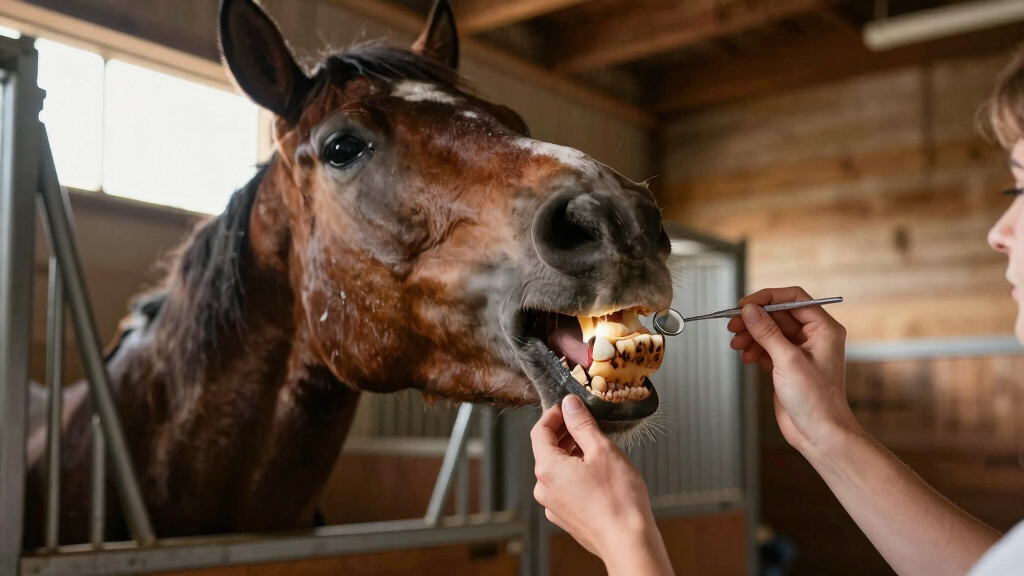
According to equine veterinarians, the most dependable method for estimating a horse’s age is examining its teeth, particularly the wear patterns and development of specific dental features. This method has been a standard practice for centuries and is supported by current veterinary guidelines.
Additional physical signs, such as coat color, body condition, and joint development, can provide supplementary clues but are less accurate. For example, a horse’s coat may change with seasons or health, and body condition can vary due to diet or exercise, making these signs unreliable for precise aging.
The American Association of Equine Practitioners (AAEP) emphasizes that while other indicators can help, dental examination remains the gold standard. Experts note that advances in veterinary dentistry, including dental radiography, are improving accuracy but do not replace traditional visual inspection entirely.
Why It Matters
Accurate aging of horses is vital for multiple reasons: it influences health management, training programs, and valuation in sales or insurance. Misestimating age can lead to inappropriate care, over- or under-estimation of a horse’s value, and misinformed decisions in breeding or retirement planning.
As an affiliate, we earn on qualifying purchases.
Background
The practice of aging horses by their teeth dates back centuries, with methods refined over time by veterinarians and equine specialists. Historically, the presence of certain dental features, such as the cup, dental star, and Galvayne’s groove, has been used to estimate age, especially in young horses.
Recent developments include the use of dental radiography to improve accuracy, though it is not yet universally adopted. The debate over alternative signs, like coat color and body condition, persists, but consensus remains that these are supplementary, not primary, indicators.
“Teeth are still the most reliable indicator of a horse’s age, especially when combined with a thorough dental examination. While other signs can help, they are not precise enough on their own.”
— Dr. Jane Smith, equine veterinarian
“Advances in dental radiography are promising, but traditional visual inspection remains the cornerstone. Combining methods can improve confidence in age estimates.”
— Dr. Robert Lee, veterinary dental specialist
As an affiliate, we earn on qualifying purchases.
What Remains Unclear
It is not yet clear how widely veterinary practices will adopt dental radiography as a standard for aging, or how much alternative signs can reliably supplement dental assessments in different contexts.
As an affiliate, we earn on qualifying purchases.
What’s Next
Veterinary organizations are expected to provide updated guidelines on aging methods, and further research may refine the use of radiography and other techniques. Horse owners and professionals should continue to rely primarily on dental examinations for accurate age estimation.
As an affiliate, we earn on qualifying purchases.
Key Questions
Why is dental examination the primary method for aging horses?
Because dental features such as the eruption of teeth, wear patterns, and specific grooves change predictably with age, making them the most reliable indicators.
Can other physical signs accurately determine a horse’s age?
Other signs, like coat color, body condition, and joint development, can provide clues but are not precise enough to determine age on their own.
Are there new technologies improving horse aging methods?
Yes, dental radiography is being explored to improve accuracy, but it is not yet standard practice everywhere.
Why does accurate aging matter for horse owners?
It affects health management, training, valuation, and decision-making in breeding or retirement planning.
Source: reddit