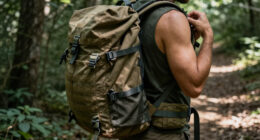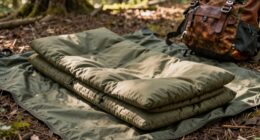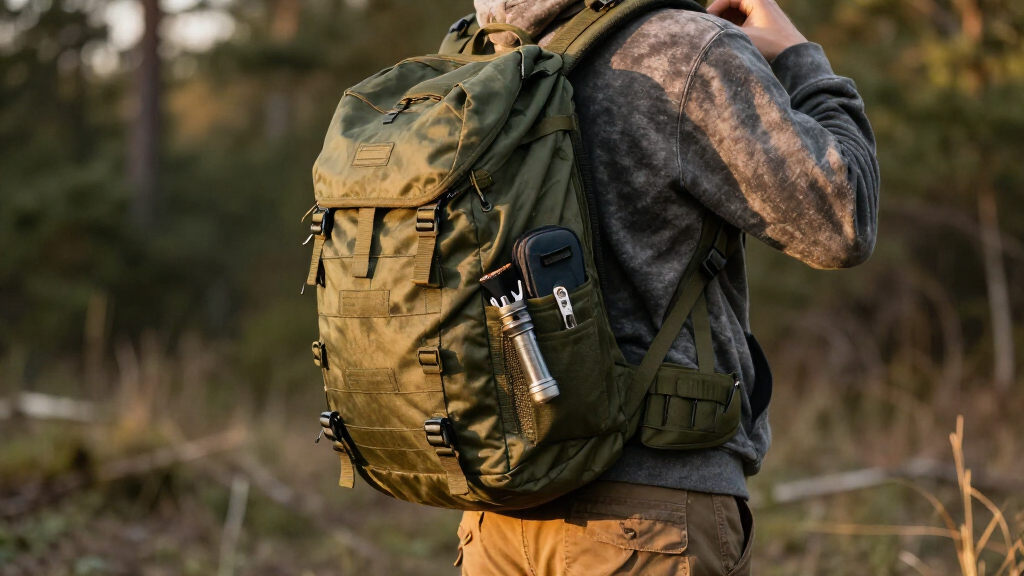
Not all emergency prepper backpacks are built the same, and the differences matter more than most buyers realize. After comparing nine of the most popular survival kits side by side, the ReadyWise Emergency Survival Gear Tactical Backpack stands out as my best overall pick, thanks to its rugged bag, broad 64-piece gear loadout, and balance of quality versus price. Budget-conscious buyers should look at the Ready America 1-Person 72 Hour Emergency Kit, while couples get the most gear-per-dollar from the Ready America 70285 Deluxe 2-Person kit. The core tradeoff in this category is convenience versus completeness: pre-packed kits save time but often include filler supplies, short water rations, or flimsy bags that won’t survive real evacuation conditions. Read on for the full breakdown of what each kit actually delivers and who each one suits best.
Key Takeaways
- Ready America dominates this category with five of nine spots, but its kits vary widely in gear quality — the Deluxe versions include power stations and real first aid, while the base 70280 and 70490 models cut corners on food and tools.
- Couples’ kits consistently offered better value per person than single-person kits, with the Ready America 70285 Deluxe delivering roughly double the supplies for far less than double the price.
- The biggest weakness across nearly every kit was water — most provide only the bare 72-hour minimum, so buyers planning for longer emergencies should supplement regardless of which bag they choose.
- The ReadyWise 7-Day Grab Bag is the only option built for beyond-72-hour scenarios, trading tactical features for 60 servings of food — a niche pick that wins on duration but loses on gear versatility.
- Kit backpacks themselves ranged from genuinely durable (the ReadyWise tactical bag) to barely reusable, meaning buyers who want a long-term bug-out platform should weight bag quality as heavily as contents.


| emergency prepper backpack | Duration | First Aid | Capacity | Water |
|---|---|---|---|---|
| READYWISE Emergency Food Survi | 7 days | — | — | — |
| Ready America 70285 Deluxe 2-P | Up to 3 days | 33-piece kit | 2 persons | Six 4.225 oz pouches + 32 oz BPA-free bottle |
| Ready America 72 Hour Deluxe E | 72 hours | — | 1 person | Six pouches + 32 oz bottle |
| Ready America 70490 2-Person 3 | 3 days | Included first aid kit | 2 people | Purified emergency water supply |
| Essentials Complete Deluxe Sur | 72 hours | Basic first aid kit | — | Packaged water + Frontier straw filter |
| Ready America 72 Hour Emergenc | 72 hours | 18-piece first aid kit | 1 person | 6 sealed water pouches |
| 2 Person 72 Hour Bug Out Bag B | 72 hours | Included first aid kit | 2 persons | — |
| Ready America 70280 Emergency | 72 hours (3 days) | 33-piece kit, dust masks, nitrile gloves | 2 persons | 12 sealed drinking water pouches |
| ReadyWise Emergency Survival G | — | First aid supplies included | — | — |
More Details on Our Top Picks
READYWISE Emergency Food Survival Supply 7 Day Grab Bag, 60 Servings
This option stands out for a reason most kits can’t match: 60 servings of real freeze-dried meals with a 25-year shelf life. Compared with the Ready America 70285, which packs only two calorie bars, this bag takes food seriously — you get actual breakfasts and entrées, not bricks of compressed calories. That makes it the strongest choice for buyers whose biggest worry is sustained nutrition during an extended shelter-in-place scenario. The tradeoff is equally clear: there’s no first aid, no water, no lighting, no tools. It solves one problem brilliantly and ignores the rest, so it works best as a food layer inside a larger plan rather than a standalone bug-out bag. Anyone expecting a complete kit will need to pair it with something like the Ready America options to cover medical and communication gaps.
Pros:- 60 servings of real meals, not just calorie bars
- 25-year shelf life means buy-it-once storage
- Actual breakfasts and entrées improve morale and nutrition
- Grab-bag format with carry strap for fast evacuation
Cons:- No water, first aid, lighting, or tools included
- Most meals require hot water, which may be unavailable in a true emergency
Best for: Preppers who already own gear and want a deep, long-shelf-life food reserve they can grab quickly
Not ideal for: Anyone wanting an all-in-one solution — this contains zero first aid, water, or survival tools
- Servings:60
- Duration:7 days
- Shelf Life:Up to 25 years
- Food Type:Freeze-dried breakfasts & entrées
- Preparation:Hot water required
- Design:Tactical-inspired grab bag with adjustable strap
Our verdict“Buy this as your food layer, not your whole kit — it pairs with a gear-focused bag rather than replacing one.”
Ready America 70285 Deluxe 2-Person 3-Day Emergency Backpack
This is the pick that makes the most sense for the widest range of buyers, because it’s the only kit in this lineup that treats communication and power as seriously as food and water. The hand-crank power station with AM/FM radio, siren, and phone charger addresses the gap every other bag here leaves open — in a real disaster, information is as valuable as calories. Compared with the slimmer Ready America 70490, this Deluxe version adds a 33-piece first aid kit, N95 masks, purification tablets, and a compass, justifying its Best Overall slot. The honest tradeoff: two food bars and six water pouches are thin rations for two people over three days, and all that equipment makes the pack genuinely heavy for its size. Buyers with mobility concerns or older family members may prefer splitting supplies across two smaller bags.
Pros:- Hand-crank power station with radio, phone charger, and siren
- 33-piece first aid kit plus N95 masks and hygiene supplies
- Water purification tablets extend beyond the included pouches
- Covers two people across food, water, shelter, and tools
Cons:- Only two food bars for two people over three days
- Fully loaded pack is heavier than comparable kits
- Water pouches run out quickly past the 72-hour window
Best for: Couples or roommates who want one grab-and-go bag covering food, water, first aid, and emergency communication
Not ideal for: Anyone with back or mobility issues — the fully loaded weight is noticeable for a 3-day kit
- Capacity:2 persons
- Duration:Up to 3 days
- Food:Two 2,400-calorie emergency food bars
- Water:Six 4.225 oz pouches + 32 oz BPA-free bottle
- First Aid:33-piece kit
- Power & Comms:Hand-crank station, AM/FM radio, siren, phone charger
- Protection:2 N95 masks, gloves, ponchos, survival blankets
- Extras:Water purification tablets, compass, thermometer, lightsticks
Our verdict“The most complete two-person kit in this lineup — accept the weight and supplement the food, and you’re well covered.”
Ready America 72 Hour Deluxe Emergency Kit, 1-Person 3-Day Backpack
This model is better suited to a specific strategy: one bag per person, customized individually. Compared with buying the Ready America 70285 for a couple, two of these single-person kits let each household member carry their own weight — literally — which matters if you ever have to move on foot. The 2,400-calorie bar, six water pouches, hand-crank LED headlamp, and hygiene kit cover the 72-hour basics, and the headlamp is a smarter lighting choice than a handheld flashlight because it keeps both hands free. The tradeoff is that a single-person kit means no redundancy: if that bag is lost or separated from you, you have nothing. The first aid contents are also basic, so anyone with prescription medications or a medical condition needs to add their own supplies.
Pros:- One bag per person distributes weight across a household
- Hand-crank headlamp keeps hands free during tasks
- Includes water, shelter, hygiene, and fire-starting basics
- More affordable to duplicate than buying multi-person deluxe kits
Cons:- No redundancy — losing the bag means losing everything
- First aid contents are basic, not suitable for serious injuries
Best for: Individuals building a one-bag-per-person household plan where everyone carries their own kit
Not ideal for: People wanting a single bag to cover a family — capacity is strictly one person
- Capacity:1 person
- Duration:72 hours
- Food:2,400-calorie emergency food bar
- Water:Six pouches + 32 oz bottle
- Lighting:Hand-crank LED headlamp
- Shelter:Emergency poncho, survival blanket, waterproof matches
- Hygiene:Complete hygiene kit, tissues, contact card
Our verdict“The right building block for a per-person preparedness plan, as long as you accept its single-point-of-failure risk.”
Ready America 70490 2-Person 3-Day Emergency Survival Backpack
Think of this as the streamlined sibling of the 70285: same two-person, three-day mission, fewer premium add-ons, and that simplicity is the point. It delivers the core survival triad — long shelf-life food, purified water, and first aid — plus lighting and protective gear, without paying for the hand-crank power station and expanded toolset of the Deluxe model. For buyers on a budget who already own a radio or phone power bank, this is the smarter allocation of money. The tradeoffs are real, though: compared with the Emergency Zone Essentials kit, it doesn’t include water filtration, so you’re dependent on the packaged supply once it runs out. It also can’t stretch beyond two people, so a family of four needs two bags or a different pick entirely.
Pros:- Covers the core food, water, first aid, and lighting basics for two
- Long shelf-life food means less rotation hassle
- Lower cost than deluxe versions with power stations
- Durable, organized backpack for home, car, or workplace storage
Cons:- No water filtration or purification backup
- Skips the communication and charging tools of the Deluxe 70285
Best for: Budget-conscious couples who already own a radio or power bank and just need core 72-hour supplies
Not ideal for: Families larger than two — the kit is fixed at two people with no expansion room
- Capacity:2 people
- Duration:3 days
- Food:Long shelf-life emergency food
- Water:Purified emergency water supply
- First Aid:Included first aid kit
- Extras:Lighting, protective gear, tools
Our verdict“A sensible budget choice for two people — just add your own radio and water filter to close its gaps.”
Essentials Complete Deluxe Survival Kit 2 & 4 Person | Bug-Out Bag | Emergency Go Bag for Disasters
This pick makes the most sense for households of three or four, because it’s the only option in this batch that scales past two people in a single bag. Where the Ready America 70285 and 70490 both cap out at two, this Emergency Zone kit covers the whole family with 53 pieces including food, water, a Frontier straw filter, knife, light sticks, and a discreet backpack that doesn’t advertise you’re carrying supplies — a genuine advantage in the chaotic aftermath of a hurricane or wildfire evacuation. The tradeoffs come from trying to do so much in one package: it’s bulky and awkward to carry for extended distances, and the first aid kit leans basic, lacking the more substantial medical contents serious preppers will want. Durability details on individual components are thin, so expect to upgrade some pieces over time.
Pros:- Available in 2-person and 4-person configurations
- Frontier straw filter provides backup water capability
- Discreet design avoids advertising your supplies
- 53 pieces cover food, water, shelter, light, and tools
Cons:- Bulky for its capacity, hard on the shoulders over distance
- First aid contents are basic, not advanced medical grade
Best for: Families of 3-4 who want one comprehensive bag rather than managing multiple per-person kits
Not ideal for: Anyone planning to travel long distances on foot — the bulk makes it tiring to carry
- Configurations:2-person and 4-person
- Total Pieces:53
- Duration:72 hours
- Water:Packaged water + Frontier straw filter
- First Aid:Basic first aid kit
- Key Components:Blanket, flashlight, knife, light stick, whistle
- Brand:Emergency Zone
Our verdict“The most practical single-bag answer for a family of four — just plan on upgrading the medical kit and testing the carry comfort.”
Ready America 72 Hour Emergency Kit, 1-Person Backpack
This is the most affordable way to check the 72-hour basics box without building a kit piece by piece. Food, water, first aid, warmth, and signaling tools all arrive in one lightweight grab-and-go pack, which is exactly what a first-time prepper needs before a storm season starts. Compared with the Ready America 70280 2-Person pack, this solo version covers the same categories at roughly half the supply count, so the price gap reflects fewer pouches and a smaller 18-piece first aid kit rather than missing gear. The tradeoff is that the backpack itself is basic — no reinforced stitching or weatherproof shell — and the medical supplies won’t handle anything beyond cuts and scrapes. Still, as an entry point or a car-trunk backup, this pick makes sense for buyers who want readiness today, not a project.
Pros:- Covers every core survival category — food, water, first aid, warmth, signaling — in one purchase
- Lightweight and compact enough to store in a car trunk or office desk
- Very low cost of entry compared with building a kit from scratch
- Food bar and water pouches have long storage lives with no prep needed
Cons:- Backpack material is thin with no weatherproofing or reinforced seams
- 18-piece first aid kit is minimal — no trauma supplies or medications
- Single-person capacity means couples and families must buy multiple units
Best for: Solo renters, students, or first-time preppers who want a complete 72-hour grab bag under a tight budget
Not ideal for: Anyone with medical conditions needing advanced first aid supplies, or people wanting a durable pack they’ll carry for long distances
- Capacity:1 person
- Duration:72 hours
- Food:2400 calorie emergency food bar
- Water:6 sealed water pouches
- First Aid:18-piece first aid kit
- Shelter & Warmth:Emergency blanket and poncho
- Lighting:12-hour lightstick
- Signaling:Safety whistle
Our verdict“Buy this if you’re a solo prepper on a budget who wants turnkey 72-hour coverage today; skip it if you need durable carrying capacity or serious medical gear.”
2 Person 72 Hour Bug Out Bag Backpack Survival Kit
Where most kits in this roundup cut costs on the bag itself, this one starts with 900D nylon, which is the kind of fabric that survives being dragged, dropped, and rained on during a real evacuation. It also goes beyond the basics with a solar lantern and NOAA weather radio — two items the Ready America 70280 omits — giving a two-person household light that doesn’t burn through batteries and live emergency broadcasts when cell networks fail. That added capability comes at a cost, though: this model stands out as one of the heaviest and bulkiest packs in the lineup, which matters if your evacuation plan involves walking any distance. Casual buyers who just want peace-of-mind supplies under the bed will find it over-equipped. For couples who take bug-out planning seriously and expect to be self-reliant, this is the more complete platform.
Pros:- 900D nylon construction is far more durable than the standard polyester packs in this price class
- Solar lantern and NOAA radio add power-independent lighting and real-time emergency information
- Complete 72-hour supply loadout for two people including shelter and tools
- Built for diverse scenarios from earthquakes to wildfires
Cons:- Heavy and bulky — noticeably harder to carry than the Ready America 70280
- Over-equipped for casual users who will never touch half the tools
- Premium build pushes the price well above basic two-person kits
Best for: Couples in disaster-prone regions (wildfire, hurricane zones) who want a rugged pack with power-independent electronics
Not ideal for: Older adults or anyone with limited carrying strength — the full load is heavy for on-foot evacuation
- Material:900D nylon
- Capacity:2 persons
- Duration:72 hours
- First Aid:Included first aid kit
- Food & Water:72-hour supply included
- Shelter:Included shelter and warmth gear
- Lighting:Solar lantern
- Radio:NOAA emergency radio
Our verdict“This makes the most sense for a two-person household that expects to actually walk out with their kit and wants gear that survives the trip, not just sits in a closet.”
Ready America 70280 Emergency 2-Person 3-Day Survival Backpack
This kit hits the sweet spot between price and completeness for two people. The 33-piece first aid kit with dust masks and nitrile gloves is a meaningful step up from the 18-piece kit in the Ready America 1-Person pack — you’re getting actual hygiene and airway protection, which matters in earthquake dust or wildfire smoke. Unlike the 900D nylon Bug Out Bag, this pack prioritizes grab-and-go lightness over rugged construction, so it’s the better choice for households keeping a kit in a closet or car rather than planning long treks. The two-person loadout covers 4800 calories and 12 water pouches, enough to bridge a three-day power outage comfortably. What you give up is durability and any power or radio gear — and note that pouches and food bars have expiration dates that need tracking every few years.
Pros:- 33-piece first aid kit with dust masks and gloves beats most kits at this price
- Balanced two-person loadout — 4800 calories and 12 water pouches for 72 hours
- Lightweight and organized for fast grab-and-go evacuation
- Significantly cheaper than premium nylon bug-out bags with similar supply coverage
Cons:- Backpack fabric is lightweight, not built for rough handling or long carries
- Consumables expire and need a replacement schedule every few years
- No instructions included, which can trip up first-time kit owners
Best for: Couples or roommates who want a balanced, affordable 72-hour kit for home or car storage
Not ideal for: Families of three or more, or preppers who need a bombproof bag for extended on-foot evacuation
- Capacity:2 persons
- Duration:72 hours (3 days)
- Food:2 emergency food bars, 4800 calories total
- Water:12 sealed drinking water pouches
- Shelter & Warmth:2 emergency ponchos, 2 survival blankets
- First Aid:33-piece kit, dust masks, nitrile gloves
- Lighting & Signaling:2 lightsticks (12 hours each), safety whistle
- Backpack:Lightweight, organized for grab-and-go evacuation
Our verdict“The best price-to-coverage ratio for a two-person household that needs a solid 72-hour kit without paying for tactical-grade construction.”
ReadyWise Emergency Survival Gear – Tactical Military Backpack, 64 Pieces
The standout feature here is the 25-year shelf life on 36 servings of freeze-dried meals — nearly every other kit in this roundup, including the Ready America packs, relies on food bars rated for around five years. That makes this the pick for buyers who want to buy once and forget it, storing a kit for decades without rotation headaches. The 64-piece loadout adds cooking capability — portable stove and waterproof matches — that cheaper kits skip entirely. But that self-sufficiency comes with real friction: meals require hot water, so you’re dependent on the stove and a water source just to eat, unlike the eat-straight-from-the-wrapper bars in the Ready America 70280. It’s also heavy and bulky, closer to a loaded tactical pack than a lightweight go-bag. Compared with the READYWISE 7 Day Grab Bag, this version trades total food volume for gear and tools.
Pros:- Freeze-dried meals rated for up to 25 years, dramatically reducing rotation maintenance
- 64 pieces include cooking essentials — portable stove, waterproof matches — absent from most kits
- Tactical backpack offers organized compartments and quick-access storage
- Doubles as a legitimate camping kit, not just a shelf emergency
Cons:- Meals require hot water, adding a dependency the stove must satisfy
- Heavy and bulky compared with lightweight grab-and-go packs like the Ready America 70280
- Limited menu variety across the 36 servings
Best for: Long-horizon preppers and campers who want a set-and-forget kit with food that outlasts typical 5-year rotations
Not ideal for: Anyone needing instant, no-prep eating during evacuation — hot water cooking isn’t practical on the move
- Total Pieces:64
- Food Servings:36 freeze-dried servings
- Shelf Life:Up to 25 years
- Cooking:Portable stove and waterproof matches
- First Aid:First aid supplies included
- Backpack:Tactical military-style backpack
- Meal Prep:Requires hot water for freeze-dried meals
Our verdict“Choose this if you’re stocking a long-term emergency cache or want a dual-purpose camping and survival kit; pass if you need something you can eat from while walking.”
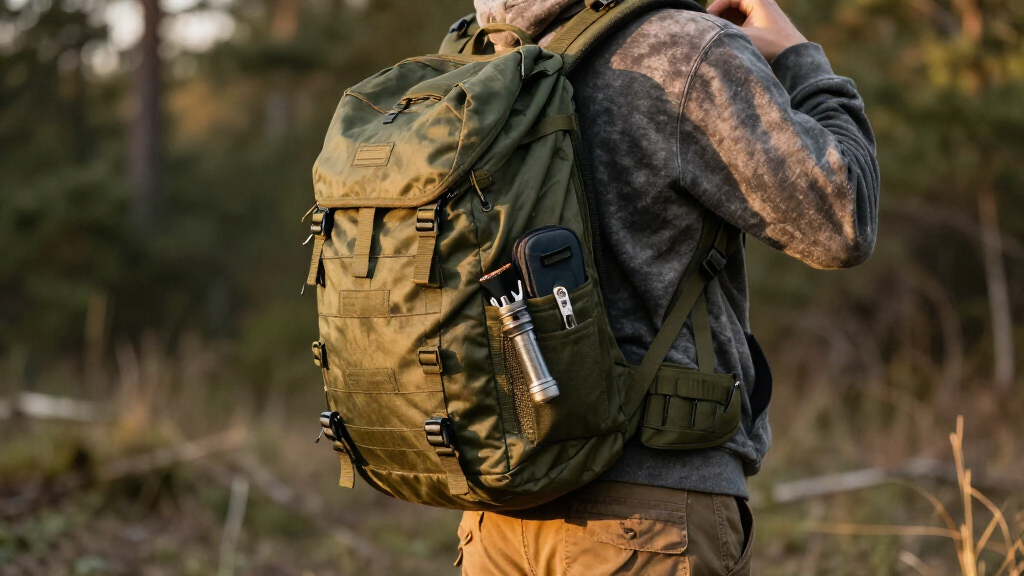
How We Picked
I evaluated each emergency prepper backpack against the factors that matter most during an actual evacuation: supply completeness (food, water, first aid, light, warmth, and communication tools measured against FEMA’s 72-hour baseline), bag quality (strap construction, fabric durability, and whether the pack is worth keeping after the supplies are used), and value per person — a two-person kit isn’t automatically a better deal if it simply splits one person’s rations. I also weighed shelf life of consumables and how easy each kit is to grab and carry under stress, since a survival kit you can’t move with quickly is a liability, not an asset.
The ranking order reflects a simple philosophy: the best kit is the one you will actually have ready when disaster hits. Kits with redundant basics (extra light sources, real first aid supplies, power capability) ranked higher than those padded with single-use novelties. Bags that could serve as a lasting platform for customization outranked disposable ones, and kits designed for realistic household scenarios — couples and small families — scored better than solo kits with inflated piece counts.
Factors to Consider When Choosing Emergency Prepper Backpacks
Choosing an emergency prepper backpack involves more than picking the kit with the longest feature list. These are the factors that separate a kit you’ll trust from one that fails you when it matters.Water: The Supply Every Kit Underestimates
Almost every pre-packed kit in this roundup provides the bare minimum three liters per person per day — and some provide less. Water is heavy, which is why manufacturers skimp, but dehydration impairs judgment within hours, well before food becomes a concern. A common mistake is assuming the included pouches are sufficient; in practice, you should add water purification tablets or a filter straw and a collapsible bottle to any kit you buy. If you live in a hot climate or have pets, double your water planning. The kits in this list differ mainly in how much extra room they leave for supplemental water, which is a real differentiator worth checking before you buy.
Person Count and Household Reality
Buying a two-person kit for a couple is usually more economical than buying two solo kits, but the math breaks down with kids, elderly family members, or pets in the picture. A four-person kit like the Essentials Complete covers a family of four on paper, yet children need smaller portions, and medications or infant supplies are never included. My advice: match the kit to your household’s actual headcount, then budget an additional twenty to fifty dollars for personalization — prescription copies, cash in small bills, and comfort items. Buyers who skip this step often discover during a real emergency that a generic kit covers a generic person, not their family.
Bag Quality: The Platform Outlives the Supplies
Food bars expire in five years and water pouches eventually degrade, but the backpack itself can serve for a decade if it’s built well. That’s why I weighted bag construction heavily in these rankings — flimsy packs with thin straps fail fast when loaded beyond their factory contents, and nearly every serious prepper ends up adding gear. Look for reinforced stitching, padded shoulder straps, and multiple compartments so supplies aren’t dumped into one cavernous pocket. The tactical-style bags in this roundup cost more upfront but repay that difference every time you reorganize or expand your loadout. A cheap bag full of supplies you can’t carry comfortably is worse than a good bag half full.
First Aid: Where Pre-Packed Kits Cut Corners
Kit manufacturers love advertising first aid inclusion, but the included kits are frequently token assortments — a few bandages, some gauze, and maybe a cheap packet of ointment. Compare the actual item lists rather than the claim on the box. A usable trauma kit needs pressure dressings, antiseptic, a triangular bandage, and ideally a tourniquet; none of the kits reviewed here include all of these. The Deluxe Ready America models come closest to adequate, which is part of why they ranked above the base versions. Plan to spend an extra fifteen to thirty dollars upgrading the medical component of whatever kit you buy — this is the single highest-return improvement you can make.
72 Hours Is a Minimum, Not a Standard
Government guidance frames 72 hours as the window before emergency services respond, but real disasters routinely exceed that. Hurricanes, wildfire evacuations, and extended power outages frequently stretch to a week or more, which is why the ReadyWise 7-Day Grab Bag earned a spot despite its narrower gear selection. Think of a 72-hour kit as a foundation, not a ceiling: food with 25-year shelf life, a way to purify more water, and a light source that doesn’t depend on disposable batteries all extend your readiness cheaply. Buyers who treat the kit as a finished product tend to overestimate their preparedness; those who treat it as a starting point are far better positioned when an event actually runs long.
Storage, Rotation, and Accessibility
A kit buried in the back of a garage closet is functionally useless during a fast evacuation. Whatever backpack you choose, store it near an exit, in a car trunk, or somewhere reachable in under a minute, and check it twice a year — batteries corrode, water pouches develop pinhole leaks, and food expires quietly. Keep a printed inventory taped inside the lid so you know what to rotate. One overlooked point: kits stored in vehicles face temperature swings that dramatically shorten shelf life, so vehicle-stored kits need more frequent inspection. The grab-and-go design of every product in this roundup only pays off if the bag is actually positioned to be grabbed.
Frequently Asked Questions
Are pre-packed emergency backpacks actually good, or should I build my own kit?
Pre-packed kits are genuinely worthwhile for most people because they remove the biggest barrier to preparedness: starting from zero. Building a custom kit produces better tailoring to your needs, but it typically costs more, takes multiple shopping trips, and most people never finish the project. The smart middle path is buying a solid pre-packed kit — like the Ready America Deluxe models or the ReadyWise tactical bag — and then upgrading the weak spots, which are almost always first aid and water. You get the instant coverage of a kit plus the personalization of a custom build, usually for less total cost than sourcing every item individually.
How long do the food and water in these emergency kits last before expiring?
Most kits in this category include food bars and water pouches rated for five years of shelf life, though some ReadyWise food items stretch to 25 years. The catch is that real-world storage conditions matter more than the printed date — heat, freezing, and humidity all shorten that window, especially for kits stored in cars or garages. I’d recommend writing the purchase date on the bag and doing a six-month inspection where you check pouch integrity and battery condition. Water pouches are the most common failure point since they develop micro-leaks over time, so squeeze-test them during your inspections and replace anything suspect.
Is a 2-person kit enough for a family, or do I need a 4-person kit?
A 2-person kit is not adequate for a family of four, because the food and water are rationed per person — you’d be splitting every resource in half. The Essentials Complete 4-Person kit exists precisely for this scenario and costs less than buying two couple kits. That said, family size isn’t the only variable: if you have an infant, elderly parent, or pets, no pre-packed kit covers those needs, and you’ll need to add formula, medications, or pet food yourself. For households of three, a 4-person kit with the extra capacity used for custom additions is usually the better play than stretching a 2-person kit.
What’s the difference between the cheap Ready America kits and the Deluxe versions?
The price gap comes down to gear that actually functions in an emergency versus bare-minimum compliance. The Deluxe versions include meaningful upgrades: a power station for charging phones, better first aid supplies, and more complete hygiene items, while the base kits like the 70280 and 70490 rely on lighter food rations and basic tools. If your budget only allows the base kit, it’s still far better than nothing, but expect to spend extra upgrading the medical supplies and adding a backup light source. For roughly thirty to fifty more dollars, the Deluxe versions close most of those gaps at purchase, which is why they rank higher in this roundup.
Should I keep my emergency backpack at home, in my car, or at work?
The honest answer is that serious preparedness means more than one location, since disasters rarely strike when you’re home. If you can only afford one kit, home storage near an exit is the default because that’s where your other supplies and family are. A car-stored kit makes sense if you commute long distances or live in an earthquake-prone region where roads may fail, but remember that vehicle temperature swings shorten food and water shelf life considerably. A minimal desk-drawer kit at work — water, light, comfortable shoes, a snack — bridges the gap cheaply. The grab-bag format of every product reviewed here is designed for home staging first, so start there and expand outward.
Conclusion
After comparing all nine kits, the right choice comes down to who’s carrying it. For best overall, the ReadyWise Emergency Survival Gear Tactical Backpack earns the top spot with a durable bag and well-rounded 64-piece loadout that balances quality, gear, and price. The Ready America 1-Person 72 Hour Deluxe kit is my best value pick for solo preppers who want real first aid and a power station without paying couple-kit prices. Couples get the most for their money with the Ready America 70285 Deluxe 2-Person, my best premium recommendation, while the simpler Ready America 1-Person base kit is the best starting point for beginners who want basic coverage before investing deeper. Families of four should go straight to the Essentials Complete 4-Person kit, and anyone preparing for disruptions longer than 72 hours — wildfire or hurricane evacuations, extended outages — should choose the ReadyWise 7-Day Grab Bag for its superior food duration. Whichever kit you pick, remember that every option reviewed here benefits from added water purification and an upgraded first aid kit; the backpack is the beginning of your preparedness, not the end of it.