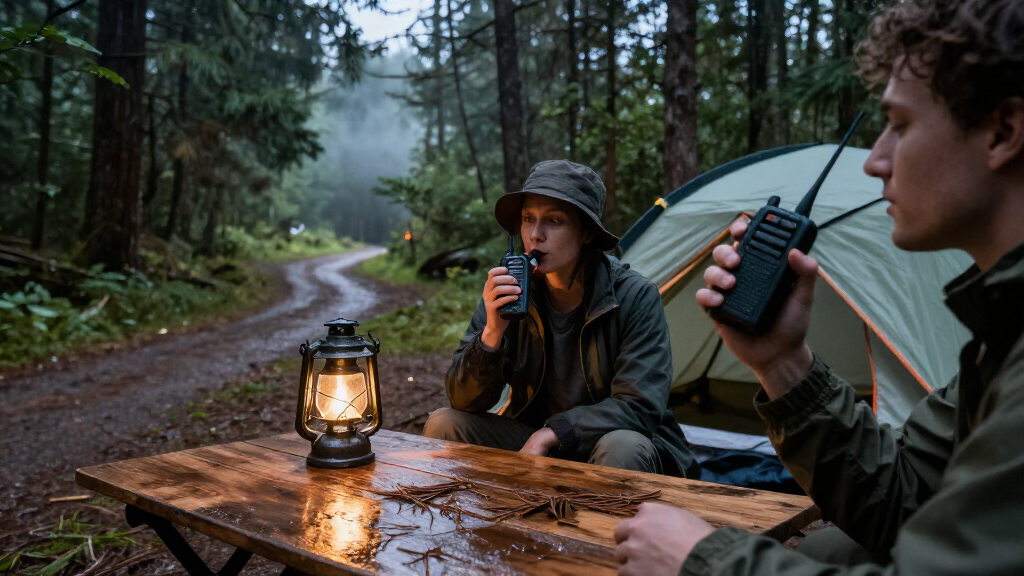

For a flexible emergency-ready choice, I’d start with the Motorola Talkabout T605 H₂O, which pairs waterproof construction with practical outdoor features. The Gaswei G2Pro+ and Retevis RB48 IP67 stand out for groups that need rugged, water-resistant radios, while the Midland GXT1000VP4 adds GMRS capability for buyers prepared to handle its licensing requirements. The main tradeoffs are water protection versus simpler operation, rechargeable convenience versus battery flexibility, and FRS simplicity versus GMRS range potential. No handheld radio guarantees communication when terrain, distance, or infrastructure get in the way. Read on for how these 15 options differ and which type of emergency plan each suits best.

Get emergency and outdoor gear delivered free with Prime
- Fast, free delivery on millions of items
- Prime Video, Amazon Music and more included
- Member-only deals all year
Key Takeaways
- The Motorola Talkabout T605 H₂O is my best overall fit for buyers who want a recognizable, water-focused radio without stepping into the added licensing considerations of GMRS.
- The four-pack options are better suited to household or team planning than the two-packs, but buyers should compare charging and battery arrangements before choosing a larger bundle.
- IP67-rated models such as the Gaswei G2Pro+ and Retevis RB48 are the strongest fit for wet environments; water-resistant protection is not the same as full waterproofing.
- GMRS radios, including the NULETO MK108 and Midland GXT1000VP4, call for a licensing check, so they make more sense for buyers willing to follow the applicable rules.
- The Airiton AI-K28 uses 4G LTE rather than relying only on direct radio-to-radio communication, making network availability and service terms part of the emergency plan.


| two-way emergency radio | Pack size | Channels | Water resistance | Privacy codes |
|---|---|---|---|---|
| Gaswei G2Pro+ IP67 Waterproof | 4 radios | 22 FRS channels | IP67; waterproof and floating | 121 combinations |
| NULETO MK108 GMRS Two-Way Radi | 2 radios | 60 | IP55; not for submersion | 121 |
| Motorola Talkabout T802 Two-Wa | 2 radios | 22 | IP54 | 121 |
| WisHouse M9 Rechargeable Two-W | 4 radios | 22 | Not water resistant | — |
| Motorola Solutions Talkabout T | 2 radios | 22 | IPX4 | 121 |
| Retevis RB48 IP67 Waterproof F | 4 walkie talkies | 22 | — | — |
| Retevis RT22 Rechargeable FRS | 4 radios | 16 | Not water resistant | — |
| Midland LXT600VP3 Two-Way Radi | 2 radios | 36 | IP00; no rated water ingress protection | 121 |
| Airiton AI-K28 4G LTE Push-to- | 2 radios | 200 | Not water resistant | — |
| Midland T51VP3 X-Talker FRS Tw | 2 radios | 22 | Water resistant | 38 CTCSS codes |
| MOICO T5 Two-Way Radios | 2 radios | 22 | IP65 | 99 CTCSS tone sets |
| pxton PX-888S Rechargeable Two | 4 radios | 16 | — | 165 |
| Midland GXT1000VP4 GMRS Two-Wa | 2 radios | 50 | JIS4 | 142 |
| Motorola Talkabout T605 H₂O Wa | 2 radios | 22 | — | 121 |
| Retevis RB48 FRS Two-Way Radio | 2 radios | 22 | — | — |
More Details on Our Top Picks
Gaswei G2Pro+ IP67 Waterproof Floating Two-Way Radios, Yellow, 4-Pack
For a group that may need to communicate around water, the Gaswei G2Pro+ has the clearest advantage here: its IP67 waterproof, floating design is built for conditions the WisHouse M9 cannot handle, since that model is not water resistant. Four radios also make it easier to equip a family or small team without mixing models. Dual-channel monitoring and two PTT buttons give users more ways to coordinate, while NOAA alerts and an SOS signal add emergency-focused functions beyond basic voice calls. The tradeoff is power flexibility: its included batteries are nonstandard, unlike the WisHouse’s rechargeable AA setup. The stated range is up to six miles, but terrain can reduce it, so I would choose it for wet-weather resilience and group features, not for a promise of long-distance contact.
Pros:- IP67-rated waterproofing and a floating design suit wet environments better than the WisHouse M9.
- Four radios provide a ready-made set for a family or small group.
- Dual-channel monitoring and dual PTT buttons support more flexible group coordination.
- NOAA weather alerts, SOS, FM radio, and adjustable VOX add useful emergency and hands-free functions.
Cons:- Included batteries are nonstandard, limiting replacement options compared with radios that use common AA cells.
- The stated maximum range is six miles, and real-world reach can be shorter.
- The extensive controls may be more than a casual user needs for simple short-range calls.
Best for: Families or outdoor teams of four who need floating, submersion-resistant radios for boating, shoreline trips, or wet-weather emergencies.
Not ideal for: Buyers who want to replace batteries with common AA cells, or who need dependable communication across long distances or obstructed terrain.
- Pack size:4 radios
- Channels:22 FRS channels
- Privacy codes:121 combinations
- Maximum stated range:6 miles
- Water resistance:IP67; waterproof and floating
- Emergency and weather features:NOAA weather alerts and SOS alert
- Hands-free features:VOX with 9 sensitivity levels; whisper mode
- Battery:4 nonstandard batteries included
Our verdict“Choose the Gaswei G2Pro+ if your group needs four radios built to float and withstand submersion, and skip it if common-battery convenience matters more.”
NULETO MK108 GMRS Two-Way Radios, 2-Pack
The NULETO MK108 suits buyers who want rechargeable radios with more channel choices than the 22-channel Motorola Talkabout T475. Its 60-channel GMRS setup, channel scanning, and 121 privacy codes help users find a channel and reduce routine interference, though privacy codes do not make conversations private. USB-C charging is convenient away from a dedicated charger, and the included dual-slot dock gives both radios a shared home between trips. The IP55 housing can handle rain and splashes, and the stated drop resistance adds reassurance for field use, but it is not submersion-proof like the Gaswei G2Pro+. NOAA alerts and an SOS alarm support emergency readiness. I would choose it for a pair who can use GMRS legally and value rechargeable flexibility, not for swimmers or buyers who need a four-radio family set.
Pros:- 60 channels and 121 privacy codes offer more channel choices than the Motorola Talkabout T475.
- USB-C charging plus a dual-slot desktop charger gives two convenient charging options.
- IP55 housing resists rain, splashes, and dust, with stated drop resistance up to 2 m.
- NOAA alerts, SOS alarm, FM radio, VOX, and a backlit display provide useful field features.
Cons:- IP55 protection does not make the radios suitable for submersion, unlike the Gaswei G2Pro+.
- The two-radio pack is less suited to larger families or teams than four-packs in this roundup.
- Actual communication range varies with terrain and surroundings.
Best for: Two-person teams seeking rechargeable GMRS radios with USB-C charging, weather alerts, and more channel options for outdoor or work use.
Not ideal for: Buyers who need waterproof radios for submersion, a four-radio bundle, or a simple FRS-only option without GMRS requirements.
- Pack size:2 radios
- Radio type:GMRS
- Channels:60
- Privacy codes:121
- Maximum stated range:Up to 6 miles in open areas
- Water resistance:IP55; not for submersion
- Battery:1800 mAh lithium-ion per radio
- Charging:USB-C or included dual-slot desktop charger
- Drop resistance:Up to 2 m (6.6 ft)
Our verdict“Pick the NULETO MK108 for a rechargeable two-person GMRS setup with broad channel choice, but not for underwater use or a larger group.”
Motorola Talkabout T802 Two-Way Radios, 2-Pack, IP54 Water-Resistant, 22 Channels, Black and Blue
The Motorola Talkabout T802 stands apart from the more conventional Motorola T475 by adding Bluetooth-linked location sharing and messaging through a smartphone app. That can help a group coordinate when voice contact is awkward, while NOAA alerts, call alerts, and a flashlight keep the radios useful as emergency gear. Its advertised maximum range reaches up to 35 miles under suitable conditions, but I would not treat that figure as a reliable distance in hills, buildings, or trees; the NULETO MK108’s more modest six-mile claim is a better reminder that terrain shapes real-world reach. The T802 uses three AA batteries per radio and lists up to 16 hours of battery life, giving buyers a familiar battery format but a finite operating window. App-dependent functions also require a connected phone, so this is not the best fit for someone seeking a fully standalone radio.
Pros:- Bluetooth app adds location sharing, messaging, and radio controls beyond the T475’s listed functions.
- NOAA weather alerts, an integrated flashlight, and call alerts support emergency use.
- Uses three included AA batteries per radio, which are a familiar battery format.
- Offers 22 channels, 121 privacy codes, and compatibility with FRS and GMRS radios.
Cons:- Location sharing and messaging require a connected smartphone and app.
- IP54 water resistance is not protection against submersion; the Gaswei G2Pro+ is better suited to wet environments.
- The 35-mile maximum range is conditional and should not be read as an expected everyday distance.
Best for: Small hiking or camping groups who carry smartphones and want location sharing and messaging alongside radio-to-radio communication.
Not ideal for: Buyers who want emergency communication without a smartphone, need stronger water protection than IP54, or prioritize rechargeable batteries included with the radios.
- Pack size:2 radios
- Channels:22
- Privacy codes:121
- Maximum stated range:Up to 35 miles under suitable conditions
- Water resistance:IP54
- Connectivity:Bluetooth
- Battery:3 AA batteries per radio; included
- Listed battery life:Up to 16 hours
- Emergency features:NOAA weather alerts, location sharing, messaging, and integrated flashlight
Our verdict“Choose the T802 if smartphone-assisted group coordination matters, but choose a simpler radio if you need standalone emergency communication.”
WisHouse M9 Rechargeable Two-Way Radios, 4-Pack
For a group that wants four radios and a straightforward rechargeable setup, the WisHouse M9 includes 12 rechargeable AA batteries and USB charging cables, avoiding the nonstandard battery issue of the Gaswei G2Pro+. NOAA alerts, a flashlight, an SOS alarm, and three-level VOX cover useful basics for camping or local coordination. Compared with the Gaswei, however, the M9 gives up the features that matter most around water: it is not water resistant, does not float, and has a shorter stated maximum range of five miles. Its range can also shrink around buildings, trees, and other obstructions, so these are best treated as nearby-contact radios rather than a long-distance safety link. I would shortlist them for dry trips and group convenience, but skip them for wet-weather exposure or demanding emergency conditions.
Pros:- Four radios and 12 rechargeable AA batteries provide a full-group kit with a familiar battery format.
- USB charging cables are included for recharging the supplied batteries.
- NOAA weather alerts, flashlight, and SOS alarm add practical emergency functions.
- VOX has three sensitivity levels for hands-free communication.
Cons:- Not water resistant, unlike the IP55 NULETO MK108 and IP67 Gaswei G2Pro+.
- The stated maximum range is five miles and may fall around buildings, trees, and other obstacles.
- Included charging cables are micro USB, rather than USB-C.
Best for: Families or camping groups of four who want rechargeable AA batteries, basic emergency alerts, and short-range communication in dry conditions.
Not ideal for: Boaters, hikers expecting rain or water crossings, and buyers who need a water-resistant radio or stronger range claims.
- Pack size:4 radios
- Channels:22
- Maximum stated range:5 miles
- Battery:12 included 1000 mAh rechargeable AA batteries
- Charging:USB; two dual-head micro USB charging cables included
- Water resistance:Not water resistant
- VOX:Hands-free operation with 3 sensitivity levels
- Emergency features:NOAA weather alerts, flashlight, and SOS alarm
Our verdict“Choose the WisHouse M9 for an affordable-feeling four-radio setup with rechargeable AA cells for dry outings, and skip it where water protection is needed.”
Motorola Solutions Talkabout T475 Weather-Resistant Two-Way Radios, Black/Yellow, 2-Pack
The Motorola Talkabout T475 is a practical two-radio choice for buyers who want familiar emergency basics without the T802’s smartphone-dependent location and messaging features. It pairs NOAA weather alerts with a built-in LED flashlight, VibraCall, rechargeable NiMH batteries, and useful carry accessories, including a case and earpiece. Its IPX4 rating is suited to splashes, not submersion, so the Gaswei G2Pro+ is the stronger match for boating or water exposure. The T475’s stated maximum range of up to 35 miles is also a best-case figure, not a dependable expectation in obstructed terrain. Battery life is listed at up to 12 hours, shorter than the T802’s listed 16 hours. I’d favor this model for a pair wanting a familiar, accessory-rich radio for routine outdoor use, rather than advanced coordination tools or immersion protection.
Pros:- NOAA weather radio and alerts provide a dedicated source of weather information.
- Built-in LED flashlight and VibraCall add practical options for low-light or quiet situations.
- Includes rechargeable NiMH batteries, charger, carry case, earpiece, belt clips, and lanyard.
- IPX4 protection helps with splashes during ordinary outdoor use.
Cons:- IPX4 does not protect against submersion, unlike the floating IP67 Gaswei G2Pro+.
- The stated maximum range of up to 35 miles depends on suitable conditions and can be much shorter.
- Listed battery life is up to 12 hours, below the T802’s listed 16 hours.
Best for: Two-person camping or travel pairs who want rechargeable radios with NOAA alerts, a flashlight, and carry accessories in a weather-resistant design.
Not ideal for: Buyers who need waterproof radios for submersion, app-based location sharing, or longer listed battery life than the T802.
- Pack size:2 radios
- Channels:22
- Privacy codes:121
- Maximum stated range:Up to 35 miles
- Water resistance:IPX4
- Battery:2 included 800 mAh rechargeable NiMH batteries
- Listed battery life:Up to 12 hours
- Emergency features:NOAA weather radio and alerts, LED flashlight, and VibraCall
- Included accessories:Carry case, charger, earpiece, belt clips, and lanyard
Our verdict“Pick the T475 for straightforward emergency features and useful accessories in a rechargeable two-radio set, but not for submersion or smartphone-based coordination.”
Retevis RB48 IP67 Waterproof FRS Walkie Talkies, 4-Pack
For emergency communication in wet, dusty, or rough conditions, the RB48 is the strongest fit in this group. Its IP67 rating and MIL-STD-810H testing give it a durability advantage over the water-resistant Midland T51VP3, while the glove-friendly PTT button is easier to operate when hands are cold or covered. Four radios, charging docks, and NOAA weather alerts make it practical for a household or small crew that needs a radio per person. The tradeoff is bulk: at 730 g, it is far heavier than the compact Retevis RT22. Its stated range is also up to 3 miles, so it is better suited to local coordination than long-distance communication. Channel and privacy-code compatibility can also affect contact with other FRS radios.
Pros:- IP67 waterproofing and testing for dust, vibration, shock, and temperature changes
- Large PTT button is designed for use with gloves
- NOAA weather alerts and vibration alerts provide useful warning options
- Four radios, batteries, and charging docks are included
Cons:- Heavy compared with compact options such as the Retevis RT22
- Stated maximum talking range is 3 miles
- Compatibility with other radios depends on matching channels and privacy codes
Best for: Families, outdoor crews, or emergency-preparedness groups who need four radios that can handle rain, dust, and gloved operation.
Not ideal for: Buyers who prioritize a lightweight radio for everyday carry, or need communication beyond local FRS range.
- Pack size:4 walkie talkies
- Frequency:FRS
- Channels:22
- Durability:IP67; MIL-STD-810H
- Maximum stated range:3 miles
- Battery:2000mAh Li-ion; up to 20 hours
- Dimensions:1.3 × 2.4 × 7.1 inches
- Weight:730 g
- Warranty:5 years for radio body; 1 year for accessories
Our verdict“Choose the RB48 if rugged, weather-ready communication for a group matters more than low weight or extended range.”
Retevis RT22 Rechargeable FRS Walkie Talkies, 4-Pack
The RT22 is the portability pick for groups that want four radios without carrying the heft of the Retevis RB48. Each weighs just 3.8 ounces, and the slim body, belt clip, and USB-C charging suit family outings, event staff, or short-range coordination. Noise reduction and hands-free VOX can help when users need to communicate while working, though VOX is not a substitute for a clearly accessible push-to-talk option in every noisy setting. The main compromise is protection: this model is not water resistant, making the RB48 a safer choice in wet or dusty environments. Its battery supports up to 10 hours of continuous use, half the RB48’s stated duration, and the stated range is 3 km. Choose it for light carry, not severe-weather readiness.
Pros:- Lightweight 3.8-ounce radios with belt clips
- USB-C charging and up to 10 hours of continuous use
- Hands-free VOX and noise reduction support work while moving
- Four-radio set uses license-free FRS operation
Cons:- Not water resistant, unlike the Retevis RB48
- Up to 10 hours of continuous use is a shorter stated runtime than the RB48
- Maximum stated talking range is 3 km
Best for: Families or event teams that want a lightweight four-radio set with USB-C charging for fair-weather, short-range use.
Not ideal for: People preparing for storms, wet worksites, or long outings where water protection and longer stated battery life matter.
- Pack size:4 radios
- Frequency:FRS
- Channels:16
- Maximum stated range:3 km
- Battery:1000mAh; up to 10 hours continuous use
- Charging:USB-C
- Weight:3.8 oz (108 g)
- Dimensions:0.83 × 2.2 × 5.35 inches
- Water resistance:Not water resistant
Our verdict“Pick the RT22 for a light, rechargeable four-radio set in dry conditions, but choose the RB48 for weather exposure.”
Midland LXT600VP3 Two-Way Radios, 36 Channels, 2-Pack
The LXT600VP3’s clearest emergency advantage is its two power options: rechargeable packs for routine use and four AAA batteries per radio as backup, though the alkaline batteries are not included. That flexibility can be more useful during a prolonged outage than the RT22’s USB-C rechargeable-only setup. The pair also scans NOAA weather channels and provides alerts, giving it a practical warning role beyond person-to-person calls. Midland advertises up to 30 miles, but that figure depends on open terrain with minimal obstruction; it is not a dependable expectation in built-up areas. Its IP00 rating means no rated water protection, so it falls behind the rugged Retevis RB48 for exposed conditions. This makes most sense for a home kit where users can store spare batteries and keep the radios sheltered.
Pros:- Rechargeable packs and desktop charger are included
- Can use four AAA alkaline batteries per radio as backup
- NOAA weather scan across 10 channels and weather alerts
- 36 channels and 121 privacy codes offer plenty of channel settings
Cons:- No rated water ingress protection
- AAA backup batteries are not included
- The advertised maximum range depends on open areas with minimal obstructions
Best for: Households building an emergency kit who want rechargeable radios with an option to switch to replaceable AAA batteries.
Not ideal for: Outdoor users who may face rain or need rugged water protection; the Retevis RB48 is better suited to those conditions.
- Pack size:2 radios
- Channels:36
- Privacy codes:121
- Maximum stated range:Up to 30 miles in open areas with minimal obstructions
- Weather features:NOAA scan across 10 channels and weather alerts
- Power:Rechargeable packs or 4 AAA alkaline batteries per radio; AAA batteries not included
- Battery life:6 hours
- Water resistance:IP00; no rated water ingress protection
- Warranty:1-year limited
Our verdict“Choose the LXT600VP3 for a sheltered home emergency kit where replaceable-battery backup matters more than water resistance.”
Airiton AI-K28 4G LTE Push-to-Talk Two-Way Radios with SIM Cards, 2-Pack
The AI-K28 works differently from the FRS radios here: its 4G LTE push-to-talk system can connect users over cellular coverage rather than relying on nearby radio-to-radio reach. That can suit teams spread across a large service area, and its one-to-one and encrypted group calling add options beyond the basic channel-based communication of the Midland T51VP3. The advertised 10,000-mile range should not be read as independent coverage; calls still depend on a working cellular network. That dependency is a serious emergency tradeoff if towers or service are unavailable. The radios are also not water resistant, unlike the IP67 Retevis RB48, so they need protection from rain. I would choose this only when cellular infrastructure is part of the plan, rather than as a standalone backup for network outages.
Pros:- 4G LTE push-to-talk supports communication beyond typical local FRS range when coverage is available
- Supports one-to-one and encrypted group calls
- Noise-canceling microphones support clearer speech in noisy settings
- Shock-resistant body and included clips and hand straps
Cons:- Communication depends on cellular network coverage
- Not water resistant
- The advertised 10,000-mile maximum is not a guarantee of coverage or connectivity
Best for: Work teams or households that need push-to-talk across a wide area and expect cellular service to remain available.
Not ideal for: Buyers seeking a network-independent emergency radio or equipment for wet outdoor conditions; the set relies on cellular coverage and is not water resistant.
- Pack size:2 radios
- Connectivity:4G LTE
- Channels:200
- Calling:One-to-one and encrypted group calls
- Advertised maximum range:10,000 miles; communication depends on cellular coverage
- Water resistance:Not water resistant
- Batteries:2 included 9V batteries
- Included accessories:2 Type-C USB chargers, 2 clips, 2 hand straps, user manual
- Certification:FCC ID: 2BNNE-BQ-K28
Our verdict“Choose the AI-K28 for wide-area team calls where cellular service is available, not as a replacement for network-independent emergency radios.”
Midland T51VP3 X-Talker FRS Two-Way Radios, Orange, 2-Pack
The T51VP3 is a straightforward two-radio option for people who want familiar FRS operation plus weather alerts, without the larger four-radio setup of the Retevis RB48. Its 22 channels and 38 privacy codes help users find a compatible channel setting, while NOAA scanning and alerts add a useful layer for local weather awareness. The three-level eVOX hands-free feature can help when both hands are occupied, though voice activation may be less reliable in noisy surroundings than deliberate push-to-talk. The stated 28-mile maximum range is a best-case claim, not a reliable distance in obstructed terrain. It is water resistant, but the product data does not provide an IP rating, so I would not treat it as equivalent to the RB48’s IP67 protection. AAA power is convenient to replace, but users must plan for fresh batteries.
Pros:- 22 FRS channels and 38 privacy codes for channel selection and compatibility
- NOAA weather scanning and alerts provide local weather updates
- Three-sensitivity-level eVOX supports hands-free communication
- Water-resistant design with belt clips
Cons:- Requires AAA batteries, so users need a supply of replacements
- Water resistance is not specified with an IP rating like the Retevis RB48
- The advertised 28-mile maximum range is not a dependable expectation in obstructed terrain
Best for: Pairs who want compact FRS radios with NOAA alerts and hands-free calling for local coordination in changeable weather.
Not ideal for: Users expecting IP-rated waterproofing, a four-radio household kit, or dependable communication at the advertised maximum range.
- Pack size:2 radios
- Frequency:FRS
- Channels:22
- Privacy codes:38 CTCSS codes
- Maximum advertised range:28 miles
- Weather features:NOAA weather scan and alerts
- Hands-free operation:eVOX with 3 sensitivity levels
- Battery:1 AAA battery per radio, included; average battery life 10 hours
- Water resistance:Water resistant
Our verdict“Pick the T51VP3 for a simple two-person FRS set with weather alerts, but choose the RB48 if rated waterproof protection is a priority.”
MOICO T5 Two-Way Radios, 2-Pack
The MOICO T5 is a compact choice for households that want basic local communication without relying on rechargeable packs. Its 22 FRS channels, 99 CTCSS tone sets, and three-level VOX give users ways to organize conversations and transmit hands-free. A backlit display and built-in flashlight are useful during a power outage, while the stated IP65 protection adds resistance to dust and water exposure. Compared with the rechargeable pxton PX-888S, the MOICO is a smaller two-radio set rather than a four-radio kit with charging stations and earpieces. Its main tradeoff is readiness: four AAA batteries are needed and are not included. The stated 3-mile maximum also falls to a typical 0.5–1 mile in towns, so I would treat it as a short-range backup, not a dependable long-distance link.
Pros:- 22 FRS channels and 99 CTCSS tone sets offer options for organizing local communication.
- Three VOX sensitivity levels support hands-free operation.
- Backlit LCD and built-in LED flashlight help in low-light situations.
- Compact body includes a detachable belt clip and stated IP65 protection.
Cons:- Four AAA batteries are required for the pair, and none are included.
- Typical stated range in cities or towns is only 0.5–1 mile.
- Two-radio package lacks the charging stations and earpieces supplied with the pxton PX-888S kit.
Best for: Households wanting a compact two-radio backup that can run on replaceable AAA batteries and includes basic low-light features.
Not ideal for: Buyers who want radios ready to use out of the box, a multi-person kit, or reliable communication across long distances.
- Radio type:FRS, UHF
- Pack size:2 radios
- Channels:22
- Privacy codes:99 CTCSS tone sets
- Stated maximum range:3 miles
- Typical stated urban range:0.5–1 mile
- Battery requirement:4 AAA batteries total; not included
- Stated battery life:12 hours
- Water resistance:IP65
Our verdict“Choose the MOICO T5 for a compact, replaceable-battery backup for nearby communication, but skip it if you need a ready-charged group kit or longer practical range.”
pxton PX-888S Rechargeable Two-Way Radios with Earpieces, 4-Pack
For a family or small response group that needs four handsets, the pxton PX-888S offers a more complete shared kit than the two-radio MOICO T5. Each radio comes with a charging station, belt clip, hand strap, and earpiece, so users can keep equipment together and communicate with less noise in busy settings. The rechargeable 1500 mAh batteries are listed for 8–12 hours of continuous use, and a 3–4 hour full charge supports routine recharging between outings. VOX, scanning, a low-battery alarm, and a flashlight add practical functions without making the set depend on a phone network. The tradeoff is durability clarity: it is described as water resistant, but no protection rating is provided. Its stated 2-mile range also depends on surroundings, so I would not choose it over the waterproof Motorola Talkabout T605 H₂O for wet outdoor emergencies.
Pros:- Four radios include matching charging stations, earpieces, belt clips, and hand straps.
- Rechargeable 1500 mAh batteries are listed for 8–12 hours of continuous use.
- VOX, channel scanning, and a low-battery alarm support practical group use.
- 165 privacy codes provide more channel-code combinations than the MOICO T5’s 99.
Cons:- Water resistance is described without a specific protection rating.
- Stated maximum range is 2 miles and can be reduced by obstacles and surroundings.
- Continuous-use battery life varies with frequency of use.
Best for: Families, volunteer teams, and small groups that need four rechargeable radios with individual earpieces and charging stations.
Not ideal for: People expecting clear protection against heavy rain or immersion, or groups that need a documented waterproof rating and greater stated range.
- Pack size:4 radios
- Frequency:UHF
- Channels:16
- Privacy codes:165
- Stated maximum range:2 miles
- Battery:1500 mAh rechargeable lithium-ion
- Continuous-use time:8–12 hours
- Full charge time:3–4 hours
- Included accessories:4 charging stations, 4 belt clips, 4 earpieces, 4 hand straps
Our verdict“Pick the pxton PX-888S when four people need a coordinated rechargeable kit, but choose a rated waterproof model such as the Motorola T605 H₂O for wet conditions.”
Midland GXT1000VP4 GMRS Two-Way Radios with Headsets, 2-Pack
The Midland GXT1000VP4 is the most feature-rich option here for buyers who want weather information and backup power choices in a two-radio set. Its NOAA weather scan and alerts add a useful warning channel beyond person-to-person communication, while 50 channels, 142 privacy codes, and voice-activated transmission give groups room to coordinate. Rechargeable NiMH packs suit regular use; the option to run on eight AA batteries offers another power path when charging is unavailable. That flexibility gives it an emergency-planning advantage over the USB-C-only Motorola Talkabout T605 H₂O, though the Midland is only JIS4 water resistant rather than waterproof. The stated 36-mile maximum is not a realistic expectation in obstructed areas, and listed battery life is 10 hours. GMRS operation also makes this a more specialized choice than FRS models such as the MOICO T5.
Pros:- NOAA weather scan and alerts add a dedicated source of weather warnings.
- Rechargeable NiMH packs or eight AA batteries provide two power options.
- Includes headsets, charger, belt clips, and AC and DC adapters.
- 50 channels, 142 privacy codes, and hands-free voice activation support group coordination.
Cons:- JIS4 water resistance is not the same as waterproof protection offered by the Motorola T605 H₂O or Retevis RB48.
- The 36-mile maximum range is condition-dependent and should not be treated as a typical operating distance.
- Listed battery life is 10 hours.
Best for: Prepared households and outdoor groups who want NOAA weather alerts, included headsets, and the option to use rechargeable packs or AA batteries.
Not ideal for: Buyers seeking a waterproof radio, a small lightweight handset, or a simple FRS-only set without GMRS-specific considerations.
- Radio type:GMRS two-way radio
- Pack size:2 radios
- Channels:50
- Privacy codes:142
- Stated maximum range:36 miles
- Water resistance:JIS4
- Battery options:Rechargeable NiMH packs or 8 AA batteries
- Stated battery life:10 hours
- Included accessories:Headsets, belt clips, desktop charger, rechargeable packs, AC adapter, DC adapter
Our verdict“Choose the Midland GXT1000VP4 if weather alerts and alternate battery options matter more than waterproofing or a straightforward FRS setup.”
Motorola Talkabout T605 H₂O Waterproof Two-Way Radios, 2 Pack
The Motorola Talkabout T605 H₂O is the clearest pick in this group for boating, fishing, and other situations where a dropped radio could end communication. Its IP67 waterproof build is paired with a floating design that stays face up, making retrieval easier than with the water-resistant Midland GXT1000VP4. A flashlight that activates when the radio hits water may also help signal its location. The two radios use FRS, offer 22 channels and 121 privacy codes, and recharge over USB-C. That makes the set straightforward for local outdoor communication, but it is not the strongest all-purpose emergency kit: listed battery life is up to nine hours, and its 35-mile maximum is a best-case claim rather than a dependable expectation across obstructed terrain. For rougher handling and longer listed battery life, the Retevis RB48 is another option, though it does not float.
Pros:- IP67 waterproof design suits use around water.
- Floating, face-up construction makes a dropped radio easier to retrieve.
- Water-activated flashlight can help locate the handset.
- USB-C charging and included rechargeable batteries simplify routine charging.
Cons:- Listed battery life is up to 9 hours, shorter than the Retevis RB48’s stated up-to-20-hour figure.
- The stated 35-mile maximum range should not be read as typical coverage.
- Two-radio pack is less suited to larger groups than the four-radio pxton PX-888S kit.
Best for: Boaters, anglers, and outdoor users who need a waterproof radio that floats and is easier to locate after falling into water.
Not ideal for: Groups prioritizing long battery life, glove-friendly controls, or an emergency radio for extended use away from charging.
- Radio type:FRS, UHF
- Pack size:2 radios
- Channels:22
- Privacy codes:121
- Stated maximum range:35 miles
- Battery life:Up to 9 hours
- Charging:USB-C
- Weight:7.84 ounces
Our verdict“Choose the T605 H₂O for water exposure and floatability; pick the Retevis RB48 instead if durability and longer listed battery life matter more than flotation.”
Retevis RB48 FRS Two-Way Radios, 2-Pack
The Retevis RB48 is built for users who expect radios to face rough handling, dust, and wet conditions rather than stay tucked in a drawer. Its IP67 waterproof and dustproof construction, MIL-STD-810H durability standard, and glove-friendly controls make it a tougher work-oriented choice than the compact MOICO T5. A 2000 mAh rechargeable battery is listed for up to 20 hours, while USB-C charging and a dock help keep the pair ready for repeat shifts. NOAA weather alerts and vibration alerts add useful notice options, and the bright yellow finish is easier to spot than the Midland GXT1000VP4’s more subdued design. The clear tradeoff is reach: the stated maximum is 2 miles, far below the headline claims on some competing radios. It also lacks the T605 H₂O’s floating design, so this is rugged gear, not a float-to-retrieve choice.
Pros:- IP67 waterproof and dustproof protection suits demanding outdoor conditions.
- MIL-STD-810H durability standard and glove-friendly controls support rougher use.
- 2000 mAh rechargeable batteries are listed for up to 20 hours.
- USB-C dock, bright yellow finish, NOAA weather alerts, and vibration alert add practical utility.
Cons:- Listed maximum talking range is 2 miles.
- Unlike the Motorola Talkabout T605 H₂O, it is not described as floating.
- Two-radio pack does not equip a larger group as fully as the four-radio pxton PX-888S kit.
Best for: Outdoor workers, maintenance crews, and emergency-preparedness users who need tough, rechargeable FRS radios with glove-friendly controls and long stated battery life.
Not ideal for: Boaters who need a radio that floats, or users whose priority is maximum stated range rather than rugged construction and battery endurance.
- Radio type:FRS
- Pack size:2 radios
- Channels:22
- Stated maximum range:2 miles
- Water and dust protection:IP67
- Durability standard:MIL-STD-810H
- Battery:2000 mAh lithium-ion
- Battery life:Up to 20 hours
- Charging:USB-C and charging dock
Our verdict“Pick the RB48 for rugged local communication and long stated battery life, but choose the Motorola T605 H₂O if flotation is a must or a four-pack if you need more handsets.”
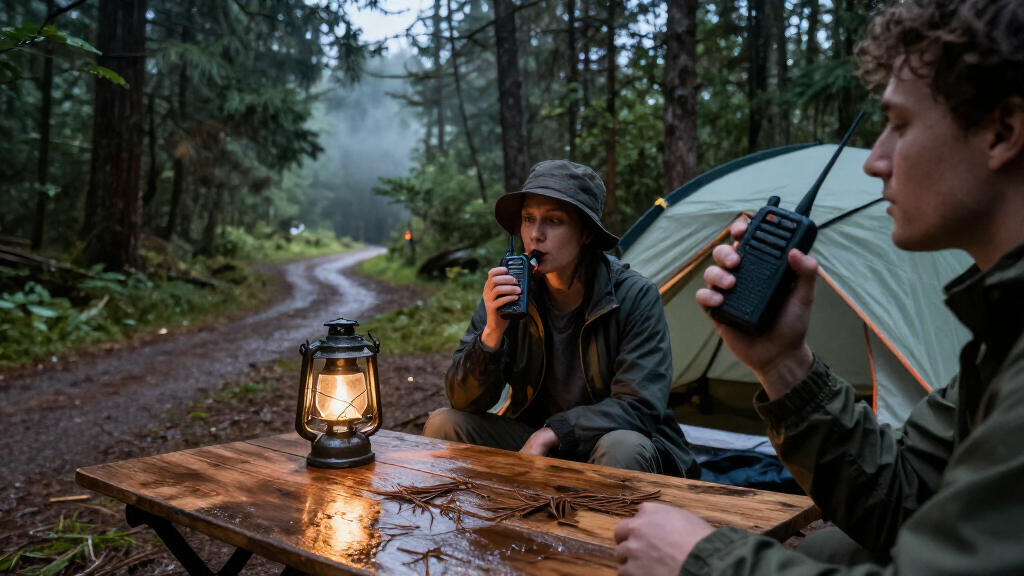
How We Picked
I ranked these radios by how well their stated features support emergency communication, not by channel counts or claimed maximum range alone. I weighed water and weather protection, power and charging flexibility, ease of use under stress, group size, and the practical distinction between FRS, GMRS, and LTE-based push-to-talk. I also considered whether the product’s format—such as a four-pack, headset bundle, or compact design—solves a clear buyer need.
The ranking favors options that balance dependable, straightforward use with useful protection and a clear role. Models with a specialized strength can still be a better pick for a particular plan, but licensing duties, dependence on cellular networks, limited bundle size, or less robust water protection affect their broader usefulness. Product names and listed features guide this comparison; real-world range varies with terrain, buildings, antenna position, and interference.
Factors to Consider When Choosing Two-way Emergency Radios
Choosing an emergency radio starts with the communication plan, not the longest range claim. I’d first decide who needs to talk, where they will be, and whether the plan must work without cellular service or outside power. These choices help narrow the field before comparing bundles and feature lists.
Match the Radio Service to Your Plan
FRS radios are generally the simpler route for casual, short-range communication, while GMRS can support different equipment and operating options but brings licensing responsibilities in the United States. Don’t assume a higher channel count means a radio reaches farther or works on a private frequency; channel labels can overlap between models. If you choose GMRS, check current FCC rules and make sure every person using the radios understands the operating requirements. For a household that wants a quick, uncomplicated backup, an FRS model may be easier to share. For a group willing to learn the rules and coordinate equipment, GMRS may fit a more deliberate plan.
Plan Around Range, Terrain, and Backup Communication
Manufacturers’ range figures usually describe favorable conditions, not a promise for a neighborhood, forest, or building. Hills, walls, dense trees, and distance can sharply reduce communication, so plan around the places you actually need to connect. A radio is most useful when paired with agreed meeting points, check-in times, and a backup method if contact fails. Avoid choosing solely by a large advertised range number; compare the radio service and your likely surroundings instead. If your plan depends on coverage beyond direct radio communication, an LTE push-to-talk model may help only where compatible network service is available.
Treat Water Protection as a Specific Requirement
Waterproof and water-resistant labels describe different levels of protection, and a radio built for rain may not suit immersion or repeated splashes. Check the model’s stated protection rating and what conditions it covers rather than relying on words like rugged or weather-ready. Floating designs can make a dropped radio easier to recover on a boat, but they do not replace a dry storage plan. Seals, charging ports, and battery compartments also need proper care after exposure. Pay more for stronger water protection when water is a realistic hazard, not simply because the label sounds reassuring.
Choose Power for the Length of the Outage
Rechargeable radios are convenient when you can keep them charged, but that advantage fades during a prolonged outage without a compatible way to recharge. Replaceable batteries can simplify resupply, though they require you to store spares and check their condition. Before buying a bundle, verify what charging accessories and battery options are included; pack size alone does not tell you how easy the radios are to keep operational. Assign a charging routine and store cables or spare batteries with the emergency kit. A mixed plan—charged radios plus a separate backup power source—can be more resilient than relying on one charging method.
Buy for the Number of People Who Must Communicate
A two-pack may suit a pair that stays together or a household with a separate backup device, while a four-pack can support divided teams or family members in different locations. More radios only help if users know how to select the shared channel, manage privacy codes, and keep devices charged. Headsets can make communication easier when hands are busy, but they add small parts that can be misplaced or damaged. Set a simple channel plan before an emergency and practice using it with everyone who may carry a radio. If children or occasional users are involved, prioritize clear controls and a short setup routine over extra features.
Check Rules, Service Needs, and Maintenance
Some radios communicate directly over radio frequencies, while LTE push-to-talk depends on compatible cellular coverage and any required service arrangements. Those approaches solve different problems: direct radios avoid dependence on a mobile network, while LTE devices may connect over broader areas when service is active. Read the product details for SIM, subscription, activation, and coverage requirements before treating an LTE model as an outage backup. For any radio, inspect battery contacts, charging ports, accessories, and stored power supplies periodically. Keep the manual and a written operating plan with the kit so a less-familiar user can get started without relying on internet access.
Frequently Asked Questions
Will these radios work if cell service and the power grid are down?
FRS and GMRS radios communicate directly with compatible radios, so they do not need a cell tower to be available. They still need charged or working batteries, and their usable range can shrink around buildings, hills, and other obstacles. The Airiton AI-K28 is different because its 4G LTE push-to-talk feature depends on compatible network coverage and service. For an outage plan, decide whether you need communication without cellular infrastructure and choose your primary radio accordingly. Keep a backup power plan and agree on check-in procedures before an emergency.
Do I need a license to use the radios in this roundup?
Licensing depends on the radio service and the rules where you operate. In the United States, GMRS use requires an FCC license, while FRS is generally intended for personal use without an individual license. The NULETO MK108 and Midland GXT1000VP4 are identified as GMRS models, so check current requirements before operating them. A model’s channel count or appearance does not determine whether a license is needed. If you want to avoid that added responsibility, focus on an FRS option and verify the product’s service classification.
Is a four-pack a better emergency choice than a two-pack?
A four-pack makes sense when several people may split into separate teams or need radios at different locations. A two-pack can be a better fit for a pair, a small household, or buyers who already have compatible radios. Compare the complete kit rather than the number of units: charging accessories, battery options, and the ability to keep every device ready matter during an outage. Extra radios also need a shared channel plan and routine battery checks. Choose the smallest bundle that covers your actual communication roles, with a spare device only if it supports your plan.
Should I choose waterproof protection or more features?
Choose stronger water protection when the radio may be used in heavy rain, near water, or in conditions where a drop could leave it wet. The Gaswei G2Pro+ and Retevis RB48 IP67 are aimed at more demanding water exposure than models described as water-resistant. If your radios will stay indoors in a dry emergency kit, straightforward controls, power flexibility, or a bundle suited to your group may matter more. Also check the stated protection details; water-resistant does not mean safe for immersion. A rugged rating is useful only when it matches the conditions in your plan.
Can I rely on the advertised range when choosing an emergency radio?
No single range claim can predict performance in every location. Buildings, trees, hills, interference, and how the radio is held can all affect the signal. A model with more channels or a larger advertised range may not solve a terrain problem or reach someone beyond direct radio coverage. Test communication in the places where you expect to use the radios, then set fallback meeting points and check-in times. If your plan needs broader coverage, assess whether a network-dependent option is suitable and whether service is likely to remain available.
Conclusion
My best overall pick is the Motorola Talkabout T605 H₂O for buyers who want a water-focused emergency radio from a familiar consumer lineup. For best value in a group bundle, compare the four-pack Retevis RB48 and Gaswei G2Pro+ against the number of people you need to equip and the level of water protection your setting calls for. The best premium-style fit for buyers seeking GMRS capabilities is the Midland GXT1000VP4, provided they are ready to follow licensing rules. For beginners, an FRS model with simple controls and a clear two-radio setup is easier to adopt than a GMRS or LTE system with extra requirements. For wet outdoor use, choose an IP67-rated option; for communication that may span beyond direct radio range, consider the Airiton AI-K28 only if compatible LTE service is part of your plan.
Black Friday Picks

Bose QuietComfort Headphones (2nd Gen), Wireless Noise-Cancelling Over-Ear Headphones, Black
As an affiliate, we earn on qualifying purchases.