When selecting the best insulated sleeping pad for cold ground, you need a model that balances warmth, weight, and durability. The Therm-a-Rest Z Lite Sol stands out for its reliable insulation and compact design, making it ideal for cold-weather backpacking. The Elegear CumbreX™ offers superior R-value and all-season performance, perfect for extreme conditions. However, tradeoffs like weight and price mean you might sacrifice portability or budget-friendliness for warmth. Keep reading to explore the top options and find the best fit for your needs.
Listen free for 30 days with Audible
Thousands of audiobooks and originals — cancel anytime.
Start your free trialAs an affiliate, we earn on qualifying purchases.
Key Takeaways
- Higher R-values generally correlate with better insulation against cold ground, but can add weight and cost.
- Inflatable pads often provide more comfort and adjustable insulation, while foam pads excel in durability and simplicity.
- The best insulated pads balance warmth with weight for backpacking, or prioritize comfort for base camping.
- Materials and construction influence how well the pad maintains insulation in wet conditions or under pressure.
- Tradeoffs between price, weight, and insulation make it essential to consider your specific cold-weather camping needs.




More Details on Our Top Picks
TREKOLOGY Sleeping Pad for Camping – Ultra-Lightweight, 4-Inch Thick, All-Season Insulated Mat
The TREKOLOGY UL R7 stands out for its impressive 7.2 R-value, making it one of the highest-insulating pads in this lineup. Compared with foam options like the Therm-a-Rest Z Lite Sol, it offers far greater comfort and warmth, especially in cold conditions, without sacrificing much weight. Its inflatable design provides a more cushioned sleep surface, which is essential for those sleeping on uneven or cold ground. However, this added comfort comes with the tradeoff of needing to inflate and deflate, and it’s less simple to maintain than foam pads. Still, for backpackers seeking a reliable all-season pad that balances warmth, support, and packability, this is a top choice.
Pros:- High R-value of 7.2 provides excellent warmth in cold conditions
- Lightweight at just 2 lbs, ideal for packers
- Durable waterproof ripstop material supports up to 330 lbs
Cons:- Requires hand inflation, which can be time-consuming without an electric pump
- Limited color options and hand wash only for cleaning
Best for: Backpackers who need a lightweight, high-insulation pad capable of handling winter camping conditions
Not ideal for: Minimalist hikers who prefer ultralight foam pads or those who want a pad that requires no inflation or maintenance
- Material:40D ripstop nylon with TPU coating
- Insulation R-Value:7.2
- Thickness:4 inches
- Dimensions:70.8 x 24 inches
- Weight:2 lbs (900 g)
- Support Capacity:330 lbs (150 kg)
Bottom line: This pad is perfect for cold-weather backpackers who prioritize warmth and durability without adding much weight.
Therm-a-Rest Z Lite Sol Camping and Backpacking Sleeping Pad
The Therm-a-Rest Z Lite Sol offers a simple, no-fuss insulation solution with an R-value of 2.0, making it suitable for mild to cool conditions but less ideal for extreme cold. Its foam construction provides durability and reliability, especially when compared with inflatable options like the TREKOLOGY pad, but it sacrifices comfort and cushioning. Its reflective ThermaCapture coating enhances warmth by trapping heat, which can be a noticeable advantage over non-insulated foam pads like the Therm-a-Rest Z Lite Original. This pad shines for ultralight backpackers who need a dependable, compact, and budget-friendly option that won’t weigh them down, though it’s less supportive on uneven or very cold ground.
Pros:- Extremely lightweight and compact for backpacking
- Reflective coating boosts warmth with minimal added weight
- Highly durable foam material lasts for years
Cons:- Limited insulation makes it unsuitable for very cold conditions
- Less comfortable than inflatable or thicker foam pads, especially for side sleepers
Best for: Trail runners or minimalist campers needing a lightweight, reliable pad for cool conditions
Not ideal for: Side sleepers or those seeking plush comfort or insulation for winter camping
- Material:Closed-cell foam
- Dimensions:51 x 20 inches (regular)
- Folded Size:20 x 4 x 5.5 inches
- Weight:14 ounces
- R-Value:2.0
- Made in:USA
Bottom line: This foam pad is best suited for lightweight travelers who camp in cool weather and prioritize durability and packability.
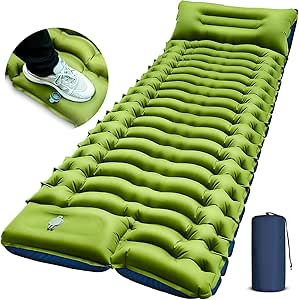
Camping Sleeping Pad with Built-in Pillow and Foot Pump, Ultralight Inflatable Mattress for Camping, Backpacking, Hiking, and Traveling – Green
This inflatable pad, with dimensions of 78 x 27 x 8 inches, offers an expansive sleeping surface with added thickness for comfort, making it more suitable for those who value space and support. Its built-in foot pump allows quick setup, which is a significant advantage over traditional inflatable pads like the TREKOLOGY, especially in cold or windy conditions. While its insulation capabilities may be less than the TREKOLOGY UL R7, this pad compensates with quick inflation and extra width for side sleepers. However, it may not keep you warm enough in very cold ground without additional insulation, and its inflatable nature means it can be punctured or lose air over time.
Pros:- Quick inflation with built-in foot pump saves time
- Extra wide and thick for superior comfort
- Durable nylon and TPU construction for outdoor use
Cons:- Less insulation than inflatable pads with high R-values, limiting cold-weather performance
- Built-in pillow may not suit everyone’s preference
Best for: Campers who prioritize quick setup, extra space, and moderate insulation for shoulder seasons or mild winter trips
Not ideal for: Cold-weather backpackers or those who need maximum insulation in freezing conditions
- Dimensions:78 x 27 x 8 inches
- Material:40D nylon and TPU
- Inflation Time:30-60 seconds
- Deflation Time:1 second
- Weight:Similar to a water bottle
- Warranty:1 year
Bottom line: Ideal for outdoor enthusiasts seeking convenience, space, and moderate warmth, but not for extreme cold conditions.
Camping Foam Mat with Aluminum Foil Insulation, Lightweight Tent Pad and Thermal Blanket
The Camping Foam Mat with Aluminum Foil provides a very lightweight thermal barrier with a simple, foldable design. Its EPE foam core is thin at just 0.20 cm, and the reflective aluminum foil increases heat retention, making it suitable as a basic ground sheet or a supplemental insulator in cold conditions. Compared with foam pads like the Therm-a-Rest Z Lite Sol, this option is extremely portable and versatile but offers limited cushioning and insulation—it’s more of a thermal blanket than a sleeping pad. Its main role is to provide an extra layer of warmth rather than real comfort, so it suits those who need a backup or a multi-use ground protector in cold environments.
Pros:- Extremely lightweight and easy to carry
- Effective thermal insulation with aluminum foil layer
- Versatile use as blanket, tent ground sheet, or picnic pad
Cons:- Very thin, providing little cushioning or support
- Limited insulation in extremely cold weather
Best for: Backcountry travelers who need an ultra-lightweight, multi-purpose thermal barrier for cold ground
Not ideal for: Campers seeking a comfortable sleeping surface or those in extremely cold environments without additional insulation
- Material:EPE foam with aluminum foil
- Color:Silver white with black edges
- Weight:160g / 5.65oz
- Thickness:0.20 cm
- Length:200 cm / 78.7 inches
- Width:150 cm / 59 inches
Bottom line: Best for lightweight, versatile thermal protection rather than comfort or maximum cold insulation.
Therm-a-Rest Z Lite Original Camping and Backpacking Sleeping Pad
The Therm-a-Rest Z Lite Original is a classic foam pad known for its rugged simplicity and heat-trapping dimples, which help add some insulation—rated at 1.7 R-value. Compared to the inflatable TREKOLOGY, it offers fewer comfort features but excels in durability and ease of use, especially in rough terrain or wet conditions. Its folding design makes it very compact, ideal for minimalist backpackers. However, with a lower R-value, it’s less suitable for very cold ground and may feel rigid or uncomfortable for side sleepers. This pad makes sense for those who prioritize reliability and lightweight support over plush comfort in cold conditions.
Pros:- Lightweight and highly portable with folding design
- Durable foam construction withstands rough use
- Provides additional warmth with heat-trapping dimples
Cons:- Limited R-value makes it unsuitable for very cold conditions
- Less cushioned comfort, especially for side sleepers
Best for: Backpackers needing a tough, reliable pad for moderate cold and rough terrain
Not ideal for: Cold-weather campers or those seeking maximum comfort and insulation
- Material:Closed-cell foam
- Dimensions:72 x 20 inches
- Folded Size:20 x 5 x 5.5 inches
- Weight:14 ounces
- Insulation R-Value:1.7
- Made in:USA
Bottom line: This foam pad offers dependable support and moderate warmth for outdoor enthusiasts in moderate climates but isn’t suited for extreme cold.
Naturehike Insulated Inflatable Sleeping Pad 27oz, 4.6 R-Value Ultralight Backpacking Sleeping Mat for Camping and Hiking
This option stands out for combining a high R-value of 4.6 with ultralight portability, making it ideal for backpackers who prioritize warmth without adding bulk. Compared to the TREKOLOGY UL R7 with its even higher R-value of 7.2, the Naturehike offers a more manageable weight for extended trips, though it may not insulate as effectively in extreme cold. Its durable 20D nylon and TPU construction ensure longevity in rough terrains, but the inflation process requires care to avoid bulging in very low temperatures. The dual-vent valve simplifies setup, making quick adjustments easy. Ideal for backpackers seeking reliable cold-weather insulation that won’t weigh down their pack, but not suited for those who need maximum warmth in extreme winter conditions or prefer non-inflatable mats for rougher terrains.
Pros:- High R-value of 4.6 provides solid insulation in cold conditions
- Lightweight and compact for backpacking convenience
- Durable, wear-resistant materials
Cons:- Requires careful inflation to prevent bulging in very cold weather
- Limited color options and aesthetic choices
Best for: Backpackers and hikers needing a lightweight, cold-weather sleeping solution
Not ideal for: Campers in extremely cold environments where higher R-values are necessary, or those preferring foam pads for durability
- Weight:27 oz (770 g)
- R-Value:4.6
- Thickness:8 cm (3.2 inches)
- Material:20D nylon + TPU
- Size:77.17 x 25.2 inches (196 x 64 cm)
- Inflation System:Dual-vent valve
Bottom line: A versatile, lightweight inflatable pad well-suited for cold-weather backpacking that balances insulation and portability.
TREKOLOGY Camping Sleeping Pad with 7.2 R-Value – Ultra-Lightweight, 4″ Thick Camping Mat for All Seasons
The TREKOLOGY UL R7 makes a compelling case for those seeking superior insulation with an R-value of 7.2, significantly higher than the Naturehike or ApolloAir, without sacrificing portability. Its 4-inch thickness ensures comfort and support, comparable to foam mattresses like the Memory Sleeping Pad but with the added benefit of easier packing and inflation. While the material is highly durable and waterproof, it requires hand washing, which might be inconvenient on longer trips. Inflation can demand some effort, yet it provides a stable, supportive sleep surface for a range of weather conditions. This pick is best for budget-conscious campers who need reliable warmth across all seasons, but it may be less appealing to ultralight minimalist hikers who prefer lighter options or foam pads for rugged terrains.
Pros:- Excellent R-value of 7.2 supports all-season use
- Lightweight and compact for its size
- Durable, waterproof ripstop nylon
Cons:- Requires hand washing, less convenient for extended trips
- Inflation may be effortful for some users
Best for: Casual campers and backpackers wanting broad seasonal insulation at a great price
Not ideal for: Minimalist hikers or those seeking ultralight gear, due to its weight and need for effort in inflation
- Material:40D ripstop nylon with TPU coating
- Insulation R-Value:7.2
- Weight:2 lbs (900 g)
- Dimensions:70.8″ x 24″ (180 x 60 cm)
- Thickness:4 inches (10 cm)
- Included Components:Camping Sleeping Pad, Carry Bag
Bottom line: A high-R-value, budget-friendly sleeping pad perfect for all-season camping and backpacking.
Gear Doctors ApolloAir 5.2 R-Value Ultralight Inflatable Camping Sleeping Pad
The ApolloAir’s standout feature is its rapid inflation, taking under 2 minutes, making it ideal for campers who value speed and convenience. Its R-value of 5.2 offers respectable insulation, comparable to the Hikenture but slightly lower, which may limit its performance in very cold conditions. Its lightweight design—around 3 ounces including accessories—makes it a top choice for those who prioritize minimal pack weight. The durable Hexagon Shield nylon and included repair kits add peace of mind, although the cushioning might not satisfy those who prefer thicker, foam-like support. This product suits backpackers needing quick setup and reliable insulation for moderate winter camping, but less so for those in extreme cold or who want maximum padding.
Pros:- Inflates in under 2 minutes, saving setup time
- Lightweight and highly portable
- Includes repair kits and accessories
Cons:- Less cushioned compared to foam options like Memory Sleeping Pad
- Inflation may require effort for some users
Best for: Backpackers and campers who need fast setup and a lightweight, insulated inflatable pad
Not ideal for: Campers seeking maximum warmth or extra cushioning, or those preferring foam mats for durability in rougher conditions
- Weight:3 oz (plus included pouch and pump sack)
- Inflated Dimensions:72.8″ x 22″ x 3.2″
- Packed Size:8.5″ x 3″
- R-Value:5.2
- Material:Hexagon Shield 40D Nylon with E-LAST coating
Bottom line: A rapid-inflation, lightweight pad ideal for quick setups and moderate insulation needs in backpacking trips.
Memory Sleeping Pad – 3.1 Inch Ultra-Thick Foam Camping Mattress with Pillow, Insulated, Self-Inflating, Easy Storage
The Memory Sleeping Pad offers an entirely different experience, prioritizing comfort with its 3.1-inch thick foam core and high R-value of 9.5—far surpassing inflatable options like the ApolloAir or Naturehike. Its plush support rivals a hotel bed, making it ideal for cold-weather campers who value warmth and luxury. The self-inflating feature simplifies setup, although its weight of over six pounds makes it less suited for backpacking. Its foam construction provides dependable insulation even in extremely cold environments, but folding and packing the thick foam can be cumbersome. This choice makes sense for car campers or base camp setups where weight is less critical, but less so for lightweight backpackers or those seeking quick, compact solutions.
Pros:- Exceptional insulation with an R-value of 9.5
- Ultra-thick foam provides excellent support and comfort
- Easy self-inflation with upgraded valves
Cons:- Heavy and bulky, less portable for backpacking
- Requires effort to fold and store due to foam thickness
Best for: Car campers, base camp setups, or anyone prioritizing comfort and high insulation in cold weather
Not ideal for: Backpackers and hikers needing ultralight gear or fast setup, due to its weight and bulk
- Dimensions:77 x 26.98 inches
- Thickness:3.1 inches
- Weight:6.59 lbs
- Max Support:800 lbs
- R-Value:9.5
Bottom line: A luxurious, highly insulated foam pad perfect for cold-weather car camping or base camps where comfort outweighs pack weight.
Hikenture Camping Sleeping Pad with 6.2 R-Value, Ultralight All-Season Mattress for Backpacking and Outdoor Use
The Hikenture pad offers a well-rounded balance of insulation, size, and weight. Its R-value of 6.2 is strong enough for winter or cold shoulder seasons, yet it remains lightweight at under 5 pounds, making it attractive for multi-season backpacking. The wave chamber design ensures even weight distribution and added comfort, but the large footprint—79 inches long and 55 inches wide—may be too bulky for some ultralight purists. Its reflective layers contribute marginally to heat retention, but in extreme cold, higher R-value options like the TREKOLOGY might perform better. This mattress suits those who want a spacious, insulated pad for cold weather without sacrificing too much weight or packability, but it’s less ideal for minimalist hikers or tight backpackers.
Pros:- Good R-value of 6.2 supports winter camping
- Spacious enough for two sleepers
- Lightweight for its size
Cons:- Bulky for very tight backpacking setups
- Reflective layers might be less effective in extreme cold
Best for: Backpackers seeking a spacious, insulated sleeping pad for cold conditions without excessive weight
Not ideal for: Ultralight hikers or those with strict pack size limitations due to its large dimensions
- R-Value:6.2
- Dimensions:79″ x 55″
- Thickness:3.2 inches
- Weight:4.85 lbs
- Packed Size:12″ x 5.5″
Bottom line: A roomy, well-insulated pad designed for cold-weather camping that balances size and weight effectively.
Elegear CumbreX™ Sleeping Pad for Camping with 9 R-Value, Ultralight All-Season Insulated Backpacking Mattress
The Elegear CumbreX™ stands out for its impressive R-value of 9, making it one of the highest insulation ratings available, suitable for temperatures as low as -40°C. Compared to the Gear Doctors Oxylus, which offers a lower R-value of 4.3, the CumbreX provides superior warmth, though it comes with a slight weight penalty of 2 pounds, still remarkably lightweight for such insulation. Its compact pack size and durable tear-resistant nylon shell make it ideal for serious backpackers who prioritize warmth without excess bulk. However, it requires an external pump since it lacks a built-in inflation method, and its mummy shape might not suit everyone’s sleeping style. For cold-weather explorers seeking maximum insulation in a lightweight package, this is a top choice.
Pros:- Exceptional R-value of 9 for extreme cold insulation
- Lightweight and highly packable for backpacking
- Durable, waterproof design withstands rugged conditions
Cons:- Requires external pump for inflation
- Mummy shape may not suit all sleep preferences
Best for: Backpackers and winter campers who need reliable warmth in extreme cold and are comfortable with external inflation methods.
Not ideal for: Casual campers or those preferring a more spacious, pillow-friendly shape, as the mummy design may feel restrictive.
- R-Value:9
- Weight:2 lbs
- Thickness:4 inches
- Material:20D tear-resistant nylon with TPU layer
- Packed Size:Compact
- Inflation Method:Pump sack (4-6 pumps)
Bottom line: This pad is ideal for cold-weather enthusiasts who need maximum insulation without adding weight or bulk.
Gear Doctors Oxylus 4.3 R-Value Insulated Self-Inflating Sleeping Pad for Camping and Backpacking
The Gear Doctors Oxylus offers a solid R-value of 4.3, making it suitable for cooler conditions but not quite as insulated as the Elegear CumbreX. It excels in ease of use, self-inflating quickly and requiring minimal effort—ideal for those who want quick setup after a long day. Its 75D water-resistant polyester shell adds durability and weather resistance, comparable to the rugged build of the Camping Foam Mat, but with more insulation and comfort. However, some users find the self-inflating feature less adjustable than manual pumps, and additional inflation may be needed for maximum comfort, which can be inconvenient. This pad makes sense for outdoor enthusiasts seeking a balance of warmth and convenience in all seasons.
Pros:- Self-inflates quickly and easily
- Water-resistant and abrasion-resistant shell
- Lightweight and easy to pack
Cons:- May need additional inflation for maximum comfort
- Limited color options
Best for: Campers and backpackers who value quick setup and reliable warmth in cool to cold conditions without a heavy or bulky pad.
Not ideal for: Extremely cold weather expeditions where higher R-values are necessary, or those who prefer a fully manual inflation process for fine-tuning comfort.
- R-Value:4.3
- Material:75D micro-coated polyester
- Dimensions:72″ x 20″ x 1.5″
- Weight:35.2 oz
- Included Components:Carry bag, Repair patch
Bottom line: This pad is best suited for outdoor users who prioritize convenience and moderate insulation across varied conditions.

How We Picked
Products were selected based on their insulation ratings (R-value), overall build quality, weight, and user reviews. Priority was given to models that deliver consistent warmth in cold conditions, while remaining practical for backpackers and campers. We also considered ease of use, durability, and value, ensuring options suit a range of budgets and experience levels. The ranking reflects a balance of performance, portability, and price, with the top picks excelling in providing reliable insulation against cold ground without excessive weight or complexity.Factors to Consider When Choosing Best Insulated Sleeping Pad For Cold Ground
Choosing the best insulated sleeping pad for cold ground involves more than just R-value. It’s important to consider how the pad’s insulation, weight, and durability align with your specific camping style. Understanding these factors helps prevent common mistakes, like overpaying for unnecessary features or underestimating cold exposure. The following sections highlight key considerations to help you make an informed decision.R-Value and Insulation Quality
The R-value measures a pad’s ability to resist heat transfer from your body to the cold ground. For cold-weather camping, look for pads with an R-value of at least 4.0, but higher values (around 6 or more) provide better protection in harsh conditions. Keep in mind that higher R-values often come with increased weight and cost, so balance your insulation needs with portability. Also, consider how insulation is constructed; some pads use reflective layers or high-quality foam to boost warmth.
Weight and Packability
If you’re backpacking in cold environments, weight and pack size are critical. Inflatable pads tend to be lighter and more compact, but can be more fragile. Foam pads are bulkier but highly durable and simple to use. Think about how much weight you’re willing to carry and whether a compact pack size outweighs the convenience of a more robust, self-inflating option. For car camping or base camps, weight is less of a concern, allowing for thicker, more comfortable models.
Durability and Material Quality
Cold ground can be tough on sleeping pads, especially if you camp in rocky or abrasive terrain. Look for high-denier fabrics, reinforced seams, and puncture-resistant materials. Inflatable models with high-quality materials tend to last longer and resist damage, but are more expensive. Foam pads are inherently durable, making them suitable for rugged conditions, though they might sacrifice some comfort. Consider your typical camping environment when choosing materials to avoid early wear or failure.
Comfort and Surface Features
Comfort matters, especially on cold nights when sleep quality impacts your energy levels. Thicker pads (4 inches or more) generally provide better cushioning, while textured surfaces can improve grip and prevent slipping. Some models include built-in pillows or adjustable firmness, enhancing overall sleep quality. Keep in mind that adding comfort features might increase weight or complexity, but can be worth it for better rest in freezing conditions.
Price and Value
Insulated sleeping pads span a wide price range, from budget foam mats to high-end inflatable models. Consider how often you’ll camp in cold conditions—investing more might be justified if you frequently encounter sub-freezing temperatures. Conversely, casual or occasional winter campers can opt for more affordable options that still offer sufficient insulation. Balance your budget with the need for durability and performance, aiming for a model that provides the best value for your specific use case.
Frequently Asked Questions
What R-value should I look for in an insulated sleeping pad for winter camping?
For winter camping, an R-value of at least 4.0 is recommended, but for extreme cold, models with an R-value of 6 or higher provide added insulation. The higher the R-value, the better the pad’s ability to block cold ground heat transfer. Keep in mind that extremely high R-value pads tend to be heavier and more expensive, so consider your typical camping conditions and weight limits when choosing.
Are inflatable sleeping pads better than foam for cold ground conditions?
Inflatable pads often offer superior comfort and adjustable insulation, making them popular for cold ground use. They typically have higher R-values and better packability, but can be more delicate and prone to punctures. Foam pads are generally more durable, less expensive, and easier to repair, but they tend to be bulkier and less comfortable. The best choice depends on your balance between comfort, durability, and weight.
How important is the material of the sleeping pad in cold weather?
The material impacts durability, weight, and insulation performance. High-denier fabrics and reinforced seams resist tears and punctures, especially important on rocky terrains. Reflective layers or high-quality foam can increase warmth without adding much weight. Choosing a pad with durable, insulating materials helps maintain performance over multiple trips and prevents early failure under harsh conditions.
Can I use a regular summer sleeping pad in winter conditions?
Using a summer sleeping pad in winter usually results in inadequate insulation, leading to heat loss and cold nights. Most summer pads have low R-values, often below 3, which isn’t sufficient for cold ground. To stay warm, supplement a summer pad with an additional insulation layer or upgrade to a dedicated cold-weather model with higher R-value. For frequent winter camping, investing in an insulated pad is a wise choice.
Should I prioritize weight or insulation in a cold-weather sleeping pad?
This depends on your camping style. If you’re backpacking and need to carry the pad over long distances, prioritize lightweight, high-R-value models that balance warmth and weight. For car camping or base camps, you can afford heavier, more cushioned options with higher insulation ratings. Always consider how much weight you’re willing to carry versus your need for warmth and comfort in cold conditions.
Conclusion
For those who prioritize overall reliability and versatility, the Therm-a-Rest Z Lite Sol offers a durable, high-insulation foam option suitable for most cold conditions. Budget-conscious campers should consider the Camping Foam Mat with Aluminum Foil Insulation for dependable warmth at a lower price. For advanced winter adventurers, the Elegear CumbreX™ provides top-tier insulation and all-season performance, though at a higher cost. Beginners or casual campers might lean toward inflatable models for comfort and ease of setup, while serious backpackers should look for ultralight, high-R-value pads to keep warm without sacrificing too much pack space.
Fall Picks
fall essentials
As an affiliate, we earn on qualifying purchases.