When planning cold storage for multi-day wilderness trips, focus on choosing well-insulated coolers and packing perishables near ice or frozen packs to keep them cold longer. Limit cooler openings to prevent temperature fluctuations and organize items for easy access. Consider natural methods like burying perishables in snow or digging snow pits if conditions permit. Monitoring environmental changes and adjusting your storage strategies will help keep your food safe. Keep exploring to learn more tips for effective wilderness cold storage.

Get emergency and outdoor gear delivered free — and shop member deals
- Fast, free delivery on millions of items
- Access to Prime Big Deal Days deals on October 6–7
- Prime Video, Amazon Music and more included
Key Takeaways
- Select high-quality, well-insulated coolers and pack perishables near ice or frozen packs to maintain cold temperatures longer.
- Limit cooler openings to reduce temperature fluctuations and preserve cold conditions.
- Use natural methods like snow pits or burying perishables for supplemental or alternative cold storage.
- Organize food into smaller portions or containers to ease access and minimize warm air exposure.
- Replenish ice or dry ice regularly and develop a temperature management plan based on environmental conditions.
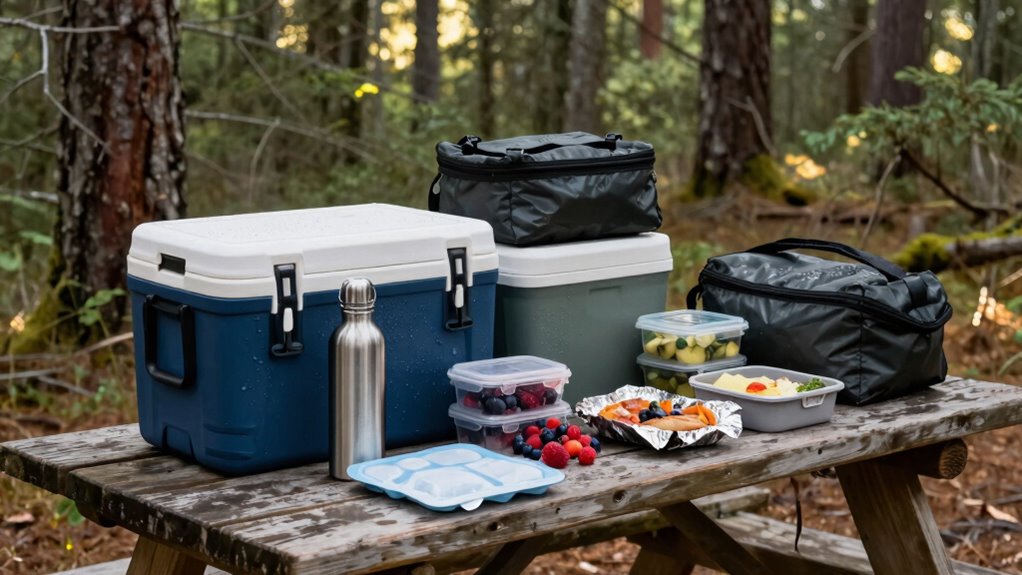
When heading into the wilderness, managing your cold storage is essential to keeping food fresh and safe. Proper temperature regulation is the key to preventing spoilage and ensuring you have nutritious meals throughout your trip. You’ll want to think carefully about how to keep your perishables at the right temperature without relying on electricity or traditional refrigeration. The goal is to create a system that maintains consistent cold conditions, especially since ambient temperatures can fluctuate dramatically depending on the weather and elevation.
Effective wilderness food storage relies on maintaining consistent cold conditions without electricity, adapting to changing weather and elevation.
To start, consider the type of cold storage that best suits your trip length and environment. A high-quality cooler with good insulation can be effective, but it needs to be packed properly. Use ice or frozen packs to keep the interior cold, and plan to replenish or replace ice as needed. Layer your food strategically—placing perishables that spoil quickly near the ice ensures they stay cold longer, while items like dry snacks or canned goods can be stored at room temperature. Proper organization not only helps with temperature regulation but also makes it easier to access what you need without exposing the entire storage to warm air.
Another important aspect of food preservation is limiting the amount of times you open your cold storage. Every time you do, cold air escapes, and warm air enters, raising the internal temperature. To minimize this, pack your cooler tightly and only open it when necessary. Consider dividing your perishables into smaller containers or bags to reduce the need for repeated access to the entire supply. If you’re planning a multi-day trip, think about ways to extend your food’s freshness, such as pre-freezing certain items or using dry ice if the trip is longer and you need extra cold capacity. Additionally, exploring cold storage methods suitable for your environment can help maintain the necessary temperatures when traditional options aren’t feasible. Incorporating temperature regulation techniques can further optimize your food safety strategies and adapt to changing conditions, especially in unpredictable outdoor environments. Developing a temperature regulation plan can help you better adapt to changing conditions and prolong food safety.
In some cases, you might explore alternative cold storage solutions like specialized coolers with built-in refrigeration or using natural methods such as digging a snow pit or burying perishables in the ground, depending on your environment. These options can help with temperature regulation when traditional coolers aren’t practical. To further enhance food safety, it’s also wise to learn about food safety practices specific to wilderness settings and limited refrigeration. Always be mindful of temperature control techniques to prevent spoilage and ensure your food remains safe to eat. Whichever method you choose, always consider food safety and plan your meals around what can be safely stored at ambient temperatures if refrigeration isn’t available.
high insulation cooler for camping
As an affiliate, we earn on qualifying purchases.
As an affiliate, we earn on qualifying purchases.
Frequently Asked Questions
How Long Can Perishable Food Stay Cold in Wilderness Conditions?
In wilderness conditions, perishable food typically stays safe for about 24 hours if kept cold, but this can vary based on temperature control. If temperatures rise above 40°F (4°C), food safety declines quickly, risking spoilage and illness. To maximize freshness, insulate your storage and use ice packs. Always check for signs of spoilage before eating, and plan to consume perishables within a day or two, especially in warm weather.
What Are the Best Materials for DIY Insulated Containers?
Think of your DIY insulated container as a cozy fortress wall. For the best insulation, use foam board, reflective bubble wrap, or thick neoprene — they trap cold like a shield. Prioritize container durability with sturdy plastic or metal shells that withstand wilderness bumps. Combining these materials creates a reliable, long-lasting home for your perishable foods, keeping them cold and fresh on your multi-day adventure.
How Do I Prevent Food From Freezing or Spoiling?
To prevent your food from freezing or spoiling, use reusable ice packs to maintain a consistent cool temperature without freezing your items. Consider solar-powered coolers, which use solar energy to keep food cold efficiently, especially in remote areas. Keep perishable items in the coolest part of your cooler and limit opening it. Regularly check the temperature, and pack foods in insulated containers to prolong freshness and prevent spoilage.
Are There Eco-Friendly Cold Storage Options?
Yes, eco-friendly cold storage options exist. You can explore solar refrigeration, which harnesses sunlight to keep your food cool without harmful emissions. Additionally, biodegradable coolants offer an environmentally safe alternative to traditional refrigerants, reducing your ecological footprint. These options not only preserve your food effectively during multi-day wilderness trips but also help protect the environment, making your adventure more sustainable and guilt-free. Don’t wait—your eco-conscious journey starts now.
How to Manage Ice Supply on Multi-Day Trips?
To manage your ice supply on multi-day trips, focus on strategic ice pack placement and insulation techniques. Place ice packs near perishables and at the top of your cooler to keep everything cold longer. Use insulation techniques like wrapping items in extra layers or insulating your cooler with blankets or foam to slow melting. Replenish ice when possible, and minimize opening your cooler to conserve the cold environment.
freeze packs for wilderness trips
As an affiliate, we earn on qualifying purchases.
As an affiliate, we earn on qualifying purchases.
Conclusion
Mastering cold storage for wilderness trips isn’t just about keeping your food fresh — it’s about safeguarding your adventure itself. When you get it right, you’ll feel like a wilderness ninja, outsmarting nature’s toughest challenges. Remember, the difference between a good trip and a great one can hinge on your storage game. So, stay sharp, plan smart, and treat your cold storage like your secret weapon — because in the wild, it’s the ultimate game-changer.
As an affiliate, we earn on qualifying purchases.
As an affiliate, we earn on qualifying purchases.
Fall Picks
fall essentials
As an affiliate, we earn on qualifying purchases.