Smart campers know that having a backup water supply is essential because primary sources can fail or get contaminated unexpectedly. It guarantees you stay safe and prepared, especially in remote areas where help isn’t nearby. Relying on filtration devices and storing extra clean water helps protect against shortages and health risks. By layering these safety measures, you boost your chances of staying hydrated and healthy. If you want to learn more, you’ll find useful tips to improve your water safety plan.

Get emergency and outdoor gear delivered free — and shop member deals
- Fast, free delivery on millions of items
- Access to Prime Big Deal Days deals on October 6–7
- Prime Video, Amazon Music and more included
Key Takeaways
- To ensure continuous access to safe water if primary sources fail or become contaminated.
- As an emergency measure when immediate help or additional water supplies are unavailable.
- To safeguard against unexpected water shortages during extended camping or remote trips.
- To provide a reliable backup when filtration devices are compromised or malfunctioning.
- To enhance overall water safety through layered protection and preparedness strategies.

When you’re out camping, relying solely on your main water source can leave you vulnerable if it fails or runs out. That’s why smart campers always have a water backup for their water backup. It’s an essential part of emergency preparedness because you never know when your primary supply might become unavailable, contaminated, or simply too low to meet your needs. Having a secondary source ensures you’re not caught off guard, especially in remote areas where help isn’t immediately accessible.
A critical element of this backup plan is water filtration. Even if you find a new water source, it doesn’t mean it’s safe to drink. Dirty, stagnant, or contaminated water can carry bacteria, viruses, or parasites that threaten your health. Water filtration devices become your safeguard, allowing you to make questionable water safe for consumption. Portable filters, pump systems, or gravity-fed units are lightweight, easy to pack, and effective at removing harmful pathogens. Investing in reliable water filtration equipment means you can turn nearly any water source into drinkable water, giving you peace of mind during your trip.
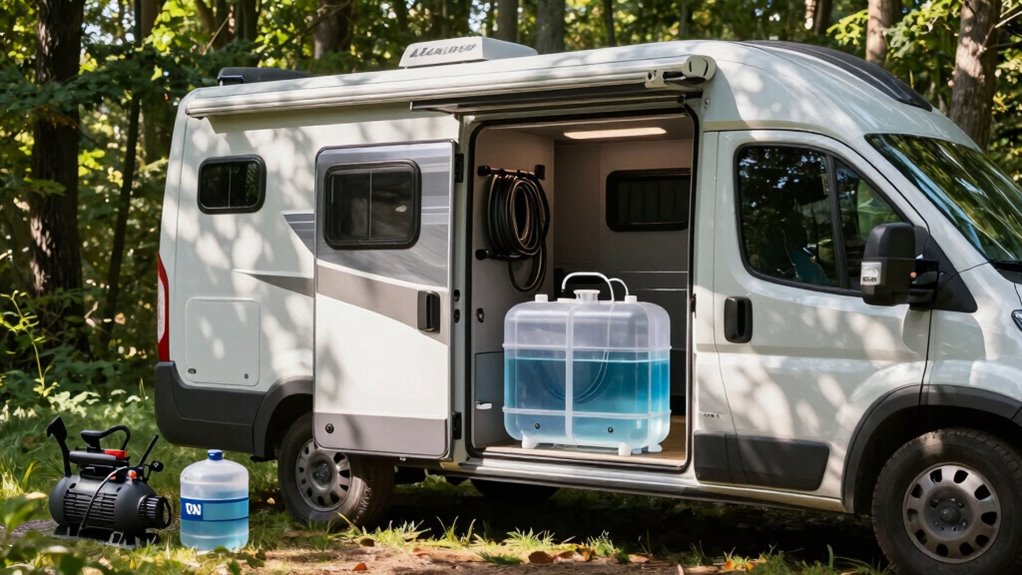
Having a backup water supply isn’t just about quantity; it’s also about quality. You want to be prepared to filter out sediment, chemicals, or microorganisms if your primary water source becomes compromised. For example, if you’re camping near a stream or pond, you might carry a small, portable water container filled with clean water for emergencies, but always rely on your filtration system to treat any additional water you collect. This layered approach—backup water plus filtration—ensures you’re protected against unexpected shortages and potential health hazards. Additionally, understanding water quality testing can help you identify if a water source is safe before consumption, adding an extra layer of protection.
Backup water isn’t just about quantity; ensure quality with filtration to stay safe in emergencies.
Planning for water emergencies means considering both storage and filtration. You might carry extra bottles, collapsible containers, or even water purification tablets as immediate solutions. Proper knowledge of water sources and effective filtration techniques can make all the difference in critical moments. Moreover, incorporating water conservation practices can help you extend your supplies and reduce waste, which is especially important in remote camping locations. The integration of water safety**** practices into your camping routine ensures you’re prepared for any unexpected water-related challenges.
portable water filtration system for camping
As an affiliate, we earn on qualifying purchases.
As an affiliate, we earn on qualifying purchases.
Frequently Asked Questions
How Often Should I Test My Water Backup System?
You should test your water backup system at least once every three to six months to guarantee it’s functioning properly. Regular testing is essential for emergency preparedness, giving you confidence in your water supply during emergencies. When testing, follow water storage tips like checking for leaks and maintaining cleanliness. This routine helps you identify issues early, making sure your water backup remains reliable when you need it most.
What Are the Signs My Water Backup Is Failing?
Did you know that over 60% of campers experience water issues during trips? If your water backup system is failing, you might notice a foul odor or strange taste in your water, indicating filtration problems. Reduced water flow, leaks, or inconsistent pressure are also signs. Staying alert helps guarantee your emergency preparedness remains effective, so regularly check your water filtration system and address issues promptly to keep your water supply safe.
Can I Use Any Type of Water for Backup?
You can’t just use any water for backup; you need safe, potable water. Always prioritize water purification methods like boiling, filtering, or chemical treatments before storing water in designated storage containers. These containers should be made of food-grade materials to prevent contamination. Using clean, properly sealed storage containers guarantees your backup water stays safe and ready when you need it, giving you peace of mind during emergencies or dry spells.
How Much Extra Weight Does a Water Backup Add?
The extra weight from a water backup isn’t overwhelming, but it’s enough to make you think. It depends on your storage containers and water filtration setup. Typically, a gallon of water weighs about 8.34 pounds, so a backup of a few gallons adds around 20-30 pounds. You’ll want to balance the peace of mind from your storage containers with the impact on your overall load, especially during long trips.
Is a Water Backup Necessary in All Camping Scenarios?
A water backup isn’t necessary in all camping scenarios, but it’s highly recommended for emergency preparedness. If you’re camping at sites with strict campground restrictions or limited water access, a backup guarantees you stay hydrated and maintain hygiene. It provides peace of mind, especially in remote areas or unexpected situations. Always assess your destination and potential challenges to decide if a water backup aligns with your safety and comfort needs.
collapsible water container for camping
As an affiliate, we earn on qualifying purchases.
As an affiliate, we earn on qualifying purchases.
Conclusion
Having a water backup for your water backup is like having a safety net under a tightrope—it’s your peace of mind in case the unexpected happens. When you’re out in nature, surprises are inevitable, but with this double layer of protection, you stay prepared and confident. Just as a sturdy bridge supports your journey across a river, your backup system keeps your camping adventure smooth and worry-free, no matter what twists and turns come your way.
water purification tablets for backpacking
As an affiliate, we earn on qualifying purchases.
As an affiliate, we earn on qualifying purchases.
As an affiliate, we earn on qualifying purchases.
Fall Picks
fall essentials
As an affiliate, we earn on qualifying purchases.