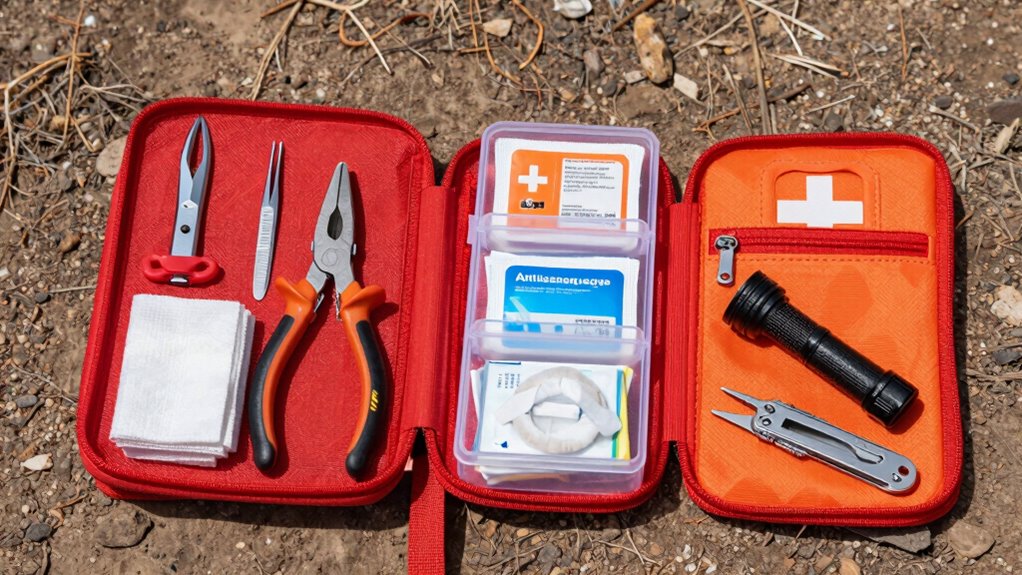

A useful emergency kit has carefully chosen supplies that serve multiple purposes and suit your environment. It’s organized logically with clear labels and waterproof containers, so you can access what you need in seconds. Flexibility is key—adapt your kit based on changing conditions and risks. The right gear is durable, lightweight, and efficient, helping you respond quickly during emergencies. Want to discover how to build an effective kit that truly works in the field?

Get emergency and outdoor gear delivered free with Prime
- Fast, free delivery on millions of items
- Prime Video, Amazon Music and more included
- Member-only deals all year
Key Takeaways
- Proper organization and clear labeling enable quick access to essential supplies during emergencies.
- Inclusion of versatile, environment-specific supplies ensures readiness for varied scenarios.
- Lightweight, durable gear with high-quality materials withstands harsh conditions and prolongs usability.
- Familiarity with first aid techniques maximizes kit effectiveness in preventing injury escalation.
- Flexibility to adapt contents based on changing conditions improves overall survival chances.
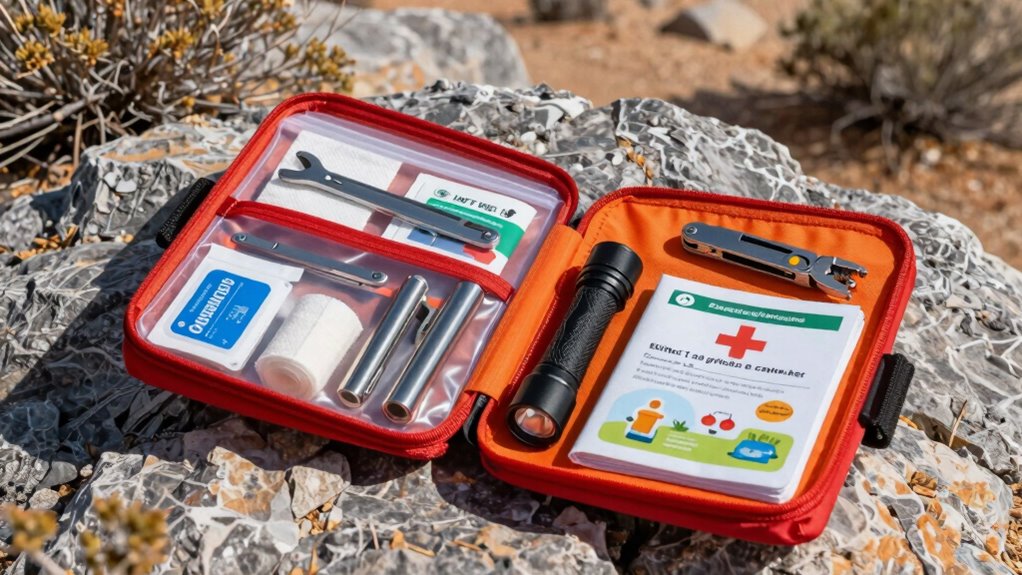
Have you ever wondered what separates a quick recovery from a serious setback in the field? The answer often comes down to how well-prepared you are with your emergency kit. A truly useful emergency kit isn’t just about having a collection of supplies; it’s about having the right ones, organized efficiently, so you can respond swiftly when seconds count. When it comes to survival gear, the key is versatility—items that serve multiple purposes and are easy to access under stress. But perhaps most essential is your first aid supplies. Without proper first aid, even minor injuries can escalate, turning manageable situations into life-threatening emergencies.
A useful emergency kit should be tailored to your environment and the types of risks you might encounter. If you’re in a remote area or planning a long trek, your kit needs to include more than just bandages and antiseptics. It should contain items like sterile gauze, adhesive tape, scissors, tweezers, and pain relievers, all essential for controlling bleeding, preventing infection, and managing pain. These supplies are fundamental for first aid, but their effectiveness depends on how well you understand their use. Familiarity with basic first aid techniques makes a massive difference in an emergency, allowing you to stabilize injuries before professional help arrives. Additionally, understanding your environment’s natural hazards can help you select more appropriate supplies and strategies for survival, especially when considering color accuracy and other technical factors that influence the visibility and effectiveness of your gear in different conditions. Incorporating emergency preparedness principles can significantly boost your chances of success in unexpected situations. Recognizing the importance of organization ensures that your kit remains accessible and functional when every second matters. Moreover, knowing how to adapt your kit to changing conditions can be crucial, as environments can shift unexpectedly, requiring flexible strategies and supplies.
Beyond first aid, your survival gear should include tools that help you stay alive and comfortable. Think multi-tools, flashlights, whistle, and a reliable fire-starting kit. The goal is to have gear that’s lightweight yet durable enough to withstand the elements. The quality and material of your gear can also influence its durability and effectiveness in harsh conditions. A good emergency kit is also organized logically, so you don’t waste time digging through layers of stuff when every second counts. Clear labeling and compartmentalization are vital. For example, keep all first aid supplies in one waterproof pouch, and survival tools in another. This way, you can quickly access what you need without unnecessary fumbling. Proper organization not only saves time but also reduces stress during high-pressure situations, making it easier to stay calm and focused.
Popular right now

Sony WH-1000XM6 Wireless Noise-Canceling Headphones, Black

Apple AirPods Pro 3 Wireless Earbuds with Active Noise Cancellation

Samsung 55-Inch Neo QLED 4K TV with WireLogic 8-Foot Ultra High Speed HDMI Cable
As an affiliate, we earn on qualifying purchases.
Frequently Asked Questions
How Often Should Emergency Kits Be Restocked?
You should restock your emergency kit at least every six months, or sooner if you notice expired items. Regular kit maintenance is essential to guarantee everything functions when needed. Check expiration dates on all supplies, medications, and batteries, and replace any outdated items promptly. Properly maintaining your kit guarantees you’re prepared in an emergency, and staying vigilant about restocking helps prevent missing critical supplies during a crisis.
Can Emergency Kits Be Customized for Specific Environments?
You can absolutely customize emergency kits for specific environments, tailoring them with personalization options and environment-specific supplies. Imagine preparing a kit for a mountain hike, including extra water purification tablets and thermal blankets. In a coastal area, you’d add marine first aid supplies. By evaluating your environment, you guarantee your kit contains exactly what you need, making it more effective and reassuring during emergencies.
What Legal Requirements Exist for Emergency Kits in Workplaces?
You need to follow legal compliance and workplace regulations when assembling emergency kits. Regulations vary by region and industry but generally require kits to include essentials like first aid supplies, fire extinguishers, and emergency contact info. Staying updated guarantees your kit meets legal standards, helping you respond effectively during emergencies. Regularly review and maintain your kit to ensure compliance and readiness, reducing legal liabilities and safeguarding everyone’s safety.
How Do I Choose the Right Size Emergency Kit?
Think of choosing your emergency kit like Goldilocks finding the porridge—size matters. You want a kit that fits your space and access needs, not too big or small. Consider kit storage options and size considerations to guarantee it’s portable yet complete. Assess your environment, potential risks, and the number of people to serve. The right size keeps essentials handy without overwhelming your workspace or vehicle.
Are There Eco-Friendly Options for Emergency Kit Supplies?
Yes, eco-friendly emergency kit supplies are available. Look for options with eco-conscious packaging, which minimizes waste and environmental impact. Choose sustainable supply options like reusable tools, biodegradable bandages, and solar-powered flashlights. By selecting these eco-conscious products, you’re reducing your carbon footprint while ensuring your kit remains effective. Making environmentally responsible choices helps protect the planet and prepares you for emergencies with minimal ecological harm.
Conclusion
A truly useful emergency kit is like a reliable toolbox, ready to handle whatever chaos comes your way. It’s not just about packing a bunch of supplies; it’s about choosing what you’ll actually need and knowing how to use it. Keep your kit organized, update it regularly, and practice using its contents. When disaster strikes, a well-prepared kit becomes your trusted sidekick—ready to support you through the storm and help you stay safe and confident.