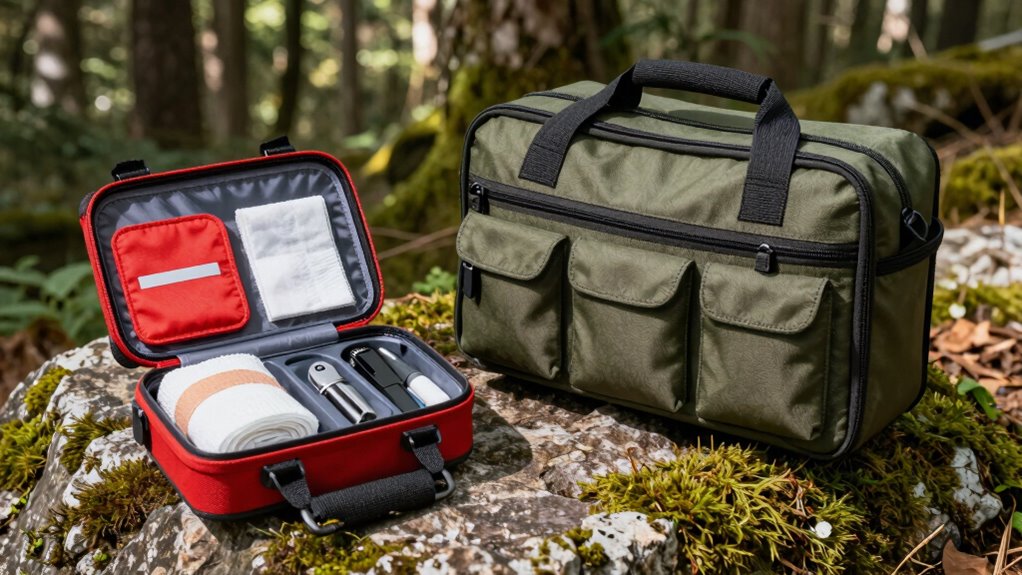
Trauma kits and medical kits serve different outdoor roles by focusing on specific needs. Trauma kits are essential for severe injuries like heavy bleeding, fractures, or deep cuts, helping you stabilize serious conditions until help arrives. Medical kits cover minor health issues such as insect bites, headaches, and small wounds, supporting overall well-being. Understanding these differences helps you choose the right equipment for your adventure, and exploring further will show you how to optimize your safety gear.

Get emergency and outdoor gear delivered free — and shop member deals
- Fast, free delivery on millions of items
- Access to Prime Big Deal Days deals on October 6–7
- Prime Video, Amazon Music and more included
Key Takeaways
- Trauma kits are designed for severe injuries like heavy bleeding and fractures, while medical kits handle minor health issues.
- Trauma kits include tourniquets and pressure dressings for life-threatening emergencies; medical kits contain pain relievers and antiseptics.
- Trauma kits stabilize serious injuries until professional help arrives; medical kits support overall health and minor ailment management.
- The content of trauma kits is tailored for extreme situations; medical kits focus on general health and minor incidents.
- Proper selection and training for each kit type ensure effective response to specific outdoor injury risks.
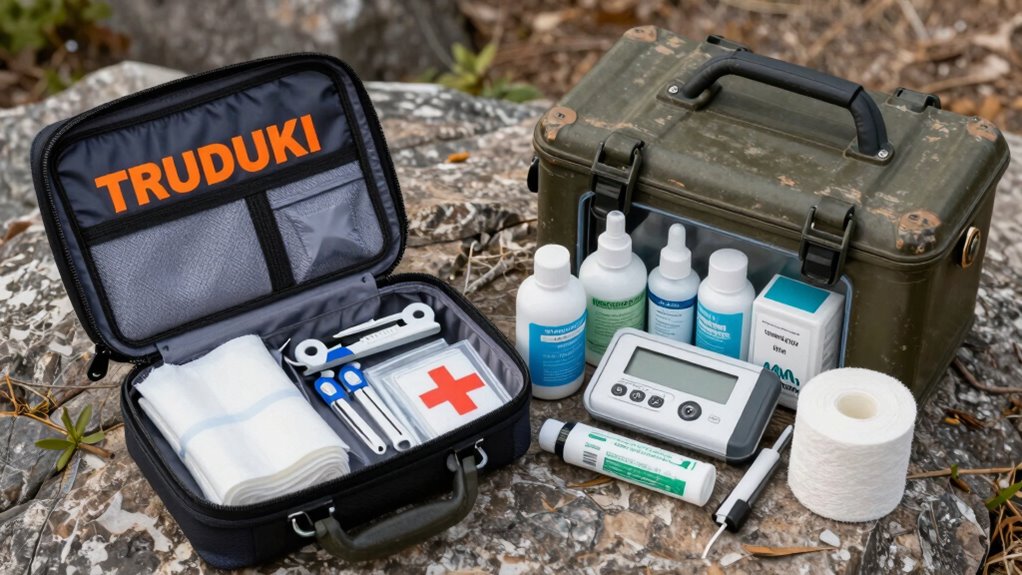
When emergencies strike, having a well-stocked trauma or medical kit can make all the difference in providing immediate care. Whether you’re hiking, camping, or just exploring the outdoors, being prepared is essential. Trauma kits and medical kits each serve unique roles in emergency preparedness, and understanding their differences helps you choose the right gear for your adventures. Trauma kits are designed for severe injuries, such as deep cuts, fractures, or heavy bleeding. They typically include items like tourniquets, pressure dressings, and hemostatic agents to control bleeding quickly. Medical kits, on the other hand, focus on general health concerns, offering supplies for minor ailments, such as pain relief, antiseptics, or allergy medications. While a trauma kit addresses life-threatening injuries, a medical kit handles everyday health issues that might arise during your outdoor activities.
Having the right trauma or medical kit ensures quick care and safety during outdoor adventures.
Your choice between these kits depends on the environment and risks you anticipate. For extreme outdoor excursions, especially where professional medical help might be hours away, a trauma kit becomes crucial. It allows you to stabilize serious injuries until help arrives. Conversely, a medical kit is valuable for maintaining overall health and managing minor incidents, like blisters or insect bites. But no matter which kit you carry, kit customization plays a vital role. You should tailor your supplies based on your specific needs and the activities you plan to do. For example, if you’re hiking in remote areas, adding extra bandages, antiseptics, and a compact splint makes sense. For family camping trips, including medications like antihistamines or pain relievers ensures preparedness for common issues.
Having the right gear is only part of emergency preparedness; knowing how to use it matters just as much. Take the time to learn basic first aid and how to properly apply items in your trauma kit, such as dressing a wound or applying a tourniquet. Regularly reviewing and updating your kits ensures they remain ready to use. If you’re customizing your kit, consider the specific risks of your environment, the number of people you’re responsible for, and your own medical knowledge. Proper kit customization makes your supplies more effective and ensures you’re not overwhelmed with unnecessary items.
In the end, understanding how trauma kits and medical kits serve different roles helps you be more intentional in your preparations. Whether dealing with a severe injury or a minor health concern, having the right kit and knowing how to use it enhances your safety and confidence during outdoor adventures.
As an affiliate, we earn on qualifying purchases.
Frequently Asked Questions
Can Trauma Kits Be Used for Non-Emergency Situations?
Trauma kits are primarily designed for emergencies, but you can use them for non-emergency medical situations too. If you encounter minor injuries during outdoor activities, these kits can handle everyday first aid, like cuts, scrapes, or bruises. Having a trauma kit on hand guarantees you’re prepared for both urgent and non-emergency medical needs, making it a versatile addition to your outdoor gear.
Are Medical Kits Suitable for Professional Medical Responders Only?
Medical kits aren’t just for professional responders; anyone can use them in emergencies. However, you should be aware of medical kit limitations and understand your responder qualifications before administering aid. Proper training guarantees you use the kit effectively and safely. If you’re untrained, it’s best to wait for professional help, but in urgent situations, your quick action with a medical kit could make a vital difference until responders arrive.
How Often Should Trauma Kits Be Restocked?
Promptly replenishing your trauma kit is vital for preparedness. You should restock your trauma kit after each use or at least every six months to make certain it’s ready for emergencies. Regular kit maintenance, including checking expiration dates and replacing used supplies, keeps your first aid kit effective. Staying vigilant with routine restocking and maintenance guarantees you’re always prepared to respond swiftly, safely, and securely in outdoor emergencies.
What Training Is Required to Effectively Use a Trauma Kit?
To effectively use a trauma kit, you should undergo first aid training tailored to emergency situations. This training equips you with the skills first responders need to manage severe injuries confidently. You’ll learn how to control bleeding, treat shock, and stabilize victims until professional help arrives. Regular refresher courses make certain your skills stay sharp, so you’re prepared to provide immediate, life-saving care when it’s most needed.
Do Medical Kits Include Advanced Life Support Equipment?
Medical kits generally include basic supplies for emergency preparedness, but they often lack advanced equipment needed for advanced life support. If you’re looking for advanced equipment like airway management tools or defibrillators, you’ll need to supplement your kit with specialized gear. This guarantees you’re prepared for a range of emergencies, especially in outdoor settings where access to professional medical help might be delayed.
As an affiliate, we earn on qualifying purchases.
Conclusion
So, next time you’re packing for the great outdoors, remember: trauma kits are your superhero sidekicks ready to save lives when things get ugly, while medical kits are your trusty sidekicks for everyday boo-boos. Don’t be that person caught unprepared—unless you’re into dramatic rescue scenes. In the wild, a little prep keeps you from turning a minor scrape into an epic saga. Stay smart, pack right, and avoid turning your adventure into a disaster movie.
As an affiliate, we earn on qualifying purchases.
As an affiliate, we earn on qualifying purchases.
Halloween Picks
halloween
As an affiliate, we earn on qualifying purchases.