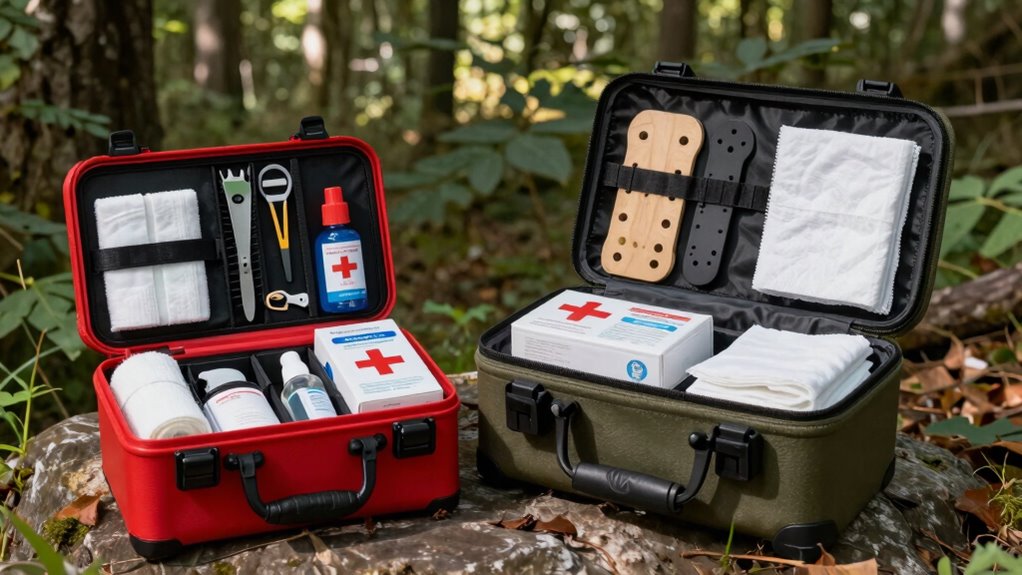
Trauma kits and medical kits play different roles outdoors. Trauma kits target serious injuries like heavy bleeding, broken bones, or traumatic wounds, helping you stabilize and control bleeding until help arrives. Medical kits handle minor issues such as cuts, insect bites, or blisters, supporting overall health and comfort during your activities. Understanding these differences helps you choose the right kit for your situation, and there’s more to discover on how to prepare effectively for various outdoor emergencies.

Get emergency and outdoor gear delivered free — and shop member deals
- Fast, free delivery on millions of items
- Access to Prime Big Deal Days deals on October 6–7
- Prime Video, Amazon Music and more included
Key Takeaways
- Trauma kits are designed for severe injuries, quickly controlling bleeding and stabilizing serious wounds outdoors.
- Medical kits address minor injuries and daily health needs, supporting overall well-being during outdoor activities.
- Trauma kits focus on rapid response to emergencies, while medical kits manage everyday medical issues.
- Customizing kits based on activity and environment enhances their effectiveness for specific outdoor scenarios.
- Proper knowledge of injury types and kit contents ensures appropriate use and improved safety outdoors.
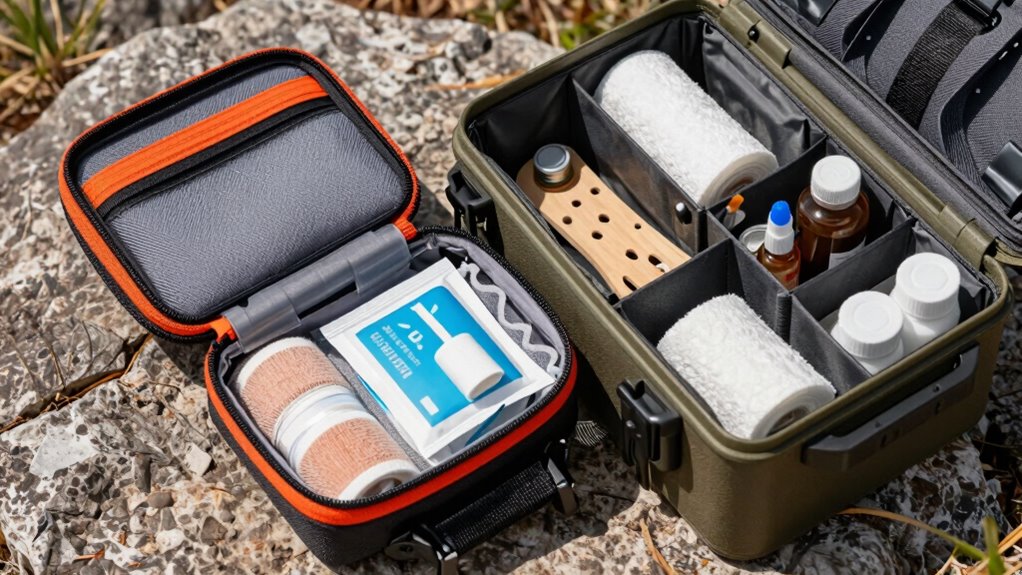
Trauma kits and medical kits are essential tools that can make a vital difference in emergency situations. When you’re out in the wilderness or on an outdoor adventure, being prepared means having the right equipment to handle different types of injuries. While both kits are crucial, they serve distinct roles based on the nature of emergencies you might encounter. Understanding their differences helps you optimize your emergency preparedness and guarantees you’re ready for whatever comes your way.
A trauma kit is specifically designed for severe injuries—think heavy bleeding, broken bones, or traumatic wounds. These kits typically include items like tourniquets, hemostatic dressings, and splints. When you’re in a situation where rapid bleeding control is necessary, a trauma kit becomes your first line of defense. Its purpose is to stabilize serious injuries until you can get professional medical help. Since outdoor environments can be unpredictable, having a trauma kit allows you to act swiftly, reducing the risk of shock or infection. Customizing your trauma kit based on your activity, environment, and potential risks guarantees it’s tailored for the specific outdoor roles you’ll face. Proper storage and maintenance of these kits is crucial to ensure their effectiveness, especially in challenging outdoor conditions. Additionally, understanding the types of injuries you might encounter helps you select the most appropriate supplies for your trauma kit. Having knowledge about first aid techniques complements your kit and improves your response in emergencies. Moreover, being familiar with the outdoor environment where you’ll be can help you anticipate specific injuries and prepare accordingly.
Medical kits, on the other hand, are more versatile and are designed for minor injuries or medical needs that aren’t immediately life-threatening. They include bandages, antiseptics, pain relievers, and other essentials for everyday minor ailments. When you’re hiking, camping, or backpacking, a well-stocked medical kit helps you manage cuts, blisters, or insect bites effectively. Unlike trauma kits, medical kits aren’t solely for emergencies—they’re about maintaining overall health and comfort during your outdoor activities. This broader scope makes them an important part of your emergency preparedness, especially when professional medical help might not be immediately available. Customizing both kits is vital, because no two outdoor trips are the same. You can tailor your trauma kit to address specific risks like heavy bleeding or fractures, while your medical kit can be adjusted for the duration of your trip, the number of people involved, and the environment. For instance, if you’re venturing into remote areas, adding extra supplies like a thermal blanket or additional antiseptics can make all the difference. By understanding the distinct roles of trauma and medical kits, and personalizing them accordingly, you enhance your ability to respond effectively in emergencies, guaranteeing safety and peace of mind during your outdoor adventures.
outdoor trauma kit with tourniquets
As an affiliate, we earn on qualifying purchases.
As an affiliate, we earn on qualifying purchases.
Frequently Asked Questions
Can Trauma Kits Be Used for Everyday Injuries?
Trauma kits can be used for everyday injuries, but they’re mainly designed for severe emergencies. For minor injuries, a basic first aid kit is usually enough for injury prevention and quick treatment. While trauma kits contain advanced supplies like tourniquets and bleeding control tools, they’re best suited for serious situations. Use the appropriate kit to guarantee effective first aid, whether for minor cuts or major trauma.
What Training Is Needed to Properly Use a Trauma Kit?
Like a seasoned hero in an emergency, you need proper training to use a trauma kit effectively. You should pursue first aid certification, which covers essential skills for emergency response. This training teaches you how to control bleeding, apply dressings, and handle shock. With this knowledge, you’ll confidently respond to traumatic injuries, ensuring you’re prepared to act swiftly and effectively when someone’s life depends on it.
How Durable Are Medical Kits in Extreme Weather Conditions?
Medical kits are designed with climate resilience in mind, making them fairly durable in extreme weather conditions. You’ll find that their equipment durability varies based on materials used, but high-quality kits withstand rain, snow, heat, and humidity better. To guarantee maximum effectiveness, choose kits with weatherproof or waterproof cases, and regularly inspect them for wear and tear. Proper storage and maintenance help keep your medical supplies reliable, no matter the climate.
Are There Size Limitations for Carrying Trauma or Medical Kits?
Size limitations for carrying trauma or medical kits depend on kit portability and storage requirements. You can typically carry compact kits suited for backpacking or hiking, but larger kits may be restricted if storage space is limited, like in a vehicle or aircraft. To guarantee you’re prepared, choose a kit that balances essential supplies with manageable size, allowing easy access without sacrificing portability or exceeding your storage capacity during outdoor adventures.
What Are the Legal Considerations for Carrying These Kits?
You might think carrying a kit is harmless, but legal restrictions and liability concerns can turn it into a legal minefield. Laws vary by location, and improper use could lead to serious consequences. Always check local regulations before packing your trauma or medical kit. Remember, liability concerns mean you could be responsible if you attempt treatment without proper training. Stay informed, prepared, and within legal bounds to avoid unexpected legal drama during outdoor adventures.
wilderness medical kit for camping
As an affiliate, we earn on qualifying purchases.
As an affiliate, we earn on qualifying purchases.
Conclusion
Remember, knowing the difference between trauma kits and medical kits can be the difference between life and death in the outdoors. Trauma kits are your quick response tools for severe injuries, while medical kits handle everyday ailments. As the saying goes, “Prepare for the worst, hope for the best.” By carrying the right kit for the right situation, you guarantee you’re ready for whatever nature throws your way, keeping yourself and others safe when it matters most.
As an affiliate, we earn on qualifying purchases.
compact outdoor medical supplies
As an affiliate, we earn on qualifying purchases.
As an affiliate, we earn on qualifying purchases.
Fall Picks
fall essentials
As an affiliate, we earn on qualifying purchases.