To build a better sleep layering strategy at camp, start with a snug moisture-wicking base layer to stay dry and regulate temperature. Add an insulating layer like fleece or down to trap heat, and choose a sleeping bag rated for your expected temperatures. Use a sleeping pad for ground insulation, along with thermal accessories like hats and socks. Keep your layers flexible, removing or adding items as needed for comfort. If you keep exploring, you’ll find more tips to perfect your setup.

Get emergency and outdoor gear delivered free with Prime
- Fast, free delivery on millions of items
- Prime Video, Amazon Music and more included
- Member-only deals all year
Key Takeaways
- Start with a moisture-wicking base layer to keep skin dry and regulate temperature.
- Choose insulating layers like fleece or down based on expected nighttime temperatures.
- Use a sleeping bag rated for the conditions, with additional ground insulation like a sleeping pad.
- Pack thermal accessories such as hats and socks to retain heat in extremities.
- Adjust layers overnight by removing or adding clothing for personalized comfort and temperature control.
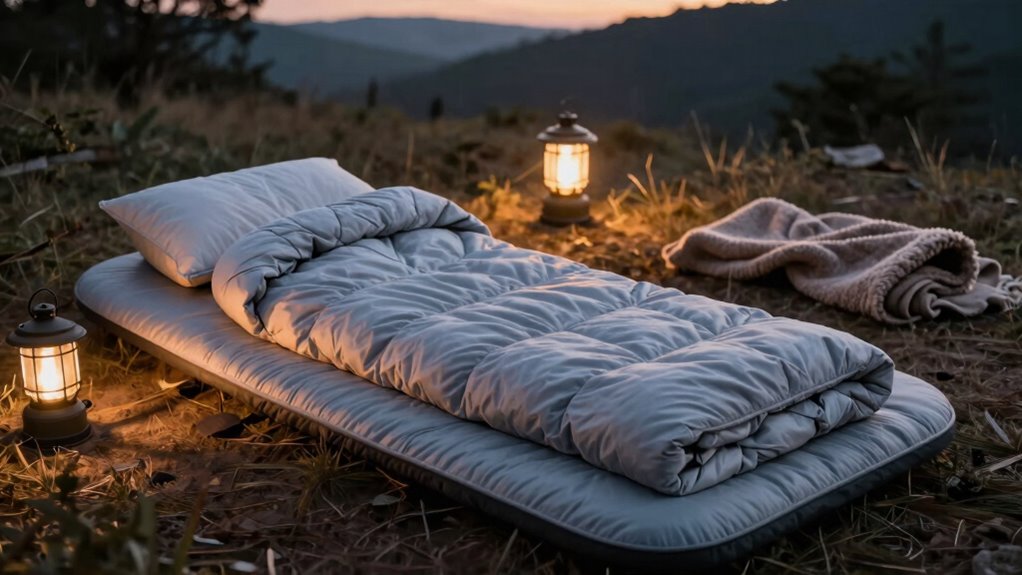
Getting a good night’s sleep at camp can be challenging, but building an effective sleep layering strategy makes it easier. When you focus on nighttime comfort and temperature regulation, you create an environment that helps you rest despite the outdoor elements. The key is to layer your clothing and gear thoughtfully, so you can adapt to changing temperatures and keep your body comfortable throughout the night.
Layering gear thoughtfully ensures a comfortable, adaptable sleep environment despite outdoor temperature changes.
Start with a moisture-wicking base layer. This layer should fit snugly against your skin to draw sweat away from your body, keeping you dry and preventing chills. Materials like merino wool or synthetic fibers work well because they regulate temperature and dry quickly. When you stay dry, your body maintains a steady core temperature, which is essential for restful sleep. Avoid cotton because it traps moisture, making you cold and uncomfortable.
Next, add an insulating layer. This is your primary source of warmth and can include a fleece, down jacket, or thermal shirt. The insulating layer traps heat close to your body and provides a buffer against the cold air outside your sleeping bag. The amount of insulation depends on the temperature forecast; you want enough to stay warm without overheating. Remember, a good insulating layer helps with nighttime comfort by maintaining a stable body temperature, even if the temperature drops during the night. Incorporating insulation techniques such as using layered clothing or specialized gear can further enhance your warmth retention. Additionally, choosing the right gear for cold conditions can make a significant difference in your overall comfort.
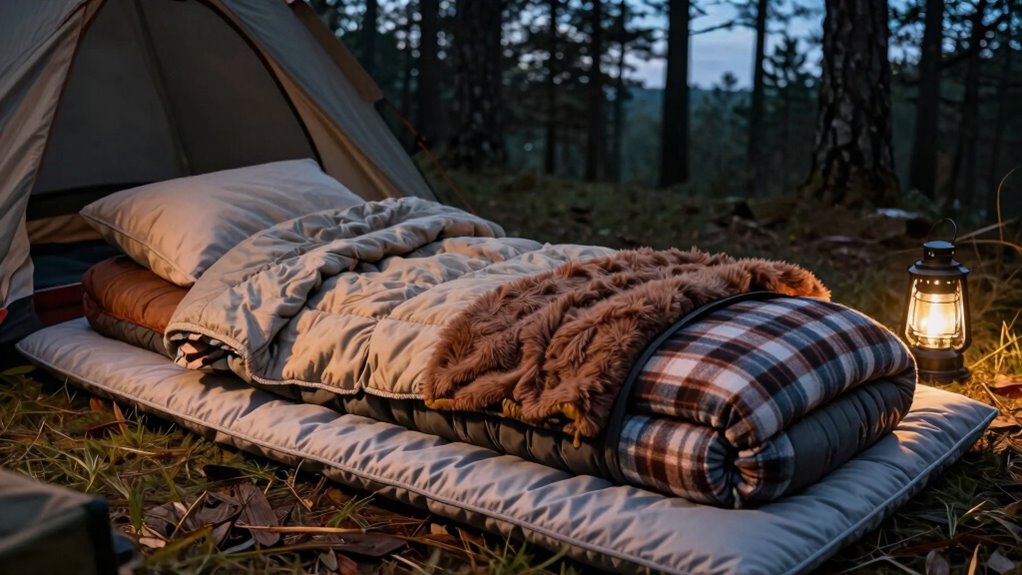
Your sleeping bag acts as the outermost layer, but how you use it can further enhance your sleep. Use a sleeping bag rated for the expected temperatures, and consider adding a sleeping pad underneath for extra insulation from the cold ground. If it’s particularly chilly, you might also pack a hat or a pair of thermal socks to keep extremities warm, which *considerably* impacts overall comfort and helps regulate your body temperature. Incorporating appropriate gear such as thermal accessories can significantly improve your overall sleep quality in outdoor conditions.
If you find yourself feeling too warm during the night, you can remove or loosen your insulating layer. Conversely, if it gets cold, add a lightweight jacket or an extra blanket inside your sleeping bag for extra warmth. This versatility allows you to fine-tune your layers and optimize nighttime comfort. When you approach sleep with this flexible layering system, you’re better equipped to handle unexpected cold snaps or warm spells, making your camping experience more restful and enjoyable.
moisture-wicking base layer for camping
As an affiliate, we earn on qualifying purchases.
As an affiliate, we earn on qualifying purchases.
Frequently Asked Questions
What Are the Best Materials for Camping Sleep Layers?
The best materials for camping sleep layers combine fabric insulation and breathable layers. Look for sleeping bags with synthetic insulation like polyester, which stays warm even when damp, or down for lightweight warmth. Pair these with breathable fabrics like merino wool or polyester blends to wick moisture and regulate temperature. These materials keep you comfortable, dry, and warm throughout the night, ensuring better sleep during your camping adventures.
How Do I Prevent Moisture Buildup in My Sleep System?
To prevent moisture buildup in your sleep system, use moisture-wicking and breathable fabrics for your layers. Make certain your sleeping bag and pads are well-ventilated by opening vents or adjusting your setup to promote airflow. Avoid trapping sweat by choosing lightweight, quick-drying materials. Also, change damp clothing promptly and keep your gear dry and well-ventilated during breaks. This helps maintain a dry, comfortable sleeping environment and prevents moisture from accumulating.
What Should I Pack for Unexpected Weather Changes?
You should pack lightweight gear that’s versatile for unexpected weather, like a waterproof jacket and quick-drying clothes. Include a compact, insulated layer for warmth, and don’t forget a rain cover for your pack. Also, bring supplies for campfire cooking, as it can keep you warm and dry if weather turns bad. These essentials help you stay comfortable and prepared, no matter what surprises the weather throws your way.
How Do I Choose the Right Sleeping Pad for Layering?
You choose the right sleeping pad for layering by considering your camping gear and sleep hygiene needs. Opt for a pad with good insulation and cushioning to prevent heat loss and improve comfort. A lightweight, inflatable pad works well for layering because it’s easy to pack and adjust. Make sure it complements your sleeping bag and other gear to create a cozy, insulated sleep environment, helping you rest well despite outdoor conditions.
How Can I Improve Comfort Without Adding Bulk?
To improve comfort without adding bulk, focus on sleep ergonomics and thermal regulation. Use a lightweight, contoured pillow that supports your neck, and choose breathable, moisture-wicking fabrics for your sleep system. Layer thin, insulating materials like silk or down beneath your sleeping bag to boost warmth without bulk. Adjust your sleeping position to maintain proper spinal alignment, ensuring restful sleep while keeping your pack light and manageable.
down sleeping bag for cold weather
As an affiliate, we earn on qualifying purchases.
As an affiliate, we earn on qualifying purchases.
Conclusion
By mastering your sleep layering strategy, you’ll turn your camp nights into a sanctuary of rest, even amidst the wildest storms. Think of it as crafting a fortress where warmth and comfort reign supreme, no matter what nature throws your way. So, pack smart, layer wisely, and embrace the night with confidence. With these tips, you’ll sleep soundly enough to wake up feeling like you’ve been reborn—ready to conquer whatever adventure awaits at dawn.
sleeping pad for camping insulation
As an affiliate, we earn on qualifying purchases.
As an affiliate, we earn on qualifying purchases.
As an affiliate, we earn on qualifying purchases.
Halloween Picks
halloween
As an affiliate, we earn on qualifying purchases.