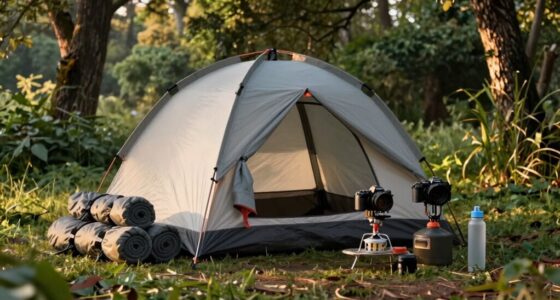
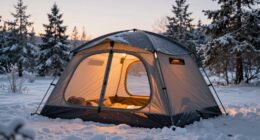
To build a more durable basecamp shelter system, choose high-quality, weather-resistant materials like ripstop nylon and waterproof fabrics, and use seam-sealing techniques to prevent leaks. Select a flat, well-drained site and secure your shelter with sturdy stakes and guy lines, especially in windy conditions. Build a small platform or elevate your shelter to reduce water seepage. Ensuring proper setup, site selection, and redundancy keeps your shelter resilient — keep exploring for more tips.

Get emergency and outdoor gear delivered free — and shop member deals
- Fast, free delivery on millions of items
- Access to Prime Big Deal Days deals on October 6–7
- Prime Video, Amazon Music and more included
Key Takeaways
- Select high-quality, weather-resistant materials like ripstop nylon or polyester for tents and tarps.
- Choose flat, well-drained sites and elevate shelters on platforms to prevent water pooling.
- Secure shelters with durable stakes and guy lines, especially in windy or storm-prone areas.
- Incorporate proper ventilation and seam-sealing techniques to enhance weather resistance and reduce condensation.
- Carry modular, backup gear such as extra stakes, repair kits, and additional tarps for flexibility and redundancy.
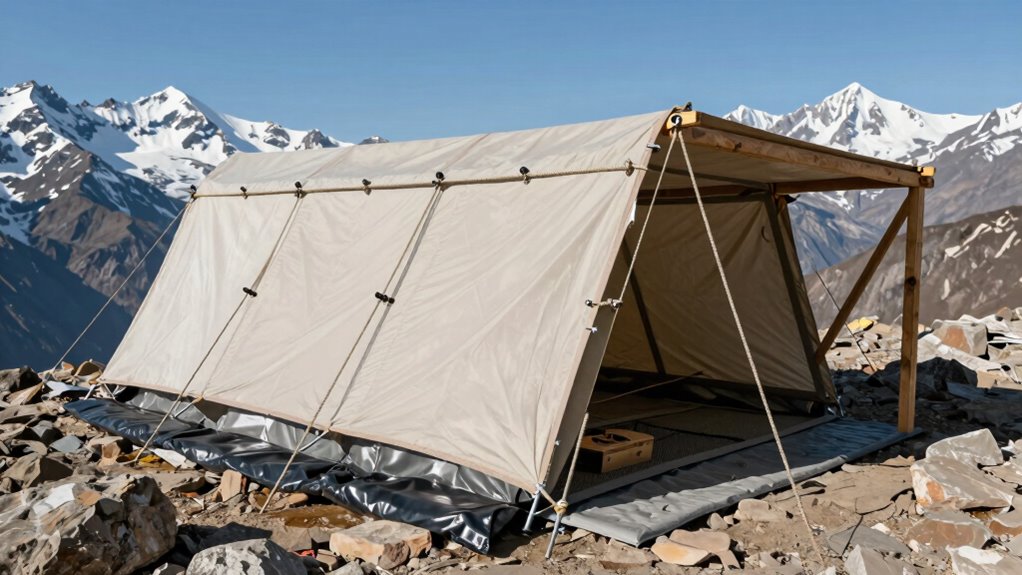
Creating a durable basecamp shelter system is essential for ensuring safety and comfort in remote or challenging environments. When setting up your shelter, your choice of camping gear plays a pivotal role in how well it withstands the elements. Invest in high-quality tents, tarps, and stakes designed for rugged conditions. Look for gear made from durable, weather-resistant materials like ripstop nylon or polyester, which can endure wind, rain, and even snow. The right camping gear not only provides protection but also contributes to the overall longevity of your shelter system, saving you time and effort during setup and repairs.
Weather resistance is a key factor when building a shelter that can handle unpredictable conditions. Your shelter should be able to repel rain and resist snow accumulation without leaking or collapsing. Use waterproof fabrics and seam-sealing techniques to keep moisture out and maintain a dry interior. Additionally, consider adding a rain fly or tarp overhead, especially if you’re in an area prone to sudden storms. Proper ventilation is also essential to prevent condensation buildup, which can compromise weather resistance and cause discomfort inside the shelter. Incorporating weather-resistant materials into your shelter design is crucial for durability in unpredictable environments. Ensuring your shelter includes proper sealing techniques enhances its ability to resist water intrusion and extends its lifespan.
Effective weather resistance requires waterproof fabrics, seam sealing, and proper ventilation for comfort and dryness.
The foundation of your shelter system should be solid. Choose a flat, well-drained location that minimizes the risk of flooding or water pooling around your setup. Secure your shelter firmly with stakes and guy lines, especially in windy conditions. Use durable, weather-resistant cords and stakes that can withstand tension without breaking or pulling out. Proper anchoring not only enhances weather resistance but also improves stability, preventing the shelter from shifting or collapsing during storms. If possible, build a small platform or elevate your shelter slightly above ground level to avoid water seepage and improve airflow underneath.
Lastly, think about modularity and redundancy in your shelter design. Having backup camping gear like extra stakes, repair kits, and additional tarps can be lifesavers when faced with unexpected weather changes. A well-prepared shelter system combines quality gear, weather-resistant materials, strategic placement, and secure anchoring—giving you confidence that your basecamp will remain safe and comfortable, no matter what nature throws your way. When you prioritize durability and weather resistance, you’re setting yourself up for a successful, enjoyable outdoor experience in even the most challenging environments.
As an affiliate, we earn on qualifying purchases.
Frequently Asked Questions
What Are the Best Materials for Extreme Weather Conditions?
For extreme weather, you should choose durable materials like high-quality, water-resistant fabrics such as ripstop nylon or polyester for your shelter. Use proper ventilation techniques to prevent condensation and maintain airflow, especially in cold conditions. Incorporate insulation materials like foam or reflective insulation to retain heat. These choices help your shelter withstand harsh elements, keep you comfortable, and guarantee longevity in severe climates.
How Do I Ensure Proper Ventilation in the Shelter?
Did you know poor ventilation can cause condensation and mold in shelters? To guarantee proper airflow, use ventilation techniques like adjustable vents or screened windows. Keep airflow optimized by positioning vents opposite each other to create cross-ventilation, which reduces humidity and maintains fresh air. Regularly check and adjust your ventilation system, especially during weather changes, to keep your shelter comfortable, dry, and safe for extended stays.
What Are Common Mistakes to Avoid During Setup?
To avoid common setup mistakes, focus on proper rope tension and anchor placement. Guarantee your ropes are tight enough to stabilize the shelter without causing stress on the fabric. Place anchors securely into solid ground, avoiding loose or rocky areas that could shift. Regularly check tension and anchor points during setup, and avoid rushing, which can lead to weak points or unstable structures. Proper attention to these details keeps your shelter safe and durable.
How Can I Improve Insulation for Cold Environments?
To improve insulation in cold environments, focus on thermal layering by adding insulating materials like foam or sleeping pads beneath your sleeping bag. Use moisture control techniques, such as venting your shelter and avoiding sweating, to prevent heat loss caused by dampness. Consider layering clothing inside your shelter and sealing gaps to keep cold air out. These steps will help maintain warmth and guarantee a cozy, durable basecamp shelter system.
What Maintenance Is Required for Long-Term Durability?
You might think maintenance is tedious, but it’s essential for long-term durability. Regularly inspect your shelter for wear and tear, reseal seams, and replace any damaged materials promptly. Prioritize campfire safety by keeping fire areas clear and preventing wildlife from accessing food or shelter. This not only prolongs your shelter’s life but also keeps you safe and respectful of nature, ensuring your basecamp remains resilient and secure over time.
weather-resistant camping stakes
As an affiliate, we earn on qualifying purchases.
As an affiliate, we earn on qualifying purchases.
Conclusion
By thoughtfully enhancing your shelter system, you create a foundation that withstands the subtle whispers of the elements. While it’s not about chasing perfection, a well-built basecamp offers quiet reassurance amid unpredictable conditions. Embrace the process as a gentle dance with nature’s nuances, trusting that your efforts lay the groundwork for resilient adventures. When you respect the delicate balance, your shelter becomes more than just a refuge — it’s a quiet demonstration of your preparedness and adaptability.
As an affiliate, we earn on qualifying purchases.
As an affiliate, we earn on qualifying purchases.
Fall Picks
fall essentials
As an affiliate, we earn on qualifying purchases.