To stay comfortable without overcomplicating camp, focus on simple essentials like proper sleep gear, layered clothing, and staying hydrated. Keep your campsite organized with easy-to-use gear and avoid unnecessary items. Respect fire safety and wildlife precautions to guarantee a worry-free experience. Check weather updates to adapt quickly and pack accordingly. By sticking to these basics, you can enjoy your trip comfortably and safely; there’s more helpful advice to discover as you go.

Get emergency and outdoor gear delivered free — and shop member deals
- Fast, free delivery on millions of items
- Access to Prime Big Deal Days deals on October 6–7
- Prime Video, Amazon Music and more included
Key Takeaways
- Use multi-purpose gear like a sleeping bag that also serves as a blanket or pillow.
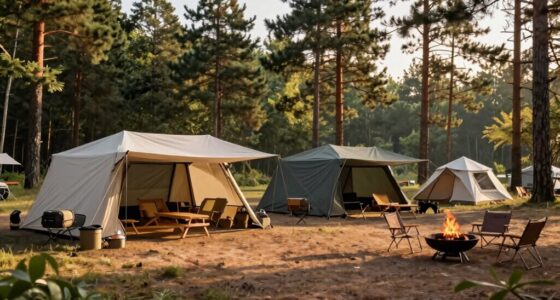
- Keep your campsite organized with minimal, essential items for quick setup and packing.
- Layer clothing to adapt easily to changing temperatures without extra bulky items.
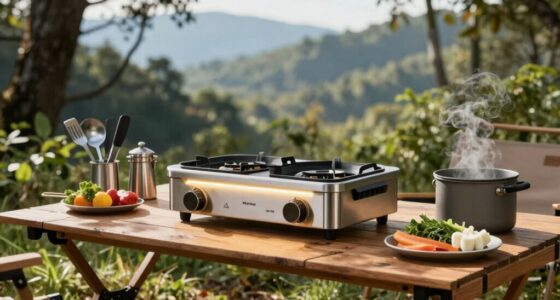
- Set up a simple, designated area for cooking, eating, and relaxing to reduce clutter.
- Prioritize safety and comfort essentials like fire safety, wildlife precautions, and hydration.
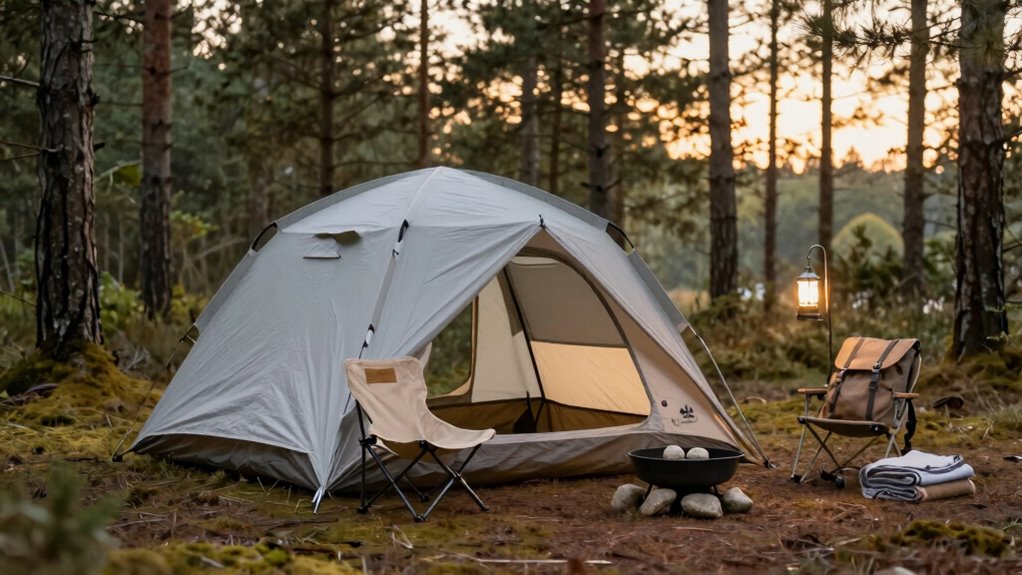
Ever wondered how to stay comfortable at camp without turning it into a complicated project? The key is to keep things simple while focusing on essential safety and comfort tips that make your experience enjoyable. First and foremost, campfire safety should be your top priority. Always choose a clear, dry area away from overhanging branches and tents. Keep your fire small and manageable, never leave it unattended, and make sure you have water or a fire extinguisher nearby in case things get out of control. When you’re done, fully extinguish the fire by dousing it with water, stirring the ashes, and guaranteeing everything is cool to the touch. Doing this not only prevents wildfires but also helps you breathe easier knowing your campsite is safe. Incorporating wildlife precautions into your routine ensures a peaceful camping experience and helps protect the local ecosystem. Wildlife precautions are equally important to keep your camping experience smooth and stress-free. Avoid leaving food or trash outside your tent, as these attract curious animals. Use sealed containers or hang your food out of reach, ideally in a bear-proof bag or a tree at least 10-15 feet off the ground and 4-6 feet away from the trunk. This simple step keeps unwanted visitors at bay and preserves the natural environment. Also, steer clear of feeding animals or leaving scented items lying around, which can encourage them to become too accustomed to humans. Maintaining a respectful distance from wildlife ensures your safety and theirs, preventing dangerous encounters and helping preserve the local ecosystem. Additionally, paying attention to weather conditions can help you better prepare your gear and clothing for comfort throughout your trip. Checking the latest weather forecast before heading out can help you anticipate sudden changes and avoid uncomfortable situations. Being aware of climate variability can further enhance your preparedness, ensuring you pack the right gear for unexpected weather shifts. To stay comfortable overall, invest in a good sleeping pad and a quality sleeping bag suited for the weather. Layer your clothing so you can adjust as temperatures fluctuate, and consider bringing a lightweight blanket for extra coziness. A portable chair and a small table can make your meal and relaxation time much more pleasant, without complicating your setup. Hydration is vital, so keep plenty of water on hand and drink regularly.
multi-purpose camping sleeping bag
As an affiliate, we earn on qualifying purchases.
As an affiliate, we earn on qualifying purchases.
Frequently Asked Questions
What Are the Best Lightweight Camping Gear Options?
You should opt for compact tents and lightweight cookware to keep your camping gear manageable. Compact tents are easy to carry and quick to set up, saving you time and effort. Pair them with lightweight cookware like titanium or aluminum pots and pans, which reduce weight without sacrificing durability. These gear choices keep your pack light, making your trip more comfortable and less complicated, so you can focus on enjoying the outdoors.
How Do I Choose the Right Campsite?
Imagine your campsite as a cozy nest in a vast forest. To choose the right one, scan for good campground amenities like clean water and accessible facilities. Consider factors like proximity to water, shade, and safety. Think of each element as a piece of a puzzle, fitting together to create your ideal refuge. Pick a site that feels both welcoming and convenient, ensuring your outdoor experience is simple, enjoyable, and stress-free.
What Are Simple Meal Ideas for Camping?
For simple camping meals, focus on easy snack ideas like trail mix, granola bars, and fresh fruit, which require no prep. For larger meals, one-pot meals like instant chili, pasta, or rice dishes make cooking straightforward. You just need a single pot, minimal ingredients, and quick prep. These options keep things simple, save time, and let you enjoy more of your trip without stressing over complicated cooking routines.
How Can I Stay Warm Without Heavy Clothing?
Did you know that proper layering can boost warmth by up to 50%? To stay warm without heavy clothing, use layering techniques—start with a moisture-wicking base layer, add insulating materials like fleece or down, and top with a windproof shell. This combination traps heat effectively and keeps you dry, ensuring you stay cozy even in chilly conditions without piling on bulky gear.
What Are Quick Fixes for Common Camping Problems?
You can quickly fix common camping problems by keeping safety in mind and using environmental tips. For instance, if you encounter a leak, seal it with waterproof tape. To prevent pests, set up natural repellents around your site. Always check weather updates for safety, and keep your campsite clean to avoid attracting animals. These simple, eco-friendly tricks help you stay comfortable and safe without overcomplicating your camping experience.
As an affiliate, we earn on qualifying purchases.
Conclusion
Staying comfortable without overcomplicating your camp is all about simplicity, preparation, and awareness. Keep your gear minimal but effective, plan ahead but stay flexible, and listen to your body’s needs. Focus on what truly matters — rest, hydration, and enjoying the outdoors. Remember, comfort doesn’t mean luxury; it means ease, balance, and connection. Embrace the basics, simplify your approach, and let nature enhance your experience, not complicate it.
bear-proof food storage container
As an affiliate, we earn on qualifying purchases.
As an affiliate, we earn on qualifying purchases.
portable camping chair and table set
As an affiliate, we earn on qualifying purchases.
As an affiliate, we earn on qualifying purchases.
Fall Picks
fall essentials
As an affiliate, we earn on qualifying purchases.