
TL;DR
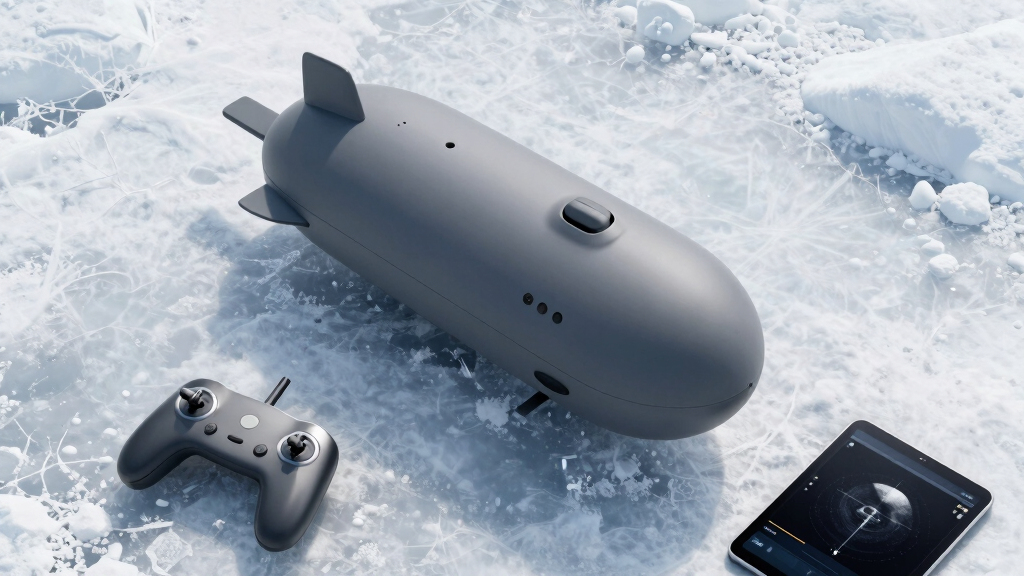
A robotic submarine, Ran, mapped the underside of the Dotson Ice Shelf in West Antarctica and detected unusual under-ice structures. The vehicle then went silent, and its current status remains unknown. This development could impact understanding of ice melt and sea level rise.
An autonomous underwater vehicle, Ran, mapping the underside of West Antarctica’s Dotson Ice Shelf, went silent after reporting unusual under-ice structures during a mission in 2022, and its current status remains unknown. This event raises concerns about potential changes in ice melt dynamics and the accuracy of existing models.
The Ran submarine, operated by researchers led by Professor Anna Wåhlin of the University of Gothenburg, conducted 14 successful missions beneath Dotson Ice Shelf in 2022, mapping about 54 square miles of ice underside. During these missions, Ran detected features such as terraces, teardrop-shaped pits, fractures, and channels—none of which are visible via satellite. These features suggest complex melting patterns driven by warm circumpolar deep water, which erodes the ice from below.
On its final mission, Ran traveled approximately ten miles into the cavity beneath Dotson before losing contact. The vehicle’s disappearance has prompted investigations, but no definitive cause has been identified. The team notes that the vehicle relied on acoustic navigation and internal sensors, as radio signals cannot penetrate the ice, making real-time communication impossible. The incident highlights the challenges of deep-ice exploration and the importance of such missions for understanding ice-ocean interactions that influence sea level rise.
Why It Matters
This event is significant because the detailed mapping of the ice shelf’s underside provides new insights into melting processes driven by warm ocean currents. The features detected by Ran, such as fractures and melt channels, are critical in understanding how ice shelves weaken and break apart, potentially accelerating glacier flow into the ocean. The loss of Ran complicates ongoing efforts to monitor these processes in real time, but the data collected so far already informs models predicting future sea level rise. As West Antarctica contributes substantially to global sea level, understanding its melting mechanisms is vital for climate change projections.
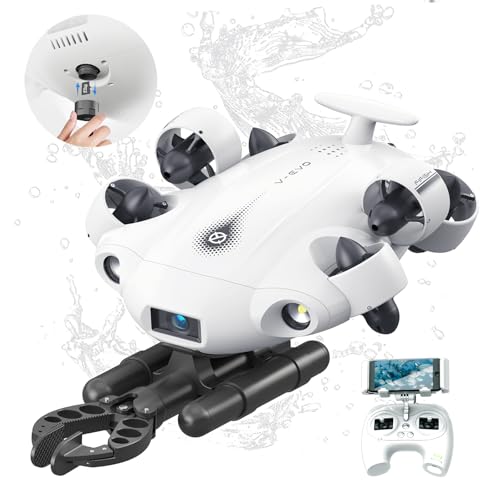
【2025 New】FIFISH V-EVO 4K60FPS Underwater Drone with Robotic Arm, with Removable SD Card, QYSEA AI Vision Lock 360° Omnidirectional Movement Underwater ROV with Depth Hold,330ft Dive
- 4K 60FPS Camera: High-quality underwater footage
- Removable SD Card: Easy storage and data transfer
- Hydrodynamic Design: Reduces resistance for longer dives
As an affiliate, we earn on qualifying purchases.
As an affiliate, we earn on qualifying purchases.
Background
Previous satellite data indicated that West Antarctica, particularly areas like Dotson Ice Shelf, has experienced significant ice loss since 1979, contributing approximately 0.55 inches to sea level rise. Warm circumpolar deep water from the Southern Ocean has been identified as a major factor in basal melting. The recent missions by Ran revealed complex features beneath the ice, challenging simplified melt models that often overlook detailed interactions such as fractures and melt channels. The disappearance of Ran adds a new layer of uncertainty to these efforts, emphasizing the difficulty of remote sensing and autonomous exploration in such environments.
“Seeing Ran disappear into the dark, unknown depths below the ice, executing her tasks for over 24 hours without communication, is of course daunting.”
— Professor Anna Wåhlin
“The data collected by Ran has already reshaped our understanding of the basal melting processes, but its disappearance underscores how much remains hidden beneath the ice.”
— Research team spokesperson

Underwater Robotics : Science, Design and Fabrication
- Includes step-by-step robot plans: Basic shallow-diving underwater robot instructions
- Covers subsea vehicle development: Discussion on subsea vehicle design and engineering
- Provides resource appendices: Additional reference materials and resources
As an affiliate, we earn on qualifying purchases.
As an affiliate, we earn on qualifying purchases.
What Remains Unclear
It remains unclear what caused Ran to go silent—whether mechanical failure, collision with ice, or other factors. No debris or signals have been recovered, and the cause of its disappearance is still under investigation. The impact of this loss on ongoing research and monitoring efforts is also uncertain.

Utilizing Autonomous Underwater Vehicles for Seafloor Mapping, Target Identification, and Predictive Model Testing
As an affiliate, we earn on qualifying purchases.
As an affiliate, we earn on qualifying purchases.
What’s Next
The research team is conducting investigations to determine Ran’s fate. Future missions are planned to continue mapping beneath Dotson Ice Shelf, possibly with improved technology to mitigate risks. Researchers will also analyze existing data to refine models of ice melt and stability in the region, aiming to better predict future sea level contributions.

Underwater Warfare Technology Essentials: Integrating Sonar, Autonomous Subsea Systems, and Anti-Submarine Operations
As an affiliate, we earn on qualifying purchases.
As an affiliate, we earn on qualifying purchases.
Key Questions
What was Ran, and what was its mission?
Ran was an autonomous underwater vehicle designed to map the underside of the Dotson Ice Shelf in West Antarctica, providing detailed images of features like fractures, channels, and melt patterns.
What did Ran discover before going silent?
Ran detected unusual under-ice structures such as terraces, teardrops, fractures, and melt channels, which suggest complex melting processes driven by warm ocean currents.
Why is Ran’s disappearance significant?
The loss raises concerns about the safety and reliability of autonomous exploration in Antarctic conditions and limits real-time monitoring of ice melt processes critical for sea level rise predictions.
How does this affect understanding of ice melt in West Antarctica?
The detailed data collected so far has improved understanding of basal melting mechanisms, but the disappearance of Ran creates gaps in ongoing observation and modeling efforts.
What are the next steps for researchers?
Investigations into Ran’s disappearance are underway, and future missions are planned to continue mapping and studying the region’s ice-ocean interactions, potentially with enhanced technology.

![10 Things To Do For This Saturday in L.A. [7-4-2026]](https://wildernesssense.com/wp-content/uploads/2026/07/10-things-to-do-for-this-saturday-in-l-a-7-4-2026-featured-560x300.jpg)