
TL;DR

Get emergency and outdoor gear delivered free — and shop member deals
- Fast, free delivery on millions of items
- Access to Prime Big Deal Days deals on October 6–7
- Prime Video, Amazon Music and more included
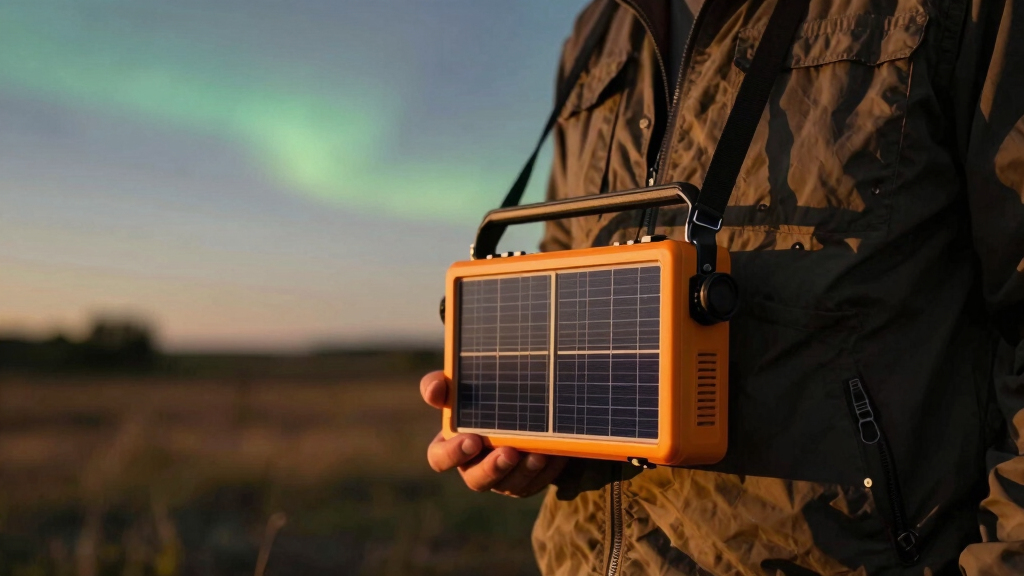
A solar coronal mass ejection is expected to cause geomagnetic activity, potentially making the northern lights visible in 19 U.S. states tonight. Visibility depends on geomagnetic conditions and weather. This rare event offers a unique opportunity for skywatchers.
A solar coronal mass ejection (CME) is expected to produce geomagnetic activity tonight, which could make the aurora borealis visible in up to 19 U.S. states. The event is of interest to skywatchers and scientists because it offers a rare chance to observe the northern lights outside their usual Arctic regions. This development is confirmed by NOAA forecasts and space weather alerts, though visibility depends on atmospheric conditions and sky clarity.
The CME was launched by the Sun and is expected to reach Earth, interacting with its magnetic field to produce a G1 to G2 geomagnetic storm. These levels are classified as minor to moderate but are sufficient to enhance aurora visibility in parts of the northern United States. The forecast indicates the best viewing opportunities will be in states near the U.S.-Canada border, including Washington, Idaho, Montana, North Dakota, South Dakota, Minnesota, Wisconsin, Michigan, and Maine.
Additional regions such as Oregon, Wyoming, Nebraska, Iowa, Illinois, Indiana, Ohio, New York, Vermont, and New Hampshire may also see faint auroras if the geomagnetic storm intensifies. However, the actual visibility will depend on local weather, light pollution, and the sky’s darkness. The event coincides with the Strawberry Full Moon, which could hinder observation due to increased brightness, and the prolonged daylight of the summer solstice period further complicates visibility in some areas.
Forecasts remain subject to change as space weather conditions evolve, and the intensity of the geomagnetic storm will only be confirmed as the CME approaches and instruments measure its orientation and strength.
Impacts of the June 29 Aurora Forecast for U.S. Skywatchers
This event provides a rare opportunity for residents in parts of the U.S. to witness the aurora borealis outside their typical Arctic zones. It highlights how solar activity can influence Earth’s magnetic environment and offers a chance for amateur astronomers and the general public to observe a natural phenomenon usually limited to northern latitudes. Although the storm levels are minor to moderate, they are enough to generate impressive displays, which can inspire interest in space weather and atmospheric science.
northern lights viewing flashlight
As an affiliate, we earn on qualifying purchases.
As an affiliate, we earn on qualifying purchases.
Background on Solar Activity and Aurora Visibility in the U.S.
The Sun periodically releases coronal mass ejections (CMEs) that send charged particles toward Earth. When these particles interact with Earth’s magnetic field, they can produce auroras—colorful light displays in the sky. Historically, geomagnetic storms of G1 to G2 levels have caused auroras to appear at lower latitudes than usual, especially during peak solar activity periods. The current CME is part of a pattern of increased solar activity observed in 2026, which has led to heightened space weather alerts across the globe. Such events are unpredictable in their exact impact, as the intensity and magnetic orientation of the CME as it nears Earth determine the actual geomagnetic response.
“The current geomagnetic storm forecast indicates G1 to G2 levels, which could produce visible auroras in parts of the northern United States tonight.”
— NOAA Space Weather Prediction Center
portable telescope for aurora borealis
As an affiliate, we earn on qualifying purchases.
As an affiliate, we earn on qualifying purchases.
Factors That Could Alter Aurora Visibility Tonight
The actual intensity and appearance of the aurora depend on several variables, including the exact magnetic orientation of the CME, local weather conditions, moonlight, and light pollution. Forecasts are subject to change as the CME approaches, and the geomagnetic response may be stronger or weaker than currently predicted. It is not yet confirmed whether the storm will reach the higher end of the forecasted G2 level, which would increase visibility chances.
As an affiliate, we earn on qualifying purchases.
Monitoring Space Weather and Anticipated Developments
Space weather agencies will continue to monitor the CME’s progress and magnetic orientation throughout the night. Updates on the storm’s strength and potential visibility windows will be provided as new data arrives. Observers are advised to stay informed through NOAA alerts and to prepare for optimal viewing conditions by choosing dark, open areas away from city lights. The event’s outcome will become clearer as the CME interacts with Earth’s magnetic field, and the possibility of seeing the aurora in southern regions will be reassessed during the night.
As an affiliate, we earn on qualifying purchases.
Key Questions
Can I see the northern lights from anywhere in the U.S. tonight?
While the best chances are in northern states near the U.S.-Canada border, auroras may be faintly visible in parts of Oregon, Wyoming, Nebraska, Iowa, Illinois, Indiana, Ohio, New York, Vermont, and New Hampshire if conditions are favorable.
What weather conditions are ideal for observing the aurora borealis?
Clear, dark skies with minimal light pollution are essential. Avoiding moonlight and urban lighting will improve visibility, especially during moderate geomagnetic storms.
How long will the aurora be visible tonight?
The duration depends on the storm’s strength and magnetic conditions. Observers should monitor space weather updates for the latest forecasts and be prepared for potential windows of visibility throughout the night.
Will the aurora be visible in the southern U.S.?
It is unlikely that the aurora will be visible in the southern U.S. due to the geomagnetic storm’s limited strength, but some faint displays could be possible at the lowest latitudes if conditions align.
Source: Google Trends
Halloween Picks
halloween
As an affiliate, we earn on qualifying purchases.