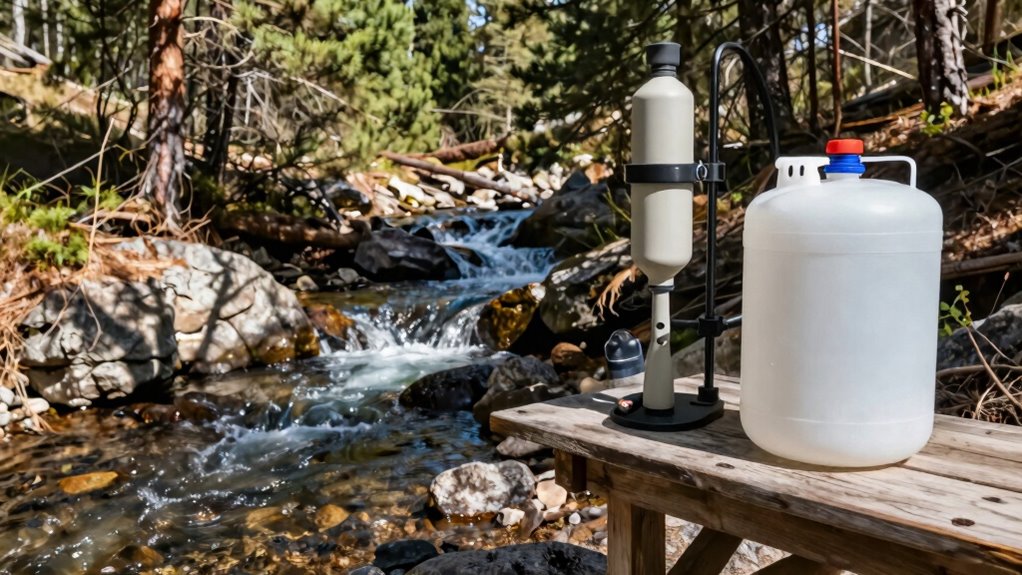

As a camper, you should know the importance of having multiple water sources and backup plans to stay safe and hydrated. Carry enough supplies, including extra containers, and scout for alternative sources along your route. Always treat natural water before drinking and understand effective treatment methods like filters or purification tablets. Proper storage and regular checks keep your water safe and ready. Keep exploring, and you’ll find more tips to perfect your water redundancy strategy.

Get emergency and outdoor gear delivered free — and shop member deals
- Fast, free delivery on millions of items
- Access to Prime Big Deal Days deals on October 6–7
- Prime Video, Amazon Music and more included
Key Takeaways
- Always carry multiple water containers to ensure backup supply during source shortages or contamination.
- Identify and familiarize yourself with alternative water sources along your route or campsite.
- Use reliable water treatment methods like filters, tablets, or UV sterilizers before drinking natural water.
- Regularly inspect, rotate, and properly store water supplies to prevent bacterial growth and contamination.
- Plan for sufficient water capacity to last several days, accounting for potential delays or source unavailability.
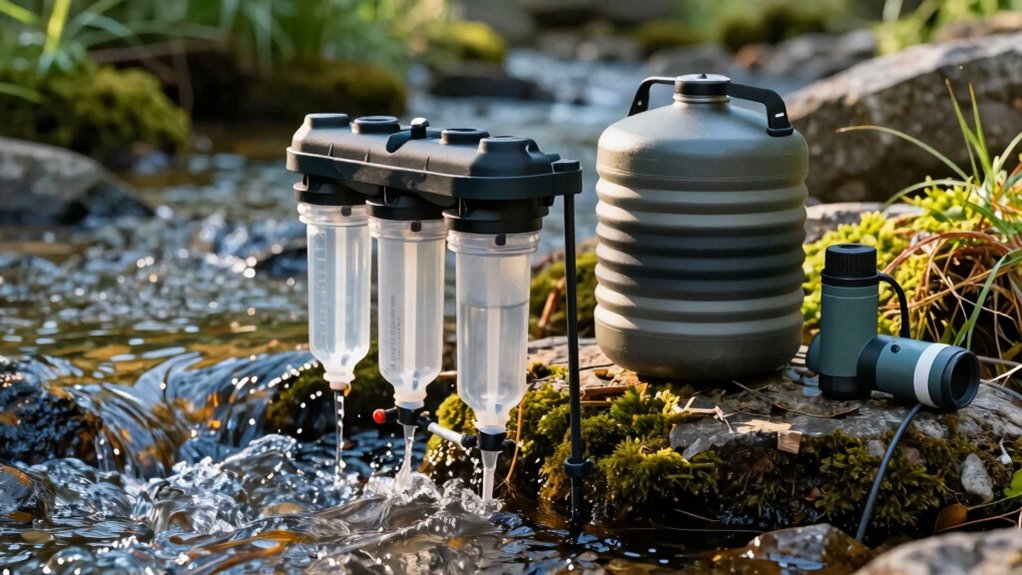
When you’re camping in remote areas, relying on a single water source can leave you vulnerable to shortages or contamination. That’s why understanding water redundancy is crucial for your safety and comfort. You need to be prepared for situations where your primary water source becomes unavailable or unsafe. This means having a plan for emergency sourcing and knowing how to implement water filtration techniques to guarantee your water is safe to drink.
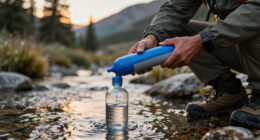
First, consider carrying multiple water containers or bottles with you. Don’t rely solely on what you find at your campsite—bring enough to get through a few days, especially if water sources are scarce. Having a backup means you won’t be stuck without hydration if your main source dries up or gets contaminated unexpectedly. When you find a water source, use water filtration devices to remove harmful bacteria, protozoa, and other contaminants. Portable water filters, purification tablets, or UV sterilizers are all effective tools that can turn questionable water into safe drinking water. This practice is an essential component of emergency sourcing, giving you peace of mind knowing you can treat water on the spot.
Carry multiple containers and always treat water from natural sources for safe drinking.
It’s equally important to identify multiple water sources along your route or around your campsite. Relying on just one stream or pond can be risky—what if it dries up or becomes polluted? Scout for alternative sources beforehand, so you’re not scrambling at the last minute. Having options allows you to switch sources if needed and reduces the chances of dehydration or illness. Additionally, always be prepared to treat water immediately after collection. Even clear-looking water can harbor pathogens, so don’t skip the step of filtration or purification. Understanding water safety practices is key to preventing waterborne illnesses during your trip. Proper knowledge of water treatment methods can make a significant difference in ensuring your water is safe. Furthermore, familiarizing yourself with contaminant types can help you choose the most effective treatment methods for different water conditions. Having a grasp of water testing techniques can also help you assess water quality more accurately before consumption.
Another key aspect of water redundancy is understanding how to store water properly. Keep extra water in durable, sealed containers that are easy to transport. Be mindful of how long you store water, as it can develop bacteria over time, especially in warm conditions. Regularly check your supplies and rotate them to keep your emergency sourcing ready for use at all times. In addition, understanding water storage best practices can help extend the shelf life of your stored water and prevent contamination.
portable water filter for camping
As an affiliate, we earn on qualifying purchases.
As an affiliate, we earn on qualifying purchases.
Frequently Asked Questions
How Much Extra Water Should I Carry for Redundancy?
You should carry at least 1-2 gallons of extra water per person for redundancy. For emergency planning, aim for a three-day supply, which means about 3-6 gallons per person. Make certain your water storage is easily accessible and properly sealed to prevent contamination. This extra water ensures you’re prepared for unexpected delays or emergencies, giving you peace of mind while camping and helping you stay hydrated in any situation.
What Are the Best Portable Water Filtration Options?
You should consider portable water filters with high filtration efficiency, like pump filters, gravity systems, or squeeze filters, depending on your needs. Look for options that are compatible with various water sources and easy to use. Brands like Sawyer, Katadyn, and MSR offer reliable choices. Prioritize filters that remove bacteria, protozoa, and viruses, ensuring safe drinking water during your camping trip.
How Do I Maintain Water Redundancy Systems?
You can’t just set it and forget it—water redundancy systems demand ongoing care! Regularly check your water storage for leaks and contamination, and keep your system maintenance up-to-date. Flush filters, sanitize tanks, and guarantee all connections stay secure. By staying vigilant, you’ll prevent surprises that could turn your water supply into a disaster. Keep your water redundancy reliable, and you’ll stay hydrated no matter what.
What Signs Indicate My Water System Is Failing?
You’ll notice signs like declining water quality, such as discoloration, odors, or sediment, which indicate your system might be failing. If pressure drops unexpectedly or the flow becomes inconsistent, it suggests durability issues. Keep an eye on leaks or unusual noises, as these also signal trouble. Regularly inspecting your water system helps catch problems early, ensuring you maintain reliable water quality and system durability while camping.
Can Water Redundancy Systems Be Installed DIY?
You can install water redundancy systems yourself, but it depends on your skill level and the system’s complexity. If you’re comfortable working with plumbing and understand your water source, you can improve system durability by following detailed instructions. Just guarantee you have the right parts, tools, and enough knowledge to create a reliable backup. Otherwise, consulting a professional ensures your setup remains safe and functional, especially in remote camping situations.
water purification tablets for outdoor use
As an affiliate, we earn on qualifying purchases.
As an affiliate, we earn on qualifying purchases.
Conclusion
Think of water redundancy as your own modern-day Ark, ready to weather any storm. By ensuring multiple water sources, you safeguard your adventure from unexpected dry spells, much like Noah’s preparedness kept him afloat. Remember, a well-planned backup isn’t just about convenience—it’s about peace of mind. Embrace this resilience, and your camping journey will be as timeless as the tales of explorers who dared to prepare for the unknown.
UV sterilizer for water purification
As an affiliate, we earn on qualifying purchases.
As an affiliate, we earn on qualifying purchases.
collapsible water containers for camping
As an affiliate, we earn on qualifying purchases.
As an affiliate, we earn on qualifying purchases.
Fall Picks
fall essentials
As an affiliate, we earn on qualifying purchases.