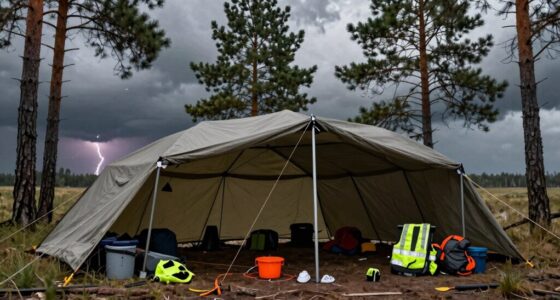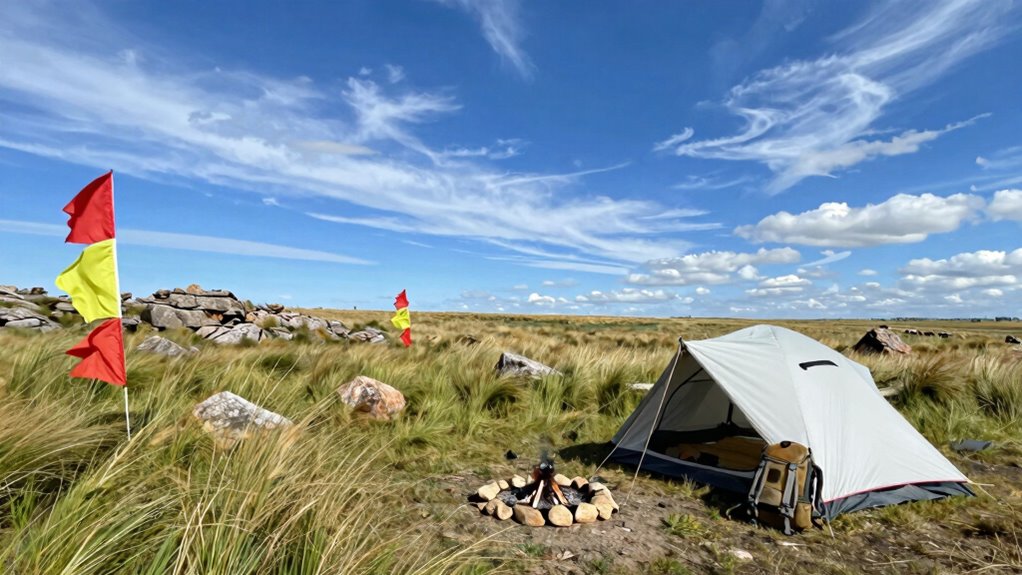

When setting up camp in open, windy terrain, focus on securing your tent with sturdy stakes driven at a 45-degree angle and deeply embedded. Choose a site that offers natural windbreaks like rocks or shrubs, and position your tent entrance away from the wind’s direction. Use multiple guy lines to evenly tension the tent, and keep gear secured inside or tied down. Stay aware of wind patterns to adapt your setup—more tips await to help you stay safe and stable.

Get emergency and outdoor gear delivered free with Prime
- Fast, free delivery on millions of items
- Prime Video, Amazon Music and more included
- Member-only deals all year
Key Takeaways
- Choose a sheltered site near natural windbreaks like rocks or dense shrubs.
- Use aerodynamic tents with reinforced seams and multiple guy points for stability.
- Drive stakes deeply at a 45-degree angle and secure all guy lines tightly.
- Position the tent entrance away from prevailing winds to reduce pressure on the fabric.
- Monitor weather forecasts and adjust setup and securing methods accordingly.

Setting up camp in windy terrain requires careful planning and quick thinking to guarantee safety and stability. Wind can turn a peaceful night into a restless one if you don’t properly secure your shelter. The key to a successful setup is understanding how to effectively use tent anchoring techniques and choosing wind resistant shelters. When you’re in open, gusty environments, your goal is to prevent your tent from collapsing or blowing away, especially when storms threaten to roll in unexpectedly.
Start with your tent anchoring. Use sturdy stakes and invest in high-quality, long stakes designed for rocky or loose soil. Drive them at a 45-degree angle away from the tent, ensuring they’re deep enough for maximum hold. If the ground is particularly hard or loose, supplement stakes with additional anchors like deadman anchors or use guy lines to distribute tension evenly. Tighten all guy lines to keep the tent taut, which reduces flapping and stress on the fabric. Remember, loose stakes or slack guy lines are your enemy in windy conditions—they can cause your shelter to shift or collapse.
Secure stakes at 45 degrees and tighten guy lines to ensure stability in windy conditions.
In addition to proper anchoring, opt for wind resistant shelters that are specifically designed for exposed environments. These tents typically feature aerodynamic shapes that minimize wind resistance and have reinforced seams for added durability. Look for tents with low profiles; a lower center of gravity helps reduce the risk of the tent flipping over during strong gusts. If possible, select models with multiple guy points, giving you more options for stabilizing the tent against side winds. Some shelters are built with reinforced frames and sturdy poles, which offer extra resistance to harsh weather. Incorporating proper site selection is crucial, as it can significantly enhance your shelter’s stability against wind. Additionally, choosing a wind-resistant material for your shelter can further improve its ability to withstand gusts.
When setting up, always choose your site wisely. Find a natural windbreak like large rocks, dense shrubs, or a slight hill if available. Avoid setting your tent at the top of ridges or in open fields where wind currents are strongest. Position the entrance away from the prevailing wind direction so that gusts don’t directly hit the opening, which can cause flapping and stress on the fabric. Keep your gear inside the tent or securely tied down to prevent it from becoming airborne. Additionally, be aware of local wind patterns as they can significantly affect your shelter’s stability. Being aware of the wind speed forecast can also help you anticipate potential issues and prepare accordingly. Understanding these environmental factors can make all the difference in windy conditions.
As an affiliate, we earn on qualifying purchases.
Frequently Asked Questions
How Can I Prevent My Tent From Blowing Away?
To prevent your tent from blowing away, you should focus on proper tent maintenance and weather forecasting. Secure your tent with sturdy stakes and guy lines, especially in windy conditions. Check the weather forecast beforehand so you can adjust your setup accordingly. Double-check all stakes and tie points, and consider adding extra anchors if the wind picks up. Regular tent maintenance guarantees your gear stays secure and safe during storms.
What Are the Best Anchoring Methods for Windy Conditions?
Think of your tent as a ship battling fierce winds—strong anchoring keeps it grounded. Use sturdy pegs made of steel or other durable materials, driven deep into the soil. Tie down guy lines securely, creating windbreak strategies that block gusts. For added stability, consider using heavier objects like rocks or sandbags to weight down stakes, ensuring your shelter stays steady amidst the storm’s roar.
How Should I Position My Tent in Open Terrain?
You should position your tent with its door facing away from prevailing winds to reduce wind entry and improve tent ventilation. Choose a spot on higher ground or a slight elevation at your campsite to avoid flooding and dampness. Clear away loose debris and secure your stakes deeply, especially in open terrain. Proper orientation and site selection guarantee better airflow, stability, and comfort during windy conditions.
What Safety Precautions Are Necessary in Windy Environments?
In windy environments, you need to stay safe by monitoring wind speed and gust impact. Always secure your tent with sturdy stakes and guy lines, and consider additional anchors if gusts are strong. Avoid setting up near trees or loose objects that could become hazards during gusts. Keep an eye on weather updates, and be ready to pack up quickly if wind conditions worsen. Safety depends on preparation and awareness of gust impact.
How Do Wind Patterns Affect Campsite Selection?
You should choose a campsite that minimizes wind turbulence by selecting a location shielded by natural barriers like trees or rocks. Good air circulation helps reduce wind speed around your tent, making it more stable and comfortable. Avoid open ridges or hilltops where wind patterns are unpredictable and strongest. By understanding how wind patterns flow, you can pick a site that offers safety, stability, and a better camping experience in windy terrain.
heavy-duty tent stakes for rocky soil
As an affiliate, we earn on qualifying purchases.
As an affiliate, we earn on qualifying purchases.
Conclusion
As you pack away your gear, remember that your campsite is more than just a spot on the map — it’s a beacon of resilience in the dance of wind and sky. Like a sturdy tree rooted deep, your setup stands against the gusts, a symbol of strength amid chaos. Embrace the rhythm of nature’s whispers and roars, knowing each careful placement is a silent vow to endure. Your camp becomes a sanctuary, resilient as the wind’s eternal song.
As an affiliate, we earn on qualifying purchases.
compact windbreak camping shelter
As an affiliate, we earn on qualifying purchases.
As an affiliate, we earn on qualifying purchases.
Halloween Picks
halloween
As an affiliate, we earn on qualifying purchases.