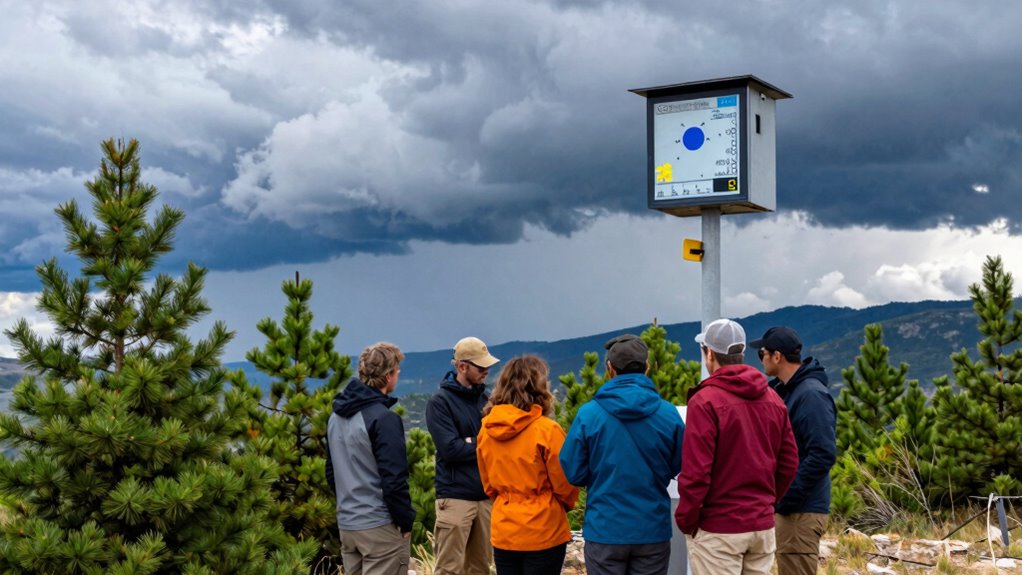
You should understand that weather data is an estimate based on models, not a certainty, so always stay alert to actual conditions. Pay close attention to key signs like changing wind, temperature drops, or darkening skies that forecasts might miss. Be prepared to act quickly if weather shifts unexpectedly. Monitoring reliable sources and recognizing patterns can help you stay safe. There’s more to discover about interpreting weather info to boost your outdoor experience.
Key Takeaways
- Weather forecasts are estimates and can be inaccurate; always verify critical data before making decisions.
- Recognize the significance of barometric pressure trends to anticipate weather changes.
- Use real-time observations alongside forecasts to better respond to sudden weather shifts.
- Trust official alerts and warnings, but also stay alert to signs of changing weather conditions.
- Prepare for weather unpredictability by packing extra supplies and shelter options.
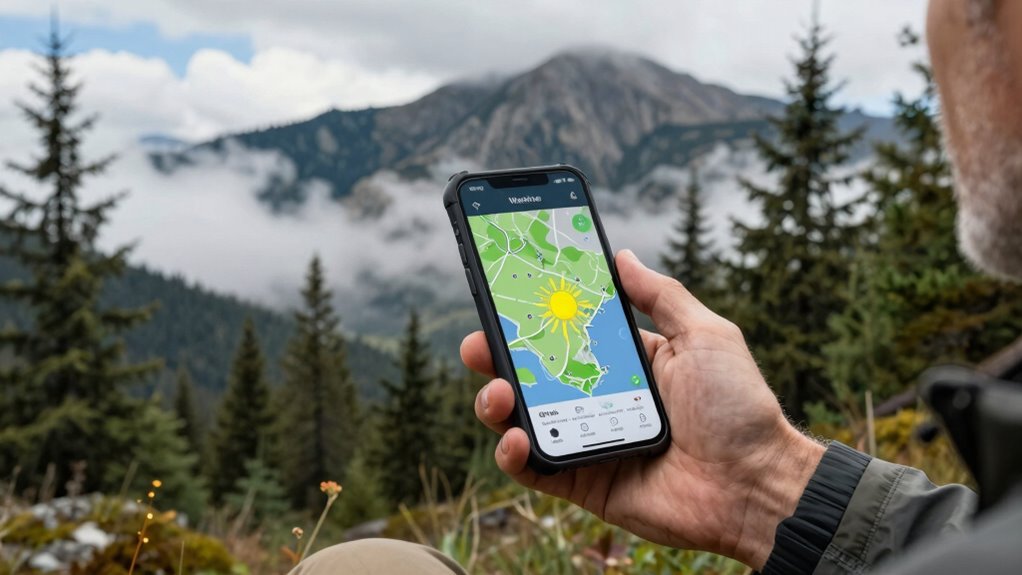
When planning a camping trip, checking the weather forecast is essential to guarantee a safe and enjoyable experience. Knowing what the weather will be like helps you prepare the right gear, choose suitable clothing, and plan your activities accordingly. But understanding the camping forecast goes beyond just knowing if it’s going to rain or shine. It’s about interpreting the data accurately to prioritize weather safety and make smart decisions throughout your trip.
First, recognize that weather forecasts are estimates based on current data and models, which means they aren’t always 100% precise. Pay attention to the forecast timing—short-term forecasts tend to be more reliable, especially within the next 24 to 48 hours. If a storm is predicted, don’t just glance at the temperature; look carefully at wind speeds, chance of precipitation, and specific warnings like thunderstorms or high winds. These details are *vital* for weather safety, especially when you’re in remote areas where help might not be immediately accessible.
Understanding weather data also involves knowing how to interpret different forecast sources. Some models provide detailed information, like temperature fluctuations during the day and night, humidity levels, and barometric pressure changes. This data can help you anticipate weather shifts, such as sudden drops in temperature or approaching storms. Being aware of these signs enables you to adapt quickly—setting up tarps, securing loose gear, or even deciding to postpone activities that could become risky in adverse conditions. Additionally, understanding the significance of barometric pressure changes can give you early indications of weather shifts, allowing you to stay ahead of potential hazards. Developing a basic understanding of weather patterns can also help you recognize signs of changing conditions in real time. Furthermore, having some knowledge of weather models can improve your ability to interpret forecast variations and plan accordingly.
It’s wise to keep an eye on weather alerts from trusted sources, such as weather apps, national weather services, or local park advisories. These alerts often include weather safety tips and emergency instructions, which can be life-saving if severe weather is imminent. Remember, weather data isn’t just for planning; it’s an ongoing resource to monitor during your trip. Conditions can change rapidly, so staying informed allows you to respond promptly and avoid dangerous situations.
Lastly, understanding the limits of weather data means recognizing when to trust your instincts over forecasts. If the forecast suggests clear skies but you notice darkening clouds and increasing wind, it’s better to err on the side of caution. Being prepared for unexpected weather changes—by packing extra clothing, emergency supplies, and knowing shelter options—further enhances your weather safety. Recognizing that weather data is an estimate helps you approach forecasts with a cautious mindset and rely on your observations as well.
In essence, mastering weather data for your camping trip isn’t just about checking the forecast once. It’s about actively interpreting it, staying alert for updates, and making informed decisions that keep you safe and comfortable while enjoying the great outdoors.

FosPower NOAA Emergency Weather Radio A1 7400mWh Portable Power Bank, AM/FM, USB/Solar/Hand Crank Charging, Battery Operated, SOS Alarm & Flashlight for Indoor/Outdoor Emergency – Orange
[7400mWh (2000mAh) POWER BANK WILL KEEP DEVICES POWERED] The FosPower FOSPWB-2376 emergency radio incorporates a 7400mWh (2000mAh) power…
As an affiliate, we earn on qualifying purchases.
As an affiliate, we earn on qualifying purchases.
Frequently Asked Questions
How Often Should I Check Weather Updates Before Camping?
You should check weather updates at least twice daily before camping, especially as weather patterns can change quickly and seasonal shifts bring unexpected conditions. In the morning, review the forecast to plan your day, and again in the evening to stay informed about overnight changes. Staying updated guarantees you’re prepared for rain, wind, or temperature drops, giving you peace of mind and a safer, more enjoyable camping experience.
Can Weather Forecasts Be Inaccurate for Remote Camping Locations?
Weather forecasts can be less accurate for remote camping locations due to data limitations and remote accuracy issues. You might find that predictions are less reliable because fewer weather stations feed into models in these areas. To stay safe, check multiple sources, consider real-time updates, and prepare for sudden weather changes. Always have backup plans in case the forecast isn’t as accurate as you’d hope, especially in remote areas.
What Are the Best Apps for Real-Time Weather Alerts?
The best apps for real-time weather alerts prioritize data accuracy and offer reliable weather prediction updates. Apps like NOAA Weather Radar Live and AccuWeather provide instant alerts for severe weather, helping you stay safe during your camping trip. You’ll receive timely notifications about storms or changing conditions, ensuring you can adjust plans accordingly. Trust these apps to deliver precise data, so you’re always prepared, no matter where you camp.
How Does Weather Data Account for Sudden Storms?
Sudden storms can surprise you, but storm prediction and data accuracy work together to keep you informed. Weather models analyze real-time radar, satellite signals, and atmospheric shifts, swiftly updating forecasts. While no system is flawless, these tools help detect rapid changes, giving you ample alerts and advice. Staying vigilant, trusting reliable weather apps, and understanding how data accounts for storms ensure you’re prepared and protected against unexpected weather whirls.
Is Historical Weather Data Useful for Planning Camping Trips?
Yes, historical weather data is useful for planning camping trips. It helps you identify seasonal patterns and understand how climate change might be affecting weather trends over the years. By analyzing past conditions, you can better anticipate what to expect, avoid harsh weather, and choose the best time for your trip. This knowledge guarantees a safer, more enjoyable experience, especially as climate change influences unpredictable weather variations.

Newentor Weather Station Wireless Indoor Outdoor Thermometer, Color Display Digital Weather Thermometer with Atomic Clock, Barometric Pressure, Forecast Station with Adjustable Backlight, Black
[Color LCD Screen Weather Station] Newentor temperature & humidity monitor with a large color LCD display shows essential…
As an affiliate, we earn on qualifying purchases.
As an affiliate, we earn on qualifying purchases.
Conclusion
Understanding weather data equips you with the power to anticipate nature’s surprises, turning potential chaos into confidence. Just as a sturdy tent withstands storms, informed decisions shelter you from unexpected weather shifts. In the wilderness, knowledge becomes your safest refuge, contrasting the unpredictable elements with your preparedness. Embrace this insight, and your camping adventures transform from uncertain to extraordinary—proof that awareness, like a well-timed forecast, can make all the difference between struggle and serenity.

Amazon Basics Waterproof Multipurpose Camping Tarp with Reinforced Corners and Edges, Protective Cover, 9.5 x 11.3 Feet, Dark Green
[HEAVY-DUTY WATERPROOF PROTECTION] Made with durable rip-stop fabric featuring polyethylene lamination on both sides for maximum water resistance….
As an affiliate, we earn on qualifying purchases.
As an affiliate, we earn on qualifying purchases.

BTMETER BT-100 Handheld Anemometer, Digital Wind Speed CFM Meter Gauge Air Flow Velocity Tester for HVAC Shooting Drone, Wind Chill, 14℉-113℉ Wind Temperature
【Multifunction Pro Anemometer】Wind Speed, Wind Temperature, Wind Chill, Low battery indicator on bright backlit LCD screen. BT-100 is…
As an affiliate, we earn on qualifying purchases.
As an affiliate, we earn on qualifying purchases.