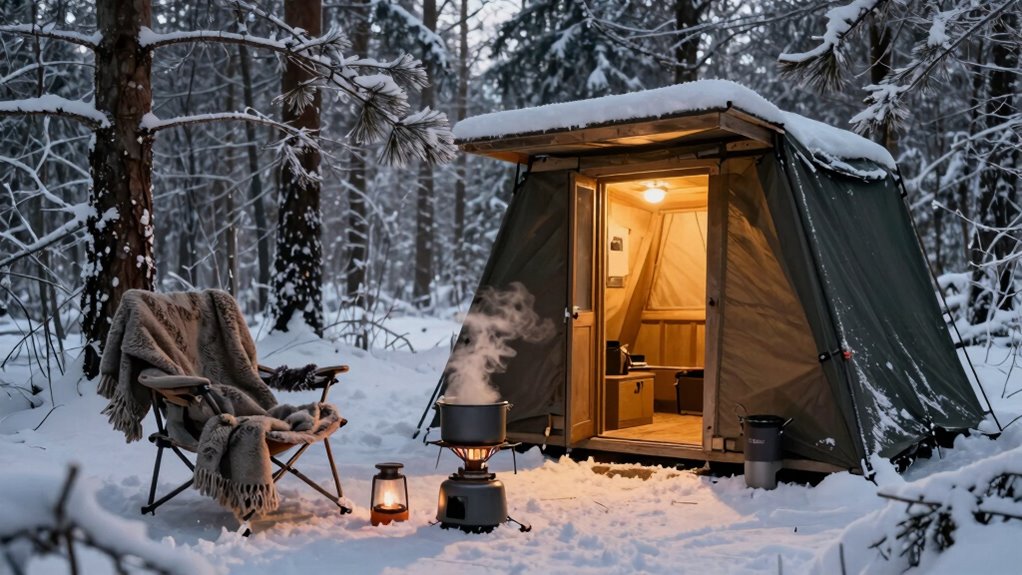
In cold camps, better heating strategies focus on staying dry, layered, and insulated. Use lightweight, compact sleeping pads to trap heat and prevent heat loss from contact with the ground. Wear moisture-wicking clothes and dry layers to avoid dampness that drains body heat. Add extra insulation with gloves, hats, and thermal layers, and consider small warmers if power is available. Combining these methods guarantees you stay warm and safe, and there’s more to discover if you keep exploring.

Get emergency and outdoor gear delivered free with Prime
- Fast, free delivery on millions of items
- Prime Video, Amazon Music and more included
- Member-only deals all year
Key Takeaways
- Prioritize moisture-wicking clothing and waterproof gear to stay dry and prevent heat loss.
- Use layered insulation, combining lightweight pads with insulated clothing, to trap body heat effectively.
- Incorporate portable insulation like sleeping pads for thermal barriers during rest and sleep.
- Employ targeted heating devices such as hand warmers to supplement body heat in extreme cold.
- Maintain proper ventilation to reduce condensation and keep gear dry, enhancing overall warmth.

When you’re in a cold camp, staying warm is essential for safety and comfort. The right heating strategies don’t just keep you cozy; they can prevent hypothermia and other cold-related issues. One of the most effective ways to improve warmth is by using portable insulation. This allows you to create a barrier between your body and the cold ground or surrounding air, trapping heat and reducing heat loss. A good sleeping pad or insulated mat can make a significant difference. Look for lightweight, compact options that can be easily packed and set up, especially if you’re moving camp frequently. Portable insulation is crucial because it provides a foundation for better warmth retention, whether you’re sleeping or resting during the day.
In addition to insulation, moisture management plays a vital role in maintaining warmth. When your clothing and gear become damp, your body loses heat much faster, making it harder to stay warm. That’s why moisture management should be a top priority. Choose moisture-wicking base layers that draw sweat away from your skin, keeping you dry and comfortable. Avoid cotton, which retains moisture and can lead to chills when it gets wet. Instead, opt for synthetic or wool fabrics that insulate even when damp. Keep your gear dry by using waterproof clothing and tents, and make sure to ventilate when necessary to prevent condensation from building up inside your shelter. Proper moisture management ensures you stay dry, which in turn helps maintain your core temperature.
A thorough approach to heating in cold camps incorporates these elements seamlessly. Besides insulation and moisture control, you should also consider layering your clothing properly to trap heat while allowing excess moisture to escape. Use a combination of insulating layers and windproof outer shells, and always have extra dry clothes on hand in case your current layers get damp. Portable heating devices, such as hand warmers or small electric heaters (where power sources permit), can provide additional warmth when needed. But, even without electrical appliances, your body heat combined with effective insulation and moisture management creates a powerful defense against the cold. Staying dry, layered, and insulated forms the foundation of better heating strategies, ensuring that you can endure harsh conditions safely and comfortably.
lightweight insulated sleeping pad
As an affiliate, we earn on qualifying purchases.
As an affiliate, we earn on qualifying purchases.
Frequently Asked Questions
How Do I Prevent Frostbite in Cold Camping Conditions?
To prevent frostbite in cold camping conditions, you should wear proper clothing, including insulated, moisture-wicking layers, and keep extremities covered with gloves and hats. Stay dry, avoid tight gear that cuts circulation, and take regular breaks to warm up. Emergency preparedness is essential—carry hand warmers and a thermal blanket. Recognizing early frostbite symptoms helps you act quickly, ensuring your safety in harsh environments.
What Are Eco-Friendly Heating Options for Remote Camps?
You can choose eco-friendly heating options like solar panels to power small, efficient heaters or LED lights, reducing reliance on fossil fuels. Additionally, a wood stove offers a renewable, sustainable heat source if you have access to wood. Using these options responsibly, with proper ventilation, helps keep your remote camp warm while minimizing environmental impact. Remember to follow safety guidelines to prevent accidents and preserve the surrounding wilderness.
How Can Insulation Improve Heating Efficiency in Tents?
Insulation improves heating efficiency in tents by reducing heat loss through insulation barriers and thermal layering. You should add insulating materials like foam pads or reflective barriers to trap warmth inside. Layering your clothing and using thermal blankets enhances this effect, creating a barrier that keeps cold air out. By combining insulation barriers with thermal layering, you make your tent much warmer and more energy-efficient, conserving heat and reducing your heating needs.
What Safety Precautions Are Essential With Portable Heaters?
To guarantee safe use of portable heaters, you should prioritize proper ventilation safety to prevent dangerous buildup of fumes. Always place the heater on a stable, level surface away from flammable materials, and keep it at least three feet from tents’ walls and gear. Never leave it unattended, and check regularly for signs of overheating or malfunction. These precautions help you stay warm while preventing potential hazards.
How Do Weather Changes Affect Heating Strategies?
Weather changes considerably impact your heating strategies, especially with temperature fluctuations and wind chill. When temperatures drop or wind chill increases, you need to boost your heat sources or add insulation to retain warmth. Adjust your camping gear accordingly, like layering clothing or using windbreaks, to stay comfortable. Staying aware of weather forecasts helps you anticipate sudden drops, ensuring your heating methods remain effective and safe in changing conditions.
moisture-wicking base layers for cold weather
As an affiliate, we earn on qualifying purchases.
As an affiliate, we earn on qualifying purchases.
Conclusion
Think of your camp as a tiny lighthouse amid a stormy sea, where your heating strategy is the steady beam guiding you safely through the darkness. When you choose smarter, more efficient ways to stay warm, you’re lighting that beacon brighter, cutting through the cold and fears. With each well-placed heat source, you turn your camp into a haven—a sanctuary where warmth and hope shine brightest amid the winter’s grip.
portable hand warmers for camping
As an affiliate, we earn on qualifying purchases.
As an affiliate, we earn on qualifying purchases.
As an affiliate, we earn on qualifying purchases.
Halloween Picks
halloween
As an affiliate, we earn on qualifying purchases.