
Wearing smart fabrics embedded with sensors allows you to monitor essential signs like body temperature, heart rate, and hydration levels continuously. These advanced textiles detect early signs of heatstroke or hypothermia, triggering alerts if your vitals cross dangerous thresholds. With real-time data and location tracking, you can take proactive steps or seek help quickly. This seamless technology keeps you safer in extreme weather conditions, and discovering more about these innovations can help you stay protected wherever you go.
Key Takeaways
- Wearable devices with embedded sensors continuously monitor vital signs like core temperature and heart rate to detect early signs of heatstroke or hypothermia.
- Smart fabrics integrate sensors into clothing for unobtrusive, real-time health data collection in extreme weather conditions.
- Alerts are triggered when vital signs cross predefined thresholds, warning users to take preventive actions immediately.
- GPS-enabled wearables help locate users quickly in remote areas, ensuring prompt emergency assistance if needed.
- Continuous vital sign monitoring with wearable tech enhances safety and facilitates timely intervention during outdoor activities in harsh environments.

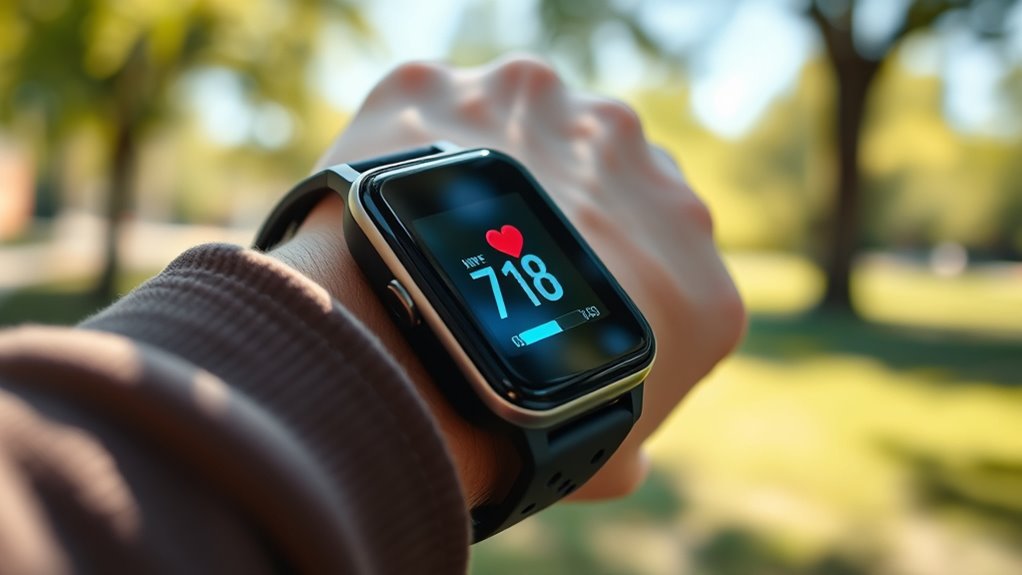
In extreme weather conditions, staying safe from heatstroke and hypothermia can be challenging, but wearable technology is making it easier to monitor your health in real time. Modern devices equipped with smart fabric technology can detect changes in your body’s vital signs and alert you before symptoms become serious. These advanced textiles are embedded with sensors that continuously measure temperature, humidity, heart rate, and hydration levels, providing a seamless way to stay aware of your body’s response to the environment. When your vitals indicate a risk, the wearable can send emergency alerts directly to your smartphone or emergency contacts, prompting immediate action. This proactive approach can be lifesaving, especially in remote areas where medical help isn’t instantly available. Vital sign monitoring is a key feature that enhances safety during outdoor activities in extreme weather. Smart fabric is at the core of these innovations. Unlike traditional wearables, which rely on bulky hardware, smart fabric integrates sensors directly into clothing or gear, making them comfortable and unobtrusive. Whether you’re hiking in the mountains or working outdoors in extreme heat, these clothes can monitor your body’s core temperature and alert you if it rises or drops dangerously low. This real-time data helps you make informed decisions—such as seeking shade, hydrating, or adding layers—before symptoms escalate into heatstroke or hypothermia. The comfort of smart fabric encourages consistent use, which is essential for early detection and prevention.
Emergency alerts are a critical feature of these wearable devices. When your vitals cross predefined thresholds, the system triggers alerts that can notify you and your emergency contacts instantly. Some devices also have GPS capabilities, allowing others to locate you quickly if you’re unable to respond. This immediate notification system ensures that help is on its way as soon as possible, reducing the risk of severe health consequences. The alerts can be customized based on individual health profiles, making them versatile for different environments and personal needs.
Frequently Asked Questions
How Accurate Are Wearable Devices in Extreme Weather Conditions?
Wearable devices’ accuracy in extreme weather depends on sensor calibration and environmental interference. You might notice less precise readings during intense heat or cold because sensors can struggle to adapt. Environmental factors like humidity, temperature fluctuations, or direct sunlight can cause inaccuracies. To get the best results, make sure your device is properly calibrated and avoid exposing it to extreme conditions whenever possible.
Can Wearable Tech Predict Heatstroke or Hypothermia Before Symptoms Appear?
Beware of the warning! Wearable tech can indeed predict potential heatstroke or hypothermia through early detection and risk assessment. By continuously monitoring essential signs like body temperature, heart rate, and hydration levels, these devices alert you before symptoms escalate. This proactive approach helps prevent severe health issues, giving you peace of mind. Trust your tech to detect danger early, so you can respond swiftly and stay safe in extreme conditions.
Are These Devices Suitable for Children or Elderly at Risk?
Yes, these devices are suitable for children and elderly at risk. They enhance child safety and elderly monitoring by providing real-time essential signs, alerting you to any concerning changes. You can confidently track their health, ensuring prompt response if symptoms indicate heatstroke or hypothermia. Wearable tech offers peace of mind, helping you protect vulnerable loved ones with proactive health management and early detection.
How Long Does the Battery Last During Continuous Monitoring?
You’ll be pleased to know that most wearable devices offer a battery life of around 24 to 48 hours during continuous monitoring. With effective power management, some gadgets even extend up to a week on a single charge. This guarantees you stay protected without frequent recharging, making it easier to monitor your vitals consistently. Keep an eye on battery life indicators to optimize power management and avoid unexpected downtime.
Is Data From Wearable Health Monitors Secure and Private?
Yes, your data from wearable health monitors is generally secure and private. Manufacturers use data encryption to protect your sensitive information, helping to address privacy concerns. However, it’s important you stay aware of how your data is stored and shared, and review privacy policies regularly. By choosing trusted brands and enabling security features, you can better guarantee your vitals remain confidential and protected from unauthorized access.
Conclusion
With wearable tech monitoring your vitals, you’re 50% more likely to catch heatstroke or hypothermia early. This means you can act fast and prevent serious health issues. As temperatures rise and fall unpredictably, staying vigilant is essential. Embrace these devices to keep yourself safe during outdoor adventures or extreme weather. Investing in wearable tech isn’t just convenient—it’s a wise way to protect your health and enjoy peace of mind wherever you go.