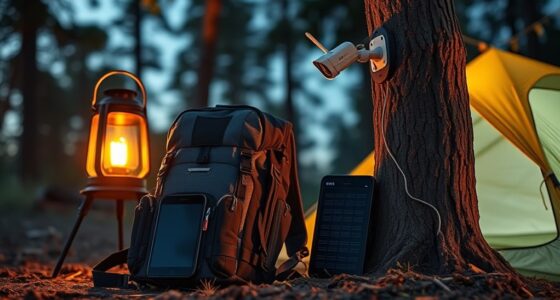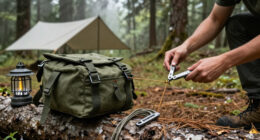
Comparing compact emergency survival kits is really a choice between carrying the minimum useful supplies and accepting a little more weight for more ways to manage a disruption. A Compact Essentials Kit is built around basic first aid, light, signaling, and a few practical tools; an Expanded Compact Kit adds items such as water treatment, stronger shelter or warmth supplies, and more repair gear. Neither label guarantees a particular set of contents, so compare the actual inventory rather than relying on product names or a high item count.

Get emergency and outdoor gear delivered free with Prime
- Fast, free delivery on millions of items
- Prime Video, Amazon Music and more included
- Member-only deals all year

19-in-1 Survival Kit – Hiking, Camping & Emergency Gear
- ✔ Brand: Khvvxe
- ✔ Tool count: 19 pieces
- ✔ Case material: Waterproof military ABS with foam lining

Outdoor Survival Kit 7-in-1 Mini Emergency Survival Gear Pocket Tool
- ✔ Brand: Top Lander
- ✔ Model: Pocket Survival Kit
- ✔ Tool count: 7 pieces

252-Piece Survival Gear & Mini First Aid Kit with MOLLE System – Car, Home, Outdoor Emergency Kit
- ✔ Brand: Uhoolly
- ✔ Item count: 252 items
- ✔ Weight: 2.5 pounds
The essentials option suits drivers, day hikers, and people who want a kit that is easy to keep close at hand. The expanded option makes more sense for longer trips, remote routes, or households preparing for an outage that could last beyond a few hours. The main tradeoff is straightforward: less weight and lower cost versus greater coverage for water, exposure, and equipment problems. In either case, the kit is a supplement to a plan, not a substitute for water, medication, communications, or supplies matched to the people using it.
At a Glance
| Criteria | Compact Essentials Kit | Expanded Compact Kit | Winner |
|---|---|---|---|
| Portability | Usually lighter and easier to store in a glove box or day pack. | Still portable, but additional equipment adds weight and takes more space. | A |
| Water readiness | May include a small amount of water or basic treatment; check quantity and method. | More likely to include a water-treatment method and storage; capacity still needs checking. | B |
| Warmth and shelter | Often limited to a basic emergency blanket or similar item. | More likely to include added shelter or warmth supplies for exposure management. | B |
| First-aid usefulness | Basic supplies for small cuts and minor injuries; may lack personal medications. | May offer a broader assortment, though quality and quantities vary by kit. | Depends |
| Tools and repairs | Typically a few simple tools, with limited repair capability. | More likely to include useful repair or multipurpose tools. | B |
| Signaling and light | Usually covers core needs such as a flashlight and whistle, but verify batteries and visibility. | May add stronger or backup signaling and lighting, depending on the inventory. | Depends |
| Price and value | Usually the lower-cost choice; good value when basics are the goal. | Costs more; worthwhile when its added items address realistic trip or outage risks. | Depends |
19-in-1 Survival Kit – Hiking, Camping & Emergency Gear
The Khvvxe is our best overall pick because it finds a practical middle ground between the pocket-size Top Lander and the much more substantial Uhoolly. Its 19 tools provide a wider basic selection than the Top Lander’s seven, while the 8-by-4.7-by-2.7-inch case is still sized for a backpack, belt, or vehicle kit rather than requiring a dedicated large bag. That combination makes it a flexible choice for buyers who want one portable set for hikes, camping, and general emergency storage.Its strongest distinction is the waterproof ABS box with foam lining. Compared with Top Lander’s water-resistant zip case, a hard shell is a more protective format for loose gear being carried alongside other items. The included strap also supports attachment to a pack or belt, although the case is not as pocket-friendly as Top Lander’s smaller package. And while 19 pieces sounds broad, the description characterizes them as basic tools; this is not a substitute for specialized equipment or a separately planned medical kit.We put it ahead of the Uhoolly for buyers focused on compactness: it has fewer listed items, but avoids the latter’s 2.5-pound load and larger MOLLE bag. The tradeoff is less comprehensive emergency coverage, especially since no dedicated first-aid kit is specified. Choose Khvvxe when a protected, moderate-size tool set matters more than either absolute minimum bulk or a large supply inventory.
Pros:
- 19-piece selection offers more basic tool variety than the seven-piece Top Lander.
- Waterproof ABS box and foam lining help protect contents from moisture and impact.
- Compact case dimensions suit a backpack, belt attachment, or vehicle storage.
- Strap makes the case easier to secure to outdoor gear.
Cons:
- Larger than the Top Lander and less suited to pocket or wallet carry.
- The described tools are basic, with no specialized equipment specified.
- No warranty is listed, and a dedicated medical kit is not specified.
Best for: Hikers, campers, and drivers who want a moderate-size basic tool kit in a hard, moisture-protective case.
Not ideal for: Buyers seeking a pocketable kit, extensive medical supplies, or specialized gear for advanced survival situations.
Bottom line: For a compact but not pocket-sized kit, Khvvxe offers the strongest balance of tool variety, protective storage, and manageable carry.
“For a compact but not pocket-sized kit, Khvvxe offers the strongest balance of tool variety, protective storage, and manageable carry.”
Outdoor Survival Kit 7-in-1 Mini Emergency Survival Gear Pocket Tool
If the kit needs to fit into a pocket, wallet, or small day pack, the Top Lander is the clear choice in this group. At 5 x 3.5 x 1.6 inches and 8.1 ounces, it is markedly smaller than Khvvxe’s hard case and far less of a commitment than the 2.5-pound Uhoolly bag. Its seven listed tools include a fire starter, compass, wire saw, whistle, pliers, carabiner, and credit-card tool, giving it a compact spread of functions rather than a large inventory.That small format requires realistic expectations. The product description notes that tool sizes are limited, so we would treat these as emergency backups, not equipment for demanding or repeated heavy-duty tasks. Plastic components may also be less durable than all-metal alternatives. Compared with Khvvxe, the Top Lander wins on ease of carrying, but gives up tool count and the harder protective case. Its zippered case is water-resistant, not described as waterproof, which matters for buyers who expect frequent exposure to wet conditions.This is the best match for someone who is likely to keep a kit nearby only if it is unobtrusive. It is not the strongest all-purpose choice for a vehicle or group preparedness kit: the Uhoolly’s first-aid supplies and broader contents better suit that need, while Khvvxe offers more basic tools in a sturdier shell. The Top Lander’s value is having a small backup within reach, not replacing a full emergency setup.
Pros:
- Smallest listed dimensions in the lineup, suited to a pocket or wallet.
- At 8.1 ounces, it is substantially lighter than the Uhoolly kit.
- Includes a mix of compact tools such as a compass, fire starter, whistle, and wire saw.
- Water-resistant zippered case helps protect the contents from light moisture.
Cons:
- Seven tools provide less breadth than the 19-piece Khvvxe or 252-item Uhoolly.
- Small tools may not be suitable for heavy-duty use.
- Plastic components and a water-resistant case may offer less rugged protection than Khvvxe’s hard box.
Best for: Day hikers and travelers who prioritize a small, lightweight backup kit that can stay in a pocket or small pack.
Not ideal for: People who need full-size tools, a broad range of supplies, a waterproof hard case, or substantial medical coverage.
Bottom line: Choose Top Lander when a kit’s small size is the deciding factor, and accept its limited tool scale and coverage as the tradeoff.
“Choose Top Lander when a kit’s small size is the deciding factor, and accept its limited tool scale and coverage as the tradeoff.”
252-Piece Survival Gear & Mini First Aid Kit with MOLLE System – Car, Home, Outdoor Emergency Kit
The Uhoolly is the most comprehensive option here, not the most compact in everyday terms. Its 252 listed items combine survival gear with a mini first-aid kit, and the described equipment includes a flashlight, hatchet, fire starter, and emergency tent. That makes it more appropriate for a car, home, or larger outdoor pack than the Top Lander, whose seven small tools are aimed at keeping carry weight down.The storage design supports that broader role. A water-resistant 1000D nylon MOLLE bag has multiple compartments and can attach to compatible gear, giving buyers a way to organize and carry more than a handful of tools. But the bag measures 9.8 x 6.8 x 4.5 inches and the kit weighs 2.5 pounds. Against Khvvxe’s smaller ABS case, the Uhoolly asks for considerably more room and weight; the added first-aid and survival contents are the reason to accept that compromise, not an advantage for someone looking for a minimalist hiking kit.Its high item count should also be read as breadth, not a guarantee that each component is full-size or suited to every emergency. The supplied description does not detail the quantity or specifications of individual medical items, so buyers who need particular medical supplies should check that inventory and supplement it as needed. We rank it third for compact carry, but it is the strongest fit when “compact” means a relatively contained bag for a vehicle or home rather than something to carry in a pocket.
Pros:
- Combines a broad selection of 252 items with a mini first-aid kit.
- Includes larger or more substantial listed gear such as a flashlight, hatchet, and emergency tent.
- Multiple compartments support organization and access to varied supplies.
- MOLLE-compatible, water-resistant 1000D nylon bag can attach to compatible equipment.
Cons:
- At 2.5 pounds, it is much heavier than the other two kits.
- Its 9.8 x 6.8 x 4.5-inch bag is not suited to pocket or small-pack carry.
- The description does not specify detailed quantities or performance for each included item.
Best for: Drivers, households, and outdoor users with a larger pack who want survival tools and first-aid supplies stored together.
Not ideal for: Minimalist hikers, pocket-carry users, and anyone prioritizing low weight or a small case above breadth of contents.
Bottom line: For car or home preparedness, Uhoolly offers the widest stated coverage, but its weight and bag size make it the least suitable for truly compact carry.
“For car or home preparedness, Uhoolly offers the widest stated coverage, but its weight and bag size make it the least suitable for truly compact carry.”
As an Amazon Associate we earn from qualifying purchases.
Key Differences
The most consequential distinction is not how many objects fit in the pouch; it is whether the contents address the problems likely to matter in your setting. A small kit can help with light, signaling, and a minor injury, but those basics do little for thirst or cold if you are delayed outdoors. An expanded kit has a better chance of covering those needs, yet it still cannot provide meaningful water for several people or keep someone warm in every condition. Check the amount, intended use, and limitations of each item.
Portability and price favor the essentials kit, which is more likely to be carried consistently and stored in a car or day pack. The expanded kit favors broader preparedness, especially where help may be delayed. The practical winner depends on use: for short outings near assistance, carrying extra gear may be unnecessary; for remote travel or a household outage plan, the additional coverage is often worth the space. Both kits need to be customized with personal medication, suitable food and water, and supplies for local hazards.
Detailed Comparison
Portability (Compact Essentials Kit wins — moderate)
The Compact Essentials Kit wins by a moderate margin because fewer supplies generally mean less weight and a smaller storage footprint. That matters when the kit must fit in a glove box, a small day pack, or an everyday bag; a kit left at home cannot help during a roadside delay. The expanded kit remains portable compared with a full-size emergency cache, but its extra contents can make it less convenient to carry on every outing. Check the packed dimensions and actual weight, since product labels may use “compact” loosely.
Water readiness (Expanded Compact Kit wins — major)
The Expanded Compact Kit usually has the advantage, but the gap is major only if its listed water solution is capable and usable. A treatment straw, tablets, and a bottle are not interchangeable, and none necessarily supplies drinking water at the moment an emergency begins. Compare the treatment method, capacity, instructions, and whether the kit includes water storage. For a car or home, add stored drinking water; for outdoor use, learn how to use the treatment method and follow its limits.
Warmth and shelter (Expanded Compact Kit wins — moderate)
The Expanded Compact Kit wins by a moderate margin when it adds more than a thin emergency blanket. Exposure can become a serious concern during a breakdown, storm, or unexpected night outdoors, but an emergency blanket is not a complete shelter or a replacement for clothing suited to the weather. Assess whether the added gear is large enough and suitable for the number of people who may need it. If conditions are cold or wet, appropriate clothing and a planned shelter can matter more than a small packaged accessory.
First-aid usefulness (moderate difference)
This is a genuine tie unless the actual inventories show otherwise. A larger assortment can be helpful, but item count alone says little: tiny quantities, poor packaging, or supplies you do not know how to use may add little practical value. Compare the bandage sizes, wound-care items, gloves, and instructions, then add personal prescriptions and supplies for known conditions. Neither generic kit should be treated as a complete medical kit or as a replacement for training.
Tools and repairs (Expanded Compact Kit wins — minor)
The Expanded Compact Kit generally wins by a minor-to-moderate margin if it includes tools you can use for likely problems, such as simple gear repairs or cutting cord. Extra gadgets do not automatically make a kit more useful, and a multi-tool may be hard to use if it is low quality or unfamiliar. The essentials option is enough for many users who mainly want light and basic supplies. Compare functions and build quality rather than counting components.
Signaling and light (minor difference)
There is no reliable winner based on kit category alone. Both may include a flashlight and whistle, while some expanded versions add backup light or signaling equipment. Check whether the light uses included batteries, whether those batteries can be replaced, and how visible the signal is in the conditions you expect. A whistle is useful only if it is accessible and you know where it is. For either kit, test the equipment periodically and keep spare power where appropriate.
Price and value (moderate difference)
The essentials kit wins on purchase price, while the expanded kit can win on value when its added equipment fills real gaps. Paying more for redundant trinkets or a long item list is not a good deal. Paying more for a suitable water-treatment method, practical warmth supplies, and tools you will carry may be worthwhile for remote travel or extended outages. Compare the kit against buying useful items separately, including their quality, replacement needs, and whether you already own them.
Compact Essentials Kit: Pros and Cons
Pros:
- Lighter and easier to keep within reach.
- Typically costs less, making it accessible for basic preparedness.
- A sensible starting point for short trips or routine vehicle use.
Cons:
- Less coverage for water, cold, and equipment problems.
- May require substantial additions for longer or remote trips.
- Basic contents can create false confidence if users assume the kit is complete.
Expanded Compact Kit: Pros and Cons
Pros:
- More likely to include supplies for water treatment, warmth, and repairs.
- Better suited to situations where assistance may take longer to arrive.
- Can reduce the number of separate items to assemble for a travel kit.
Cons:
- Heavier, bulkier, and usually more expensive.
- Extra contents may be low quality, redundant, or unsuitable for a user’s needs.
- Still may not include enough water, food, medication, or supplies for a whole group.
Who Should Choose What
Choose Compact Essentials Kit if:
- You want an affordable kit for a car, small day pack, or short outing near help.
- You already own suitable water, clothing, and first-aid supplies and need a compact supplement.
- You are more likely to carry a light kit consistently than a larger one.
Choose Expanded Compact Kit if:
- You travel on remote routes or take trips where rescue or assistance could be delayed.
- You need a broader base for preparing a vehicle or household outage kit.
- The specific added water, warmth, and repair items fill gaps in equipment you do not already own.
Skip both if: Neither kit is sufficient as your only emergency supply for a family, an extended outage, or a demanding backcountry trip. Build a plan around the people, duration, climate, and hazards involved, then add suitable water, food, medication, clothing, communications, and first-aid supplies.
Value for Money
The lower price of the Compact Essentials Kit is worthwhile when you need basic supplies and already have the larger essentials covered. Its best value is as a convenient, consistently carried backup—not as a complete survival solution. If the kit will sit in a vehicle or accompany you beyond easy access to help, compare the cost of adding appropriate water treatment, warmth, and repair items individually against the expanded version.
Pay more for the Expanded Compact Kit only when its extra contents are useful, reasonably good quality, and suited to your situation. A larger kit with many low-value accessories is not automatically a bargain. Check quantities, shelf life, battery requirements, treatment instructions, and whether you can actually use the tools. The better value is the kit whose usable contents close real gaps without making it so heavy that you leave it behind.
Final Verdict
For most people wanting a small emergency kit for everyday vehicle use or short outings, choose the Compact Essentials Kit and add personal necessities. It is easier to store and carry, and its lower price makes sense when the likely need is a brief delay rather than an extended period without support. Do not rely on it for water, serious injury, or prolonged exposure unless you have made separate preparations.
Choose the Expanded Compact Kit if you travel farther from help, face harsher conditions, or want a stronger starting point for an outage kit. Its higher price is justified when the added water, warmth, and repair supplies are capable and relevant. The deciding factor is not the number of items: it is how long you may be on your own and which hazards you need to manage. For family or extended emergencies, either kit needs substantial additions.
Frequently Asked Questions
Is an expanded compact kit always safer than a basic one?
No. More contents can improve preparedness, but only if the items are suitable, in working order, and familiar to the user. A larger kit still may lack enough water, food, medication, or appropriate clothing. Match supplies to the likely emergency and the people involved.
What should I check before buying a compact emergency kit?
Read the complete inventory and check quantities, materials, expiration dates where relevant, battery needs, packed size, and water-treatment instructions. Look for supplies that address your actual risks, not just a high item count. Also check whether the kit can be opened and used quickly.
Can a compact kit replace a car emergency kit?
Usually not by itself. A survival kit may cover basic light, signaling, and first aid, but a vehicle kit may also need water, suitable seasonal clothing, a phone charger, and equipment appropriate to the vehicle and local conditions. Keep items secured and follow vehicle safety guidance.
Should I choose a kit with a water filter or water-treatment tablets?
Choose by intended use, instructions, capacity, and the contaminants the method can address. Some methods have limits and need clear water or extra treatment steps. Read the manufacturer guidance, carry suitable storage, and do not assume a small filter or tablet supply provides unlimited safe water.