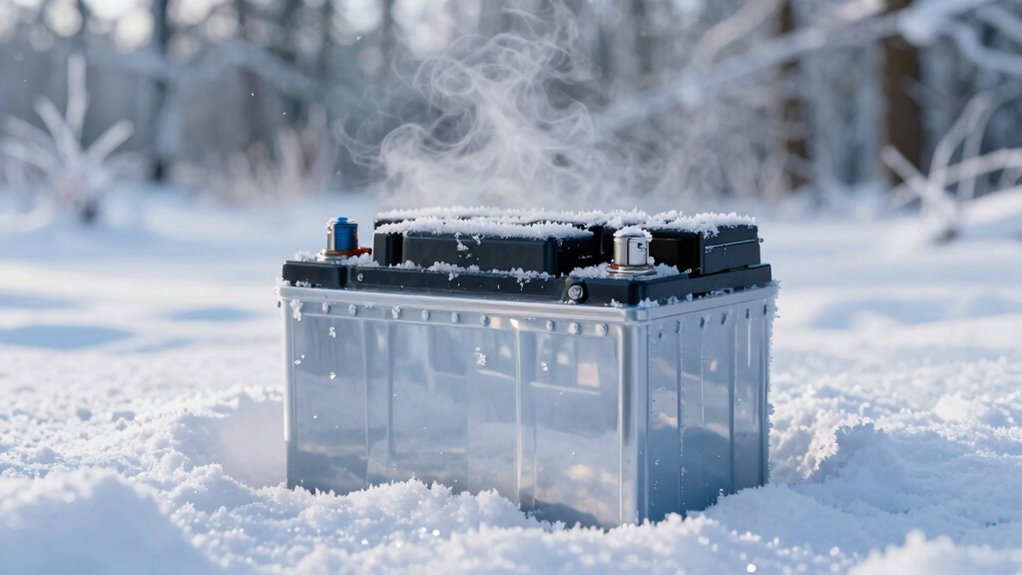

Cold weather reduces the value of every battery you pack because low temperatures slow down the chemical reactions inside, causing increased internal resistance and voltage drops. This makes batteries less efficient, draining faster, and harder to start. Lithium-ion and lead-acid batteries are especially affected, risking damage like lithium plating. To keep your batteries working well, you need to understand how cold impacts chemistry. If you want to learn more about how to protect your batteries in winter, keep exploring.

Get emergency and outdoor gear delivered free — and shop member deals
- Fast, free delivery on millions of items
- Access to Prime Big Deal Days deals on October 6–7
- Prime Video, Amazon Music and more included
Key Takeaways
- Cold temperatures slow down chemical reactions, reducing battery efficiency and capacity.
- Increased electrolyte viscosity hampers ionic movement, raising internal resistance and decreasing performance.
- Cold conditions accelerate battery degradation, causing long-term capacity loss and potential damage.
- Batteries are more prone to internal damage like lithium plating during cold cycling.
- Proper warming and storage strategies can help maintain battery value and functionality in cold weather.
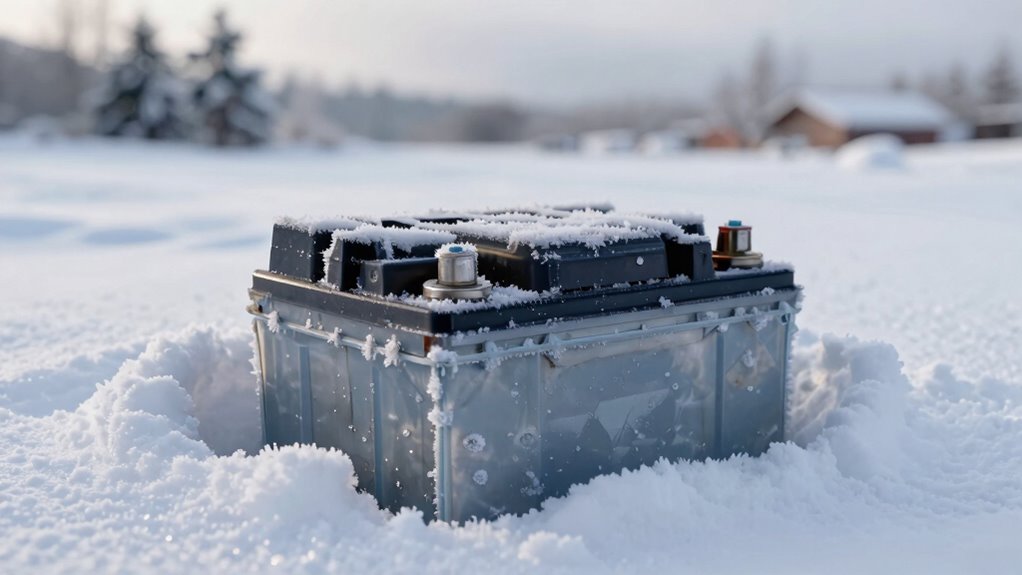
When the temperature drops, the performance and lifespan of your batteries can decline sharply, often catching you off guard. Cold weather affects batteries in ways that are rooted in their fundamental chemistry, and understanding this can help you better prepare. The core reason lies in battery chemistry: as temperatures fall, chemical reactions inside the battery slow down considerably. This slowdown reduces the battery’s ability to produce a steady flow of energy, which in turn diminishes its overall capacity. You might notice your devices draining faster or failing to start altogether when it’s cold outside.
Cold weather effects are particularly noticeable in lithium-ion and lead-acid batteries, which are common in everything from smartphones to car starters. In cold conditions, the electrolyte—the medium that allows ions to move—becomes more viscous or even partially freezes, depending on the battery type. This increased viscosity hampers ionic movement, leading to increased internal resistance. As a result, the battery struggles to deliver power efficiently. You might see a sudden drop in voltage or experience longer startup times for your vehicle, especially if it’s been sitting out in the cold overnight.
The impact on battery chemistry isn’t just about reduced power output; it also accelerates certain degradation processes. When a battery is exposed to cold temperatures, it’s more vulnerable to damage caused by repeated charge and discharge cycles. For example, the formation of crystalline structures within the electrolyte, known as lithium plating in lithium-ion batteries, becomes more likely. This plating can permanently reduce the battery’s capacity over time, making it less effective even when temperatures warm up again. Understanding how battery chemistry is affected by cold can help you make better decisions about storage and usage. Additionally, temperature’s effect on chemical reactions plays a significant role in how quickly these degradation processes occur. Recognizing the impact of cold on chemical reactions is crucial for maintaining battery health during winter months. Being aware of battery temperature thresholds can help you avoid damaging your batteries through improper handling or storage.
To mitigate cold weather effects, you should keep your batteries warm whenever possible. For your vehicle, parking in a garage or using a battery warmer can help maintain ideal operating conditions. For smaller devices, keeping them in your pocket or a warm environment before use can improve performance. It’s also wise to check your batteries regularly in the winter months, since their capacity and health can deteriorate faster in cold conditions. Using batteries designed for low temperatures or adding supplemental power sources can help ensure you’re not caught off guard when the cold hits.
In essence, cold weather impacts batteries through changes in battery chemistry, which in turn leads to decreased performance and accelerated aging. Recognizing these effects allows you to take proactive steps to preserve your batteries’ value and ensure they function reliably when you need them most.
As an affiliate, we earn on qualifying purchases.
Frequently Asked Questions
How Does Cold Weather Affect Different Types of Batteries?
Cold weather impacts batteries differently based on their chemistry. You’ll notice reduced performance because cold thermal effects slow down chemical reactions inside, especially in lithium-ion and alkaline batteries. For instance, lithium-ion batteries lose capacity faster in cold temperatures, while lead-acid batteries struggle to deliver power. To keep your batteries working longer, store them in warmer places and allow them to warm up before use.
Can Battery Insulation Improve Cold Weather Performance?
Yes, battery insulation can improve cold weather performance. Thermal insulation helps retain heat, preventing batteries from losing their charge quickly in low temperatures. By providing better battery protection, insulation minimizes the effects of cold weather, ensuring your batteries stay warmer and function efficiently. Using proper insulation materials can extend battery life and maintain power output, making it an essential step for reliable performance in cold environments.
Are There Specific Storage Tips for Batteries in Winter?
In winter, proper storage solutions are essential for maintaining your batteries’ performance. You should keep batteries in a cool, dry place away from extreme cold, which can harm them. Regular battery maintenance, like checking terminals for corrosion and ensuring proper charge levels, helps preserve their lifespan. Additionally, storing batteries at room temperature or slightly warmer can prevent capacity loss, so always insulate or bring batteries indoors during cold spells.
How Long Do Batteries Last in Freezing Temperatures?
In freezing temperatures, your batteries act like fragile ice sculptures, melting away faster than you’d expect. They typically last only a fraction of their usual lifespan, often just a few hours. Cold weather hampers battery chemistry, reducing power efficiency and causing them to drain quickly. To protect your devices, keep batteries warm and insulated, understanding that power stored in cold is like a flickering flame—vulnerable and fleeting.
What Are Signs a Battery Is Failing in Cold Conditions?
You’ll notice a failing battery in cold conditions if it struggles to hold a charge or discharges quickly, even with minimal use. Battery chemistry changes can cause sluggish performance, and poor cold resistance leads to faster power loss. Additionally, you might see difficulty starting devices, slower response times, or unusual swelling. These signs indicate the battery’s ability to operate effectively drops in freezing temperatures, signaling it’s time for a replacement or maintenance.
As an affiliate, we earn on qualifying purchases.
Conclusion
So, next time you brace for cold weather and pack your batteries, remember—things aren’t always what they seem. The cold has a sneaky way of changing their true power, and you might find yourself unprepared when it’s most critical. Will your batteries hold up when you need them most? Stay vigilant, stay prepared, and don’t let the chill catch you off guard. Because in cold weather, your batteries’ true worth is just waiting to surprise you.
As an affiliate, we earn on qualifying purchases.
As an affiliate, we earn on qualifying purchases.
Fall Picks
fall essentials
As an affiliate, we earn on qualifying purchases.