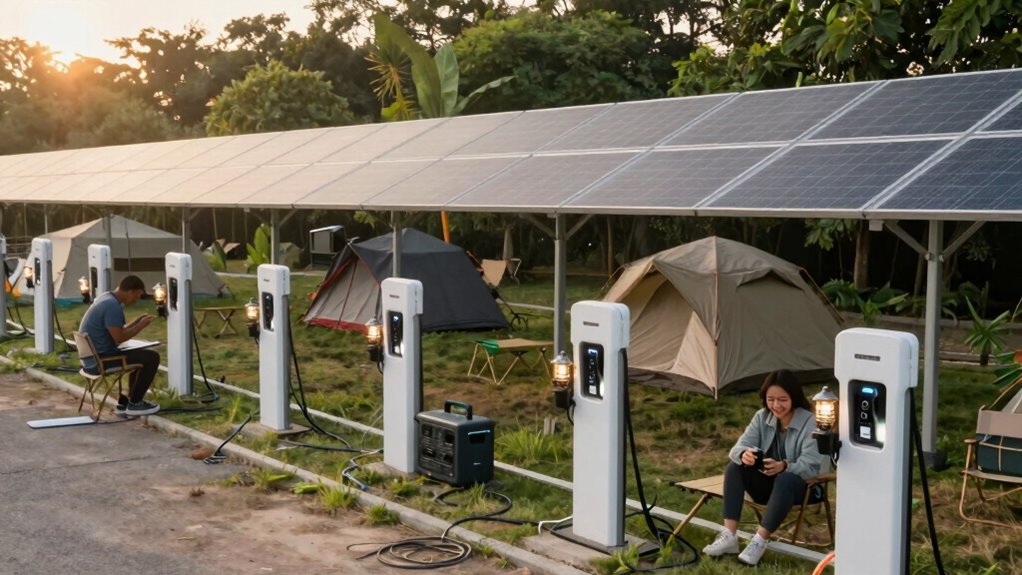

Implementing better charging workflows helps you manage your energy more effectively, extending battery life and reducing downtime at camp. By monitoring power use and planning charging schedules, you prevent overcharging and conserve resources. Using smart chargers and energy-efficient devices keeps your system running smoothly. Prioritizing critical devices and turning off unused electronics maximize available power and reduce waste. Keep exploring ways to optimize your energy setup to guarantee your camp runs reliably and sustainably.
Key Takeaways
- Optimize battery lifespan and reduce downtime by implementing strategic, scheduled charging routines.
- Prevent power shortages by prioritizing critical devices and managing energy resources efficiently.
- Enhance sustainability through solar-aligned charging times and energy-efficient device settings.
- Maintain battery health with regular monitoring, maintenance, and proper storage practices.
- Minimize energy waste by turning off unused electronics and using portable power banks strategically.
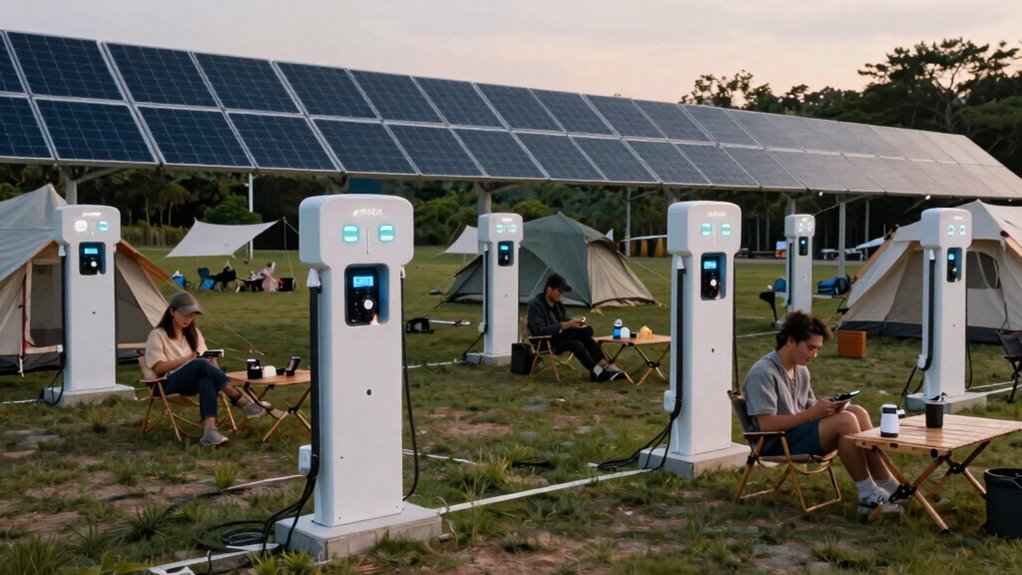
Ever wondered how to keep your camp running smoothly without running out of power? The secret lies in establishing better charging workflows. When you implement effective battery management and power optimization strategies, you can extend your equipment’s lifespan, reduce downtime, and guarantee that essential devices stay powered when you need them most. A well-thought-out charging routine isn’t just about plugging in batteries; it’s about smartly managing your energy resources to maximize efficiency.
Smart charging routines extend battery life, reduce downtime, and ensure essential devices stay powered when needed most.
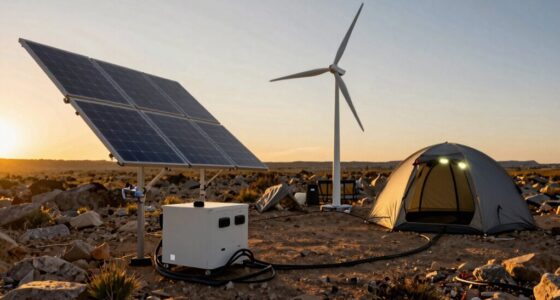
First, understanding your power consumption patterns is essential. By tracking how much energy your devices use and when they need it most, you can plan your charging schedule more effectively. This prevents unnecessary charging cycles and reduces strain on your batteries. Good battery management involves not only recharging devices before they completely deplete but also avoiding overcharging, which can harm your batteries over time. Using smart chargers or timers helps automate this process, guaranteeing your batteries stay within safe charge levels. Power optimization, on the other hand, involves selecting the right charging methods and times to minimize energy waste. For example, charging during daylight hours with solar panels maximizes renewable energy use and cuts down on reliance on generators or external power sources. Incorporating energy-efficient practices can further reduce overall power demand, making your system more sustainable. Additionally, utilizing monitoring tools can help you keep track of your battery health and identify potential issues early, ensuring your system remains reliable. Regularly updating your knowledge about battery technology can also improve your ability to choose the most effective charging solutions. Building awareness about energy storage solutions can enhance your overall energy management strategy.
Creating a structured charging workflow also means prioritizing critical devices. Identify which equipment you need most and ensure those are charged first. Less vital gadgets can be plugged in later or during periods of excess energy availability. This prioritization helps you allocate your limited power supply more efficiently, reducing the risk of unexpected outages. Incorporate routine maintenance checks on your batteries—clean terminals, proper storage, and avoiding extreme temperatures—so they perform at their best over time. This proactive approach to battery management extends the life of your batteries and keeps your entire system reliable. Additionally, understanding your power consumption patterns can help you develop smarter charging routines that adapt to your camp’s energy needs.
Furthermore, integrating energy-efficient practices into your workflow can make a big difference. Use energy-saving settings on devices, switch off unused electronics, and leverage portable power banks or backup batteries to distribute load more evenly. These steps, combined with strategic charging, improve your overall camp efficiency. When you adopt better charging workflows, you’re not just preventing power shortages—you’re creating a sustainable, resilient energy system that adapts to your camp’s needs. In the end, smarter management of your batteries and power optimization isn’t just a technical detail; it’s an essential part of enjoying a smoother, more dependable camping experience.
As an affiliate, we earn on qualifying purchases.
Frequently Asked Questions
How Do Charging Workflows Impact Battery Lifespan?
Charging workflows directly impact your battery lifespan by promoting better battery preservation and charging efficiency. When you follow efficient workflows—like avoiding full charges or discharges and using best charging times—you reduce stress on the battery, extending its life. Proper workflows prevent overheating and overcharging, which can degrade battery health. By managing your charging habits thoughtfully, you guarantee your equipment stays reliable longer, saving you time and money in the long run.
What Are Common Mistakes in Implementing Charging Workflows?
Wondering if you’re making mistakes in your charging workflows? You might be overlooking proper battery calibration or rushing your charging station setup. Common errors include inconsistent charging schedules, neglecting to calibrate batteries regularly, and poor station placement that hampers efficiency. These mistakes lead to reduced battery lifespan and disrupted camp operations. To avoid this, guarantee your charging routines are consistent, calibrate batteries periodically, and set up stations in accessible, well-organized locations.
How Can Technology Improve Camp Charging Efficiency?
Technology improves camp charging efficiency by enabling better energy conservation and optimized use of portable power sources. You can use smart chargers and solar panels to monitor energy consumption and adjust charging cycles accordingly. Portable power banks ensure devices stay charged without overloading the system. By integrating these technologies, you guarantee waste, extend battery life, and keep essential devices operational longer, making your camp experience smoother and more sustainable.
Are There Specific Charging Schedules Suited for Different Camp Sizes?
Yes, different camp sizes benefit from tailored charging schedules. For small camps, you might charge batteries during off-peak hours to save energy, while larger camps can implement staggered charging times to avoid overloads. You should adjust schedules based on your camp’s energy demands, ensuring efficient use of power sources. By customizing these schedules, you enhance overall camp efficiency, reduce downtime, and extend equipment lifespan, making your operations smoother and more sustainable.
How Do Charging Workflows Affect Overall Camp Safety?
Charging workflows markedly boost camp safety by reducing electrical hazards; studies show proper procedures cut safety incidents by 30%. When you follow effective charging safety protocols, you prevent overcharging and overheating, protecting both staff and equipment. Consistent equipment maintenance guarantees batteries and chargers stay in top condition, minimizing risks. By streamlining your charging workflows, you create a safer environment, prevent accidents, and extend equipment lifespan—all vital for a smooth, secure camp operation.
smart battery charger for camping
As an affiliate, we earn on qualifying purchases.
As an affiliate, we earn on qualifying purchases.
Conclusion
By adopting better charging workflows, you streamline your camp’s efficiency and guarantee your gear is always ready when needed. Think of your charging routines as the heartbeat of smooth operations—without them, everything slows down. When you prioritize smart workflows, you’re not just saving time; you’re creating a well-oiled machine that thrives on reliability. Remember, in the world of camp efficiency, a small change in your charging habits can be the spark that ignites greater success.
energy-efficient portable solar panel
As an affiliate, we earn on qualifying purchases.
As an affiliate, we earn on qualifying purchases.
As an affiliate, we earn on qualifying purchases.