
Battery anxiety in the backcountry is common because you rely heavily on devices for navigation, communication, and emergencies, which can turn trips stressful if power runs out. To ease this concern, use layered solutions like solar panels and power banks that extend your device’s life and keep you connected. Weather and sunlight affect solar efficiency, so planning ahead is key. Stay confident with these strategies, and you’ll discover more ways to stay powered during your adventures.

Get emergency and outdoor gear delivered free — and shop member deals
- Fast, free delivery on millions of items
- Access to Prime Big Deal Days deals on October 6–7
- Prime Video, Amazon Music and more included
Key Takeaways
- Battery anxiety stems from fear of device failure during critical moments in remote areas.
- Solar chargers and power banks are effective backup solutions to extend device battery life outdoors.
- Understanding device power consumption helps optimize usage and prevent unexpected power loss.
- Combining solar panels with power banks creates a layered, reliable power strategy for backcountry trips.
- Proper planning and equipment ensure outdoor adventures remain enjoyable without device-related stress.
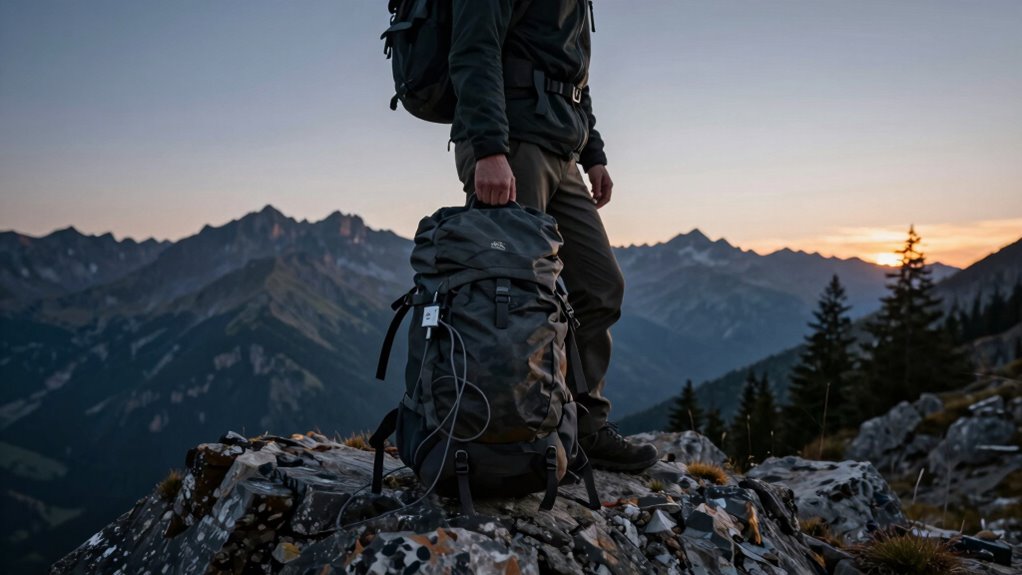
When you’re miles from the nearest outlet, battery anxiety can quickly turn a fun adventure into a stressful ordeal. The thought of your phone dying just when you need it most is enough to make anyone nervous. Luckily, there are ways to ease this worry, like using solar charging and power banks. Solar chargers are a smart option if you’re spending days outdoors. They harness the sun’s energy to keep your devices powered, so you don’t have to rely solely on limited battery life. Just set up your solar panel in the sun, and it’ll continuously generate power during daylight hours. It’s a quiet, eco-friendly solution that works well if you’re patient and plan ahead. Keep in mind, solar charging depends on weather and sunlight, so it’s best used as a backup rather than your primary power source. Additionally, understanding your devices’ power consumption can help you better plan your energy use during outdoor adventures. Knowing how much energy your devices use allows you to optimize your power management and extend your battery life more effectively. Being aware of your battery life expectations can help you set realistic goals for device use and avoid unnecessary stress during your trip. It’s also helpful to familiarize yourself with early detection methods for potential device failures to prevent unexpected power loss. Incorporating regular maintenance of your gear, like cleaning charging ports and updating firmware, can further improve device reliability during remote excursions. Power banks are another essential tool to combat battery anxiety. These portable batteries store energy so you can recharge your devices anywhere, anytime. They come in various sizes and capacities, from small, lightweight models perfect for a single charge to larger ones that can power multiple devices over several days. When heading into the backcountry, you’ll want a power bank with enough capacity to keep your phone alive, especially if you rely on it for navigation, communication, or emergency calls. Make sure to fully charge your power bank before your trip, and consider bringing a couple of them if you’re out for an extended period. Using power banks is straightforward—just connect your device, and it charges on the go. It’s a reliable way to stay connected without stressing over every percentage point. Combining solar charging with power banks offers a robust strategy. During the day, solar panels can top off your power banks, providing a renewable source of energy. When the sun sets or weather turns cloudy, you can draw from your stored energy. This layered approach minimizes the chances of losing power unexpectedly, giving you peace of mind. It’s smart to carry both, especially if you’re venturing into remote areas where charging options are nonexistent. Remember, the key to overcoming battery anxiety isn’t just about having gear—it’s about planning ahead and knowing your devices’ power needs. With solar charging and power banks in your kit, you can focus on enjoying your adventure instead of worrying about your battery dying at the worst possible moment.
solar phone charger for backpacking
As an affiliate, we earn on qualifying purchases.
As an affiliate, we earn on qualifying purchases.
Frequently Asked Questions
How Do I Prevent My Phone Battery From Draining Quickly in Cold Weather?
To prevent your phone battery from draining quickly in cold weather, focus on battery preservation techniques. Keep your phone warm by storing it in an inside pocket or close to your body. Lower your screen brightness and turn off unnecessary features like Bluetooth or Wi-Fi when not in use. Using airplane mode during inactive periods also helps conserve power. These steps will help extend your phone’s battery life in cold conditions.
What Are the Best Portable Power Sources for Extended Backcountry Trips?
For extended backcountry trips, you should consider portable solar chargers and high-capacity power banks. Portable solar panels harness sunlight to recharge your devices sustainably, especially in sunny conditions. Choose a power bank with ample battery capacity to store enough energy for your needs, ensuring you’re not left without power during cloudy days or at night. Combining these options provides reliable, eco-friendly power sources for your outdoor adventures.
Can Solar Chargers Fully Power Devices in Remote Wilderness Areas?
Solar chargers can fully power your devices in remote wilderness areas, but their effectiveness depends on solar efficiency and device compatibility. If your solar panel has high solar efficiency, it’ll convert sunlight more effectively, providing reliable power. Make sure your devices are compatible with the charger’s output, especially regarding voltage and charging ports. With a quality solar charger, you can keep your devices charged during extended trips, reducing battery anxiety.
How Accurate Are Battery Level Indicators in Extreme Outdoor Conditions?
You might find your battery level indicator less accurate in extreme outdoor conditions due to signal interference and poor calibration. Coincidentally, harsh weather or cold can disrupt the device’s ability to measure battery life properly, making it seem like you have more or less power than you actually do. To combat this, regularly calibrate your battery and minimize exposure to signal interference, ensuring your readings stay as reliable as possible in the wild.
What Emergency Backup Options Exist if All Batteries Fail?
If all your batteries fail, you should carry spare batteries for essential devices and consider alternative power sources like portable solar chargers or hand-crank generators. Battery replacement is your quickest fix, but conserving power becomes vital—turn off unnecessary devices and reduce screen brightness. Relying on these backup options ensures you stay connected and safe, even when your primary batteries run out in remote outdoor environments.
portable power bank for outdoor camping
As an affiliate, we earn on qualifying purchases.
As an affiliate, we earn on qualifying purchases.
Conclusion
So, next time your phone’s battery dips below 10%, remember it’s not the end of the world—just your *serious* dependency on technology. Embrace the wilderness’s silent, uncharged embrace and realize that a little discomfort might just teach you to reconnect with nature’s true power. After all, if your device can’t survive a weekend unplugged, maybe it’s time to question what’s truly essential—like, say, your sanity. Happy hiking, tech-free or not!
As an affiliate, we earn on qualifying purchases.
high capacity outdoor power bank
As an affiliate, we earn on qualifying purchases.
As an affiliate, we earn on qualifying purchases.
Fall Picks
fall essentials
As an affiliate, we earn on qualifying purchases.