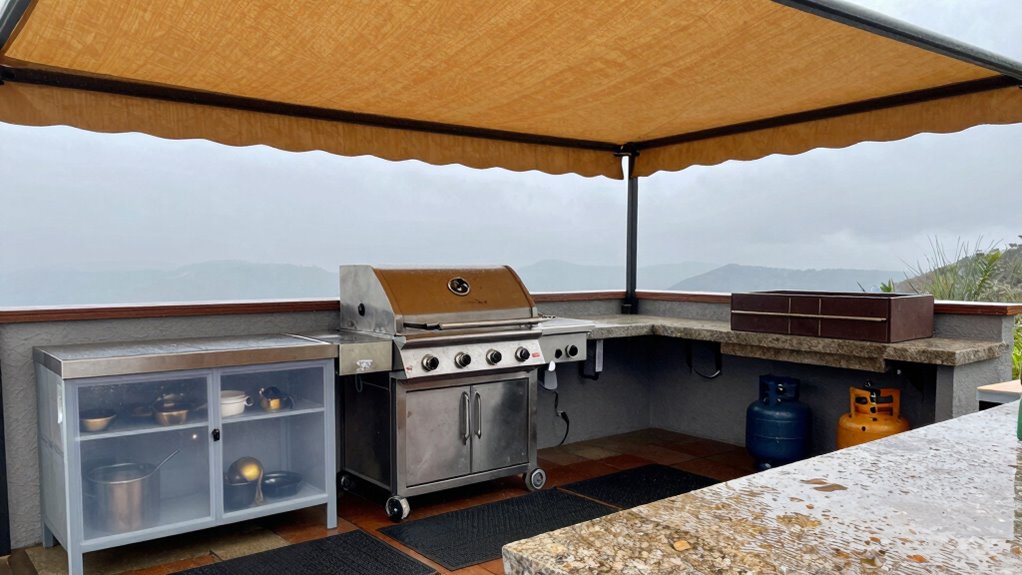

To create a reliable wet-weather cooking setup, build a sturdy, weather-resistant shelter that fully covers your cooking area. Store fuel in waterproof containers to keep it dry and efficient. Use windbreaks like portable screens or natural barriers to maintain steady heat. Equip yourself with waterproof gear and durable utensils to handle unexpected weather changes. Combining proper shelter, protected fuel, and weather-adapted tools helps you cook smoothly regardless of rain or wind. Discover more tips on staying prepared in challenging conditions.
Listen free for 30 days with Audible
Thousands of audiobooks and originals — cancel anytime.
As an affiliate, we earn on qualifying purchases.
Key Takeaways
- Build a sturdy, waterproof shelter large enough to fully cover your cooking area.
- Store fuel in sealed, waterproof containers to prevent moisture absorption and ensure easy ignition.
- Use windbreaks like portable screens or natural barriers to maintain consistent heat and protect flames.
- Equip yourself with weather-resistant utensils, cookware, and insulated gloves for quick adaptation.
- Combine shelter, fuel management, wind protection, and durable gear for a comprehensive, reliable wet-weather setup.
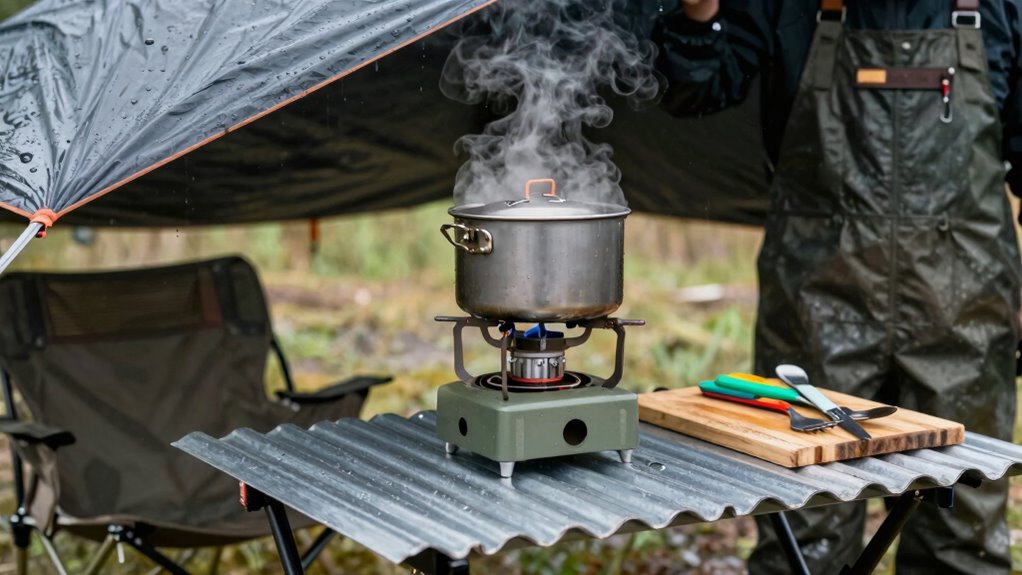
Cooking outdoors in wet weather can be challenging, but with the right setup, you can keep your culinary plans on track. One of the most vital elements is establishing a solid outdoor shelter. A good shelter protects your gear and ingredients from rain, wind, and damp conditions, guaranteeing your cooking process remains smooth. Whether it’s a canopy, a tent, or a purpose-built awning, make sure it’s sturdy and large enough to shield your cooking area completely. This prevents water from dripping onto your stove or grill, which could cause flare-ups or make your food soggy. Additionally, a well-designed shelter creates a dry workspace, helping you stay organized and focus on your cooking instead of battling the elements. Ensuring your setup is weather-resistant can make a significant difference in maintaining a reliable outdoor cooking environment. Regularly inspecting your shelter for tears or weaknesses ensures it continues to provide protection during unpredictable weather.
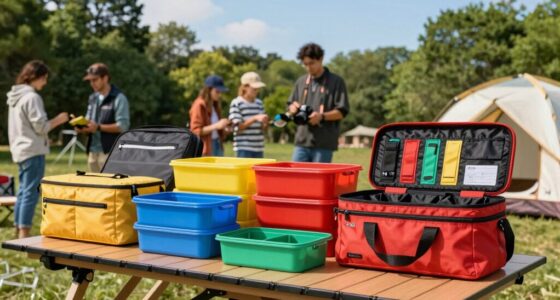
Fuel preservation is another essential aspect of a reliable wet-weather setup. Rain and humidity can quickly dampen your fuel source, rendering it useless or harder to ignite. To counter this, store your fuel in waterproof containers or sealed bags, keeping it dry and ready for use. If you’re using charcoal or wood, keep them covered with a tarp or stored in a dry, protected spot away from moisture. For liquid fuels like propane or butane, check your cylinders regularly to guarantee they’re sealed tight and free from water contamination. Maintaining dry fuel not only makes lighting your stove easier but also prolongs the lifespan of your fuel, saving you money and frustration. Proper storage methods help prevent accidental leaks or contamination that could compromise your entire outdoor cooking session. Incorporating fuel storage techniques supported by weatherproof containers can further enhance your setup’s reliability.
Beyond shelter and fuel, consider adding windbreaks around your cooking area. Wind can sap heat from your stove or grill and make it difficult to keep a steady flame. Portable screens or natural barriers like bushes and rocks can greatly improve heat retention and cooking efficiency. Additionally, weather conditions can change rapidly, so being prepared with adaptable solutions is crucial for success. Invest in high-quality, weather-resistant gear—such as waterproof utensils, durable cookware, and insulated gloves—so you’re prepared for sudden downpours or chilly conditions. These additions make your outdoor setup more resilient, allowing you to focus on your cooking rather than constantly adjusting to the weather. Proper weather-resistant gear helps you adapt quickly and stay comfortable, even during unexpected weather changes.
Ultimately, creating a more reliable wet-weather cooking setup comes down to smart planning and protection. A robust outdoor shelter keeps your workspace dry and safe, while careful fuel preservation ensures you always have a reliable heat source. Add windbreaks and weather-resistant gear, and you’ll find that even in rain or wind, you can still whip up delicious meals outdoors. With these strategies, weather won’t ruin your outdoor cooking adventures—rather, it becomes just another challenge to overcome.
outdoor waterproof camping stove shelter
As an affiliate, we earn on qualifying purchases.
As an affiliate, we earn on qualifying purchases.
Frequently Asked Questions
What Materials Are Best for Wet-Weather Cookware?
You should choose durable materials like stainless steel or cast iron for wet-weather cookware, as they withstand moisture and rough handling. These materials are resistant to rust and corrosion, making them reliable for outdoor use. Keep in mind durability considerations, and regularly clean and dry your cookware to prevent damage. Avoid cheaper options like aluminum or non-stick coatings, which require frequent maintenance and may not hold up well in wet conditions.
How Do I Prevent Rust on Outdoor Cooking Equipment?
To prevent rust on your outdoor cooking equipment, regularly apply a thin layer of oil after cleaning to create a protective barrier. Use rust prevention techniques like storing your gear in a dry, covered area and avoiding prolonged exposure to moisture. Keep up with outdoor equipment maintenance by inspecting for rust spots and addressing them early with rust remover or sandpaper. Consistent care guarantees your cookware stays in top shape and lasts longer.
What’s the Safest Way to Store Fuel Outdoors?
For outdoor safety, store fuel in a cool, well-ventilated area away from heat sources and direct sunlight. Use a approved, tightly sealed container specifically designed for fuel storage to prevent leaks and spills. Keep it upright and off the ground on a non-combustible surface. Regularly inspect containers for damage or leaks, and always keep a fire extinguisher nearby, ensuring safe and reliable fuel storage outdoors.
How Can I Keep Pests Away From My Cooking Setup?
To keep pests away from your cooking setup, use pest-proof containers for food and supplies, preventing insects and rodents from accessing them. Incorporate natural repellents like citronella candles, garlic, or peppermint oil around your cooking area to deter pests. Regularly clean up crumbs and spills, and cover your cooking equipment when not in use. These steps create an effective barrier, ensuring pests stay at bay and your outdoor cooking remains enjoyable.
What Are Quick Fixes for Unexpected Weather Changes?
Did you know that over 60% of outdoor cooks face unexpected weather changes? To handle sudden shifts, quickly implement weatherproofing techniques like covering your stove with a waterproof shelter or using windbreaks. For cooking safety, keep a fire extinguisher nearby and avoid open flames in strong winds. Keep a tarp handy to shield your setup, ensuring safe, effective cooking despite unpredictable weather.
waterproof fuel storage containers
As an affiliate, we earn on qualifying purchases.
As an affiliate, we earn on qualifying purchases.
Conclusion
Don’t let rain ruin your outdoor cooking plans. With a few simple adjustments—like a sturdy shelter and wind-resistant gear—you can keep cooking even in wet weather. Remember, a reliable setup doesn’t mean perfect conditions, but preparedness. You might think it’s too much effort, but once you’re used to it, you’ll enjoy outdoor meals rain or shine. Embrace the challenge, and keep your delicious creations coming, no matter the weather!
As an affiliate, we earn on qualifying purchases.
weather-resistant outdoor cookware
As an affiliate, we earn on qualifying purchases.
As an affiliate, we earn on qualifying purchases.
NFL season / tailgating Picks
team gear
As an affiliate, we earn on qualifying purchases.