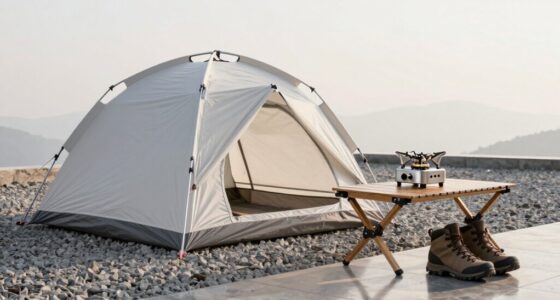
When using trail technology, remember it’s a tool to enhance your core skills, not replace them. Stay sharp by regularly practicing map reading, compass use, and recognizing natural landmarks. Use tech like GPS and trail apps to boost awareness but never rely solely on devices. Keep a balance, so you’re prepared if tech fails. By maintaining traditional skills and staying informed about eco-friendly innovations, you’ll navigate confidently and responsibly—more tips are ahead to help you stay fully prepared.

Get emergency and outdoor gear delivered free — and shop member deals
- Fast, free delivery on millions of items
- Access to Prime Big Deal Days deals on October 6–7
- Prime Video, Amazon Music and more included
Key Takeaways
- View technology as an enhancement, not a replacement, for core navigation skills like map reading and compass use.
- Regularly practice traditional skills to maintain proficiency and preparedness for tech failures or emergencies.
- Prioritize safety and environmental responsibility when adopting new trail tech, ensuring eco-friendly and sustainable choices.
- Stay informed about emerging trends to selectively integrate innovative tools that complement foundational skills.
- Use technological analogies to better understand and appreciate the balance between modern tools and natural navigation abilities.
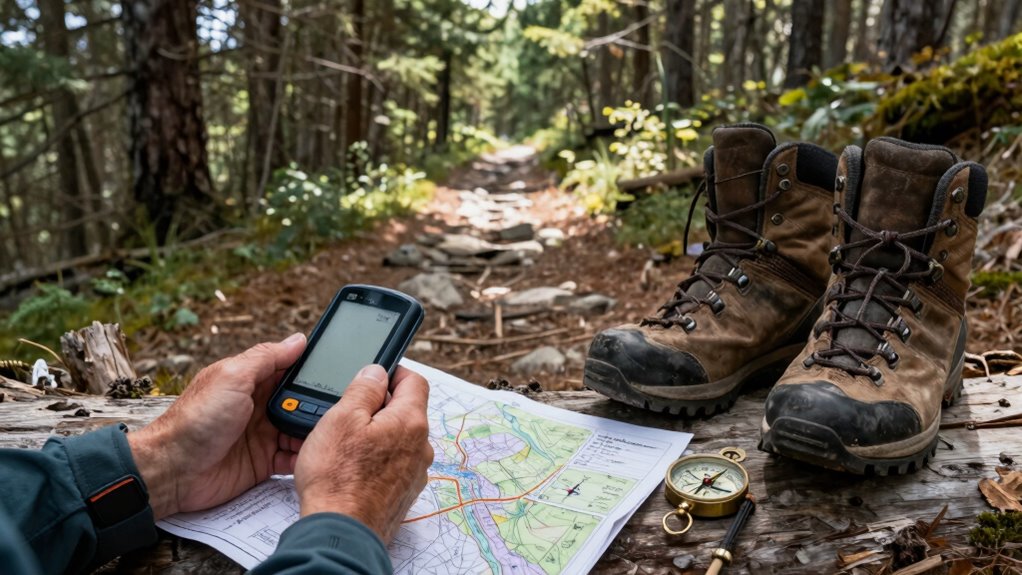
Have you ever wondered how to approach trail technology without getting overwhelmed? It’s easy to feel that new gear, gadgets, and innovations might replace your fundamental skills, but that’s not the goal. Instead, see trail technology as a tool to enhance your experience while maintaining core skills. When you integrate new tech, always keep safety considerations front and center. For instance, GPS devices, trail apps, and wearable tech can improve navigation and awareness, but they shouldn’t replace your ability to read terrain, recognize landmarks, or make sound judgment calls. Relying solely on tech can sometimes lead to complacency, so it’s essential to stay sharp with traditional skills. Practice map reading, compass use, and understanding trail signs regularly, even if you have the latest gadgets. This way, you’re prepared for situations where technology might fail or be unavailable. Additionally, understanding emerging trends in digital publishing can help you stay informed about new tools and resources that support outdoor navigation and environmental awareness, ensuring you’re making informed choices. This knowledge can empower you to select eco-friendly devices and stay updated on the latest innovations designed to minimize environmental impact. Incorporating sustainable and environmentally conscious gear aligns with the principles of minimizing your environmental impact while enjoying the outdoors. This understanding can help you make more responsible choices and contribute to conservation efforts. To deepen your understanding, consider exploring how projector technology advances—such as high contrast ratios and accurate color reproduction—can serve as analogies for maintaining clarity and precision in your navigation skills. This way, you reinforce the importance of balancing modern innovations with foundational practices. Moreover, staying curious about new trail technology can inspire you to discover eco-friendly solutions and innovations that enhance your outdoor adventures responsibly. Recognizing the importance of environmentally conscious gear can guide you toward making sustainable choices that preserve the natural beauty of the trails for future generations.
As an affiliate, we earn on qualifying purchases.
Frequently Asked Questions
How Can I Balance Technology Use With Maintaining Traditional Navigation Skills?
To balance technology use with maintaining traditional navigation skills, limit your digital dependency by setting specific times to rely on devices. Practice map and compass skills regularly to prevent skill erosion, ensuring you’re confident without electronics. Use technology as a backup, not a crutch, and challenge yourself to navigate with traditional tools in familiar areas. This approach helps you stay skilled while benefiting from modern tools when needed.
What Are the Risks of Relying Too Heavily on Trail Gadgets?
Relying too heavily on trail gadgets is like walking a tightrope—one misstep can lead to a fall. GPS dependence and gadget obsession can cause you to lose essential navigation skills, making you vulnerable if tech fails. Over time, your instincts weaken, and you’re less prepared for unexpected situations. To stay safe, keep practicing traditional skills and view gadgets as tools, not crutches, ensuring you’re adaptable in any trail scenario.
How Do I Choose the Right Trail Technology for My Experience Level?
To choose the right trail technology for your experience level, start with basic tools like a compass and map to build foundational skills. As you gain confidence, consider GPS devices with high accuracy and features like trail marker interpretation. Prioritize user-friendly options that match your skill set, and avoid over-reliance on gadgets. This approach helps you stay connected to core navigation skills while gradually integrating more advanced technology.
Can Technology Hinder My Ability to Read Natural Trail Signs?
Yes, technology can hinder your ability to read natural trail signs if you’re distracted by digital devices. Digital distractions may cause you to overlook subtle trail markers or signs that are essential for navigation. Additionally, relying too heavily on technology can be problematic if signal reliability drops, leaving you without guidance. To stay safe, balance your tech use with regular attention to natural signs, and avoid letting devices distract you from the trail.
What Backup Skills Should I Keep in Case of Technology Failure?
In case of a gentle reminder of the importance of resilience, keep your manual navigation and map reading skills sharp. Practice reading topographic maps and using a compass regularly, so you’re comfortable without relying solely on technology. These backup skills guarantee you stay on course if devices fail or lose signal. Maintaining this knowledge not only boosts your confidence but also deepens your understanding of the trail environment, enhancing your overall experience.
As an affiliate, we earn on qualifying purchases.
Conclusion
Remember, while trail technology can enhance your experience, don’t let it replace your foundational skills. Stay grounded in the basics, and use tech as a tool, not a crutch. As the saying goes, “A chain is only as strong as its weakest link.” Keep honing your core skills, and let technology serve to complement, not overshadow, your connection to the trail. This balance keeps you safe, confident, and truly in tune with nature.
eco-friendly trail navigation tools
As an affiliate, we earn on qualifying purchases.
As an affiliate, we earn on qualifying purchases.
outdoor trail app for smartphones
As an affiliate, we earn on qualifying purchases.
As an affiliate, we earn on qualifying purchases.
Halloween Picks
halloween
As an affiliate, we earn on qualifying purchases.