
To reduce friction in your camp setup, choose lightweight, smooth, and corrosion-resistant gear, and lubricate zippers and connectors with wax or silicone spray. Organize your campsite with labeled bins for quick access, and practice pitching tents beforehand. Regularly inspect and maintain your gear, replacing worn parts. Follow a consistent setup routine to minimize delays. Keep everything clean and orderly—if you keep these tips in mind, you’ll find setup becomes smoother and easier.

Get emergency and outdoor gear delivered free with Prime
- Fast, free delivery on millions of items
- Prime Video, Amazon Music and more included
- Member-only deals all year
Key Takeaways
- Use lubricants like silicone spray or wax on zippers, poles, and connectors to minimize resistance.
- Choose lightweight, smooth-zipped tents with corrosion-resistant materials for easier handling.
- Regularly inspect and replace worn or damaged parts to prevent increased friction during setup.
- Organize gear systematically and practice setup routines to reduce handling and delays.
- Clear and level the campsite area to prevent snagging and facilitate smooth assembly.
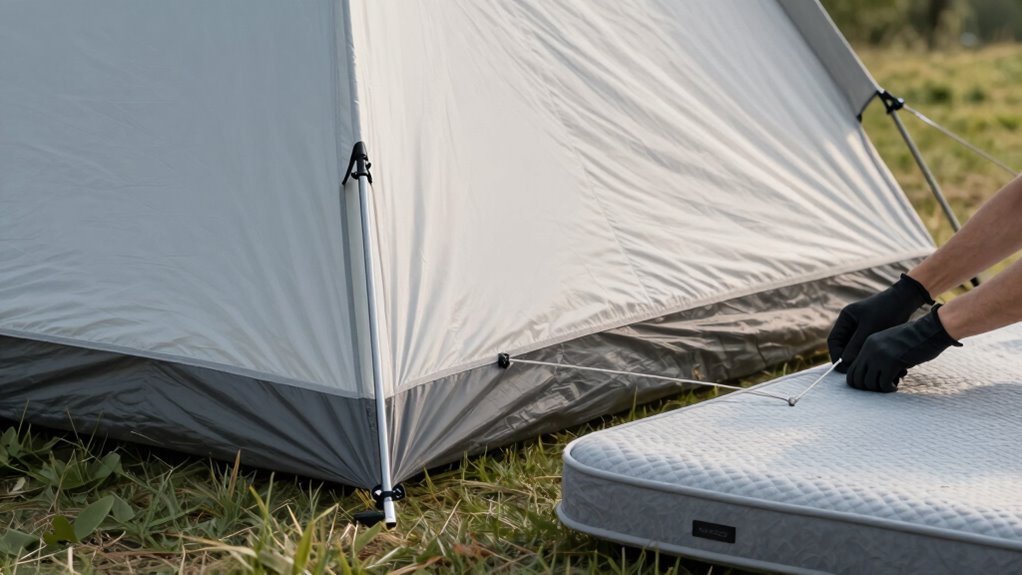
Are you tired of struggling with your camp setup every time you pitch your tent or arrange your gear? Friction can turn what should be an enjoyable experience into a frustrating ordeal. The key to a smoother setup lies in smart gear selection and effective campsite organization. When you choose the right equipment, you minimize the resistance you encounter, making assembly quicker and less frustrating. Opt for lightweight, smooth-zipped tents, and gear with corrosion-resistant materials that slide or connect easily. This reduces the effort needed to set up and tear down, saving you time and energy.
Campsite organization plays a critical role in reducing friction. Before you even start pitching your tent, clear a flat, debris-free area. Removing sticks, rocks, and loose dirt prevents unnecessary snagging and resistance when staking or threading tent poles through sleeves. Keep your gear neatly organized in accessible containers or designated spots. When everything has a designated place, you won’t waste time searching for tools or parts, which can cause unnecessary frustration and delays. Using labeled storage bins or color-coded bags helps you quickly identify what you need, avoiding awkward fumbling or repeated handling.
Another way to reduce friction is by pre-assembling parts of your gear at home. Practice pitching your tent and setting up your camp in advance, so you’re familiar with each step. This preparation allows you to identify potential trouble spots—like stiff zippers or difficult-to-thread poles—and address them before you arrive at the campsite. Lubricate zippers with wax or silicone spray to ensure they glide smoothly, decreasing resistance when opening or closing your tent. Similarly, applying a light coating of silicone spray to tent poles or connectors can make assembly effortless. Additionally, incorporating sound science principles like using specific frequencies or vibrations can subtly facilitate easier assembly, as some research suggests sound vibrations influence materials and movement. Regular maintenance of your gear, such as cleaning and inspecting components, also minimizes wear and tear, which can increase friction during setup. Furthermore, choosing gear with smooth surfaces can significantly decrease the effort needed during assembly and disassembly. Considering the environmental conditions, such as humidity and temperature, can also help you select suitable lubricants or materials that perform best under varying weather.
Pay close attention to your gear’s condition. Worn or damaged parts increase friction and can lead to difficulties during setup. Regularly inspect your gear, replacing or repairing any components that show signs of wear. Sharp or bent stakes, frayed cords, or cracked poles all create unnecessary resistance. You’ll find that maintaining your equipment pays off in ease of use, reducing the physical effort needed and preventing potential setbacks.
Finally, streamline your process by establishing a setup routine. Pack your gear systematically, so you always know where everything is. When it’s time to pitch your tent or arrange your campsite, follow the same sequence each time. This familiarity minimizes hesitation and unnecessary handling, which often causes friction. With thoughtful gear selection, proactive campsite organization, and regular maintenance, you’ll experience a much smoother, friction-free camp setup every time.
lightweight waterproof camping tent
As an affiliate, we earn on qualifying purchases.
As an affiliate, we earn on qualifying purchases.
Frequently Asked Questions
What Tools Are Best for Quick Campsite Setup?
You should carry quick-setup tools like a lightweight tent with color-coded poles, a compact camp stove, and a multi-tool for quick adjustments. These tools help you save time and guarantee safety during campfire safety checks and weather preparedness. Using easy-to-use gear minimizes setup friction, so you can focus on enjoying your trip. Being prepared with the right tools makes your campsite setup faster, safer, and more efficient.
How Can I Prevent Gear From Sliding on Uneven Ground?
Like trying to keep a boat steady on choppy water, preventing gear from sliding on uneven ground requires careful campground surface management. You can use non-slip mats or rubberized pads under your gear, which act like grips for your items. Additionally, securing equipment with stakes, bungee cords, or straps helps with gear stabilization. These strategies keep your gear in place, so you can enjoy your camp without constant readjustments.
What’s the Best Way to Organize Camp Supplies?
You should organize your camp supplies by using labeled bins or backpacks for easy access and to prevent clutter. Keep essentials like fire-starting tools and first aid supplies near the campfire area for safety. Remember to practice campfire safety by keeping water nearby and monitoring it at all times. Also, store waste properly for wilderness sanitation, ensuring trash is sealed and disposed of away from your campsite to protect the environment.
How Do I Choose Low-Friction Camping Equipment?
To choose low-friction camping gear, look for items made from smooth, durable materials like silicone, plastic, or coated metals that naturally reduce friction. Opt for gear with rounded edges and streamlined designs to minimize resistance during setup and use. Test different products to feel how smoothly they operate, and prioritize brands known for quality friction reduction. This guarantees easier handling, quicker setup, and a more comfortable camping experience overall.
How Can I Reduce Noise and Disturbance at Camp?
Think of yourself as a quiet guardian of the woods. To cut campfire noise, speak softly and keep music low. Use soft materials like blankets or pads to muffle footsteps and prevent wildlife disturbance. Set up camp away from animal trails, and avoid bright lights at night. By respecting nature’s rhythm, you’ll enjoy peaceful nights and help protect the environment, just like a guardian watching over the wild.
As an affiliate, we earn on qualifying purchases.
Conclusion
By smoothing out the rough edges in your camp setup, you turn a chaotic process into a well-oiled machine. Think of your campsite as a delicate dance—every move should flow seamlessly, preventing unnecessary wear and tear. When you reduce friction, you’ll find your camping experience becomes more enjoyable and stress-free. So, embrace these tips, fine-tune your approach, and watch your adventure glide effortlessly, like a boat sailing smoothly across calm waters.
camping gear organization storage bins
As an affiliate, we earn on qualifying purchases.
As an affiliate, we earn on qualifying purchases.
pre-assembled camping tent poles
As an affiliate, we earn on qualifying purchases.
As an affiliate, we earn on qualifying purchases.
Evergreen bestsellers Picks
bestsellers
As an affiliate, we earn on qualifying purchases.