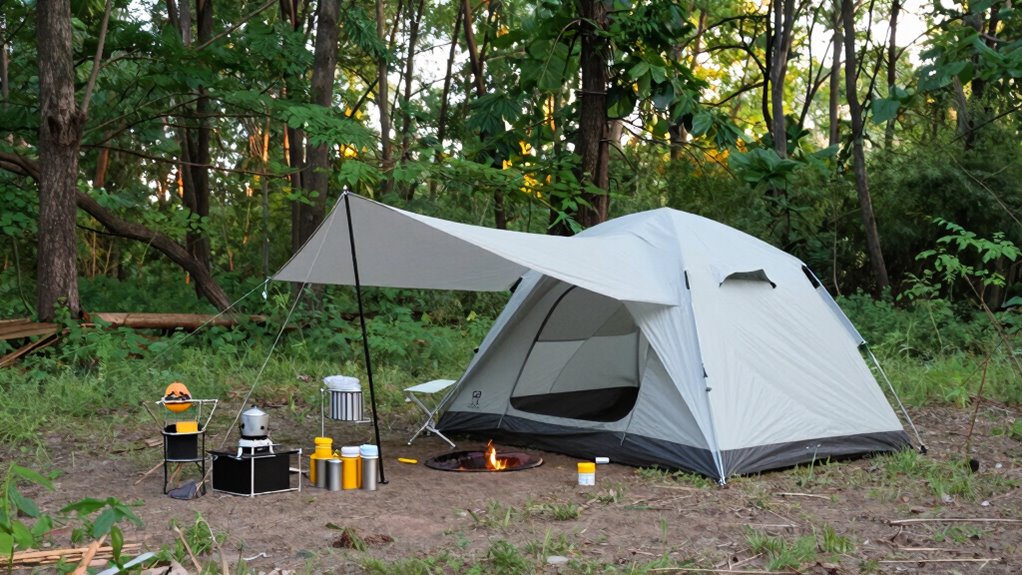

To avoid common multi-day camp setup errors, plan ahead by inspecting and organizing your gear, ensuring everything is in good condition. Select a flat, well-drained site away from flood-prone areas and fragile vegetation. Stick to established trails and campsites to minimize environmental impact. Always follow fire safety rules and properly dispose of waste to protect the environment. Keep your site manageable and safe, and you’ll discover simple ways to improve your camping experience further.

Get emergency and outdoor gear delivered free — and shop member deals
- Fast, free delivery on millions of items
- Access to Prime Big Deal Days deals on October 6–7
- Prime Video, Amazon Music and more included
Key Takeaways
- Inspect and test all gear thoroughly before the trip to prevent setup delays or failures.
- Choose a flat, stable campsite away from water sources and wildlife to ensure safety and comfort.
- Organize gear efficiently within your pack to expedite setup and minimize environmental impact.
- Follow Leave No Trace principles by sticking to established trails and campsites.
- Properly set up and fully extinguish campfires to prevent accidents and wildfires.
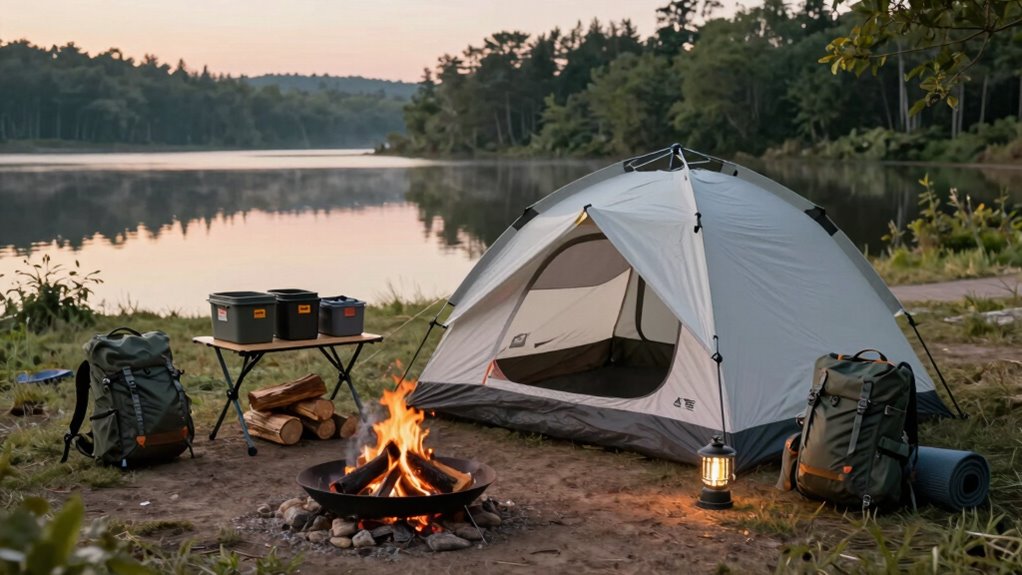
Setting up a multi-day camp can be straightforward if you plan carefully, but it’s easy to make mistakes that can disrupt your trip. One of the most common errors is neglecting campfire safety. Fire is essential for warmth, cooking, and comfort, but it also poses serious risks if not handled properly. Always check the fire regulations in your area before starting a campfire. Clear a wide, bare patch of ground away from overhanging branches, roots, and combustible materials. Keep your fire small and manageable, never leave it unattended, and make sure to extinguish it completely before sleeping or leaving the site. Remember, a well-maintained fire reduces the risk of wildfires and keeps everyone safe.
Always check fire regulations, keep fires small, never leave unattended, and fully extinguish to prevent wildfires and stay safe.
Another mistake travelers often make is ignoring the principles of Leave No Trace. When camping for multiple days, it’s tempting to leave behind a mark or neglect proper waste disposal. But preserving the environment is vital for your safety and the health of the wilderness. Pack out all trash, leftover food, and hygiene products—what you bring in, you should take out. Use designated toilet facilities if available, or dig a cathole at least 200 feet from water sources, campsites, and trails, and fill it back in when you’re done. Avoid damaging plants or disturbing wildlife, and stick to established trails and campsites to minimize your impact. Additionally, understanding the importance of proper waste disposal can help prevent environmental contamination and protect local ecosystems.
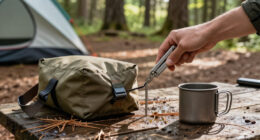
Many campers forget to check their gear thoroughly before setting up. This can lead to issues like unstable tents, broken stakes, or missing poles, which can turn your multi-day trip into a stressful ordeal. Test your gear beforehand, pack extra stakes and repair supplies, and ensure your tents and sleeping systems are in good condition. Proper organization within your pack also helps you set up efficiently, reducing time spent fumbling with equipment and allowing you to focus on enjoying your trip.
Finally, plan your campsite selection carefully. Setting up on flat ground minimizes discomfort and prevents water runoff from pooling under your tent. Avoid low-lying areas prone to flooding and steer clear of sites that might disturb wildlife or fragile vegetation. A good site will provide natural shelter from wind and offer proximity to water sources, but not too close. By choosing your spot wisely, you reduce the chances of encountering issues that could ruin your multi-day adventure.
As an affiliate, we earn on qualifying purchases.
Frequently Asked Questions
What Are the Best Tools for Quick Camp Setup?
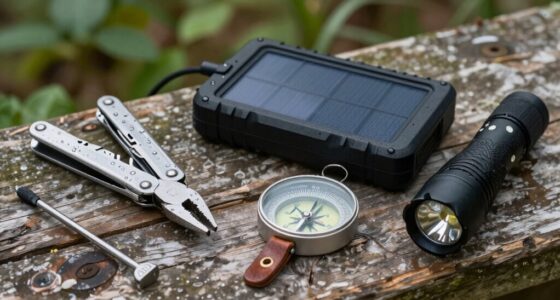
The best tools for quick camp setup include a reliable camp gear kit with multi-purpose tools like a Swiss Army knife and a compact multi-tool. Keep a setup checklist handy to streamline your process, ensuring you don’t forget essentials like stakes, tents, and cords. Using quick-assemble tents and lightweight, easy-to-pack gear also speeds things up, helping you set up efficiently and avoid common errors when establishing your campsite.
How Do Weather Changes Affect Multi-Day Camp Setups?
Imagine a sudden storm hitting your camp, causing tents to collapse. Weather changes can threaten your setup’s stability and safety. To stay prepared, prioritize weather preparedness by choosing durable, well-anchored tents. Adjust your setup to wind and rain conditions, securing stakes firmly and using rainflies. Staying flexible with your plan helps protect your gear and keeps you comfortable, regardless of unexpected weather shifts.
What Safety Precautions Should Be Prioritized During Setup?
You should prioritize safety by ensuring your campfire is fully extinguished before leaving or sleeping, preventing wildfires. Maintain a safe distance between tents and the fire area. Be wildlife-aware by storing food securely to avoid attracting animals, and keep a clean campsite. Always have a first aid kit handy, and check weather forecasts to prepare for changing conditions. These precautions help protect both you and the environment during your setup.
How to Efficiently Pack up After a Multi-Day Camp?
You might think packing up is tedious, but staying organized saves time and effort. Start by packing your gear systematically, guaranteeing your tent is securely anchored with proper techniques, and double-check your campfire safety measures before leaving. Fold and store items methodically, label boxes, and pack essentials last. This approach makes unpacking easier and ensures you leave no trace, respecting the environment and making your next trip smoother.
Are There Specific Campsite Regulations to Consider?
You should check for specific campsite regulations before setting up. Make sure you obtain any required campsite permits to avoid fines or being asked to leave. Pay close attention to fire regulations, such as designated fire rings and restrictions on open flames, to prevent wildfires and ensure safety. Familiarizing yourself with these rules helps you camp responsibly, respects the environment, and keeps everyone safe during your multi-day adventure.
As an affiliate, we earn on qualifying purchases.
Conclusion
By paying close attention to these common mistakes, you’ll set up your multi-day camp more efficiently and comfortably. Don’t let fear of making errors hold you back—practice makes perfect, and every mistake is a learning opportunity. With a little preparation and awareness, you’ll enjoy your outdoor adventure without unnecessary stress or setbacks. So, trust your instincts, stay flexible, and embrace the experience—your perfect multi-day camp is within reach!
As an affiliate, we earn on qualifying purchases.
As an affiliate, we earn on qualifying purchases.
Halloween Picks
halloween
As an affiliate, we earn on qualifying purchases.