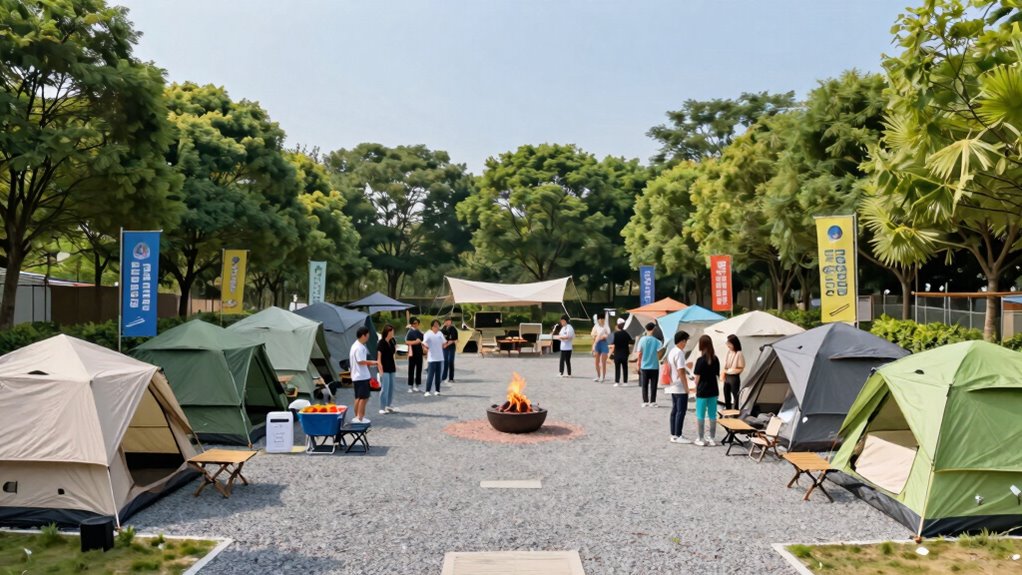
To build a more functional group camp, start by designing clear zones for activities, meals, rest, and gathering, ensuring everyone knows their spots. Keep pathways open and logical to prevent confusion, and store gear in labeled containers for quick access. Establish safety rules for campfire use, keep communication systems in place, and assign specific tasks to team members. Focus on creating an accessible, organized space that promotes safety and comfort; if you want more tips, you’ll find valuable insights ahead.
Key Takeaways
- Designate specific zones for activities, meals, rest, and gathering to streamline movement and reduce confusion.
- Use clear signage and maps to communicate camp layout and designated areas effectively.
- Implement organized storage systems with labeled containers for quick access and tidiness.
- Establish safety protocols, especially for campfire management, and ensure all members are informed.
- Assign roles and responsibilities to group members to coordinate tasks efficiently and maintain order.
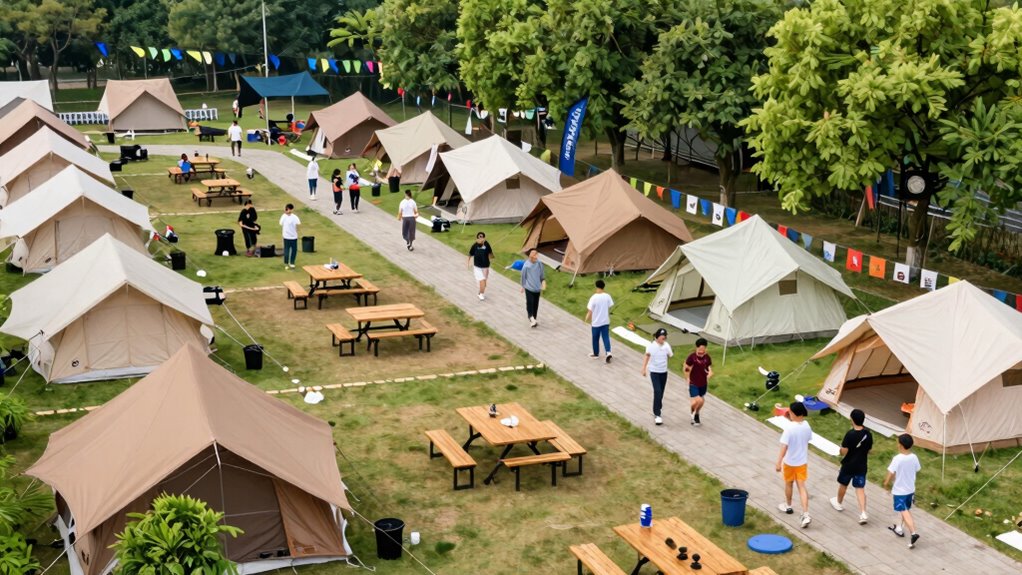
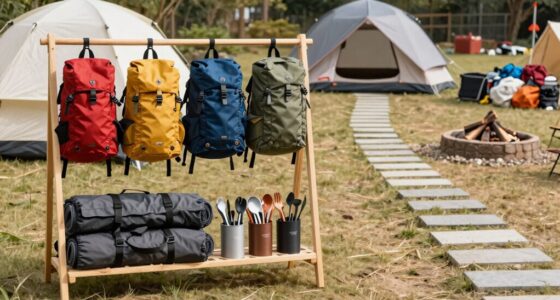
Have you ever wondered how to create a camp that truly serves the needs of your group? It all starts with thoughtful planning and organization. When setting up your group camp, focus on creating designated areas for different activities, guaranteeing everyone knows where to go for meals, rest, or gathering. This helps minimize confusion and keeps the camp running smoothly. One of the most essential aspects of a functional camp is guaranteeing campfire safety—it’s not just about having a fire but managing it responsibly. You should establish clear rules for building and maintaining the fire, such as keeping a bucket of water or a fire extinguisher nearby, and making sure everyone understands the importance of never leaving the fire unattended. Proper campfire safety prevents accidents and keeps everyone safe, letting your group enjoy the experience without worry. Additionally, campfire management involves monitoring fire size and ensuring proper extinguishing procedures are followed when the campfire is no longer needed. Incorporating safety protocols into your camp routines can significantly enhance overall security and preparedness. To further promote safety, consider educating your group about fire safety best practices before the trip begins. Another critical element is equipment organization. When gear is well-arranged and easy to access, it reduces frustration and saves time during busy moments like meal prep or packing up. Invest in sturdy storage containers or shelves labeled with their contents—think utensils, first-aid supplies, or camping tools—so everyone can quickly find what they need without digging through clutter. Encourage your group to keep personal gear organized as well, perhaps by assigning specific spots for backpacks, shoes, and jackets. This kind of organization keeps the camp tidy and ensures important equipment isn’t lost or misplaced, which can cause delays or confusion. Creating a designated storage system can further streamline the process and prevent chaos. Additionally, establishing clear communication channels helps ensure everyone stays informed and tasks are coordinated efficiently. Make sure everyone is aware of the schedule, safety procedures, and specific responsibilities. Clear signage, regular check-ins, and a designated leader help keep everyone on the same page. This way, tasks like setting up tents, collecting firewood, or preparing meals get done efficiently and without overlap. Lastly, think about comfort and accessibility. Set up common areas with comfortable seating and ensure pathways are clear for easy movement, especially for those who might need it. A well-planned layout reduces congestion and makes the space inviting for all members of your group. When each element—from campfire safety to equipment organization—is thoughtfully integrated, your camp becomes a place where everyone feels secure, organized, and ready to enjoy their outdoor adventure. The result is a more efficient, enjoyable experience for everyone involved, leaving your group with lasting memories rather than logistical headaches.
camping gear storage containers with labels
As an affiliate, we earn on qualifying purchases.
As an affiliate, we earn on qualifying purchases.
Frequently Asked Questions
How Do I Choose the Best Location for My Group Camp?
You should choose a location with easy access to camping gear storage and suitable for outdoor activities. Look for flat, well-drained terrain to set up tents comfortably and avoid flooding. Consider proximity to water sources for convenience but guarantee safety. Pick a spot away from heavy traffic or noise to keep the group relaxed. Prioritize safety, privacy, and amenities to make your group camp enjoyable and functional.
What Safety Measures Are Essential for a Group Camp?
Remember, safety first—an ounce of prevention is worth a pound of cure. You should establish clear safety measures, including campfire safety protocols and an emergency plan. Make certain everyone knows how to handle fires safely and where emergency exits and first aid kits are located. Assign roles for emergencies, and practice drills if possible. Staying prepared and vigilant keeps your group safe and ensures everyone enjoys the camp experience.
How Can I Accommodate Different Age Groups Effectively?
You can accommodate different age groups effectively by planning diverse activities that foster team bonding across all ages. Incorporate activity diversity, like age-appropriate games and quiet spaces, to guarantee everyone feels included. Encourage mixed-age team bonding exercises to build camaraderie. Adjust schedules to balance energetic activities with relaxation, making sure each age group stays engaged and comfortable, ultimately creating a harmonious, inclusive camp environment.
What Budget Considerations Should I Keep in Mind?
Imagine the camp’s foundation—solid yet flexible. Budget planning is your first step, ensuring each element fits within your means. Keep cost-saving tips in mind, like prioritizing essential features and exploring group discounts. Anticipate unexpected expenses and allocate funds for emergencies. By carefully managing your budget, you’ll create a functional, enjoyable camp that stays financially sustainable, allowing everyone to relax and focus on the adventure ahead.
How Do I Handle Conflicts Within the Group?
You handle conflicts within the group by prioritizing team communication and practicing conflict resolution. Encourage everyone to express their feelings openly and listen actively to each other. Address issues promptly before they escalate, and find common ground to compromise. Stay calm and respectful, fostering a safe environment for honest dialogue. By emphasizing these strategies, you’ll maintain a positive atmosphere and guarantee conflicts don’t disrupt your group camp experience.
campfire safety kit with extinguisher and bucket
As an affiliate, we earn on qualifying purchases.
As an affiliate, we earn on qualifying purchases.
Conclusion
By following these tips, you’ll create a group camp that’s organized, enjoyable, and efficient. Remember, clear communication and thoughtful planning make all the difference. Did you know that over 70% of group camps report higher satisfaction rates when they have designated areas and roles? Visualize your campsite bustling smoothly, with everyone knowing their spot and purpose. With a little effort, you’ll turn your camp into a well-oiled, memorable adventure for all.
group camping organizer and map signs
As an affiliate, we earn on qualifying purchases.
As an affiliate, we earn on qualifying purchases.
collapsible camping table and chairs set
As an affiliate, we earn on qualifying purchases.
As an affiliate, we earn on qualifying purchases.