TL;DR
Urbi et Orbi has developed a process to upcycle industrial concrete waste into contemporary monolithic objects. This innovative approach emphasizes circularity and environmental sustainability in design.
Urbi et Orbi has started transforming heavy industrial concrete rubble into contemporary, circular concrete monoliths, marking a significant step in sustainable design practices.
Founded in 2012, Urbi et Orbi is an Athens-based studio known for experimenting with concrete as a flexible, organic material. Their recent innovation involves the Zero Waste Project, launched in 2020, which intercepts 100% of internal industrial waste from their workshops. Heavy concrete rubble from manufacturing processes is crushed and reused as aggregate in new concrete mixes, with the final objects containing between 20% and 80% recycled components. This process creates textured, modern objects that reflect a circular approach to material use.
Examples include the Saroma side table, which incorporates fibers from traditional straw brooms, and the Legante table series, which embeds mineral scraps from local marble and ceramic workshops. These objects combine cultural references with sustainable material practices, emphasizing both aesthetic and environmental considerations. The process not only reduces waste but also produces unique textures and forms that challenge traditional perceptions of concrete as a rigid industrial material.
Potential Impact on Sustainable Design and Construction
This development underscores a shift toward circular economy principles in architecture and design, demonstrating how industrial waste can be repurposed into aesthetically compelling, durable objects. It highlights the potential for concrete, traditionally considered a high-impact material, to be reimagined as an environmentally responsible choice. Such innovations could influence future building practices, encouraging wider adoption of waste-recycling in construction and design sectors, ultimately reducing environmental footprints.

SUNBURY Outdoor Side Tables for Patio, Small Concrete Accent End Table
- Unique handcrafted concrete design: Each piece is handcrafted and unique
- Versatile usage options: Use as side table, stool, or coffee table
- Suitable for indoor and outdoor: Perfect for patios, gardens, or indoors
As an affiliate, we earn on qualifying purchases.
As an affiliate, we earn on qualifying purchases.
Background of URBI et ORBI’s Creative Recycling Approach
URBI et ORBI, based in Athens, has been exploring concrete’s organic potential through creative experimentation since 2012. Their work emphasizes the cultural and environmental significance of local materials, often integrating traditional Mediterranean motifs and craftsmanship. Their Zero Waste Project, initiated in 2020, is a core element of their philosophy, intercepting industrial waste and incorporating it into new objects. This approach aligns with broader trends in sustainable design, which seek to close the loop on material use and minimize environmental impact.
Prior to this, the studio gained recognition for objects that blend cultural references with innovative material techniques, such as embedding straw fibers or mineral scraps into concrete. Their recent focus on upcycling industrial rubble marks an evolution in their sustainable practices, emphasizing circularity and environmental responsibility in contemporary design.
“URBI et ORBI’s process exemplifies how concrete can be reimagined as a sustainable, flexible material that embodies circular economy principles.”
— an anonymous researcher

Set of 4 -Concrete Office Desk Accessories for Men-Modern Industrial Decor
- Set of 4 Office Accessories: Includes pen, card, note, and clip holders
- Cost-effective Office Decor: Enhances workspace with quality accessories
- Modern Industrial Design: Sleek, minimalist concrete aesthetic
As an affiliate, we earn on qualifying purchases.
As an affiliate, we earn on qualifying purchases.
Uncertain Aspects of the Upcycling Process
It is not yet clear how scalable this process is for mass production or how the durability of the recycled concrete compares to traditional methods over long-term use. Details about the mechanical properties and structural applications of these objects remain to be fully tested and verified.
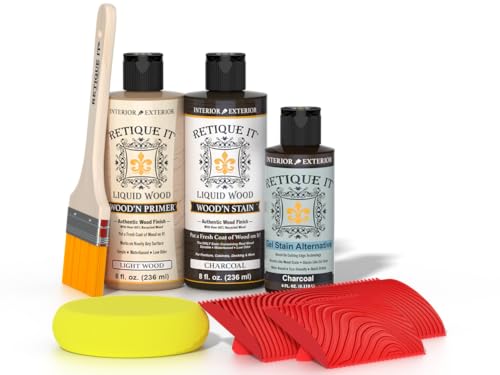
Retique It Wood Finish Multi-Purpose Kit – Go Beyond Faux Wood Including Paintable Liquid Wood Based Primer, Gel Stain – Graining Tools Included (2X 8oz Kit, Charcoal)
- Authentic Liquid Wood Finish: Looks and feels like real wood
- Eco-Friendly, Recycled Content: Contains over 60% recycled wood fibers
- Safe, Water-Based Formula: Zero VOCs and no offensive odors
As an affiliate, we earn on qualifying purchases.
As an affiliate, we earn on qualifying purchases.
Next Steps for Broader Adoption and Development
URBI et Orbi plans to continue refining their upcycling techniques, with potential collaborations in larger-scale architecture projects. Further testing on the durability and structural integrity of recycled concrete objects is expected, alongside efforts to promote industry-wide adoption of circular concrete practices.
industrial waste concrete sculpture
As an affiliate, we earn on qualifying purchases.
As an affiliate, we earn on qualifying purchases.
Key Questions
Can recycled concrete be as durable as traditional concrete?
While initial results are promising, comprehensive testing on long-term durability and structural performance is ongoing to determine if recycled concrete meets standard engineering requirements.
How much industrial waste is used in each object?
The percentage varies between 20% and 80%, depending on the specific object and the amount of recycled material available from the waste stream.
Is this process applicable to large-scale construction?
The process is still in experimental stages; scaling up for large construction projects will require further development and validation of the material’s performance.
What types of waste are used in the process?
Heavy concrete rubble from industrial demolition and mineral scraps from local marble and ceramic workshops are primary inputs for the recycled concrete objects.
Will recycled concrete objects be commercially available?
URBI et Orbi is exploring commercialization, but widespread availability depends on further testing, certification, and industry adoption.
Source: designboom