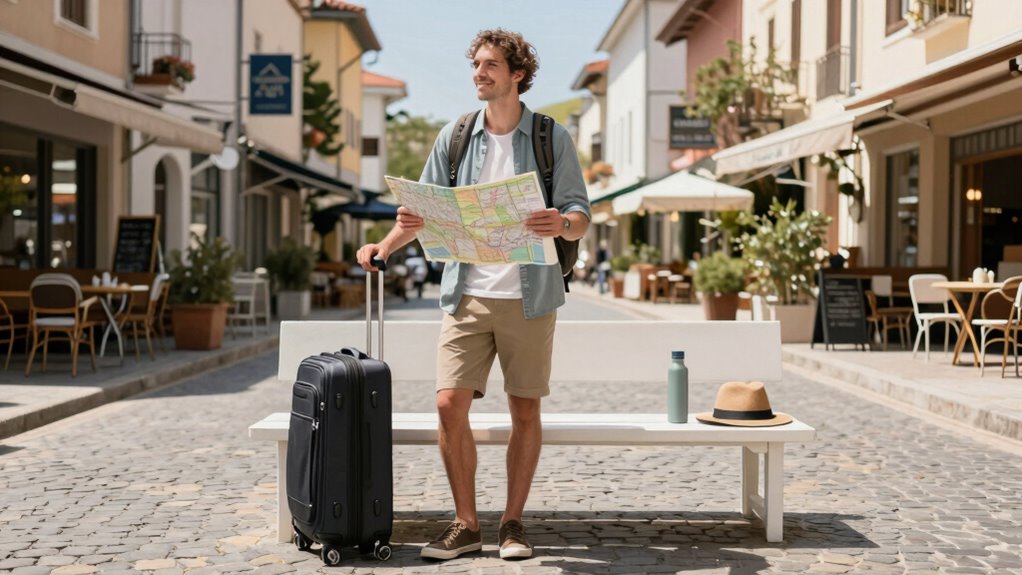

To keep simple trips smooth, plan ahead by packing only essential items and organizing them well. Research local customs, transportation, and accommodation options to avoid surprises. Stay flexible and prepared for delays or changes by having backup plans. Use technology wisely with offline maps and backup devices, and bring comfort tools like noise machines. Staying proactive and adaptable helps turn potential setbacks into minor hiccups, ensuring a more enjoyable journey. For more tips, explore the full approach below.
Listen free for 30 days with Audible
Thousands of audiobooks and originals — cancel anytime.
As an affiliate, we earn on qualifying purchases.
Key Takeaways
- Plan and book accommodations and transportation early to avoid last-minute stress.
- Pack only essential, versatile items to minimize baggage and simplify security checks.
- Research local customs and language basics to prevent misunderstandings and ease interactions.
- Prepare backup plans for delays or weather issues to stay adaptable.
- Use offline maps and technology backups to navigate smoothly and reduce frustration.

Even simple trips can quickly turn stressful if you’re not prepared. The key to keeping things smooth is knowing what essentials to bring and understanding the local environment. When packing your travel gear, think beyond just clothes. Include chargers, a universal adapter, and a small first aid kit. Don’t forget to carry a copy of your identification and important documents, as they can save you a lot of trouble if lost. A well-organized bag with compartments can make it easier to find what you need on the go. Light packing is also crucial—bring only what you’ll truly use, avoiding unnecessary bulk that can slow you down or cause frustration. Investing in versatile clothing that can be layered helps you adapt to various weather conditions without overpacking. Sound vibrations from portable sound therapy devices can also help reduce travel-related stress, promoting calmness during transit. Understanding local customs is equally important. Before your trip, do some quick research on the destination’s cultural norms and etiquette. Knowing how locals dress and behave helps you avoid unintentionally offending anyone. For example, in some places, modest clothing is expected when visiting religious sites, while in others, casual attire is acceptable everywhere. Learning a few basic phrases in the local language can also go a long way, making interactions smoother and more respectful. Respect for local customs demonstrates your appreciation for the culture and can open doors to more genuine experiences. Planning your transportation and accommodations in advance can eliminate a lot of last-minute stress. Book your accommodations early and confirm your reservations before departure. Map out your route and familiarize yourself with public transportation options or reliable ride-sharing services. This preparation means you won’t waste time figuring out directions or struggling with unfamiliar transit systems. Carry a printed map or offline navigation app to stay on track, especially if Wi-Fi or data might be unreliable. Additionally, knowing about cultural norms can help prevent misunderstandings and ensure respectful interactions. Incorporating local transportation options into your planning can also make your trip smoother and more efficient. Another way to prevent your trip from becoming unnecessarily difficult is to stay flexible. Expect some hiccups—delays, language barriers, or weather changes—and don’t let them ruin your mood. Having a backup plan or knowing how to adapt can turn potential setbacks into minor inconveniences. Keep an open mind, be patient, and remember that a good attitude can make even unexpected challenges easier to handle. Preparing for technology issues and having a backup plan can also help you stay on track. Being aware of product options like noise machines for sleep or portable sound therapy devices can help create a more relaxing environment during travel. With the right travel gear, awareness of local customs, and a flexible mindset, you’ll find that simple trips can be enjoyable and hassle-free rather than stressful and overwhelming.
portable offline maps for travel
As an affiliate, we earn on qualifying purchases.
As an affiliate, we earn on qualifying purchases.
Frequently Asked Questions
How Can I Prepare for Unexpected Travel Disruptions?
You can prepare for unexpected travel disruptions by creating travel contingency plans, such as alternative routes or transport options. Keep emergency contact preparation current, including local contacts and your embassy’s info. Carry essential items like chargers, medications, and copies of important documents. Stay informed about your destination’s weather and travel alerts. Being proactive ensures you’re ready for surprises, reducing stress and helping you navigate disruptions smoothly.
What Should I Pack for a Short, Simple Trip?
For a short, simple trip, pack your essentials like a change of clothes, toiletries, chargers, and any necessary medications. Keep packing essentials lightweight and versatile to save space. Follow travel tips like rolling clothes instead of folding, and use a small bag for quick access to essentials. Don’t forget your travel documents and a snack. Staying organized helps you avoid stress and makes your trip smoother.
How Do I Choose the Best Travel Insurance?
Choosing the best travel insurance is like steering through a vast ocean of options. You’ll want a policy with clear travel coverage options that suit your trip’s needs. Start by reading the travel policy carefully, looking for all-encompassing coverage and flexibility. Avoid hidden fine print, and compare plans based on coverage options, costs, and reviews. Keep your eyes open for policies that act like a sturdy ship, protecting you from unexpected storms.
What Are Quick Ways to Handle Travel Stress?
To handle travel stress quickly, prioritize travel relaxation by taking deep breaths and staying present. Use stress management techniques like listening to calming music or practicing mindfulness. Keep essentials accessible to avoid panic, and remind yourself that small setbacks are normal. Staying flexible and maintaining a positive mindset helps, making your journey smoother and more enjoyable, turning stressful moments into manageable ones with ease.
How Can I Stay Safe During Casual Trips?
To stay safe during casual trips, you need to stay alert and prepared. Start by knowing local safety tips—research areas beforehand to avoid risky zones. Practice cultural awareness; understanding local customs prevents misunderstandings. Always keep your valuables secure and stay aware of your surroundings. Trust your instincts, and if something feels off, remove yourself from the situation. Staying cautious guarantees your trip remains enjoyable and incident-free.
compact universal travel adapter
As an affiliate, we earn on qualifying purchases.
As an affiliate, we earn on qualifying purchases.
Conclusion
By embracing basic planning, packing, and patience, you prevent potential pitfalls and keep your trips smooth and simple. Remember, the key to carefree journeys is clarity and calm—calculated steps keep chaos at bay. So, stay savvy, stay spontaneous, and savor the serenity of stress-free adventures. With a little preparation and a positive perspective, your travels transform from trouble to treasure, turning fleeting trips into fantastic, fuss-free memories.
lightweight travel first aid kit
As an affiliate, we earn on qualifying purchases.
As an affiliate, we earn on qualifying purchases.
As an affiliate, we earn on qualifying purchases.
Flea & tick season Picks
flea and tick prevention
As an affiliate, we earn on qualifying purchases.