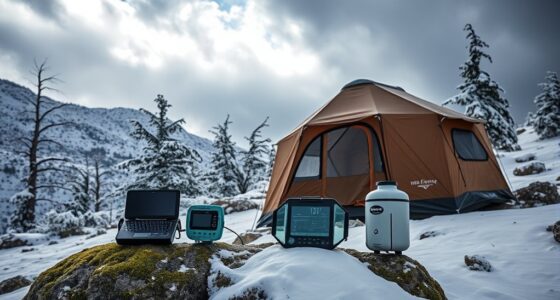
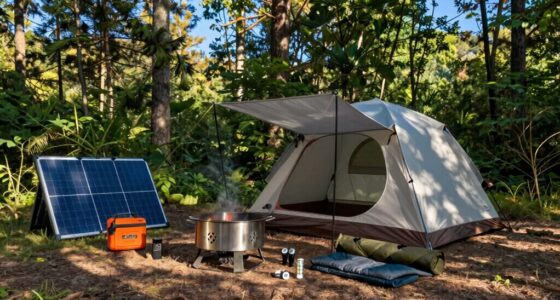
Portable hydroponic systems let you grow fresh food anywhere, whether on a balcony or off-grid location. These compact setups are easy to assemble, use nutrient-rich water instead of soil, and are perfect for limited spaces. They help you produce clean, sustainable crops year-round while conserving water and energy. Plus, they’re simple to maintain and adapt to your needs. Keep exploring to discover how these systems can transform your urban or remote gardening experiences.
Key Takeaways
- Portable hydroponic systems are compact, lightweight, and easy to set up anywhere, ideal for off-grid locations.
- All-in-one designs include reservoirs, pumps, and LED lights, simplifying off-grid food cultivation.
- These systems use recirculating nutrient solutions, conserving water and making them sustainable for remote areas.
- They can operate with solar-powered components, ensuring energy independence and continuous crop growth.
- Suitable for small spaces like rooftops or cabins, enabling year-round, soil-free gardening off the grid.
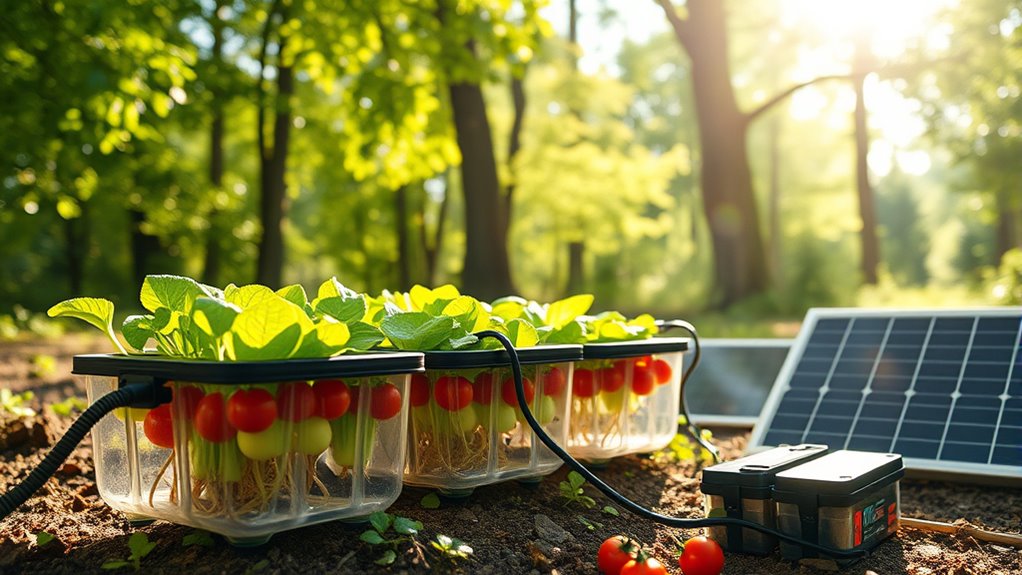
Have you ever wondered how you can grow fresh vegetables anytime and anywhere? Thanks to portable hydroponic systems, you can turn any space into a thriving garden, whether you’re off-grid or just looking to expand your urban farming efforts. These systems are designed for convenience, allowing you to cultivate your favorite greens, herbs, and even small vegetables without soil, making sustainable gardening more accessible than ever. You don’t need a backyard or extensive land; with the right setup, you can enjoy fresh produce right on your balcony, patio, or even inside your home.
Portable hydroponic systems are compact, lightweight, and easy to assemble, making them perfect for on-the-go gardening. They typically come with all the necessary components—reservoirs, grow trays, pumps, and LED grow lights—so you can start growing right away. Because they rely on nutrient-rich water solutions rather than soil, these systems use considerably less water, making them an eco-friendly choice for sustainable gardening. Plus, since you’re controlling the environment, you can grow crops year-round, regardless of the weather outside or limitations in outdoor space.
Compact, all-in-one hydroponic systems for easy, year-round gardening anywhere.
If you’re into urban farming, portable hydroponics open up a world of possibilities. You can set up a mini farm on a rooftop, in a community garden, or even inside a small apartment. This flexibility helps maximize limited space and makes sustainable gardening achievable for city dwellers. You won’t need to worry about pests, weeds, or soil-borne diseases either, as everything is contained within your system. This simplifies maintenance and ensures your plants get the right nutrients they need to thrive. Growing your own food in a portable hydroponic system also reduces your carbon footprint by cutting down on store-bought produce transportation.
Another advantage is that these systems are scalable. Whether you want a small herb garden or a larger setup to grow multiple vegetables, portable hydroponics can adapt to your needs. They’re also energy-efficient, especially if you use solar-powered pumps or LED lights, further aligning with sustainable gardening principles. Once you get the hang of it, you may find it’s an enjoyable hobby that makes fresh, healthy food more attainable, even in the most unconventional spaces.
In short, portable hydroponic systems make off-grid food production simple and sustainable. They empower you to grow fresh vegetables anytime, anywhere, transforming small spaces into productive, eco-friendly gardens. Whether for urban farming or just to enjoy fresher meals, these systems bring the farm to you—no matter where you are. Additionally, understanding the basic components of hydroponic systems can help you troubleshoot and optimize your setup for better yields.

Tuopus Hydroponics Growing System, Indoor Gardening System, Hydroponic Tower with 30 Liter Capacity Mobile Water Tank for Home, Balcony or Small Greenhouse Growing
Hydroponics Growing System – Detachable trays with 5 planting slots per layer let you expand or reduce your…
As an affiliate, we earn on qualifying purchases.
As an affiliate, we earn on qualifying purchases.
Frequently Asked Questions
What Are the Initial Setup Costs for Portable Hydroponic Systems?
Initial setup costs for portable hydroponic systems typically range from $50 to $300, depending on size and complexity. You should compare costs across different models to find the best fit for your budget. Funding options like grants, crowdfunding, or personal savings can help cover expenses. Keep in mind, investing in quality equipment may save you money long-term by reducing maintenance and increasing yield.
How Much Maintenance Do Portable Hydroponic Systems Require?
Maintaining your portable hydroponic system is manageable with minimal effort. You’ll need to regularly clean the system to prevent clogs and disease, and carefully manage nutrients to keep plants healthy. Expect to check water levels, adjust nutrient concentrations, and perform routine cleaning weekly or biweekly. This simple, steady schedule guarantees your system stays superbly productive and pest-free, making off-grid food growing consistently satisfying and stress-free.
Can Portable Hydroponic Systems Grow All Types of Vegetables?
You can cultivate most vegetables with portable hydroponic systems, but some may need specific adjustments for soil compatibility and nutrient requirements. Leafy greens like lettuce and herbs thrive easily, while root vegetables might need different setups. To guarantee success, monitor nutrient levels regularly and adjust the nutrient solution accordingly. Keep in mind that some vegetables might grow better in traditional soil, but with proper care, many can flourish hydroponically on the go.
What Is the Average Yield per Week From Portable Hydroponic Setups?
You can expect an astonishing 2-4 pounds of fresh produce weekly from your portable hydroponic setup, providing impressive yield consistency. With proper care, you might harvest a diverse array of vegetables, herbs, and greens, making your off-grid garden a mini farm. Although yields vary based on plant types and setup, you’ll likely see bountiful harvests that keep your kitchen stocked and your gardening dreams thriving.
Are Portable Hydroponic Systems Suitable for Outdoor Extreme Weather Conditions?
Yes, portable hydroponic systems can be suitable for outdoor extreme weather conditions if they’re designed with weather resilience and system durability in mind. You should look for models with sturdy, weatherproof materials and protective features like covers or insulation. Proper placement and regular maintenance also help guarantee your system withstands harsh conditions, so you can continue growing food off-grid without worrying about weather damage.
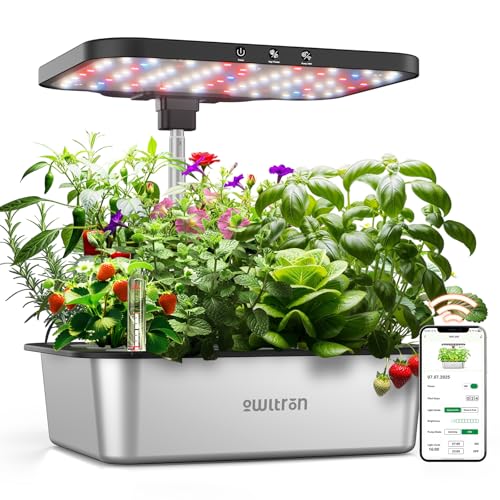
owltron Smart Hydroponics Growing System Kit,15 Pods Indoor Herb Garden with 36W LED Grow Light & APP Control, Planting Height Up to 30", Quiet Water Pump, Stainless Steel – Ideal Gift for All Ages
5X Faster Growth with 36W Full-Spectrum LED: Our garden kit indoor, whether nurturing young seedlings or helping flowering…
As an affiliate, we earn on qualifying purchases.
As an affiliate, we earn on qualifying purchases.
Conclusion
Now that you know how portable hydroponic systems let you grow food anywhere, why settle for limited space or unreliable supplies? With these systems, you can enjoy fresh greens and herbs on the go, whether camping, traveling, or living off-grid. Isn’t it time you took control of your food source and embraced self-sufficiency? Start exploring portable hydroponics today and transform any location into your personal farm. Your fresh, healthy harvest is just a setup away!
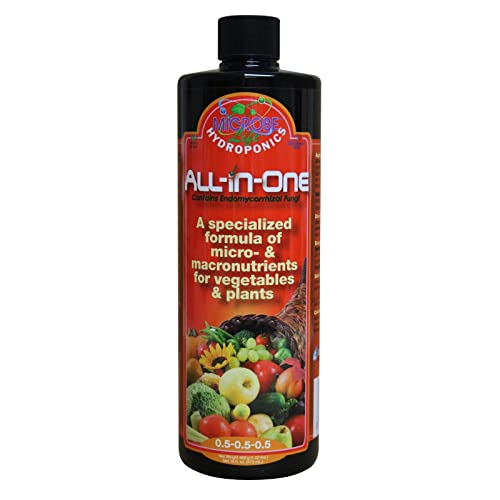
Microbe Life Hydroponics Premium All-in-One Nutrient for Plant Growth and Better Yields, Use with Any Feeding Systems Including Hydroponics or Soil, 16 Ounces
SPECIALIZED FORMULA: The Microbe Life Hydroponics All-In-One Nutrients is a specialized formula containing micro and macro nutrients for…
As an affiliate, we earn on qualifying purchases.
As an affiliate, we earn on qualifying purchases.

Ahopegarden Hydroponics Growing System Kit Indoor Herb Garden with Grow Light 12 Pods, with LCD Touch Panel Hydroponic Planter, Planting Height Up to 17", Grower Harvest Fresh Veggie Lettuce, Black
Avant-garde and modern design: Our smart hydroponics growing system kit merges urban farming innovation with minimalist aesthetics. Crafted…
As an affiliate, we earn on qualifying purchases.
As an affiliate, we earn on qualifying purchases.