
Solar fabric lets you turn textiles like tents, backpacks, and clothing into portable energy sources by embedding photovoltaic cells directly into the material. This technology allows you to generate power outdoors, charge your devices, and stay connected without relying on traditional outlets. It’s versatile, eco-friendly, and perfect for outdoor adventures or daily use. If you want to discover more about how solar fabric is transforming everyday life, keep exploring its innovative applications.

Get emergency and outdoor gear delivered free — and shop member deals
- Fast, free delivery on millions of items
- Access to Prime Big Deal Days deals on October 6–7
- Prime Video, Amazon Music and more included
Key Takeaways
- Solar fabric integrates photovoltaic cells into textiles for on-the-go energy generation in tents, backpacks, and clothing.
- It enables portable charging of devices like phones and smartwatches using solar-powered textiles.
- In tents, solar fabric replaces external panels, providing autonomous power for lighting and small appliances.
- Its flexibility and adaptability make solar fabric suitable for outdoor and everyday sustainable applications.
- Solar fabric promotes eco-friendly living by reducing reliance on traditional power sources through wearable technology.
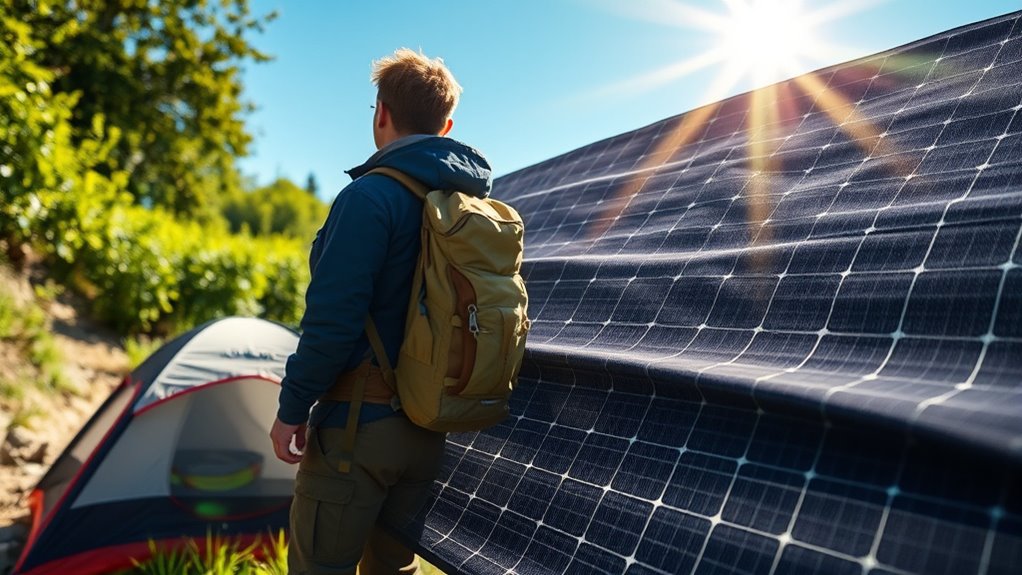
Solar fabric is an innovative material that integrates photovoltaic cells directly into textiles, enabling you to generate electricity while wearing or using fabrics. This advancement turns everyday items like clothing, tents, and backpacks into sources of renewable energy, making energy collection more seamless and accessible. As someone interested in wearable technology, you’ll appreciate how solar fabric transforms the way you think about energy independence and sustainability. Instead of relying solely on traditional power sources, you can harness the sun’s energy wherever you go, reducing your carbon footprint and enhancing your outdoor experiences.
Solar fabric seamlessly turns textiles into portable, renewable energy sources for a sustainable, tech-savvy lifestyle.
When you incorporate solar fabric into your clothing or gear, you’re essentially creating portable power stations. Imagine wearing a jacket that charges your phone or smartwatch as you walk through the city or hike in the mountains. This technology is especially valuable for outdoor enthusiasts, travelers, and adventurers who need reliable power on the move. Solar fabric in backpacks, for example, can be equipped with flexible photovoltaic cells that absorb sunlight throughout the day, storing energy in built-in batteries. By the time you reach your destination, you’ve got a ready supply of renewable energy to keep your devices running. It’s a practical solution that combines convenience with eco-friendliness, making your everyday routines more sustainable.
Tents made from solar fabric take this concept to a different level. Instead of setting up separate solar panels that can be bulky or cumbersome, you simply use a tent that captures sunlight and converts it into usable electricity. During daytime camping, the tent’s integrated photovoltaic cells supply power for lighting, charging batteries, or running small appliances. This creates a more autonomous camping experience, freeing you from the need to carry heavy power banks or seek out power outlets. Solar fabric in tents exemplifies how renewable energy can be seamlessly woven into your outdoor adventures without sacrificing comfort or convenience.
The beauty of solar fabric lies in its versatility and potential to redefine how you think about energy consumption. As wearable technology continues to evolve, integrating solar fabric into everyday items makes renewable energy more accessible and practical. You no longer have to be tethered to traditional power sources; instead, you can generate your own electricity just by being outdoors or going about your day. Innovative photovoltaic integration in textiles further enhances the efficiency and usability of solar fabric, making this technology even more promising. This shift not only promotes sustainability but also empowers you to live more independently, harnessing the sun’s power directly through the fabrics you wear and use.
solar fabric backpack with built-in charger
As an affiliate, we earn on qualifying purchases.
As an affiliate, we earn on qualifying purchases.
Frequently Asked Questions
How Durable Is Solar Fabric in Extreme Weather Conditions?
You’ll find that solar fabric offers impressive durability in extreme weather conditions. Its material longevity is proven through robust construction and weather resilience, meaning it withstands heavy rain, snow, and intense sun exposure. This fabric is designed to stay functional longer, even in harsh environments. So, whether you’re camping in a storm or trekking through rough terrain, you can rely on its durability and weather resilience to keep your power supply steady.
Can Solar Fabric Be Repaired if Damaged?
Yes, solar fabric can be repaired if damaged, but it’s best to focus on damage prevention. You should use solar fabric repair kits or patching materials designed specifically for this purpose. Carefully follow the repair instructions to guarantee a strong, lasting fix. Regular inspections help catch issues early, minimizing damage. Proper maintenance and gentle handling will extend the lifespan of your solar fabric, keeping it functional and efficient.
What Is the Energy Conversion Efficiency of Solar Fabric?
You’ll find that solar fabric’s energy conversion efficiency varies, typically ranging from 10% to 15%. This means that solar cell efficiency in these fabrics isn’t as high as traditional solar panels but is improving. You should know that energy conversion rates depend on factors like fabric quality, sunlight exposure, and design. While less efficient overall, solar fabric remains practical for powering small devices directly from your gear.
Are There Any Health Risks Associated With Solar Fabric Exposure?
You might worry about health risks from solar fabric exposure, but studies show that UV exposure from solar fabric is minimal if used properly. Solar fabrics are designed to block most harmful UV rays, reducing skin irritation risks. However, prolonged direct exposure to intense sunlight can still cause skin issues. To stay safe, wear protective clothing and limit direct contact during peak sunlight hours, just as you would with regular sun exposure.
How Does Solar Fabric Impact the Breathability of Clothing?
Solar fabric can slightly impact the breathability of clothing by affecting ventilation effects and moisture management. It may make the fabric less airy, leading to some heat retention and moisture buildup. However, advanced solar fabrics are designed with breathable materials and ventilation features to minimize these issues. You’ll find that with proper design, solar clothing still allows for good airflow and moisture control, keeping you comfortable during outdoor activities.
As an affiliate, we earn on qualifying purchases.
Conclusion
Imagine harnessing the sun’s energy just as effortlessly as a flower turns to the light. With solar fabric integrated into tents, backpacks, and clothing, you become part of a future where clean energy is always within reach. You’re not just carrying gear; you’re carrying innovation that powers your adventures and daily life. Embrace this technology, and let it light your path—like a gentle sunrise illuminating even the darkest corners of your day.
solar clothing for outdoor activities
As an affiliate, we earn on qualifying purchases.
As an affiliate, we earn on qualifying purchases.
As an affiliate, we earn on qualifying purchases.
Fall Picks
fall essentials
As an affiliate, we earn on qualifying purchases.