TL;DR

Get emergency and outdoor gear delivered free with Prime
- Fast, free delivery on millions of items
- Prime Video, Amazon Music and more included
- Member-only deals all year
Midwest Deer Surveys owner Jack Huston is promoting a drone-detection system for landowners concerned about drones over hunting properties. Huston says it can identify a drone and its pilot from radio transmissions and send activity data to an app; the system monitors rather than physically stopping drones, and costs start at about $5,000.
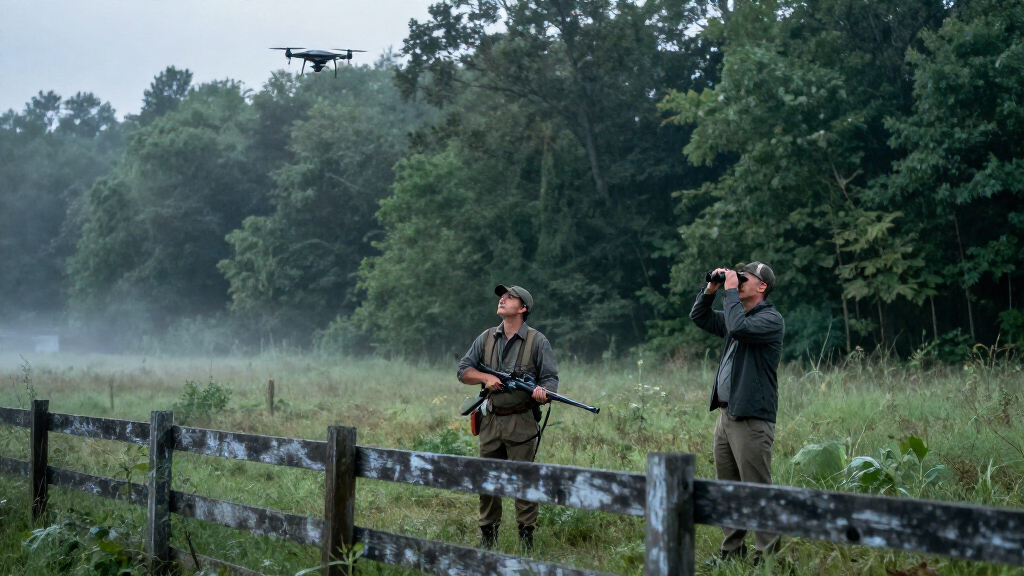
Drone-detection systems are being marketed to deer-hunting landowners who want to track aircraft flying over their properties, according to an Outdoor Life report published Nov. 2. Jack Huston, owner of Midwest Deer Surveys, says the system can detect and record information about drones and their operators, giving landowners a monitoring tool as concerns grow about unauthorized scouting and wildlife disturbance.
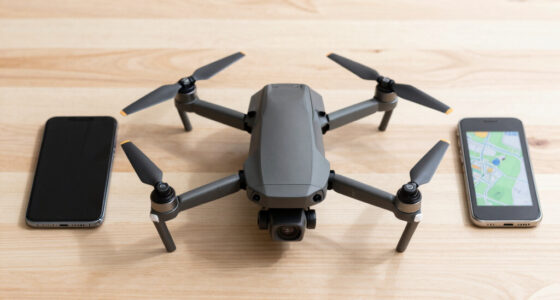
Huston says the system detects the radio transmission between a drone and its controller. It can report the drone’s and pilot’s locations, along with the drone’s make and serial number, and send collected data to an app on the landowner’s phone. The report describes the equipment as a way to monitor activity and alert users, not as a device that disables or intercepts drones.
The system is offered in several sizes, with coverage options described as roughly five-, 20- or 40-mile radii. Huston says some customers use it to create a monitoring area around a farm. Smaller stations start at about $5,000, while the largest option costs about $12,000, according to the report. Huston helped design the system and works with a separate company on manufacturing; he does not make it himself.
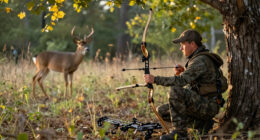
Drones already have legitimate uses in deer management, including population surveys, property work and locating wounded deer. The report says rules vary by state: Pennsylvania prohibits drone use for any type of hunting, including tracking wounded deer, while other states have different approaches. The article does not provide a state-by-state legal guide.
Monitoring Airspace Over Hunting Land
The system offers landowners a way to gather records about drone activity rather than relying only on sightings or assumptions about who is flying overhead. That could help document repeated flights and inform a landowner’s response, particularly where property owners suspect drones are being used to locate deer without permission.
Its capabilities also have limits. Detection and identification do not establish why a drone was flown, whether the operator violated a law, or whether wildlife was harmed. Nor does the reported system prevent a flight. Its high purchase cost may also put it beyond the reach of smaller landowners, leaving monitoring more accessible to owners with larger budgets.
Popular right now

Philips Café Aromis Automatic Espresso Machine with LatteGo Pro Milk System

Philips 2200 Series Fully Automatic Espresso Machine with Classic Milk Frother, 2 Coffee Varieties, Intuitive Touch Display, Ceramic Grinder

De'Longhi Rivelia Fully Automatic Espresso Machine with Milk Frother, White
As an affiliate, we earn on qualifying purchases.
Drones’ Growing Role in Deer Management
As described in the Outdoor Life report, drones are used in deer management for surveys, property monitoring and recovery of wounded animals. Thermal-equipped drones can assist with recovery where laws permit. The same technology can also be used to observe animals on land where the operator has no permission, raising concerns among hunters and landowners about scouting, disturbance and possible poaching.
Huston says complaints from landowners he meets through his survey work helped prompt interest in a detection product. He characterizes the concern as people flying over properties to scout across a broader area, rather than only neighboring landowners checking their own ground. That is his account of the problem; the report supplies no independent count of unauthorized flights or evidence establishing how widespread illegal use is.
“Most of the problem is people flying over property they don’t own or have permission to be on.”
— Jack Huston, owner and operator of Midwest Deer Surveys
Limits of Detection and State Rules
The report does not identify the system’s manufacturer, provide independent testing of its detection range or accuracy, or explain whether it can identify every drone model. It also does not establish how often flights detected by the equipment are unlawful or intended to scout deer. Huston’s statement that activity is higher than he expected is not accompanied by a figure, time period or comparison baseline.
Legal questions remain location-specific. The article notes that rules differ by state but does not spell out the laws governing drone flights over private property, data collection, or what a landowner may do after a detection. It is also unclear whether any agency or court has assessed the system’s data as evidence in a wildlife or trespassing case.
How Landowners May Use the Data
Landowners considering the equipment will need to weigh its price and coverage against their monitoring needs, and check applicable state and federal rules before acting on information it collects. The system’s stated role is to record and report drone activity; any enforcement response would depend on the facts of a flight and the relevant authorities.
The report does not announce a regulatory change, agency program or scheduled next milestone. Further details that would clarify the system’s practical value include independent performance testing, documented examples of detections, and guidance on how authorities handle reports of suspected unauthorized flights.
Key Questions
What does the drone-defense system do?
According to Jack Huston, it detects transmissions between a drone and its controller, then records details such as locations, make and serial number and sends information to an app. It is described as a monitoring system, not a device that stops a drone.
How much does it cost?
The Outdoor Life report says smaller stations start at about $5,000, while the largest system costs about $12,000. Prices may depend on the selected system and coverage.
Does flying a drone over hunting property break the law?
That depends on the location and the circumstances. The report says drone rules differ by state and gives Pennsylvania’s prohibition on drone use for any type of hunting, including tracking wounded deer, as one example. It does not provide a complete legal guide.
Are drones used for legitimate deer-management work?
Yes. The report describes uses including wildlife surveys, property management and recovery of wounded deer where permitted. It also reports concerns that some operators may use drones to scout other people’s properties.
Source: outdoorlife.com