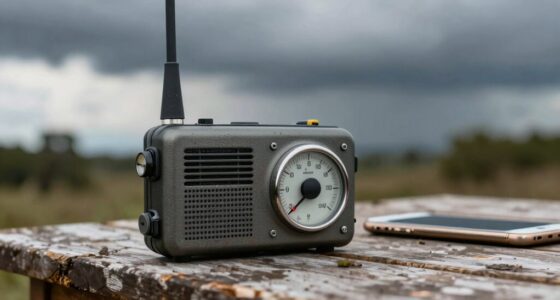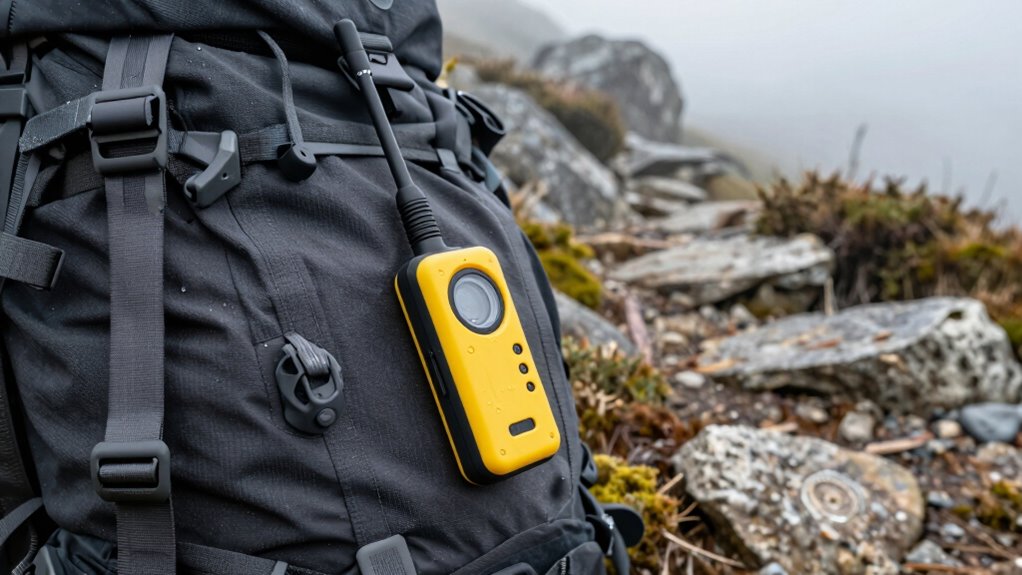
Personal Locator Beacons boost your safety plan by providing instant distress signals that reach rescue teams even in remote areas with no cell service. They are easy to activate, often with just one button, ensuring quick help when you need it most. GPS features help rescuers locate you precisely, and their durability means they work in tough conditions. If you want to understand how they can truly make your outdoor safety more reliable, keep exploring the benefits they offer.
Key Takeaways
- Provide immediate distress signals, reducing rescue response times during emergencies.
- Offer precise GPS location data to aid rescue teams in locating individuals quickly.
- Enhance safety in remote or challenging environments where traditional communication fails.
- Increase overall peace of mind by serving as a reliable backup in critical situations.
- Complement safety planning by bridging the gap between incident occurrence and rescue efforts.
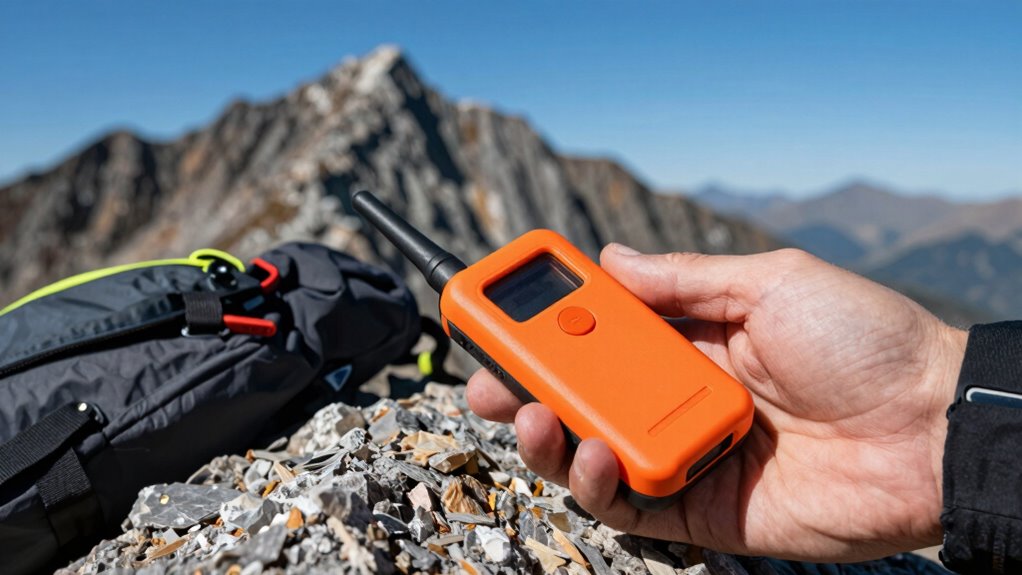
In emergency situations, having a reliable way to signal for help can make all the difference, especially when you’re in remote or difficult-to-access areas. That’s where personal locator beacons, or PLBs, come into play, enhancing your safety plan with their focused purpose: providing an emergency signal when you need it most. When you activate a PLB, it transmits a distress signal via satellite directly to rescue authorities, cutting through the noise and delays that can come with traditional communication methods. This immediate link to emergency services is what makes PLBs invaluable, especially when mobile signals are weak or nonexistent.
Device features are designed with simplicity and reliability in mind. Most PLBs are compact, lightweight, and built to withstand harsh environments, so they won’t slow you down or break when conditions get tough. They typically operate on a long-lasting battery, ensuring you’re covered for extended periods in the field. Many units feature a one-button activation, allowing you to quickly send an emergency signal without fumbling through complicated procedures. Some models even include automatic activation if they detect a sudden impact or water submersion, further reducing the risk of missing your chance to call for help.
Most PLBs are compact, durable, and easy to activate, ensuring reliable emergency signaling in tough conditions.
Beyond just emitting an emergency signal, many PLBs come with additional features to boost their usefulness. GPS integration is common, providing precise location data along with your distress signal, which can drastically reduce rescue times. This accuracy helps rescue teams find you faster, especially in areas with dense terrain or poor visibility. Some devices also have built-in LEDs or strobe lights to aid visual location during daylight or in low-light conditions. While the primary purpose is to send a distress signal, these extra features demonstrate thoughtful design geared toward increasing your chances of rescue. Additionally, the reliability of satellite technology ensures that your signal can reach rescue services even in the most challenging environments. It’s important to note that the global coverage provided by satellite networks is what makes PLBs a dependable safety tool worldwide. Incorporating satellite communication into your safety plan enhances the effectiveness of these devices, especially in remote regions where other communication methods might fail. This technology is continuously improving, offering even more reliable and faster rescue responses.
What personal locator beacons truly add to your safety plan is peace of mind. Knowing that you have a dedicated device to alert rescue services instantly can lessen your anxiety when venturing into the wilderness or remote locations. They’re not a substitute for good planning or cautious behavior, but they serve as a critical backup, ensuring that help is just a press away if things go wrong. This reliable technology is what makes PLBs such an essential component of a comprehensive safety plan. In the end, the real value of a PLB lies in its ability to reliably bridge the gap between your emergency and rescue response, making it an essential component of a comprehensive safety plan.

ACR ResQLink 400 – SOS Personal Locator Beacon with GPS and Global Coverage – Designed to Alert Search and Rescue Efforts for Any Outdoor Emergency – Ideal for Hiking, Hunting, Boating, Fishing
- No Subscription Needed: No ongoing fees for rescue readiness
- 406 MHz Emergency Signals: Provides accurate location alerts to rescuers
- LED and Infrared Strobe: Enhances visibility in low-light conditions
As an affiliate, we earn on qualifying purchases.
As an affiliate, we earn on qualifying purchases.
Frequently Asked Questions
How Long Does a Personal Locator Beacon’s Battery Last?
A personal locator beacon’s battery lifespan typically ranges from 24 to 48 hours of continuous use, depending on the model. You should check its charging frequency and replace or recharge the battery before heading into remote areas. Some beacons have rechargeable batteries, so you’ll need to charge them regularly, while others use replaceable batteries. Staying aware of your device’s battery status guarantees it’s ready when you need it most.
Are Personal Locator Beacons Waterproof and Weather-Resistant?
Yes, personal locator beacons are designed with waterproof durability and weather resistance, making them reliable in harsh conditions. You can confidently use them in rain, snow, or wet environments, knowing they won’t malfunction. Their rugged construction ensures they withstand extreme weather, so your safety isn’t compromised. This weather resistance adds an essential layer of dependability, giving you peace of mind during outdoor adventures or emergencies in unpredictable weather.
What Is the Cost of Purchasing and Maintaining a Personal Locator Beacon?
A penny saved is a penny earned, so consider costs carefully. Purchasing a personal locator beacon typically ranges from $200 to $600, with annual subscription fees of $100 to $300 for satellite services. Emergency preparedness benefits from tech advancements that make these devices more affordable and reliable. While initial investment might seem high, think of it as peace of mind that’s priceless in emergencies. Maintenance costs are generally minimal, mainly subscription renewals.
How Reliable Are Satellite Signals in Remote Areas?
Satellite signals in remote areas are generally reliable, but their accuracy can vary depending on conditions. You might face challenges with satellite signal accuracy due to obstructions like dense forests or mountains, which can hinder communication. However, personal locator beacons are designed to provide effective remote area coverage, ensuring your distress signal gets through even in tough terrains. Always check your device’s coverage map before heading into isolated regions.
Can Personal Locator Beacons Be Used Internationally?
Yes, personal locator beacons can be used internationally, but beware—global coverage isn’t universal. You’ll want to check the device’s capabilities and verify it works in remote areas around the world. Legal considerations also come into play; some countries restrict or regulate their use. Before you head out, research local laws and confirm your beacon’s coverage to avoid surprises and ensure your safety in any corner of the globe.

Ocean Signal rescueME PLB1 Personal Locator Beacon-Compact Emergency Distress Beacon with 7-Year Battery Life, 24+Hours of Operation & Lifejacket Attachment – Waterproof up to 49 feet
- Compact Size: 30% smaller and lightweight at 4 oz
- One-Handed Operation: Easily activate with one hand
- Waterproof Design: Waterproof up to 49 feet
As an affiliate, we earn on qualifying purchases.
As an affiliate, we earn on qualifying purchases.
Conclusion
Think of a personal locator beacon as your safety lifeboat in a stormy sea. When trouble strikes and you’re lost or injured, it’s the beacon that guides help straight to your side. Including one in your safety plan isn’t just a smart choice — it’s your own backup compass, ensuring you’re never truly adrift. With this tiny device, you turn uncertainty into confidence, knowing help is always just a signal away.
As an affiliate, we earn on qualifying purchases.
automatic activation personal locator beacon
As an affiliate, we earn on qualifying purchases.
As an affiliate, we earn on qualifying purchases.