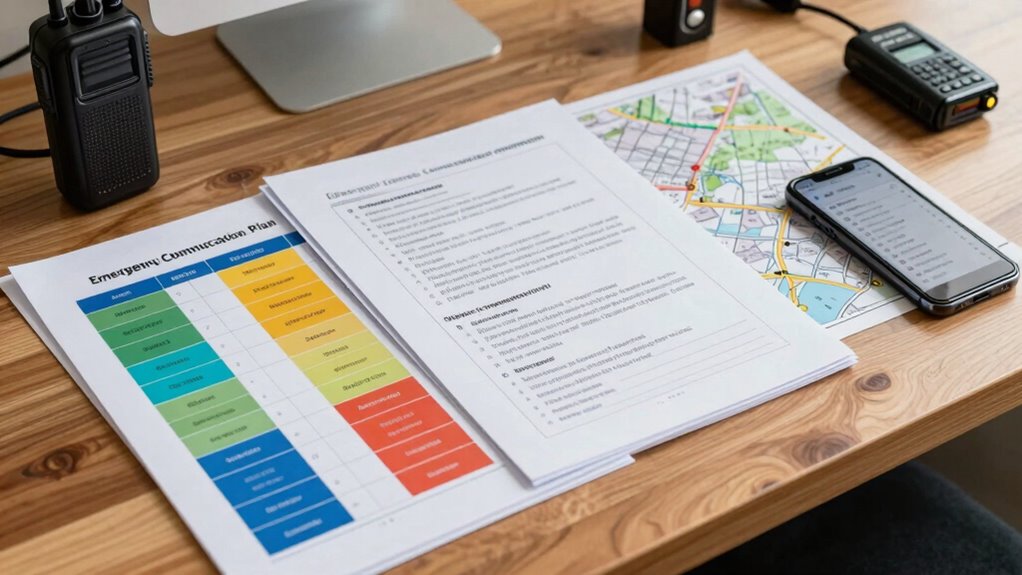

To build a layered emergency communication plan, identify key stakeholders and determine the best channels to reach each group quickly. Establish multiple communication methods like SMS, social media, radio, and physical signs to guarantee message delivery if primary systems fail. Train your team on protocols, conduct regular drills, and document your plan for continuous updates. Staying prepared with layered strategies helps you respond effectively during crises—keep exploring to master each step.

Get emergency and outdoor gear delivered free — and shop member deals
- Fast, free delivery on millions of items
- Access to Prime Big Deal Days deals on October 6–7
- Prime Video, Amazon Music and more included
Key Takeaways
- Identify and understand all key stakeholders, their preferred communication channels, and messaging needs.
- Establish multiple, redundant communication channels like SMS, social media, radio, and physical signage.
- Develop clear protocols and train teams on roles, message delivery, and emergency procedures.
- Regularly test, review, and update the communication plan to adapt to technological and organizational changes.
- Document procedures, conduct drills, and incorporate continuous feedback for ongoing improvement.
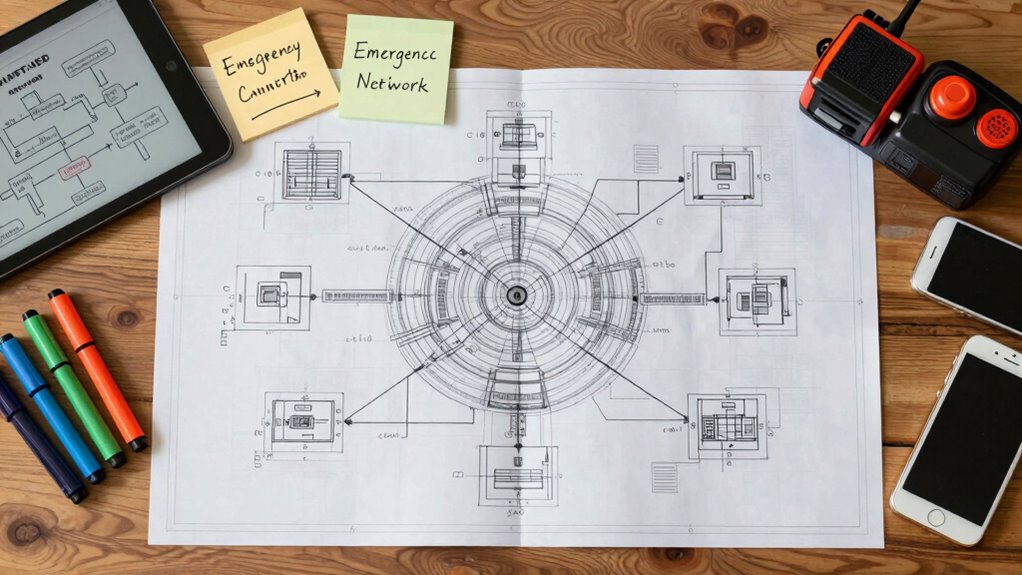
Have you ever wondered what you’d do if an emergency struck and your usual communication channels failed? In such moments, a layered emergency communication plan becomes your lifeline. The goal is to guarantee that, regardless of the situation, your message reaches the right people at the right time. This involves designing multiple, redundant channels for crisis messaging and stakeholder engagement. You need to prepare for all scenarios—power outages, internet disruptions, or even physical barriers—by establishing diverse ways to communicate. Think beyond emails and phone calls; consider text alerts, social media updates, radio broadcasts, and even physical signage if necessary. Each layer acts as a backup, so no matter what happens, your message can get through.
To build an effective layered plan, start by identifying your key stakeholders. These include employees, customers, suppliers, local authorities, and the media. You must understand the best way to reach each group swiftly and reliably. For example, employees might respond best to internal messaging apps or emergency hotlines, while customers could be reached through social media or SMS alerts. Incorporate crisis messaging strategies that are clear, consistent, and calm, avoiding panic or misinformation. Your messages should be pre-crafted and adaptable, so you can respond quickly without scrambling for words during an emergency. Clear protocols for updating stakeholders keep everyone informed and reduce confusion, which is crucial during a crisis.
Identify and understand your key stakeholders to ensure swift, reliable, and effective crisis communication.
Next, establish multiple communication channels that operate independently of each other. For instance, if your primary email system is down, your SMS or voice alert system should activate automatically. Radio announcements or public address systems can serve as last-resort options if digital channels fail. You also want to leverage social media platforms, as they allow rapid dissemination of information to a broad audience. These channels should be tested regularly to ensure functionality and understand their limitations. Training your team on these protocols ensures everyone knows their role and can act quickly when the need arises. Recognizing the importance of emerging trends in digital publishing can help you stay ahead in adapting your communication strategies to new technologies and platforms. Additionally, understanding the diversity of communication channels can significantly improve your reach and effectiveness in crisis situations. Incorporating advanced technology such as automated messaging systems can further enhance responsiveness and reliability.
Finally, document your layered emergency communication plan clearly, and review it periodically. As your organization evolves, so should your plan. Regular drills and simulations help identify gaps and improve your stakeholder engagement strategies. Building a layered plan isn’t a one-time effort; it’s an ongoing process that enhances your resilience. When you implement these multiple lines of communication, you reduce the risk of misinformation and guarantee that your crisis messaging remains effective, no matter the circumstances.
As an affiliate, we earn on qualifying purchases.
Frequently Asked Questions
How Often Should the Communication Plan Be Reviewed and Updated?
You should review your plan frequency at least annually, or whenever there’s a significant change in personnel, technology, or procedures. Establish a review schedule that prompts regular updates, ideally every six months, to guarantee accuracy and effectiveness. Regular reviews help you identify gaps, incorporate new communication tools, and keep everyone informed. Staying proactive with your review schedule ensures your emergency communication plan remains reliable and ready when needed.
What Tools Are Best for Emergency Communication?
You’ll want to choose tools that combine reliable technology and versatile communication modes. Consider using alternative communication channels like satellite phones, messaging apps, and mass notification systems, which guarantee accessibility during disruptions. Integrate technology seamlessly to streamline messages and stay connected quickly. By blending traditional methods with modern tech, you create an all-encompassing, resilient communication network, ensuring everyone stays informed and involved during any emergency.
How Do You Train Staff on the Communication Plan?
You train staff by conducting role-playing drills to simulate emergency scenarios, helping them practice using the communication plan effectively. After each drill, hold feedback sessions to discuss what went well and areas for improvement. Encourage open communication, ask for suggestions, and adapt training accordingly. Regular, realistic exercises ensure your team stays prepared, confident, and understands their roles within the layered emergency communication plan.
What Are Common Pitfalls in Developing a Communication Plan?
You might stumble into pitfalls like neglecting clear crisis messaging, which leaves your team lost in the fog. Overlooking stakeholder coordination creates silos that slow response times. Rushing the plan without testing can turn it into a fragile web. To navigate smoothly, make certain your messaging is precise and consistent, and foster open lines of communication among stakeholders. These steps transform chaos into coordinated choreography, keeping everyone on the same page when it counts most.
How Can You Ensure Communication Plan Accessibility During a Disaster?
You can guarantee your communication plan remains accessible during a disaster by addressing accessibility barriers and promoting language inclusivity. Use multiple formats like text, audio, and visual messages, and incorporate translations for diverse languages. Test your plan regularly, gather feedback, and update it to remove barriers, making sure all community members, including those with disabilities, can receive essential information quickly and effectively during emergencies.
As an affiliate, we earn on qualifying purchases.
Conclusion
By thoughtfully layering your emergency communication plan, you’re creating a safety net that gently guides everyone through challenging times. Remember, the goal isn’t to predict every twist and turn but to foster confidence and clarity when it matters most. With careful planning and a calm approach, you’ll help your team navigate uncertainties smoothly. In doing so, you’re building a resilient foundation that softly supports and reassures, no matter what comes your way.
multi-channel emergency alert system
As an affiliate, we earn on qualifying purchases.
As an affiliate, we earn on qualifying purchases.
As an affiliate, we earn on qualifying purchases.
Fall Picks
fall essentials
As an affiliate, we earn on qualifying purchases.