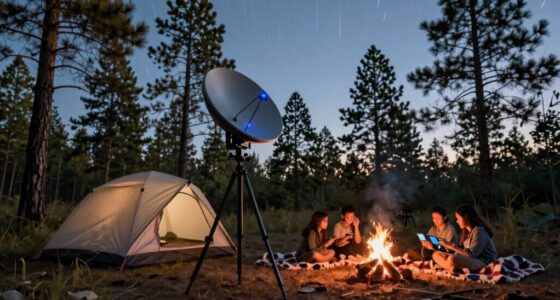

More outdoor setups now function like small operating systems because they integrate smart devices, wireless networks, and automation into a centralized system. You can control lighting, irrigation, and security instantly via apps or voice commands. Sensors monitor weather and environmental conditions to optimize actions automatically. Wireless connectivity allows flexible device placement, creating a seamless, responsive outdoor environment. If you explore further, you’ll discover how these systems enhance efficiency, security, and convenience in outdoor spaces.

Get emergency and outdoor gear delivered free with Prime
- Fast, free delivery on millions of items
- Prime Video, Amazon Music and more included
- Member-only deals all year
Key Takeaways
- Integration of smart devices creates a centralized ecosystem, similar to a small operating system managing multiple components.
- Wireless connectivity enables flexible device placement and seamless communication, akin to an OS’s network management.
- Automation based on environmental data allows outdoor setups to respond intelligently, mimicking OS-driven processes.
- Scalability and customization support expanding device networks, similar to modular OS architectures.
- Centralized control interfaces simplify management, providing a cohesive system like a small operating system.
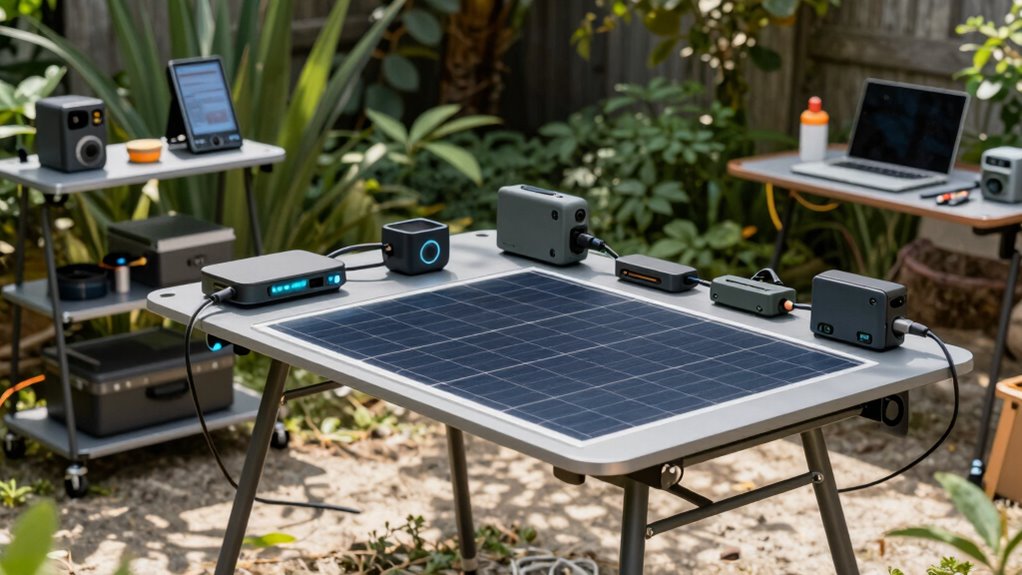
Imagine your outdoor setup functioning like a small operating system—efficiently managing your environment, resources, and activities with seamless coordination. Today’s outdoor spaces are no longer just static areas; they’re becoming integrated ecosystems powered by smart home technology and wireless connectivity. You can control lighting, irrigation, security cameras, and even outdoor speakers from your phone or voice commands, creating a cohesive environment that responds to your needs instantly. This shift is driven by the desire for convenience, security, and energy efficiency, making your outdoor space feel as intuitive and responsive as your indoor smart home.
Wireless connectivity plays a vital role in transforming outdoor setups into small operating systems. With reliable Wi-Fi or dedicated mesh networks, you guarantee that all your devices communicate smoothly without lag or interruption. You’re no longer limited by traditional wired setups that restrict placement and flexibility. Instead, you can position sensors, cameras, and smart devices wherever they’re most effective, knowing they’ll stay connected. This wireless infrastructure supports automation, enabling your outdoor environment to react automatically—watering your garden when soil moisture drops, turning on pathway lights at dusk, or activating security alarms when motion is detected—all coordinated through centralized control systems. Additionally, wireless connectivity ensures your entire setup remains synchronized and responsive over time. Moreover, advances in sensor technology enhance the accuracy and reliability of environmental data, further optimizing automation.
Furthermore, the integration of smart home technology allows for more advanced customization and efficiency. Imagine walking outside and saying, “Set the outdoor lights to blue,” or “Start the sprinkler system,” and watching your commands execute flawlessly. These systems often include sensors that monitor weather, light levels, and humidity, feeding data into your setup and triggering actions without manual input. You’re effectively creating a responsive environment that adapts to your lifestyle, weather conditions, or security concerns, all with minimal effort on your part. In addition, color accuracy in sensors and displays can enhance the precision of environmental monitoring, making automation even more reliable. As a result, outdoor setups are increasingly designed with landscaping and aesthetic elements that complement the technological features, creating a harmonious outdoor environment.
Additionally, the rise of IoT (Internet of Things) devices means your outdoor setup can expand easily. You can add smart sprinklers, outdoor cameras, or even weather stations that communicate with each other. Over time, your outdoor operating system grows smarter, learning patterns and optimizing resource use. All of this is made possible through robust wireless connectivity, which ensures your system remains synchronized and responsive.
In essence, more outdoor setups now work like small operating systems because they combine smart home technology with reliable wireless networks, creating an interconnected, automated environment. You get the convenience of centralized control, the flexibility of wireless device placement, and the intelligence of sensors and automation. It’s a smarter way to enjoy your outdoor space—more efficient, secure, and effortless than ever before.
Popular right now

Dyson Cyclone V10 Origin Cordless Vacuum

Samsung 48-Inch S90F OLED 4K Smart TV (2025)

Apple AirPods Pro with Wireless Charging Case
As an affiliate, we earn on qualifying purchases.
Frequently Asked Questions
How Do Outdoor Setups Ensure Cybersecurity?
You guarantee cybersecurity in outdoor setups by using data encryption to protect sensitive information from unauthorized access. You also implement secure remote access protocols, so only trusted devices can connect to your system. Regular updates and strong passwords further strengthen security. By actively monitoring your network and employing multi-factor authentication, you keep your outdoor setup safe from cyber threats, maintaining control no matter where you’re working from.
What Hardware Is Essential for a Mobile Outdoor OS?
Think of your outdoor setup as a brave explorer, armed with essential tools. You need rugged hardware, like a sturdy backpack, to withstand the elements, and reliable wireless connectivity, like a trusty compass, to stay connected. These are your core gear, ensuring your mobile outdoor OS functions smoothly anywhere. Without rugged hardware and solid wireless links, your setup risks losing its way, just like an explorer without a map.
How Do Outdoor OS Updates Differ From Traditional Ones?
Outdoor OS updates focus on environmental durability, ensuring software stays functional despite weather, dust, or vibrations. You’ll notice updates often include improvements to the user interface, making it easier to navigate outdoors—gloves or sunlight won’t hinder performance. Unlike traditional updates, outdoor OS updates are more frequent and streamlined, designed to keep your system resilient and user-friendly in tough conditions, so your outdoor setup remains reliable and efficient.
Can Outdoor Setups Support Real-Time Data Processing?
Think of your outdoor setup as a tiny superhero, ready to process data in real-time. Yes, it can support real-time data processing, thanks to sensor integration that feeds live info. Data visualization then transforms this chaos into clarity, like a comic strip revealing the hero’s secrets. You’re basically running a mini-OS outdoors, capable of instant analysis and decision-making, making your setup smarter and more responsive than ever.
What Are the Power Management Strategies for Outdoor Systems?
You should focus on energy optimization and battery longevity by implementing efficient power management strategies. Use low-power components, optimize software for minimal energy consumption, and leverage sleep modes during inactivity. Solar panels or rechargeable batteries can supplement power, while monitoring systems help identify energy drains. Regular maintenance guarantees components operate efficiently, extending battery life. These strategies help outdoor setups stay reliable, reduce downtime, and maximize operational efficiency in challenging environments.
Conclusion
Now, your outdoor setup isn’t just a space—it’s a system, a hub that runs smoothly, much like a small operating system. You’ve swapped simple tools for integrated devices, creating a seamless flow of control and connectivity. As your outdoor environment becomes more sophisticated, it’s easy to see how it mirrors the complexity of a computer system—organized, efficient, and ready to adapt. In this digital age, your outdoor setup is no longer just outside; it’s an extension of your smart world.