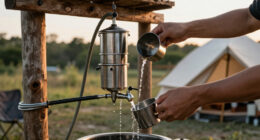
For most backpackers, I’d start with the Sawyer Squeeze with the Cnoc 2-liter bladder: its flexible water-carrying setup suits longer days better than a basic straw. The Katadyn BeFree 1L stands out for quick, simple drinking on the move, while the 6L gravity-fed filter is better for groups and camp use. The main tradeoffs are weight versus capacity, drinking speed versus hands-free filtering, and whether you need filtration or a purifier suited to a wider range of water risks. Read on for the full breakdown of all 15 options and how their designs fit different backpacking plans.

Get emergency and outdoor gear delivered free with Prime
- Fast, free delivery on millions of items
- Prime Video, Amazon Music and more included
- Member-only deals all year
Key Takeaways
- Flexible water handling separates the strongest backpacking picks. The Sawyer Squeeze paired with a Cnoc bladder offers more carrying capacity than the Katadyn BeFree’s 1-liter bottle format.
- The BeFree favors speed and simplicity over carrying volume. Its integrated collapsible bottle is convenient for solo hikers who want to filter and drink without assembling a larger setup.
- Gravity systems serve camp better than trail movement. The 1-gallon and 6-liter models can suit group water needs, but their storage and setup make them less appealing for minimal solo kits.
- Straws trade versatility for compactness. The Lormandy and emergency straw options pack small, but they do not offer the same flexible water storage as squeeze bottles and bladder systems.
- Product claims need to match the water source. The FS-TFC purifier and hand-pump purifier are positioned differently from basic filters, so buyers should verify the stated treatment capabilities rather than assume every filter handles every contaminant.
| Katadyn BeFree 1L Collapsible Water Filter Bottle |  | Best Overall | Capacity: 1 liter | Filter method: 0.1-micron hollow-fiber membrane | Maximum flow rate: 2 liters per minute | VIEW LATEST PRICE | See Our Full Breakdown |
| FS-TFC Pocket Water Filter, 0.01-Micron Portable Purifier |  | Best for Filling a Hydration Pack | Filtration: Sediment prefilter, 0.01-micron membrane, and activated carbon fiber | Purification method: Activated carbon and ultrafiltration | Flow rate: 500 mL per minute | VIEW LATEST PRICE | See Our Full Breakdown |
| Lormandy Personal Water Filter Straws, 5-Pack |  | Best for Groups and Shared Kits | Pack count: 5 filters | Filtration method: 0.1-micron hollow-fiber membrane | Filter capacity: 1,320 gallons | VIEW LATEST PRICE | See Our Full Breakdown |
| Practical Survival Reusable Emergency Water Filter Straws, 2-Pack |  | Best for Backflushing Maintenance | Quantity: 2 filters | Filtration method: Hollow-fiber membrane | Filtration size: Down to 0.1 micron | VIEW LATEST PRICE | See Our Full Breakdown |
| JEYOGO 1 L Collapsible Water Filter Bottle, 0.1 Micron, Arctic White |  | Best for Compact Packing | Capacity: 1,000 ml | Filter type: 0.1-micron hollow-fiber membrane | Maximum flow rate: Up to 1 liter per minute in description; 2 liters per minute in specifications | VIEW LATEST PRICE | See Our Full Breakdown |
| Sawyer Squeeze Water Filtration System with Cnoc 2-Liter Bladder, Blue |  | Best for Larger Water Carries | Filter type: Hollow-fiber membrane | Pore size: 0.1 micron | Bladder capacity: 2 liters (64 ounces) | VIEW LATEST PRICE | See Our Full Breakdown |
| Lormandy Portable Water Filter Straw for Hiking, Camping, and Travel |  | Best for Direct-Sip Simplicity | Model: Q3 Blue | Filtration method: 0.1-micron hollow-fiber UF membrane | Maximum flow rate: 800 milliliters per minute | VIEW LATEST PRICE | See Our Full Breakdown |
| Sawyer Products Squeeze Water Filtration System with Two 32 oz Pouches, Straw, and Hydration Pack Adapters |  | Best for Flexible Bottle and Pack Setups | Filter type: Hollow-fiber membrane | Absolute pore size: 0.1 micron | Filter weight: 2 ounces | VIEW LATEST PRICE | See Our Full Breakdown |
| Lormandy Portable Water Filter Straw | 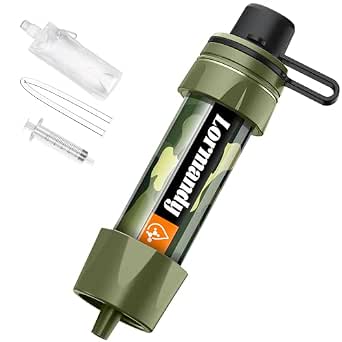 | Best for Minimalist Daypacks | Model: Q3 Green | Filtration method: 0.1-micron hollow-fiber UF membrane | Filter capacity: 1,300 gallons | VIEW LATEST PRICE | See Our Full Breakdown |
| 1-Gallon Gravity-Fed Water Filter System for Camping |  | Best for Camp Water Without Squeezing | Capacity: 1 gallon (3.78 liters) | Bag material: Food-grade TPU | Filter: 0.1-micron hollow-fiber membrane and activated carbon | VIEW LATEST PRICE | See Our Full Breakdown |
| Sawyer Products SP120 Mini Water Filtration System with Cleaning Plunger, Red |  | Best Compact Filter | Filtration method: Hollow-fiber membrane | Filter pore size: 0.1 micron absolute | Filter capacity: Up to 100,000 gallons | VIEW LATEST PRICE | See Our Full Breakdown |
| 6L Gravity-Fed Water Filter with 4-Stage Filtration |  | Best for Backpacking Groups | Capacity: 6 liters | Filtration stages: 4 | Filter pore size: 0.1 micron | VIEW LATEST PRICE | See Our Full Breakdown |
| Sawyer Products MINI Water Filtration System, Blue | 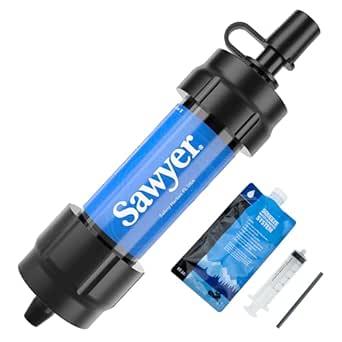 | Best Starter Kit | Filtration method: Hollow-fiber membrane | Filter capacity: Up to 100,000 gallons | Weight: 2 oz (41 g) | VIEW LATEST PRICE | See Our Full Breakdown |
| Portable 5-Layer Water Filter Straw Kit for Camping and Hiking |  | Best Accessory-Rich Straw Kit | Filtration method: Activated carbon and hollow-fiber membrane | Filter capacity: 5,000 liters | Filter life: 3 years | VIEW LATEST PRICE | See Our Full Breakdown |
| Purewell Portable Hand Pump Water Purifier with Replaceable Carbon Filter |  | Best for Faster Manual Filling | Filtration: 0.01-micron hollow-fiber ultrafiltration, activated carbon, and PP cotton | Maximum flow rate: 1,400 ml/min | Filter capacity: 793 gallons (3,000 L) | VIEW LATEST PRICE | See Our Full Breakdown |
| portable water filters for backpacking | Weight | Dimensions | Filter capacity |
|---|---|---|---|
| Katadyn BeFree 1L Collapsible | 2.24 ounces | 4.25 × 10 × 3 inches | Up to 1,000 liters |
| FS-TFC Pocket Water Filter | 8.8 ounces | 3 × 1.3 × 6.1 inches | — |
| Lormandy Personal Water Filter | 50 g | 8 × 1.2 × 1.2 inches | 1,320 gallons |
| Practical Survival Reusable Em | 56.7 g | 8 × 1.5 × 1.5 inches | — |
| JEYOGO 1 L Collapsible Water F | 120 g | 3.54 × 3.54 × 11.02 inches | — |
| Sawyer Squeeze Water Filtratio | Less than 6 ounces | 5.5 × 2 inches | — |
| Lormandy Portable Water Filter | 80 grams | 6 × 2 × 2 inches | 5,000 liters |
| Sawyer Products Squeeze Water | — | — | — |
| Lormandy Portable Water Filter | 0.11 kilograms | 6 × 2 × 2 inches | 1,300 gallons |
| 1-Gallon Gravity-Fed Water Fil | — | — | Up to 1,320 gallons (5,000 liters) |
| Sawyer Products SP120 Mini Wat | 2 oz (41 g) | 1.35 × 1.35 × 1.35 in | Up to 100,000 gallons |
| 6L Gravity-Fed Water Filter wi | 11.2 ounces | 9 × 9 × 17.7 in | Up to 1,320 gallons (5,000 liters) |
| Sawyer Products MINI Water Fil | 2 oz (41 g) | 4 × 3 × 8 in | Up to 100,000 gallons |
| Portable 5-Layer Water Filter | 115 g | 1.18 × 1.18 × 6.29 in | 5,000 liters |
| Purewell Portable Hand Pump Wa | 1 lb | 6.69 × 3.14 × 1.96 in | 793 gallons (3,000 L) |
More Details on Our Top Picks
Katadyn BeFree 1L Collapsible Water Filter Bottle
The Katadyn BeFree is a strong fit for backpackers who want to collect water and drink without carrying a separate bottle and pump. Its 1-liter collapsible body packs down when empty, while the stated flow rate of up to 2 liters per minute supports quick drinking breaks. The 0.1-micron hollow-fiber filter can be cleaned by shaking or swishing, a simpler routine than handling a separate cleaning tool. Compared with the JEYOGO 1 L Collapsible Water Filter Bottle, the BeFree has a lighter listed weight and a clearer maximum flow specification. Its tradeoff is the squeeze-to-drink design: it is less convenient for filling a hydration reservoir or serving a group than a pump-style filter. The 1,000-liter filter capacity also makes it a less suitable choice for very high-volume use.
Pros:- Collapsible 1-liter bottle packs flat when empty
- Stated flow rate of up to 2 liters per minute supports quick drinking
- Membrane can be cleaned by shaking or swishing without tools
- Listed weight is only 2.24 ounces
Cons:- Requires squeezing to draw water through the filter
- Filter capacity is listed at up to 1,000 liters
Best for: Solo backpackers who want a lightweight, collapsible bottle for quick water collection and drinking on the trail
Not ideal for: Hikers who need to pump water into a hydration reservoir, share water with a group, or prioritize a higher stated filter capacity
- Capacity:1 liter
- Filter method:0.1-micron hollow-fiber membrane
- Maximum flow rate:2 liters per minute
- Filter capacity:Up to 1,000 liters
- Weight:2.24 ounces
- Dimensions:4.25 × 10 × 3 inches
- Material:Synthetic
- Model number:8018006
Our verdict“Choose the Katadyn BeFree if you want a lightweight, fast-drinking bottle filter and do not need a pump or a higher-capacity system.”
FS-TFC Pocket Water Filter, 0.01-Micron Portable Purifier
The FS-TFC suits backpackers who want to pump water into a bottle or hydration pack, rather than drink through a squeeze bottle or straw. Its manual operation gives it more flexibility at camp, and the combination of a sediment prefilter, 0.01-micron membrane, and activated carbon fiber is distinct from the simpler hollow-fiber setups in the Katadyn BeFree and Practical Survival straws. Activated carbon is also intended to reduce odors. The stated 4,000-liter capacity is higher than the BeFree’s listed capacity, but that comes with a weight of 8.8 ounces and a slower stated flow of 500 mL per minute. Pumping adds effort and takes time, especially when filling a larger reservoir. This filter is specified for freshwater sources, so I would not choose it for water outside that use case.
Pros:- Can pump filtered water into a bottle or hydration pack
- Combines a sediment prefilter, membrane, and activated carbon fiber
- Listed filter capacity is 4,000 liters
- Replaceable filter element
Cons:- Manual pumping takes more effort than drinking through the Katadyn BeFree
- Listed weight of 8.8 ounces is heavier than the straw filters
- Designed for freshwater sources
Best for: Backpackers who prefer to pump freshwater into a hydration pack or bottle and want a filter with a replaceable element
Not ideal for: Ultralight hikers or anyone who wants to drink directly without pumping, since it weighs more than the straw and bottle options
- Filtration:Sediment prefilter, 0.01-micron membrane, and activated carbon fiber
- Purification method:Activated carbon and ultrafiltration
- Flow rate:500 mL per minute
- Capacity:4,000 liters
- Dimensions:3 × 1.3 × 6.1 inches
- Weight:8.8 ounces
- Power source:Manual
- Maximum operating temperature:90 °F
- Filter element:Replaceable
Our verdict“Pick the FS-TFC if filling a hydration pack matters more to you than minimizing weight or avoiding manual pumping.”
Lormandy Personal Water Filter Straws, 5-Pack
This five-pack is aimed at groups that want one compact filter per person, or hikers assembling several emergency kits. Each straw uses a 0.1-micron hollow-fiber membrane, and the included pouch, tubing, syringes, and clips give the set more ways to collect and handle water than the single Practical Survival straw pair. The listed 50-gram weight makes an individual straw easy to carry, though the full set and accessories are less compelling for a solo backpacker trying to keep a kit simple. The maximum flow rate is 0.2 gpm, so direct drinking may feel slower than using the Katadyn BeFree’s stated 2-liter-per-minute flow. The product description covers sediment and particles; it does not describe removal of dissolved contaminants, which limits how broadly I would rely on it.
Pros:- Five filters support group use or multiple emergency kits
- Each straw uses a 0.1-micron hollow-fiber membrane
- Includes a water pouch, silicone tubing, syringes, and rope clips
- Listed weight is 50 g
Cons:- Maximum flow rate is listed at 0.2 gpm
- Description covers mechanical filtration of sediment and particles, not dissolved contaminants
- The multi-filter set and accessories may be unnecessary bulk for a solo hiker
Best for: Small hiking groups or trip leaders who want a separate lightweight straw for each person, plus shared water-handling accessories
Not ideal for: Solo ultralight backpackers who need just one filter, or buyers seeking stated treatment for dissolved contaminants
- Pack count:5 filters
- Filtration method:0.1-micron hollow-fiber membrane
- Filter capacity:1,320 gallons
- Filter life:5 years
- Maximum flow rate:0.2 gpm
- Dimensions:8 × 1.2 × 1.2 inches
- Weight:50 g
- Temperature range:32 °F to 132 °F
- Included components:5 filters, 5 syringes, 5 rope clips, 1 water pouch, and 1 m silicone tubing
Our verdict“Choose this set when several hikers need their own compact filter, but opt for the Katadyn BeFree if you want a faster-drinking bottle for one person.”
Practical Survival Reusable Emergency Water Filter Straws, 2-Pack
The Practical Survival two-pack stands out for backpackers who want individual drinking straws with a dedicated cleaning tool. Each filter includes a backflushing plunger, giving maintenance a more direct method than the shake-and-swish cleaning described for the Katadyn BeFree. The hollow-fiber membrane is specified down to 0.1 micron, with the product data stating reduction of bacteria, parasites, and microplastics. Compared with the Lormandy five-pack, this set is a smaller purchase for a pair or solo hiker who wants a spare, but it offers fewer filters and fewer water-handling accessories. At 8 inches long, each straw needs room in a pack and requires drawing water directly through it. That makes it less useful for filling a hydration bladder or collecting water for a group.
Pros:- Each filter includes a backflushing plunger for cleaning
- Hollow-fiber membrane is specified down to 0.1 micron
- Two filters suit a pair or provide a spare
- Listed weight is 56.7 g per product set
Cons:- Requires drawing water directly through the straw
- Does not provide the pouch and tubing included with the Lormandy five-pack
- Filter lifespan is listed at up to 1,800 gallons per filter
Best for: Pairs or solo backpackers who want a spare straw and prefer a filter that includes its own backflushing plunger
Not ideal for: Hikers who need to fill a reservoir or gather water for others, since the straw is designed for direct drinking
- Quantity:2 filters
- Filtration method:Hollow-fiber membrane
- Filtration size:Down to 0.1 micron
- Bacteria and parasite reduction:Over 99.99%
- Filter lifespan:Up to 1,800 gallons per filter; up to 10 years
- Dimensions:8 × 1.5 × 1.5 inches
- Weight:56.7 g
- Included components:Backflushing plunger per filter and user manual
Our verdict“Choose the Practical Survival straws if backflushing and a two-filter set matter more than reservoir filling or group water handling.”
JEYOGO 1 L Collapsible Water Filter Bottle, 0.1 Micron, Arctic White
The JEYOGO bottle gives backpackers a folding 1-liter water container with an integrated 0.1-micron hollow-fiber filter. Its flexible BPA-free TPU body can be squeezed to drink and folded for storage, much like the Katadyn BeFree, while shake cleaning avoids carrying a syringe. A stated filter integrity check is a useful addition for hikers checking a filter after a drop or storage. The key comparison is flow: the description says up to 1 liter per minute, while the specifications list 2 liters per minute, so I would not plan around the higher figure. The BeFree’s listed flow rate is more consistent and its listed weight is lower; JEYOGO’s 120-gram weight is still compact, but not as light. It is designed for freshwater sources, and the conflicting flow data makes performance harder to predict.
Pros:- Collapsible 1-liter bottle saves space when empty
- BPA-free TPU body is flexible and squeezable
- Shake cleaning does not require a syringe
- Includes a stated filter integrity check
Cons:- Flow rate is listed as both 1 and 2 liters per minute
- Listed weight of 120 g is higher than the Katadyn BeFree’s 2.24 ounces
- Designed for freshwater sources
Best for: Backpackers who want a collapsible, squeezable bottle and value a stated filter integrity check after storage or accidental impact
Not ideal for: Hikers who need a dependable flow-rate figure or who want the lightest listed bottle filter, since the JEYOGO data is inconsistent and heavier than the BeFree
- Capacity:1,000 ml
- Filter type:0.1-micron hollow-fiber membrane
- Maximum flow rate:Up to 1 liter per minute in description; 2 liters per minute in specifications
- Bottle material:0.4 mm BPA-free thermoplastic polyurethane (TPU)
- Dimensions:3.54 × 3.54 × 11.02 inches
- Weight:120 g
- Maximum supported TDS:1,000 ppm
- Color:Arctic White
- Model:JYWFB2603
Our verdict“Choose the JEYOGO if compact folding and the integrity check appeal to you, but prefer the BeFree if a clearer flow specification and lower listed weight matter more.”
Sawyer Squeeze Water Filtration System with Cnoc 2-Liter Bladder, Blue
The 2-liter Cnoc bladder gives this Sawyer Squeeze a useful edge for backpackers who want to collect more water per trip to a source. Its under-6-ounce weight keeps that capacity from adding much pack weight, while the 0.1-micron hollow-fiber filter is described as reducing bacteria, protozoa, cysts, sediment, and microplastics. Unlike the Sawyer Products Squeeze with two 32-ounce pouches, this kit favors one larger reservoir over two smaller fill-and-carry bags. The wide opening can also make filling easier at shallow or awkward sources.
The tradeoff is that this remains a manual squeeze system: treating water takes effort, and flow may call for backwashing. Bottle connections and gravity use add flexibility, but not the hands-free convenience of the separate 1-gallon gravity system. I’d choose it for a solo hiker or pair prioritizing capacity and low weight, not for someone who wants quick, effortless filtering.
Pros:- Complete system weighs less than 6 ounces
- 2-liter TPU bladder holds more water than the included pouches in the Sawyer Squeeze two-pouch kit
- Backwashable filter can be cleaned to restore flow
- Wide-mouth bladder and bottle or gravity compatibility offer flexible filling and use
Cons:- Manual squeezing takes effort and can slow water preparation
- Filter may need backwashing to maintain flow
- Bladder height is not specified, making packed dimensions harder to assess
Best for: Solo backpackers or pairs who want a lightweight filter and a larger reservoir for carrying water between sources
Not ideal for: Hikers who dislike squeezing, want hands-free filtering, or prefer two separate smaller pouches
- Filter type:Hollow-fiber membrane
- Pore size:0.1 micron
- Bladder capacity:2 liters (64 ounces)
- Bladder material:TPU; BPA-free and PVC-free
- Weight:Less than 6 ounces
- Dimensions:5.5 × 2 inches
- Operation:Manual squeeze; compatible with gravity filtration
- Compatibility:Standard threaded water or soda bottles
- Included cleaning accessories:Cleaning coupling and cleaning plunger
Our verdict“Choose this kit if you want a low-weight Sawyer filter paired with a larger bladder, and skip it if you want water to filter without squeezing.”
Lormandy Portable Water Filter Straw for Hiking, Camping, and Travel
For a hiker who wants to drink straight from a water source, the Lormandy Q3 Blue avoids the squeeze-and-fill routine of the Sawyer Squeeze systems. At 80 grams and 6 inches long, it is small enough for a daypack, and the included pouch and tubing offer ways to draw or carry water beyond direct sipping. The listed 0.1-micron hollow-fiber UF membrane filters sediment and particles, which is a narrower claim than the Sawyer Squeeze’s stated reduction of bacteria, protozoa, cysts, and microplastics. That difference matters when matching a filter to a route’s water risks.
The product lists a maximum flow rate of 800 milliliters per minute and a 5,000-liter capacity, though actual use depends on conditions. Its easy drinking setup comes with less flexibility for preparing larger quantities at camp than the 1-gallon gravity-fed kit. I’d pick it for simple, light carry on routes with suitable sources, but not as my choice when broader contaminant claims are a priority.
Pros:- Compact 6 × 2 × 2-inch body weighs 80 grams
- Direct sipping avoids squeezing water through a pouch
- Includes a water pouch, silicone tubing, and syringe
- Listed filter capacity is 5,000 liters
Cons:- Product description claims filtration of sediment and particles, not broader contaminant reduction
- Maximum flow rate is listed as 800 milliliters per minute
- Direct-sip format is less convenient than a gravity system for preparing camp water
Best for: Day hikers who want a compact direct-sip filter for outdoor sources and value minimal setup
Not ideal for: Backpackers who need clearly stated reduction of bacteria and protozoa, or who regularly filter water for a group
- Model:Q3 Blue
- Filtration method:0.1-micron hollow-fiber UF membrane
- Maximum flow rate:800 milliliters per minute
- Filter capacity:5,000 liters
- Dimensions:6 × 2 × 2 inches
- Weight:80 grams
- Material:BPA-free, food-grade ABS
- Temperature range:32–122 °F
- Included components:Filter, water pouch, silicone tubing, syringe, and manual
Our verdict“Pick the Q3 Blue for compact, direct-sip use when its stated particle-filtration claims fit your needs.”
Sawyer Products Squeeze Water Filtration System with Two 32 oz Pouches, Straw, and Hydration Pack Adapters
This Sawyer Squeeze kit suits backpackers who want multiple ways to carry and drink filtered water. The 2-ounce filter pairs with two 32-ounce collapsible pouches, a straw, and hydration pack adapters; it can also connect to compatible 28 mm bottles or be arranged for gravity use. Compared with the Sawyer Squeeze and Cnoc 2-liter bladder, this package trades one larger reservoir for two smaller pouches, which can make it easier to separate water between hikers or carry a spare. Its 0.1-micron hollow-fiber membrane is described as reducing bacteria, protozoa, cysts, sediment, and microplastics.
The main compromise is the work involved: filling a pouch and squeezing water through the filter takes time, while gravity use needs a suitable setup. Bottle compatibility also depends on standard 28 mm threads, so a preferred bottle may not fit. The filter is backwashable, and its stated lifespan is up to 100,000 gallons, but that rating doesn’t remove the need for cleaning and care. I’d choose this over the direct-sip Lormandy straw for adaptable camp use, not for hands-free filtering.
Pros:- Filter weighs only 2 ounces
- Two collapsible 32-ounce pouches pack down and allow separate water carries
- Includes a straw and hydration pack adapters
- Backwashable and compatible with bottle or gravity setups
Cons:- Squeezing or setting up gravity filtration takes time and effort
- Bottle use depends on standard 28 mm threads
- Pouch capacity is smaller than the 2-liter Cnoc bladder included with the other Sawyer kit
Best for: Backpackers who want a lightweight filter that can serve pouches, compatible bottles, hydration packs, and a gravity setup
Not ideal for: Hikers who want to sip directly without handling a filter, or whose bottles lack standard 28 mm threads
- Filter type:Hollow-fiber membrane
- Absolute pore size:0.1 micron
- Filter weight:2 ounces
- Pouches:Two reusable 32-ounce collapsible pouches
- Bottle compatibility:Most standard 28 mm plastic water bottles
- Filter lifespan:Up to 100,000 gallons
- Included accessories:Drinking straw, hydration pack adapters, and mesh storage bag
- Operation:Manual squeeze or gravity setup
Our verdict“Choose this Sawyer kit for lightweight, adaptable connections and two separate pouches, provided you are comfortable squeezing or setting up gravity filtration.”
Lormandy Portable Water Filter Straw
The green Lormandy Q3 is aimed at hikers who want a small filter for direct sipping rather than a full water-treatment setup. Its 6 × 2 × 2-inch ABS body and listed 0.11-kilogram weight make it portable, while a 0.1-micron hollow-fiber UF membrane is described as filtering sediment and particles. The package includes a pouch, tubing, and syringe, so it offers more than a bare straw. Compared with the Q3 Blue, this listing gives a 1,300-gallon capacity and a 0.2-gpm maximum flow rate rather than the Blue model’s 5,000-liter capacity and 800-milliliter-per-minute figure. Those ratings are not directly interchangeable, so I’d treat them as model-specific claims.
Its direct-sip design is simpler than either Sawyer squeeze kit, but the stated filtration claim is narrower than Sawyer’s listed reduction of bacteria and protozoa. The limited temperature range also constrains use. This is a compact option for short outings where its particle-filtration description fits the need, not a substitute for broader treatment claims.
Pros:- Compact 6 × 2 × 2-inch format for a pocket or daypack
- Direct sipping does not require squeezing a pouch
- Includes a water pouch, silicone tubing, and syringe
- Reusable filter is listed with a 1,300-gallon capacity
Cons:- Product description claims sediment and particle filtration rather than broader contaminant reduction
- Maximum flow rate is listed as 0.2 gallons per minute
- Temperature range is limited to 32–132 °F
Best for: Minimalist day hikers who want a reusable direct-sip filter and value compact carry over a larger camp-water setup
Not ideal for: Backpackers seeking stated bacteria and protozoa reduction, higher-volume group filtering, or use outside the listed temperature range
- Model:Q3 Green
- Filtration method:0.1-micron hollow-fiber UF membrane
- Filter capacity:1,300 gallons
- Maximum flow rate:0.2 gallons per minute
- Dimensions:6 × 2 × 2 inches
- Weight:0.11 kilograms
- Material:BPA-free, food-grade ABS
- Temperature range:32–132 °F
- Included components:Filter, water pouch, silicone tubing, syringe, and manual
Our verdict“Choose the green Q3 for compact direct-sip use on outings where its stated particle filtration and temperature limits suit your plans.”
1-Gallon Gravity-Fed Water Filter System for Camping
This kit makes the most sense when I want to filter water at camp while doing something else. Its 1-gallon TPU bag hangs for gravity-fed operation, avoiding the squeezing required by both Sawyer Squeeze kits and the direct-sip routine of the Lormandy straws. The listed filter combines a 0.1-micron hollow-fiber membrane and activated carbon, and the product states a capacity of up to 1,320 gallons. That gives it a different role from the lighter personal filters: it is built around collecting a batch of water, not drinking directly from a source on the move.
The capacity is useful for a solo camper or small group, but a gallon may mean repeat trips when several people need water. Flow figures are inconsistent: the listing gives up to 0.5 liters per minute in one place and 3 liters per minute in another, and says performance can vary with source conditions. I’d favor this over a squeeze filter for hands-free camp use, but not for a moving backpacker prioritizing the smallest, simplest personal kit.
Pros:- Gravity-fed operation needs no pumping, batteries, or electricity
- 1-gallon food-grade TPU bag provides batch capacity for camp
- Filter combines a hollow-fiber membrane with activated carbon
- Replaceable filter is listed for up to 1,320 gallons
Cons:- One-gallon capacity may require frequent refills for larger groups
- Flow information conflicts, listing both 0.5 and 3 liters per minute
- Filtration performance and flow can vary with water conditions
Best for: Backpackers and campers who want to hang a bag and filter a batch of water at camp without pumping or squeezing
Not ideal for: Fast-moving solo hikers who prioritize minimal bulk, or larger groups that would need more than a gallon between refills
- Capacity:1 gallon (3.78 liters)
- Bag material:Food-grade TPU
- Filter:0.1-micron hollow-fiber membrane and activated carbon
- Filter capacity:Up to 1,320 gallons (5,000 liters)
- Flow rate:Listed as up to 0.5 liters per minute and 3 liters per minute
- Power source:Gravity-fed; no power required
- Standards:Designed to meet NSF/ANSI 42, 372, and 401
- Features:BPA-free, reusable, lightweight, portable, and easy to clean
Our verdict“Pick this system for hands-free batch filtering at camp, but choose a smaller personal filter if low bulk and on-the-move drinking matter more.”
Sawyer Products SP120 Mini Water Filtration System with Cleaning Plunger, Red
The Sawyer SP120 Mini is a strong fit when pack weight and storage space matter more than fast water collection. At 2 ounces, it can attach to a standard 28 mm bottle, pouch, or hydration pack, or work as a drinking straw. Its 0.1-micron hollow-fiber membrane is rated to reduce bacteria, protozoa, and microplastics, while the stated 100,000-gallon capacity sets it apart from the shorter-rated 5-Layer Water Filter Straw Kit. That capacity is a rating, not a reason to skip cleaning or follow-up care.
The tradeoff is speed: the listed flow rate is just 0.01 gpm, and filtering requires manual effort. Compared with the included-pouch Sawyer MINI in blue, this red version’s supplied components emphasize the filter and cleaning plunger, so check your setup needs before heading out. I’d choose it for solo trips where versatile connections and low weight matter more than filling containers quickly.
Pros:- Weighs 2 ounces and has a compact filter body.
- Works with standard 28 mm bottles, hydration packs, pouches, or as a straw.
- Rated for up to 100,000 gallons of filtration.
- Includes a cleaning plunger for maintenance.
Cons:- Listed flow rate of 0.01 gpm makes water collection slow.
- Manual filtering takes effort and is less convenient for repeated group fills.
Best for: Solo backpackers who want a very light filter that can connect to a standard bottle, pouch, or hydration pack.
Not ideal for: Hikers who regularly need to filter several liters quickly or want an included squeeze pouch and straw.
- Filtration method:Hollow-fiber membrane
- Filter pore size:0.1 micron absolute
- Filter capacity:Up to 100,000 gallons
- Maximum flow rate:0.01 gpm
- Weight:2 oz (41 g)
- Dimensions:1.35 × 1.35 × 1.35 in
- Bottle compatibility:Standard 28 mm disposable bottles
- Included components:Sawyer MINI filter and cleaning plunger
Our verdict“Choose the SP120 Mini for a compact, versatile solo filter if you can accept slow manual flow.”
6L Gravity-Fed Water Filter with 4-Stage Filtration
For a group sharing camp water, this 6-liter gravity filter serves a different purpose from the personal Sawyer SP120 Mini: it can supply several people without each hiker filtering a separate bottle. The hanging bag and pump-free operation reduce hands-on work, while the four-stage system pairs a 0.1-micron hollow-fiber membrane with activated carbon. At 11.2 ounces, it is heavier and bulkier than a personal filter, but that load buys a shared water station for a group of three to six.
The main drawback is setup: you need a suitable elevated place to hang the bag, which may be inconvenient at exposed camps. The listed flow figures also conflict—0.5 liters per minute versus 1.5 liters per hour—so I wouldn’t plan camp water needs around the faster number without clarification. Compared with the lighter Sawyer MINI, this makes more sense for shared camp use than for a solo hiker trying to keep gear minimal.
Pros:- Six-liter bag supports shared water needs for a small group.
- Gravity operation needs no pumping, batteries, or electricity.
- Combines a hollow-fiber membrane with activated carbon in a four-stage system.
- Replaceable filter is rated for up to 1,320 gallons.
Cons:- Requires a suitable elevated place to hang the bag.
- Published flow figures conflict, making fill-time expectations uncertain.
- At 11.2 ounces, it weighs more than compact personal filters such as the Sawyer SP120 Mini.
Best for: Backpacking groups of three to six who want to filter shared camp water without hand-pumping.
Not ideal for: Solo hikers or trips without a reliable place to hang the bag; its group capacity and setup can be more gear than they need.
- Capacity:6 liters
- Filtration stages:4
- Filter pore size:0.1 micron
- Filter capacity:Up to 1,320 gallons (5,000 liters)
- Listed flow rates:0.5 liters per minute and 1.5 liters per hour
- Weight:11.2 ounces
- Dimensions:9 × 9 × 17.7 in
- Power source:Gravity filtration; no power required
Our verdict“Pick this gravity system for group camp water if you have a place to hang it and can tolerate unclear flow-rate data.”
Sawyer Products MINI Water Filtration System, Blue
The blue Sawyer MINI earns a beginner-friendly spot because its kit includes the pieces needed to try several ways of filtering: a 16-ounce squeeze pouch, a drinking straw, and a cleaning plunger. Its 2-ounce filter connects to a compatible 28 mm bottle or hydration-pack tubing, so a new backpacker can start with the pouch and adapt later. Like the red SP120 Mini, it uses hollow-fiber filtration and is rated for up to 100,000 gallons; the main distinction here is the supplied pouch and straw, not a different filter capacity.
That flexibility comes with a slow, manual routine and some upkeep. Hydration-pack tubing is sold separately, and the included pouch is only 16 ounces, so filling larger containers takes repeated squeezes. Compared with the 6L Gravity-Fed Water Filter, this Sawyer is much more compact for an individual, but it does not provide hands-free group filtration. I’d pick it as an adaptable first filter for solo trips, not as the quickest option at camp.
Pros:- The 2-ounce filter is easy to carry on a backpacking trip.
- Includes a 16-ounce reusable squeeze pouch, 7-inch straw, and cleaning plunger.
- Can connect to standard 28 mm bottles or separately purchased hydration-pack tubing.
- Rated to reduce bacteria, protozoa, and microplastics.
Cons:- Manual squeezing and the small pouch make larger fills repetitive.
- Hydration-pack tubing is sold separately.
- Requires cleaning with the included plunger.
Best for: New solo backpackers who want a compact filter kit with a pouch and straw for learning which connection style suits them.
Not ideal for: Hikers who need fast bulk water for a group or want hydration-pack tubing included in the package.
- Filtration method:Hollow-fiber membrane
- Filter capacity:Up to 100,000 gallons
- Weight:2 oz (41 g)
- Dimensions:4 × 3 × 8 in
- Included accessories:16 oz reusable squeeze pouch, 7 in drinking straw, cleaning plunger
- Bottle compatibility:Standard 28 mm disposable bottles
- Operating mode:Manual
- Contaminant reduction:99.99999% of bacteria, 99.9999% of protozoa, and 100% of microplastics
Our verdict“Choose the blue Sawyer MINI if you want a light starter kit with multiple ways to drink, rather than a fast group filter.”
Portable 5-Layer Water Filter Straw Kit for Camping and Hiking
This 5-Layer Water Filter Straw Kit suits hikers who want more than a bare filter: the package includes a silicone tube, storage bag, cleaning plunger, and hook, alongside the straw itself. It can be used directly or connected to a compatible 28 mm-threaded bottle or hydration bladder. Activated carbon is included with the hollow-fiber membrane, and the listing claims odor removal—useful when taste is a concern. Compared with the 2-ounce Sawyer MINI options, this kit weighs 115 grams, so its extras make it a less weight-focused choice.
The stated filter life is 5,000 liters, shorter than the Sawyer filters’ 100,000-gallon rating, and the product also lists a three-year service life. Its 10-nanometer claim should be read as a listed specification, not treated as a substitute for checking the manufacturer’s full contaminant data. Bottle-connected use depends on a compatible thread, and the kit’s extra components may go unused by hikers who prefer a simple personal straw. I’d consider it for adaptable setups, not maximum capacity or minimum weight.
Pros:- Can be used directly or connected to a compatible bottle or hydration bladder.
- Includes silicone tubing, water storage bag, cleaning plunger, and hook.
- Combines activated carbon and hollow-fiber filtration.
- Compact body measures 6.29 inches long.
Cons:- At 115 grams, it weighs more than the 2-ounce Sawyer MINI filters.
- Listed capacity of 5,000 liters is far below the Sawyer MINI’s stated capacity.
- Bottle-connected use requires a compatible 28 mm-threaded bottle.
Best for: Backpackers who want a straw-style filter with included tubing, storage bag, and cleaning accessories for several connection options.
Not ideal for: Ultralight hikers focused on the lowest pack weight or buyers who want the longest stated filter capacity in this lineup.
- Filtration method:Activated carbon and hollow-fiber membrane
- Filter capacity:5,000 liters
- Filter life:3 years
- Weight:115 g
- Dimensions:1.18 × 1.18 × 6.29 in
- Bottle compatibility:Standard 28 mm-threaded bottles
- Included components:Filter straw, silicone tube, water storage bag, cleaning plunger, and hook
Our verdict“Choose this kit if its included tubing and accessories suit your setup, but skip it if low weight or long filter capacity is your priority.”
Purewell Portable Hand Pump Water Purifier with Replaceable Carbon Filter
The Purewell hand-pump purifier is the pick here for hikers who prefer pumping water into a container over squeezing a pouch or drinking through a straw. Its listed flow rate reaches 1,400 ml per minute, a more direct approach to filling than the slow 0.01 gpm Sawyer SP120 Mini. The filter combines 0.01-micron hollow-fiber ultrafiltration with activated carbon and PP cotton, and it runs without electricity. Tubing, a hose clip, and a carry bag are included, while the transparent lid can serve as a drinking cup.
The tradeoff is a full pound of carry weight—substantially more than any of the personal Sawyer filters here—and pumping still takes ongoing effort. Its stated 793-gallon capacity is also much shorter than the Sawyer MINI’s 100,000-gallon rating, and replacement life depends on source-water quality. The provided specs don’t establish a specific reduction rate for each contaminant, so I’d check the manufacturer’s claims for the water sources on your route before choosing it over a simpler filter.
Pros:- Listed maximum flow rate of 1,400 ml per minute supports faster container filling than the Sawyer SP120 Mini’s listed rate.
- Combines hollow-fiber ultrafiltration, activated carbon, and PP cotton.
- Works manually without electricity.
- Includes tubing, hose clip, carry bag, and instruction manual.
Cons:- At 1 lb, it is much heavier than the 2-ounce Sawyer MINI filters.
- Manual pumping requires repeated effort.
- Stated capacity of 793 gallons is much lower than the Sawyer MINI’s rated capacity.
Best for: Backpackers who want a hand pump and a stated faster fill rate for collecting water into a container, and who accept carrying one pound.
Not ideal for: Ultralight hikers or anyone prioritizing long filter capacity and minimal effort over a pump-based setup.
- Filtration:0.01-micron hollow-fiber ultrafiltration, activated carbon, and PP cotton
- Maximum flow rate:1,400 ml/min
- Filter capacity:793 gallons (3,000 L)
- Power source:Manual; non-electric
- Dimensions:6.69 × 3.14 × 1.96 in
- Weight:1 lb
- Materials:ABS and stainless steel
- Included components:Filtering system, tubing, hose clip, carry bag, instruction manual
Our verdict“Pick the Purewell if you value a pump-based, higher listed flow rate more than low pack weight or long filter life.”
How We Picked
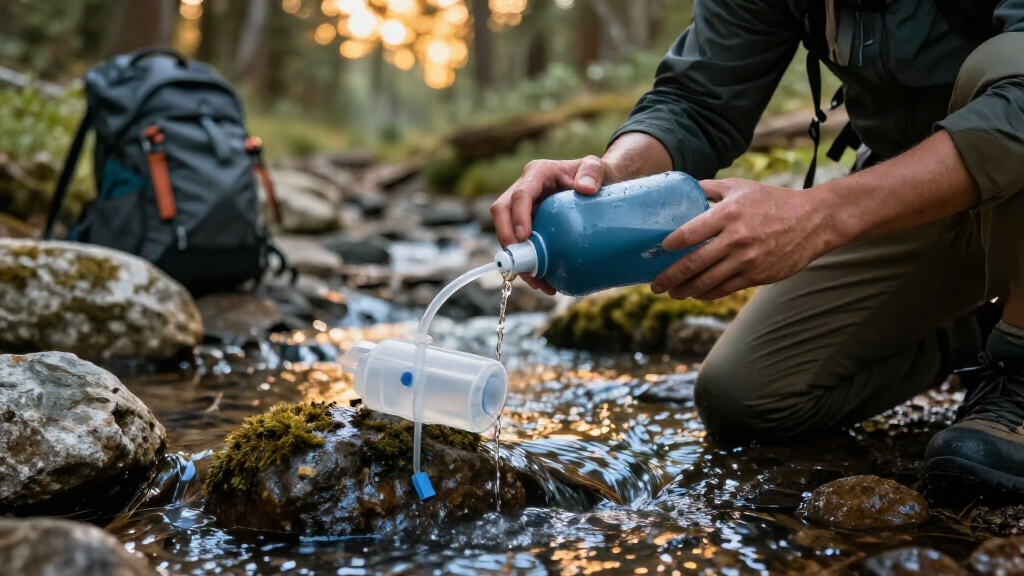
I compared these 15 portable filters through a backpacking lens, giving priority to how easily each option supports drinking, filling bottles, and carrying water away from a source. I also considered the likely value of its form factor on trail: integrated bottles and squeeze systems suit mobile use, while gravity-fed models favor a stationary camp. The ranking reflects practical differences in versatility, packability, capacity, maintenance needs, and setup, not a claim that one design fits every trip.
Products with clearer backpacking utility and adaptable ways to collect or carry water rank ahead of emergency-oriented straws and larger camp systems. I also separated products that appear similar by their included components and intended use, such as the Sawyer Squeeze kits with different water carriers. Because product names alone do not establish performance against every biological or chemical hazard, I treat filtration and purification claims cautiously and recommend checking each manufacturer’s specifications for the water conditions on your route.
Factors to Consider When Choosing Portable Water Filters For Backpacking
The right filter depends less on a single headline specification than on how you collect, carry, and drink water during a typical day. These broader choices can prevent buying a compact filter that is awkward to use, or carrying a large system that rarely leaves camp.
Choose a Water Workflow Before a Filter
Think through the full sequence: collecting from a source, treating the water, carrying it, and drinking while walking. A straw can be a compact way to drink directly from a source, but it does not fill a clean bottle for later. A squeeze filter or filtered bottle makes that handoff easier, while a gravity system shifts the work to camp. A common mistake is choosing by filter size alone and discovering that the setup does not match how often you leave water sources behind. If you often hike dry stretches, prioritize a system that lets you store treated water, even if it adds a little bulk.
Match Capacity to Your Group and Water Gaps
Solo hikers on frequent-water routes may be comfortable with a small bottle or a compact squeeze pouch. Longer dry sections, hot conditions, or shared group use call for more carrying capacity and more planning at each refill. Larger bags and gravity reservoirs can make camp water easier to manage, but they add space and can be excessive for someone hiking alone. Do not treat a filter’s flow claim or reservoir size as a substitute for estimating your daily water needs. Plan capacity around the longest stretch between reliable sources, then check whether the chosen system can carry enough treated water for that stretch.
Know What the Treatment Claim Covers
Portable filters and purifiers are not interchangeable labels, and a product name may not tell you which hazards it addresses. Read the manufacturer’s stated treatment scope and limitations for bacteria, protozoa, viruses, chemicals, and sediment. A filter designed for common backcountry biological risks may not address every concern in agricultural, industrial, or heavily developed watersheds. Some products in this lineup are marketed as purifiers, but that wording alone is not enough to confirm suitability for a particular source. Match the documented capability to your route, and carry an additional treatment method if local guidance calls for broader protection.
Account for Clogging, Cleaning, and Cold Weather
Murky water can slow many filters, so a simple pre-filter or settling step may save time and reduce clogging on silty routes. Backflushing and cleaning are not minor chores: a neglected filter can become frustrating to use when you need water quickly. Check what maintenance tools come with the system and whether the cleaning method is practical in the field. Freezing can damage some filter elements even when they look intact, so overnight temperatures and storage habits matter. If your trips include cold nights, follow the manufacturer’s storage guidance rather than assuming a filter can safely dry or freeze in a pack.
Pay for Convenience Only When You Will Use It
Integrated bottles, extra pouches, adapters, and pumps can make water handling smoother, but each added component has a weight and packing cost. A kit with multiple carriers makes more sense for hikers who regularly switch between drinking, filling, and sharing water than for someone who wants one simple bottle. Gravity systems are convenient when several people need water at camp, yet less useful if most of your drinking happens directly from a source. Compare the included parts with the way you actually hike instead of treating a longer accessory list as automatic value. The best setup is the one you will maintain and use consistently, not the one with the most pieces.
Frequently Asked Questions
Is a filter straw enough for a multi-day backpacking trip?
A straw can work when you expect to drink at water sources and do not need to carry much water between them. It is less convenient when you want to refill a bottle for a dry stretch, share treated water, or prepare water at camp. For those needs, a squeeze filter or bottle-style system gives you more flexibility. Check the straw’s treatment claims against the hazards listed for your route. Some hikers carry a straw as a backup while using a separate system for routine refills.
Should I choose the Sawyer Squeeze kit or the Katadyn BeFree 1L?
The choice comes down to how you prefer to carry and refill water. The Sawyer Squeeze with a Cnoc bladder offers a larger flexible reservoir setup, which can suit hikers who need more capacity between sources. The BeFree’s integrated 1-liter bottle is a simpler format for someone who values quick drinking and fewer separate pieces. A larger setup can take more room and require more handling, while a smaller bottle may require more frequent refills. Compare the included carriers and maintenance instructions before deciding, since those details shape daily use.
Do I need a purifier instead of a backpacking filter?
That depends on the water sources and treatment risks along your route, not simply on the word “backpacking.” Filters and purifiers may have different documented abilities against viruses and other contaminants, so read the manufacturer’s specifications rather than relying on broad labels. Remote wilderness sources and water near developed areas can present different concerns. Follow local land-management or public-health guidance when available. If a source may contain hazards outside your filter’s stated scope, choose a compatible additional treatment method.
Are gravity filters practical to carry on a solo backpacking trip?
They can be, but their main advantage is easier water processing at camp rather than fast drinking while walking. A larger reservoir may help when you need to prepare water for a group or fill several containers at once. For solo hikers who move frequently between sources, the extra bulk and setup may offer little benefit over a bottle or squeeze system. Consider how often you camp near water and how much water you need ready at once. If you rarely filter for more than yourself, a smaller format is often easier to pack and handle.
What should I do if my filter gets clogged or exposed to freezing temperatures?
Follow the specific manufacturer’s cleaning and storage instructions, since backflushing methods and cold-weather limits vary by model. Filtering turbid water can increase clogging, so let sediment settle or use an appropriate pre-filter when the product guidance permits it. Do not assume that a filter is safe after it has frozen; internal damage may not be visible. Keep it insulated and close to your body when conditions are cold, and store it as directed between uses. If you suspect damage, use a backup treatment method rather than relying on an uncertain filter.
Conclusion
For the broadest fit across solo backpacking needs, I’d choose the Sawyer Squeeze with the Cnoc 2-liter bladder as best overall for its flexible carrying setup. The Katadyn BeFree 1L is my best pick for beginners who want a straightforward bottle-style routine, while the compact Sawyer Mini models can suit hikers prioritizing a small kit over a larger water-carrying setup. For a camp-focused or group option, compare the 6L gravity-fed system with the 1-gallon model based on capacity and packing space; the FS-TFC or Purewell pump may appeal to buyers seeking purifier-style formats, provided their stated treatment claims fit the route. If you want best value in practical terms, choose the least complicated kit that already includes the carrier and accessories you will use, rather than paying pack space for components you will leave behind.